Car Seat Gap Filler review: Best Fits for Most Cars
Pick a pure gap filler if your seat moves far or the console sits tight. Pick a storage-style organizer if you want a steady catchall and the opening is wide enough for a rigid insert, typically in a small-to-moderate range. Miss the fit and the filler shifts, blocks seat travel, or keeps eating phones and cards. This guide breaks down which style suits different seat-console layouts, what stays put, and when a DIY foam fix beats buying a pair.
This guide is part of our Car accessories for comfort and convenience series.
Verdict

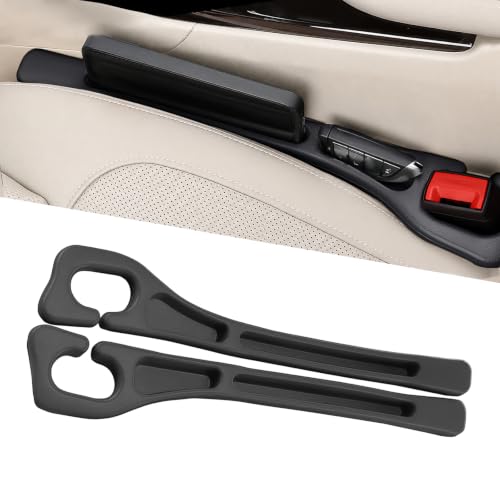
For most cars, the best value is a simple two-pack gap plug that puts retention first and storage second. The MTABCTY two-piece setup is the cleanest fit for that job based on its soft universal construction and paired coverage. Skip a universal-fit filler when the seat bolster curves sharply, the gap pinches closed, or child-seat hardware crowds the buckle area.
Specs at a glance
| Attribute | What matters | Example from a reviewed style |
|---|---|---|
| Primary job | Fill the seat-console gap and stop dropped items | Gap filler organizer |
| Materials | Silicone, foam, synthetic leather | Microfiber leather exterior over elastic sponge |
| Fit type | Universal fit or vehicle-specific | Universal fit design |
| Expansion | Must still keep contact with both sides | Expands up to 3.5cm |
| Pair coverage | Driver and passenger sides | Comes as a pair |
| Storage style | Some versions add a catch tray or cup holder | Organizer format |
Materials and build types
Car seat gap filler designs usually use silicone, foam, or synthetic leather. The useful split is not material alone, but whether the piece is a plain blocker or a blocker-plus-organizer. A microfiber leather exterior feels softer against upholstery, is less likely to scratch leather seats, and wipes clean easily, though dust can cling over time.
Typical gap-width range
Seat gap width changes the result more than the marketing does. A filler can work in a narrow gap only if it still presses against both the seat and the console; if it floats in the channel, it will migrate. Some universal-fit designs expand, but they still need a stable contact patch to stay seated.
Storage vs pure gap coverage
A pure gap-closure piece only needs to block the drop zone. An organizer tries to do that and add storage, which is useful for cards, coins, and a phone, but the extra structure can cut flexibility. If the gap is awkwardly shaped, a rigid organizer may fit worse than a plain plug.
What comes in a two-pack
Two-pack organizer styles cover both front seats. That makes sense when both sides drop the same items or when you want a matched look. The trade-off is simple: you are paying for a second piece even if only the driver side really needs help.

Who is it for?
It is for drivers who keep losing phones, keys, coins, or cards into the gap between the seat and center console. It also suits owners of leather seats who want a softer contact surface, and families who need to think carefully about child seats, boosters, and buckle access before adding anything rigid.
Drivers who drop items into the gap
Anyone tired of fishing under a seat wants basic gap closure first. That is the whole point of a car seat gap filler: it fills the space between the seat and center console and stops small items like keys, phones, money, or food from disappearing.
Owners of leather seats
Leather-seat owners should pay attention to exterior material. Microfiber leather and similar soft coverings are used because they are less likely to scuff upholstery and they wipe clean easily. Foam and silicone can still work, but some finishes collect dust faster or feel rougher against trim.
Families running child seats or boosters
Child-seat and booster setups are where a lot of universal-fit claims fall apart. The filler can crowd the seat-belt receiver, interfere with latch movement, or bind against a booster base. If the child seat changes how far the adult seat can slide, test retention with the child-seat hardware in place.
What actually fits your car?
The right answer depends on seat gap width, the console shape, and whether the seat bolsters curve inward. A filler that sits perfectly in a flat sedan may slip in an SUV with a deep, sculpted seat. If the gap changes width along its length, favor a softer piece that keeps contact everywhere, not just at one end.
Narrow gaps and wide gaps
Narrow gaps are a common failure case because many products are too thick to seat flush. Wide gaps can be just as bad if the filler does not bridge the opening tightly enough. A universal fit design can expand to different gap widths, but expansion alone does not guarantee retention.
Curved seat bolsters and odd seat shapes
Curved bolsters are hard on rigid inserts. The filler may rock, lift, or twist when the seat slides. Oddly shaped seats can also leave a crescent-shaped opening that a straight insert cannot hug. That is where soft foam or a split DIY shape may beat a hard organizer.
Seat-belt receivers and center-console shape
If the seat-belt receiver sits high or close to the console, a filler can block access or force the belt stalk to bend. A deep console lip can also prevent a rigid edge from seating fully. When either of those is true, retention matters more than storage capacity.
Fit-and-failure checklist by car layout
A filler stays put only if it keeps pressure on both sides, does not wedge against the seat track, and does not interfere with buckles or child-seat hardware. The quickest test is simple: if the piece can be pushed down by hand and rebound while still touching the seat and console, it has a chance; if it rocks or floats, it will move in use.
| Car layout | Right filler type | Quick yes/no retention test | Likely failure mode |
|---|---|---|---|
| Narrow gap, flat seat base | Soft pure gap filler or split foam | Yes if it sits flush and cannot slide lengthwise by hand | Too thick, rides up, or blocks seat movement |
| Wide gap, flat console | Organizer-style insert or firmer universal filler | Yes if both sides stay in contact after seat adjustment | Leaves a center void and drops coins underneath |
| Curved bolsters | Flexible foam or shapeable DIY filler | Yes if the filler follows the curve without rocking | Rigid edge lifts and shifts under body movement |
| Child seat installed | Low-profile filler only, if buckle access remains clear | Yes if the seat-belt receiver is fully reachable | Blocks latch points or presses into the child seat base |
| Booster seat use | Usually no filler, or a very low-profile one | Yes only if the booster still sits flat | Raises the booster edge or traps the buckle stalk |
| Seat slides far forward and back | Soft universal-fit filler with strong friction | Yes if it stays seated through full seat travel | Shifts as the seat moves and loses contact |
What works
What works is a product that matches the gap shape first and adds storage only if the extra bulk still stays planted. The safest performers are soft enough to conform, firm enough to hold shape, and narrow enough to avoid seat-track interference. That is why fit beats star ratings here.
Pure gap closure versus organizer storage
Pure gap-closure products are the better pick when the only goal is stopping drop-through. Organizer designs make sense when you want a catchall for a phone, cards, or loose change. They are different jobs. Confusing them leads to buying a tray when a simple plug would fit better.
Microfiber leather exterior in daily use
Microfiber leather exterior is a sensible middle ground. It feels gentler against upholstery than rough plastic, and it cleans with a wipe. The downside is dust attraction over time, especially in dry climates or cars that collect lint at the console edge. Heat can also make some synthetic surfaces feel tackier.
Silicone, foam, and synthetic leather compared
Silicone is usually easy to wipe clean and can handle wet spills well. Foam is light, shapeable, and forgiving in odd gaps, but it can compress and look tired sooner. Synthetic leather sits between those two: better finished than bare foam, less flexible than soft silicone, and often better for a tidier cabin look.
Two-pack organizer for both sides
A two-pack organizer is worth it when both front seats have the same problem and you want a matched solution. The paired format also helps when one side is for daily use and the other is for a passenger’s drink or phone. Just remember that storage capacity is not the same thing as gap-blocking performance.
What does not
The weak point is looseness. A universal-fit filler that does not maintain pressure between the seat and console will wander, tilt, or pop loose. It can also make seat travel harder, block the seat-belt receiver, or sit so high that coins fall into the remaining corner gap anyway.
When a universal-fit product slips
Universal fit design sounds broad because it is meant to expand to different gap widths, but unusual seat shapes can break that promise. Very narrow gaps, very wide gaps, and sculpted bolsters are the problem cases. If the piece only fits because it is jammed in, it usually fails after a few seat adjustments.
When storage capacity is the wrong goal
A large organizer can look useful and still be the wrong answer. If the console is tight, the added bulk can cut legroom or interfere with the handbrake and belt buckle. In that case, the best result is the least visible one: a thin filler that stays in place and does nothing else.
When to skip the product entirely
Skip a filler when the seat-belt receiver sits inside the drop zone, the child-seat base covers the gap, or the seat slides through a range that constantly changes the opening width. In those setups, the filler is more likely to create a new annoyance than solve the old one.
Is a DIY foam filler worth it?
Yes, if the goal is the cheapest functional fix and the gap shape is simple. Foam pipe insulation or a pool noodle can work surprisingly well because it can be cut, split, and shaped to fit. The trade-off is finish quality, long-term durability, and a less polished look than a bought organizer.
Pipe insulation as a low-cost fix
USA Today recommends foam pipe wrap insulation or a foam pool noodle for a DIY fix. The filler can be cut with a serrated knife, box cutter, or sharp scissors. For a narrow gap, the noodle may need to be cut in half lengthwise before it is slid between the seat and center console until it sits flush.
Cleanup, heat, and durability trade-offs
DIY foam is easy to replace and cheap to trim, which makes it practical for experimenting with fit. It can also look unfinished, shed particles as it ages, and soften more in heat than a purpose-built insert. If the car sees heavy sun and daily use, a purchased product usually looks better longer.
Alternatives

The Espeksvika organizer is for drivers who want gap coverage plus charging and a tidier catchall in one piece. Based on the spec sheet and owner feedback, the obvious trade-off is bulk: more features mean more shape to fit around, so it is a worse bet for tight or unusual gaps.

The Shademax two-pack leans hard into storage, with cup holders, RGB lighting, and a soft PU-leather-and-ABS build. That makes it more of a console-side accessory than a plain gap plug. It suits wider, more forgiving setups, but the added structure can be a bad match for narrow gaps or seats that move a lot.
Vehicle-specific fit options
Vehicle-specific fillers are worth considering when a universal insert keeps slipping or leaves exposed corners. They are the better answer for odd seat shapes, fixed consoles, and cars with a stubbornly narrow opening. The downside is obvious: you give up flexibility for fit.
When no filler is the right answer
If the gap is tiny, the seat travels a long way, or child-seat hardware dominates the area, the cleanest answer can be no filler at all. In those cases, a driver may be better off using a slim phone mount or a different storage spot rather than forcing a product into a bad layout.
Should you buy it
Buy a car seat gap filler if your gap is large enough to accept a piece that stays seated, and if the main problem is dropped items rather than storage. Buy a two-pack when both front seats need the same fix. Skip universal claims if your car has curved bolsters, a tight console, or child-seat interference.
If you want the most dependable fix, start with fit. Then look at material. Then decide whether you actually want storage. That order prevents most bad purchases, especially the ones that look good online but shift the first time the seat moves.
Frequently asked questions
what is the best car seat gap filler for my car
The best one is the type that matches your layout, not the one with the longest feature list. A soft pure filler is usually safest for narrow or curved gaps, while a two-pack organizer makes sense only when the gap is wide enough for a rigid insert and you want storage as well.
do car seat gap fillers actually stay in place
They stay in place only when they maintain contact with both the seat and the console. Universal fit can work well in simple layouts, but odd seat shapes, narrow openings, and heavy seat movement can make even a good product slide or tilt. Fit is the retention test.
how do I choose a universal car seat gap filler
Check whether the product can keep pressure on both sides after the seat is adjusted fully forward and back. Look for soft, shapeable construction if the bolsters curve. If the listing talks only about storage and never about contact with the seat and console, it is the wrong type.
will a seat gap filler work with leather seats
Yes, if the exterior is soft and cleanable. A microfiber leather exterior is a good sign because it is meant not to scratch leather seats and wipes clean easily. Still, dust can cling to some finishes, and rigid edges are more likely to rub than soft ones.
can a seat gap filler block seat belt access
Yes. That is one of the most common failure cases, especially in cars where the seat-belt receiver sits close to the console or where a child seat or booster compresses the area. If the buckle is harder to reach after installation, the filler is the wrong shape for that car.
are car seat gap fillers better than DIY foam noodles
Not always. Foam pipe insulation or a pool noodle is the cheapest practical fix and can work well in a simple narrow gap. A bought filler usually looks cleaner, lasts longer, and stays neater in hot weather, but the DIY route wins when cost and quick shaping matter most.
Products related to this article
Sponsored / affiliate links. As an Amazon Associate I earn from qualifying purchases. I may earn additional commission from eligible campaigns.