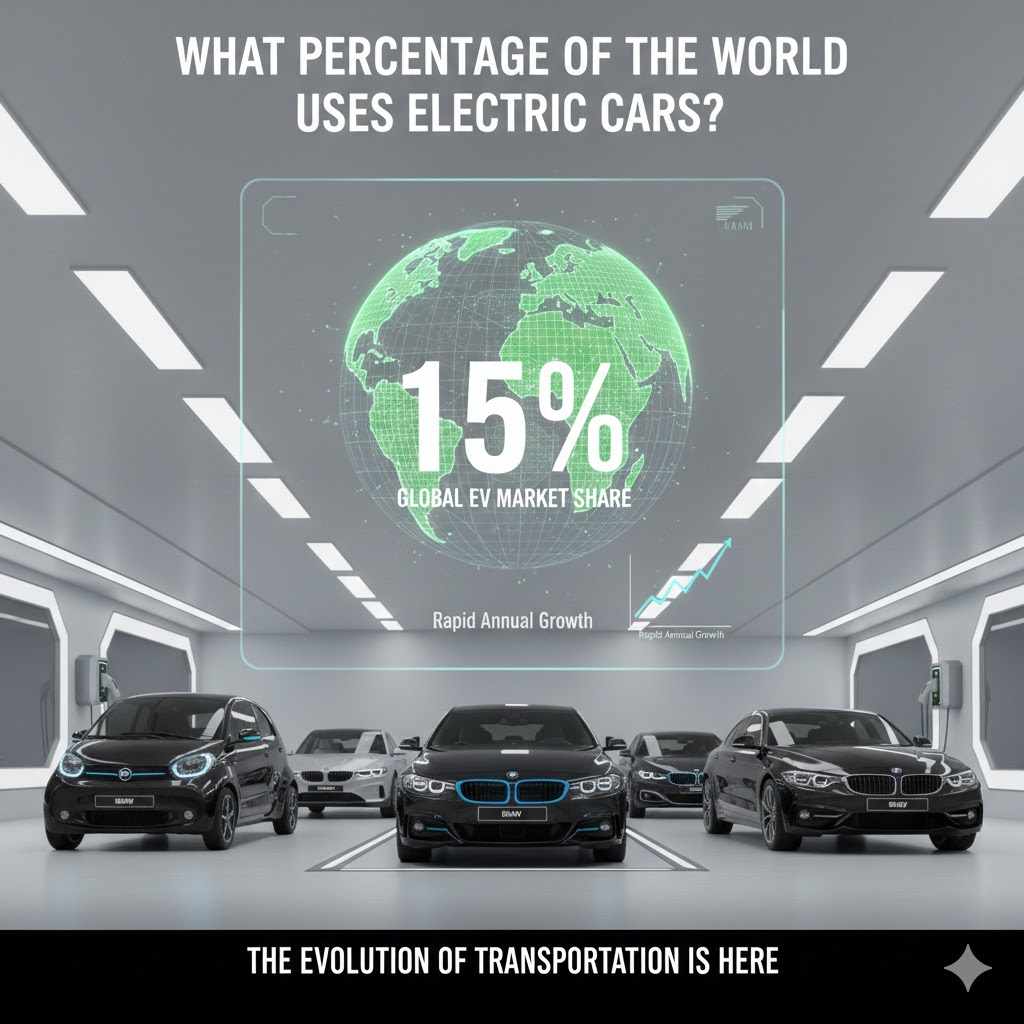
What Percentage of the World Uses Electric Cars
You’re curious about electric cars, right? Many people are asking What Percentage of the World Uses Electric Cars? It sounds like a simple question, but finding a clear answer can sometimes feel a bit tricky. Don’t worry, though!
We’ll break it down easily, step by step. We’ll look at how many people are driving electric cars now and where this trend is headed. Get ready for some easy-to-understand facts!
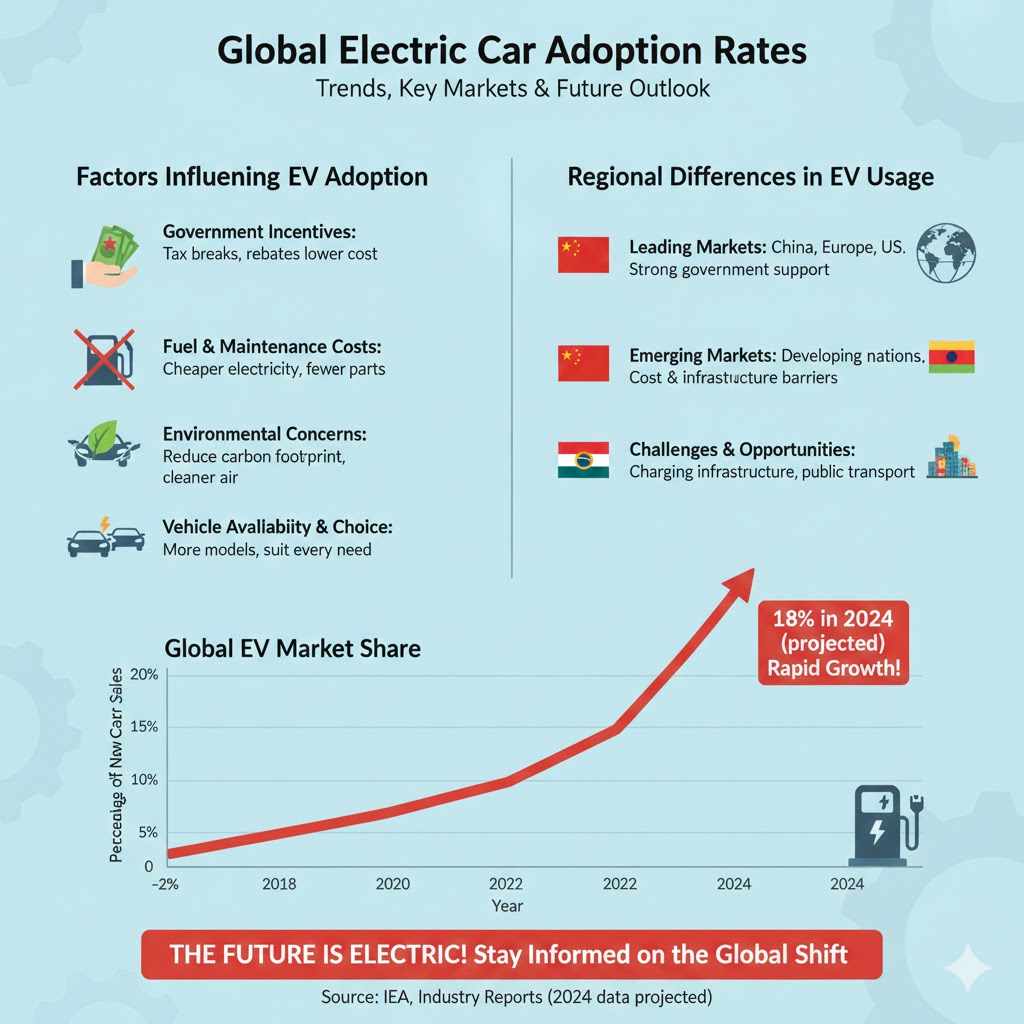
Global Electric Car Adoption Rates
This section explores the current landscape of electric vehicle (EV) adoption worldwide. We will examine the growth trends, key markets driving this expansion, and the overall percentage of vehicles on the road that are electric. Understanding these numbers helps paint a picture of the planet’s shift towards sustainable transportation.
It’s fascinating to see how quickly things are changing.
Factors Influencing EV Adoption
Several things make people choose electric cars. Government help, like tax breaks, is a big one. The cost of electricity versus gasoline also plays a role.
Plus, more car models are coming out all the time, offering more choices. The idea of helping the environment is important to many buyers too. These factors all work together to get more electric cars on the road.
- Government Incentives: Many countries offer financial rewards to encourage people to buy EVs. These can include direct rebates or tax credits that lower the purchase price significantly. For example, the United States has federal tax credits for new electric vehicles. These incentives make the upfront cost of an EV more competitive with traditional gasoline cars. This is a major driver for many consumers.
- Fuel and Maintenance Costs: Electricity is often cheaper than gasoline, leading to lower running costs. EVs also have fewer moving parts than gasoline cars, meaning less maintenance is needed. This can save owners money over the lifespan of the vehicle. Some studies show that EV owners can save hundreds of dollars per year on fuel alone. This financial benefit appeals to budget-conscious buyers.
- Environmental Concerns: Growing awareness about climate change and air pollution pushes many consumers towards EVs. People want to reduce their carbon footprint and contribute to cleaner air in their communities. This ethical consideration is a powerful motivator, especially for younger generations. Many see EVs as a responsible choice for the future.
- Vehicle Availability and Choice: The number of electric car models available has exploded in recent years. From small city cars to large SUVs and trucks, there are now options for almost every need and budget. This increased selection makes it easier for consumers to find an EV that fits their lifestyle. Car manufacturers are investing heavily in developing new EV models.
Regional Differences in EV Usage
Not all parts of the world are adopting electric cars at the same speed. Some countries are way ahead, while others are just starting. China, Europe, and parts of North America are leading the charge.
This is often due to strong government support and a higher public interest. We will look at why these regions are embracing EVs more quickly than others. It’s a global picture, but with very different local speeds.
- Leading Markets: China is currently the largest market for electric cars globally. They have set ambitious targets and provided substantial support for EV production and sales. Europe, particularly countries like Norway, the Netherlands, and Germany, also shows very high adoption rates due to favorable policies and consumer demand. The United States is seeing significant growth, especially in states like California.
- Emerging Markets: Many developing nations are still in the early stages of EV adoption. The higher upfront cost of EVs and the lack of charging infrastructure are major barriers. However, as battery costs decrease and more affordable models become available, these markets are expected to grow. Several countries in Southeast Asia and South America are starting to invest in EV policies.
- Challenges and Opportunities: Infrastructure, including the availability of charging stations, is a key challenge in many regions. Public transportation powered by electricity is also an important factor in overall adoption. Creating robust charging networks and making EVs more accessible are opportunities for growth. The development of smart grids can also help manage the increased demand from EVs.
The Growth Trajectory of Electric Vehicles
This part looks at how electric car use is expected to grow in the coming years. We will see predictions and trends that show a strong upward movement. The data suggests that EVs are not just a passing trend but a significant shift in how people will travel.
This growth is driven by many factors, including technology improvements and a global push for cleaner energy.
Technological Advancements
Batteries are getting better and cheaper. This means electric cars can go further on a single charge and cost less to buy. Charging times are also getting much faster.
These improvements are making electric cars more practical and appealing for everyday use. Think of it like smartphones getting better and cheaper over time; EVs are on a similar path. These ongoing innovations are key to wider acceptance.
- Battery Technology Evolution: Battery energy density, which determines how much power a battery can store, is continuously improving. This allows EVs to travel longer distances between charges. For example, early EVs might have had ranges of around 100 miles, while many new models now offer 250-300 miles or even more. This improved range eliminates “range anxiety” for many drivers.
- Charging Speed and Infrastructure: Fast-charging technology is becoming more widespread, allowing EVs to gain significant range in just a few minutes. Public charging networks are also expanding, making it easier to find a place to charge. Home charging solutions are also becoming more efficient and affordable. This development makes owning an EV much more convenient.
- Cost Reductions: The cost of manufacturing EV batteries has fallen dramatically over the past decade. This trend is expected to continue, making EVs more affordable to purchase. As battery costs decrease, the overall price of electric vehicles will become more comparable to traditional internal combustion engine cars. This cost parity is a major milestone for mass adoption.
Future Projections and Market Share
Experts predict that electric cars will make up a much larger portion of all vehicles sold in the future. Some forecasts suggest that by 2030 or 2035, electric cars could be the majority of new car sales in many major markets. This shift will significantly impact the automotive industry and the global energy landscape.
We are on the cusp of a major transformation in personal transportation.
- Sales Forecasts: Many industry analysts project that electric vehicle sales will continue to grow exponentially. Some reports suggest that EVs could account for over 50% of global car sales by 2030. This rapid increase is driven by a combination of consumer demand, regulatory pressure, and technological advancements. These projections highlight a fundamental change in the automotive market.
- Market Share Growth: The current percentage of electric cars on the road is still relatively small but growing fast. As more people buy EVs, the overall market share of electric vehicles will increase steadily. This means that over the next decade, you will see many more electric cars on your daily commute. The transition away from gasoline vehicles is well underway.
- Impact on Global Markets: This shift towards EVs has profound implications for oil demand, air quality, and the automotive manufacturing sector. Countries and companies that embrace this transition are likely to benefit. The global economy is adapting to this new era of electric mobility. This transformation is reshaping industries and economies worldwide.
Understanding Electric Vehicle Statistics
It’s important to know how to interpret the numbers when we talk about electric cars. This section will clarify what statistics mean and how they are collected. We will look at different ways to measure electric car usage, such as the percentage of new sales versus the total number of cars on the road.
This helps us get a clearer picture of the actual impact EVs are having globally.
Key Metrics and Definitions
When we discuss electric cars, we often use terms like “EV sales,” “EV market share,” and “EV penetration.” Understanding what each of these means is crucial for grasping the real numbers. For example, “EV sales” usually refers to the number of new electric cars sold in a specific period, while “EV market share” is the percentage of all new car sales that are electric. “EV penetration” might refer to the percentage of all vehicles on the road that are electric.
- Electric Vehicle Sales: This metric tracks the number of new battery-electric vehicles (BEVs) and plug-in hybrid electric vehicles (PHEVs) sold within a given time frame, like a quarter or a year. It’s a key indicator of current consumer demand and market momentum. For instance, if 1 million EVs were sold globally in a year, that’s a significant sales figure.
- Market Share of New Vehicle Sales: This refers to the proportion of all new passenger vehicles sold that are electric. If 100 new cars are sold and 10 of them are electric, the EV market share is 10%. This percentage is a good way to gauge how quickly the automotive industry is shifting towards electric powertrains.
- Vehicle Fleet Penetration: This is the percentage of all vehicles currently registered and in use on the roads that are electric. This number is typically lower than new sales market share because it takes time for EVs to replace older gasoline cars. As more EVs are sold over time, this penetration rate will gradually increase.
Example Calculation of Market Share
Let’s say in a particular country, 100,000 new cars were sold in a month. Of those, 15,000 were electric vehicles.
- Total New Car Sales = 100,000
- Electric Vehicle Sales = 15,000
- Market Share = (Electric Vehicle Sales / Total New Car Sales) * 100
- Market Share = (15,000 / 100,000) * 100 = 15%
So, in this hypothetical scenario, the EV market share for new car sales is 15%. This is a straightforward way to understand how much of the new car market is going electric.
Data Sources and Reliability
Reliable statistics about electric car usage come from various sources. These include automotive industry organizations, government agencies, and market research firms. It’s important to look at data from reputable sources to get an accurate picture.
Different sources might use slightly different methodologies, which can lead to small variations in numbers. However, the overall trends are usually consistent across credible reports.
- International Energy Agency (IEA): The IEA is a respected source for global energy statistics, including data on electric vehicle adoption. Their annual Global EV Outlook report provides comprehensive analysis and forecasts. They collect data from national governments and industry players worldwide. This makes their reports very valuable for understanding global trends.
- Automotive Industry Associations: Organizations like the International Organization of Motor Vehicle Manufacturers (OICA) and national auto industry groups often publish sales data. These associations gather information directly from car manufacturers, offering a detailed look at production and sales figures. They play a vital role in tracking the industry’s progress.
- Market Research Firms: Companies specializing in market analysis, such as BloombergNEF, IHS Markit, and Canalys, provide detailed reports on the EV market. These firms conduct in-depth research, surveys, and data analysis. Their reports often offer insights into consumer behavior, market trends, and future projections.
What Percentage of the World Uses Electric Cars?
This section directly addresses the core question: What Percentage of the World Uses Electric Cars? We will look at the latest available figures for the global car fleet. It’s important to distinguish between new sales and the total number of cars on the road. The percentage might seem small, but the growth rate is impressive.
We’ll present data that gives a clear, up-to-date answer to this common query.
Current Global EV Fleet Size
As of recent data, electric cars make up a relatively small percentage of the total global vehicle fleet. However, this number is growing rapidly year after year. For example, in 2022, electric cars represented about 1% of all vehicles on the road worldwide.
This figure is expected to increase significantly in the coming years as production scales up and more consumers switch to EVs.
The total number of electric cars on the road globally has surpassed 26 million by the end of 2022, according to the IEA. This shows a substantial increase from previous years, indicating strong adoption. When you consider the hundreds of millions of gasoline and diesel cars in use, the 1% figure highlights how much room there is for growth.
In 2023, estimations suggest that the global electric car fleet continued to grow, with some reports indicating it reached over 30 million vehicles by the end of the year. This continued expansion reinforces the trend of increasing electric mobility worldwide. This growth is a positive sign for efforts to reduce emissions.
New Sales vs. Total Fleet
It’s vital to differentiate between the percentage of new cars sold that are electric and the percentage of all cars on the road that are electric. For instance, in 2023, electric cars made up a much larger percentage of new vehicle sales – often exceeding 15-20% in leading markets, and even higher in specific countries like Norway where it can reach over 80%.
However, the total fleet percentage is lower because it takes many years for older gasoline cars to be retired.
Consider this: if 10% of new cars sold are electric and cars are typically kept for 10-15 years, it will take a long time for the total fleet to reflect that 10% proportion. Therefore, while new sales figures show a rapidly increasing trend, the overall percentage of EVs on the road grows more gradually. This distinction is key to a proper understanding of EV adoption.
A Comparative Look
| Metric | Approximate Percentage (Global) | Explanation |
|---|---|---|
| New Electric Vehicle Sales | 15% – 20% (globally, varies greatly by region) | Percentage of all new cars sold that are electric. High growth area. |
| Total Electric Vehicle Fleet | Around 1% – 2% | Percentage of all cars currently registered and in use that are electric. Still a small but growing number. |
This table clearly shows the difference. New sales represent the current momentum, while fleet size shows the overall impact of EVs on the road today. Both are important for understanding the full picture of electric car adoption.
The fleet number will catch up over time.
The Future Landscape of Electric Vehicles
Looking ahead, the adoption of electric vehicles is set to accelerate dramatically. This section will explore what the future holds for EVs, considering technological progress, policy changes, and consumer preferences. The trend is clear: electric cars are becoming more common and will play a much larger role in our transportation systems.
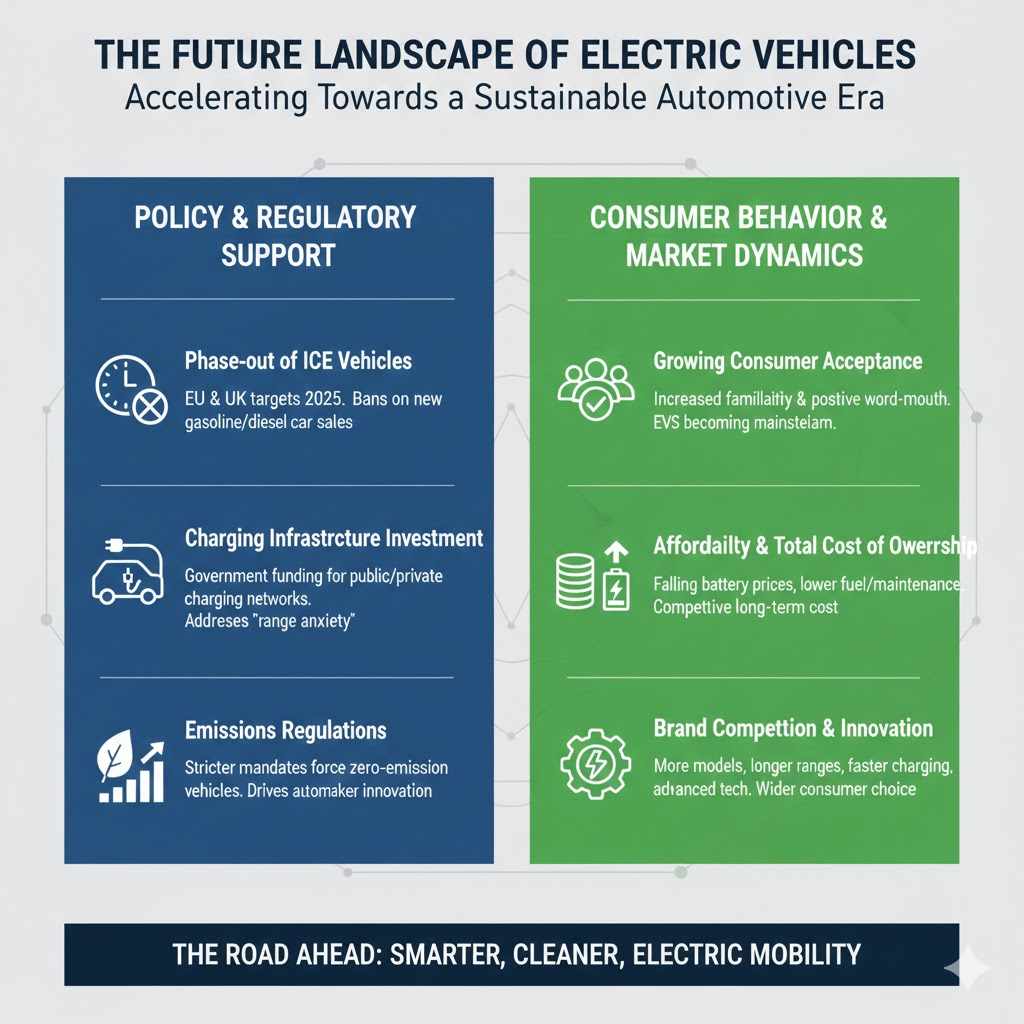
Policy and Regulatory Support
Governments worldwide are implementing policies to encourage EV adoption. These include emission standards, bans on the sale of new gasoline cars, and incentives for charging infrastructure. These measures are critical in driving the transition to electric mobility.
Without government backing, the pace of change would likely be much slower. Policy is a powerful tool for shaping markets.
- Phase-out of Internal Combustion Engine (ICE) Vehicles: Many countries and regions have announced targets to ban the sale of new gasoline and diesel cars. For example, the European Union aims to end sales of new ICE cars by 2035. The UK has a similar target. These ambitious goals send a strong signal to manufacturers and consumers, accelerating the shift to EVs.
- Charging Infrastructure Investment: Governments are investing heavily in building out public charging networks. This includes financial support for installing charging stations at homes, workplaces, and public locations. A robust charging infrastructure is essential to address “range anxiety” and make EVs convenient for everyone.
- Emissions Regulations: Stricter regulations on vehicle emissions are forcing automakers to produce more zero-emission vehicles, including EVs. These regulations create a competitive advantage for EV manufacturers and push traditional automakers to electrify their lineups. This regulatory pressure is a major driver of innovation.
Consumer Behavior and Market Dynamics
As electric cars become more affordable and practical, consumer interest is growing. Factors like the availability of desirable models, improved performance, and the positive environmental impact are influencing choices. The automotive market is responding to this demand by increasing the variety and quality of EVs.
Consumer preference is the ultimate driver of any market shift.
- Growing Consumer Acceptance: More people are becoming familiar with and accepting of electric cars. Word-of-mouth from existing EV owners and increased media coverage play a role. As people experience EVs, they often become advocates. This positive feedback loop helps to build confidence and drive further adoption.
- Affordability and Total Cost of Ownership: While the initial purchase price of EVs can still be higher than comparable gasoline cars, the total cost of ownership is often lower due to reduced fuel and maintenance expenses. As battery prices continue to fall, the upfront cost will also become more competitive, making EVs accessible to a wider audience.
- Brand Competition and Innovation: The increasing competition among automakers to produce the best EVs is driving innovation. This leads to better technology, longer ranges, faster charging, and more appealing designs. Consumers benefit from this competition through a wider selection of high-quality electric vehicles.
Frequently Asked Questions
Question: What is the current global percentage of electric cars on the road?
Answer: Currently, electric cars make up about 1% to 2% of the total global vehicle fleet. This number is growing rapidly each year.
Question: Are electric cars more expensive than gasoline cars to buy?
Answer: The initial purchase price of electric cars can sometimes be higher than gasoline cars. However, the total cost of owning an EV, including fuel and maintenance, is often lower.
Question: What is the main reason people buy electric cars?
Answer: People buy electric cars for many reasons, including environmental concerns, lower running costs, government incentives, and a desire for new technology.
Question: Which country has the most electric cars?
Answer: China is currently the largest market for electric cars globally, with the highest number of EVs sold and on the road.
Question: Will electric cars eventually replace gasoline cars?
Answer: It is widely expected that electric cars will eventually become the dominant form of personal transportation, largely replacing gasoline cars over the next few decades.
Summary
The percentage of the world using electric cars is still relatively small, around 1-2% of the total global fleet. However, new electric vehicle sales are growing rapidly, often making up 15-20% of new car purchases globally. This indicates a significant shift towards electric mobility driven by technology, policy, and consumer interest.
The future is undeniably electric.