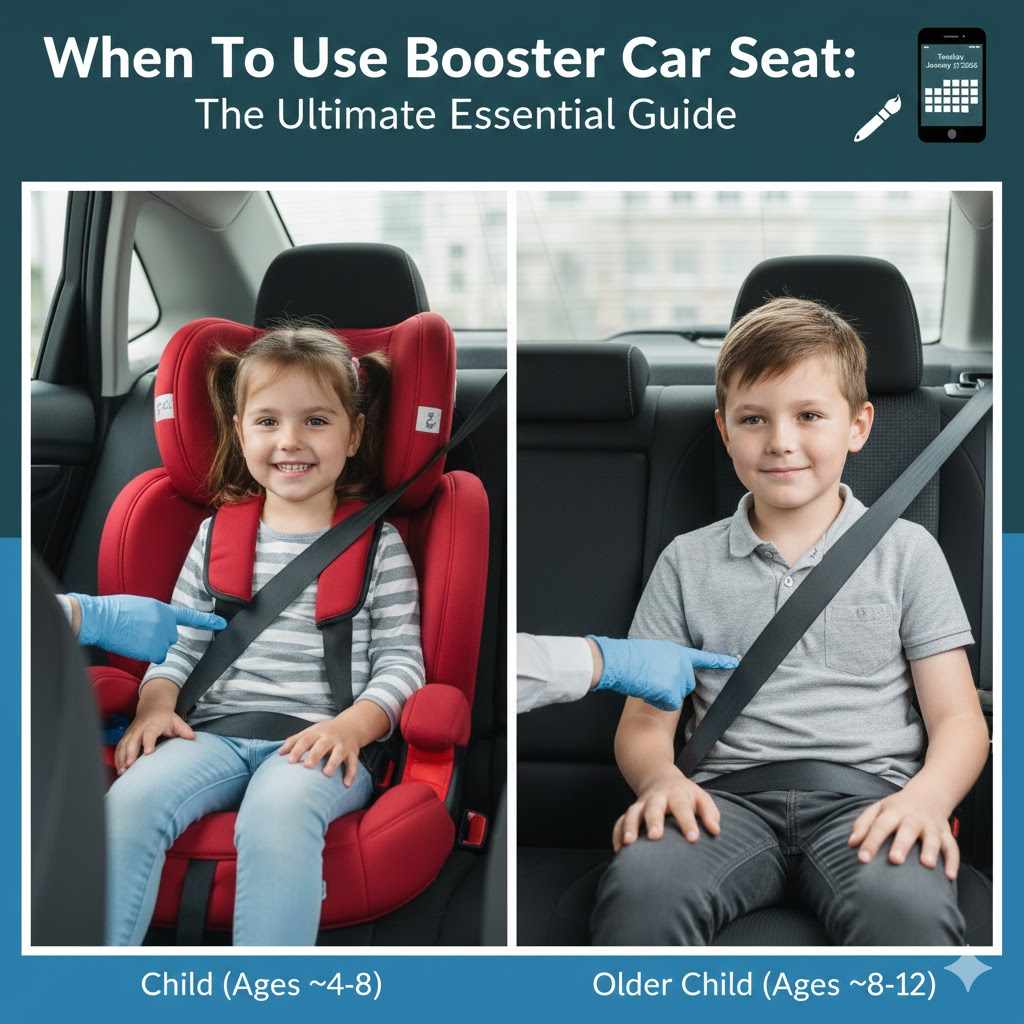
When To Use Booster Car Seat: The Ultimate Essential Guide
A child should use a booster car seat when they have outgrown the height or weight limits of their forward-facing harness seat, typically around age 5. They should remain in a booster until the adult seat belt fits them correctly, which is usually when they are 4 feet 9 inches tall and between 8 and 12 years old.
Hello there! It’s Md Meraj, your friendly guide to all things automotive. Today, we’re tackling a topic that’s incredibly important for anyone who drives with kids: car seats. Figuring out the right time to move your child from a harnessed car seat to a booster seat can feel confusing. You want them to be safe, but the rules can seem complicated. Don’t worry, I’m here to clear things up. We’ll walk through this together, step by step, so you can feel confident you’re making the safest choice for your little passenger. Let’s get started!
What is a Booster Seat and Why is it So Important?
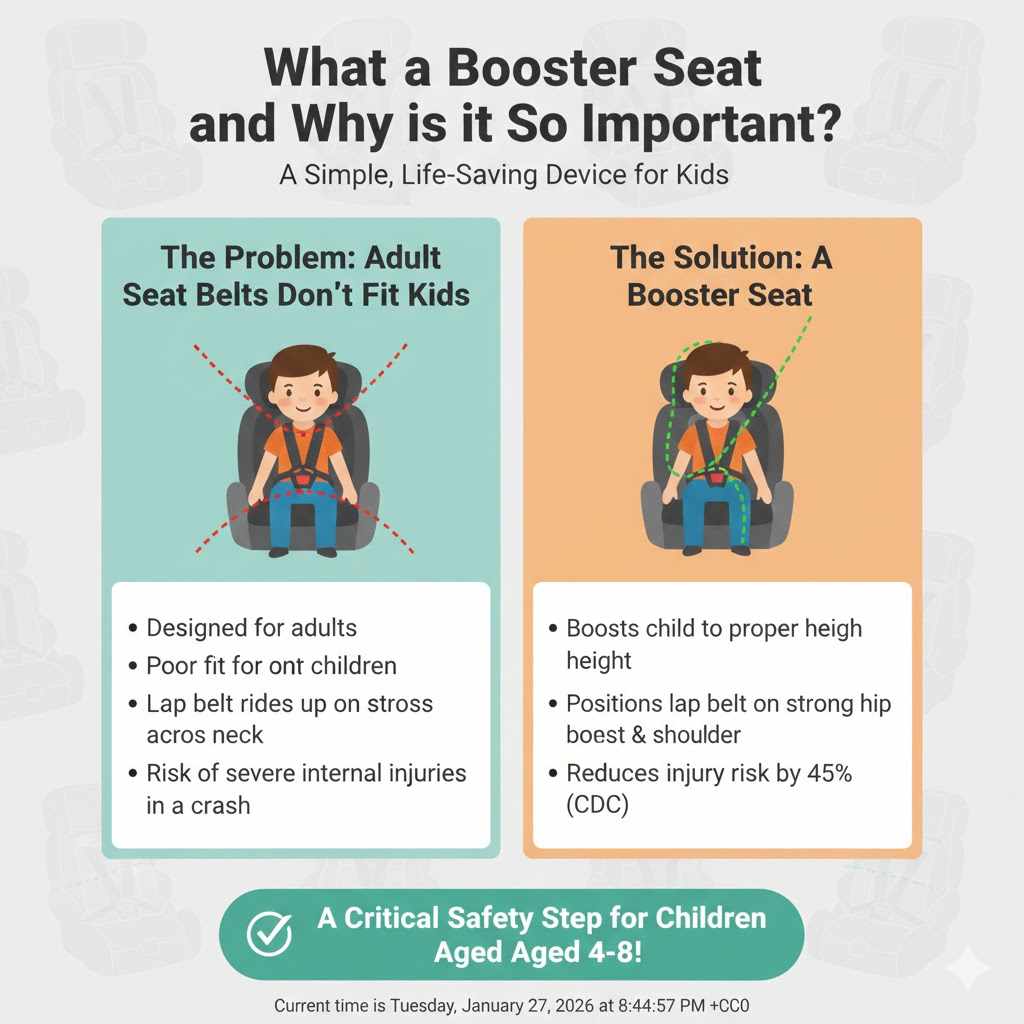
Think of a car’s seat belt. It’s designed to protect an adult, right? The lap belt goes across the strong hip bones, and the shoulder belt crosses the sturdy chest and shoulder. For a small child, that same seat belt is a poor fit. It rides up on their soft belly and cuts across their neck. In a crash, this can cause serious internal injuries.
This is where a booster seat comes in. A booster seat does exactly what its name says: it “boosts” your child up. Its only job is to lift the child so that the car’s built-in seat belt fits them correctly, just like it would on an adult. It positions the lap belt low across their upper thighs and the shoulder belt across their chest and shoulder. It’s a simple tool that makes a life-saving difference.
Using a booster seat correctly reduces the risk of injury in a crash by 45% for children aged 4-8 compared to using a seat belt alone, according to the Centers for Disease Control and Prevention (CDC). It’s not just a suggestion; it’s a critical safety step.
The Big Question: When is My Child Ready for a Booster Seat?
This is the number one question parents ask, and the answer isn’t about age alone. While many laws mention a minimum age, safety experts agree that readiness depends on three things: height, weight, AND maturity.
Outgrowing the Forward-Facing Harness Seat
Before you even think about a booster, your child must first outgrow their forward-facing car seat with a 5-point harness. Every car seat has height and weight limits set by the manufacturer. You can find these on a sticker on the side of the seat or in the owner’s manual.
Your child has outgrown their harnessed seat when they reach EITHER the maximum weight OR the maximum height. A key height indicator is when the tops of their ears are higher than the top of the car seat shell. The harness straps should also come from at or above their shoulders. If you have to move the straps up and run out of slots, it’s another sign they’re ready to move on.
The Maturity Factor: Can They Sit Still?
This is the part many people overlook. A booster seat requires the child to do some of the work. They must be able to sit upright for the entire car ride. This means no slouching, leaning over, or playing with the seat belt.
If your child is constantly wiggling, trying to get their arms out from under the shoulder belt, or slumping over to sleep, they are not mature enough for a booster. The 5-point harness does the job of holding them in the proper position. In a booster, the child must hold that position themselves. If they can’t, they are safer in their harnessed seat, even if they meet the height and weight minimums for a booster.
Readiness Checklist: Is Your Child Booster-Ready?
Use this simple checklist to see if it’s time to make the switch. Your child should meet ALL of these criteria:
- They have exceeded the top weight or height limit of their forward-facing harnessed car seat.
- Their shoulders are above the top harness slots in their forward-facing seat.
- They are at least 5 years old. The American Academy of Pediatrics recommends children stay in a harnessed seat until at least this age.
- They are mature enough to sit properly for the whole trip without slouching, leaning, or unbuckling.
If you answered “yes” to all of these, it’s likely time to start shopping for a booster seat!
Choosing the Right Booster Seat: High-Back vs. Backless
Once you’ve decided your child is ready, you’ll find two main types of booster seats on the market. Both are safe when used correctly, but one might be a better fit for your child and your car.
High-Back Booster Seats
A high-back booster looks like a miniature version of a car’s seat. It has a back and head support. These are excellent choices for the “younger” booster riders who have just transitioned from a harnessed seat.
Key Features:
- Head and Side-Impact Protection: The side “wings” and headrest provide extra protection in a side-impact crash.
- Shoulder Belt Guides: They have a guide or clip near the child’s shoulder to ensure the shoulder belt stays in the correct position over their chest.
- Comfort for Sleepers: The head support gives kids a comfortable place to rest their head if they fall asleep, preventing them from slumping over and out of position.
A high-back booster is REQUIRED if your vehicle’s back seat does not have a headrest. A child’s head needs protection from whiplash, and the vehicle headrest or the booster’s high back must be tall enough to reach at least the top of their ears.
Backless Booster Seats
A backless booster is simply a cushioned seat that lifts the child up. It has no back or head support. These are very portable and less expensive, making them a popular choice for older kids, carpooling, and travel.
Key Features:
- Portability: They are lightweight and easy to move from car to car.
- Discreet for Older Kids: Some older kids feel “babyish” in a high-back booster. A backless booster helps them feel more like a big kid while still being safe.
- Requires Vehicle Head Support: You can ONLY use a backless booster in a vehicle seating position that has a headrest. The child’s ears should not go above the top of the vehicle’s headrest.
Which One is Right for You? A Quick Comparison
Here’s a simple table to help you decide:
| Feature | High-Back Booster | Backless Booster |
|---|---|---|
| Best For | Younger children just moving from a harness; cars without headrests. | Older, more mature children; carpooling and travel. |
| Pros | Adds side-impact protection; has a shoulder belt guide; provides head support for sleeping. | Inexpensive; very portable and lightweight; less conspicuous for older kids. |
| Cons | Larger and heavier; can be more expensive. | Offers no side-impact protection; requires a vehicle headrest for safety. |
Many parents start with a high-back booster and then move to a backless one as their child gets older, taller, and more responsible.
How to Use a Booster Seat Correctly Every Time
Buying the right seat is only half the battle. Using it correctly is what keeps your child safe. Follow these simple steps for a perfect fit on every ride.
- Place it Properly: Set the booster seat flat on the back seat of your vehicle. It should not overhang the edge of the seat. For safety, children under 13 should always ride in the back seat.
- Buckle Up: Have your child sit in the booster, with their back flat against the booster’s back (for a high-back) or the vehicle’s seat back (for a backless).
-
Route the Seat Belt: This is the most critical step.
- The Lap Belt: The lap portion of the seat belt must go under the armrests of the booster seat and lie flat and low across your child’s upper thighs or hip bones. It should NEVER be on their soft tummy.
- The Shoulder Belt: The shoulder portion should go through the shoulder belt guide on a high-back booster. It needs to cross the middle of your child’s chest and shoulder. It should not be cutting into their neck or slipping off their shoulder. Never, ever put the shoulder belt behind their back or under their arm.
- Check the Fit: Give the belt a gentle tug to make sure it’s snug. There should be no slack in the belt system. The buckle should not be sitting on top of the booster seat’s frame.
The Final Step: When to Stop Using a Booster Seat
Just as there’s a right time to start using a booster, there’s a right time to stop. Again, this is not based on age! A child has outgrown their booster seat when the adult seat belt fits them correctly on its own. To check this, experts at organizations like the National Highway Traffic Safety Administration (NHTSA) recommend the 5-Step Test.
Have your child sit in the back seat without a booster seat and ask yourself these five questions:
- Does their back touch the vehicle seat flat? (They shouldn’t have to slouch to do the next step).
- Do their knees bend naturally at the edge of the vehicle seat?
- Does the lap belt sit low on their hips/upper thighs, not on their stomach?
- Does the shoulder belt lie across the center of their shoulder and chest, not on their neck or arm?
- Can they stay seated like this comfortably for the entire trip?
If you answer “no” to even one of these questions, your child is not ready to ride without a booster seat. Most kids don’t pass this test until they are between 10 and 12 years old and are at least 4 feet 9 inches tall. Don’t be in a rush—it’s always better to be safe.
State Laws vs. Best Practices
It’s important to know your local laws regarding car seats. Every state has them, but they can vary. However, safety experts agree that these laws are often the minimum requirement. For example, a law might say a child can move out of a booster at age 8. But if your 8-year-old is small for their age and doesn’t pass the 5-Step Test, they are much safer staying in their booster seat. Always prioritize best safety practices over the legal minimum.
Common Booster Seat Mistakes to Avoid
I see these mistakes often, and they can easily be fixed. Keep an eye out for them to ensure your child is as safe as possible.
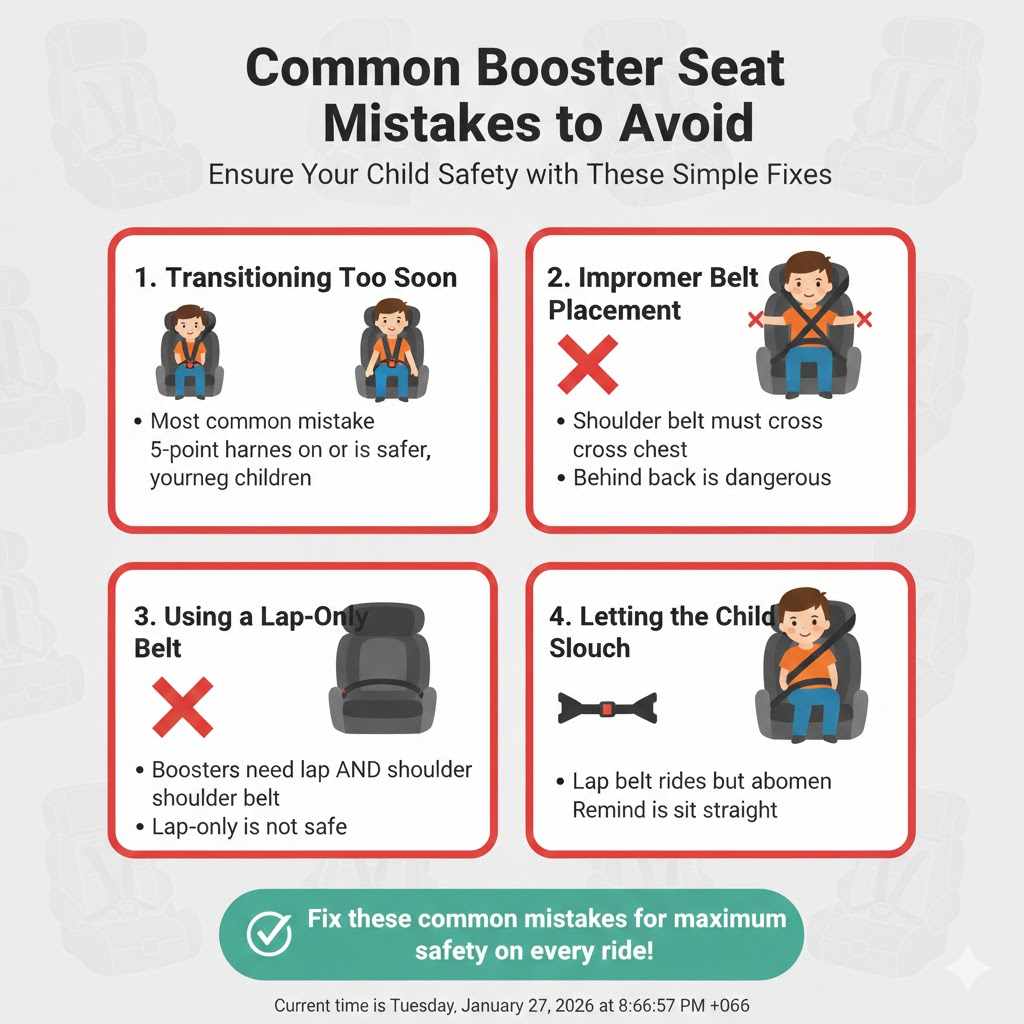
- Transitioning Too Soon: This is the most common mistake. Don’t rush your child into a booster or out of one. A 5-point harness is safer for younger children, and a booster is safer than an adult belt that doesn’t fit.
- Improper Belt Placement: Letting the shoulder belt slip off the shoulder or putting it behind the child’s back completely defeats its purpose. Make sure it’s always crossing their chest.
- Using a Lap-Only Belt: Booster seats must be used with a lap AND shoulder belt. If your back seat only has a lap belt in the center, that is not a safe spot for a child in a booster.
- Letting the Child Slouch: If the child slouches, the lap belt can ride up onto their abdomen. Remind them to sit up straight with their back against the seat.
- Ignoring Expiration Dates: Yes, car seats expire! Plastic can become brittle over time. The expiration date is usually stamped into the plastic on the bottom or back of the seat.
Frequently Asked Questions (FAQ)
1. What is the minimum age for a booster seat?
While some state laws and manufacturer minimums say age 4, safety organizations like the American Academy of Pediatrics strongly recommend waiting until at least age 5. More importantly, the child must have outgrown their harnessed car seat and be mature enough to sit properly.
2. Can I use a backless booster for my 5-year-old?
You can, provided your vehicle has a headrest that supports the back of their head. However, a high-back booster is generally recommended for younger children as it provides better shoulder belt positioning and side-impact protection.
3. What if my car only has lap belts in the back seat?
A booster seat cannot be used with a lap-only belt. If you have an older vehicle with only lap belts, you should look for a car seat with a 5-point harness that has a higher weight limit or investigate having shoulder belts installed by a qualified mechanic.
4. How do I know if the booster seat is installed correctly?
Unlike other car seats, a booster seat itself isn’t “installed.” It simply rests on the vehicle seat. The “installation” is how you buckle your child in on every ride. The key is ensuring the lap belt is low on the thighs and the shoulder belt is centered on the chest.
5. Do booster seats expire?
Yes, they do. Most booster seats have a lifespan of 6 to 10 years from the date of manufacture. The expiration date is printed on a sticker and/or stamped into the plastic of the seat. Always replace an expired seat or one that has been in a crash.
6. What’s more important for booster seat readiness: age, weight, or height?
Height, weight, and maturity are all important. A child must first outgrow the height or weight limit of their forward-facing harness. Then, they must be mature enough to sit still. Age is the least important factor, serving mostly as a general guideline.
7. Can my child use a booster seat in the front seat?
No. All children under age 13 should ride in the back seat. The force of a deploying front airbag can cause severe or fatal injuries to a child. The back seat is the safest place for them.
Your Child’s Safety is in Your Hands
Navigating the world of car seats can feel like a big responsibility, because it is. But you don’t have to be a certified technician to get it right. By focusing on fit and maturity rather than just age, you can make a confident and safe decision for your child.
Remember the key steps: max out the 5-point harness, choose the right type of booster for your child and vehicle, and always use the 5-Step Test before letting them ride without one. Every time you buckle your child in correctly, you are taking the single most important step you can to protect them in the car.
Drive safe, and know that you’ve got this!