How to Take Care of Linen Clothes: Expert Tips
Wash linen in cool or lukewarm water on a gentle cycle, use mild detergent, skip bleach, and air-dry or tumble on low while removing it damp to limit shrinkage and wrinkles. Poor care can leave linen stiff, misshapen, smelly, or weakened fast. This guide shows the right wash, dry, and finishing method for shirts, pants, dresses, sheets, and common problems like odor, stiffness, and stubborn creases.
Why linen needs different care
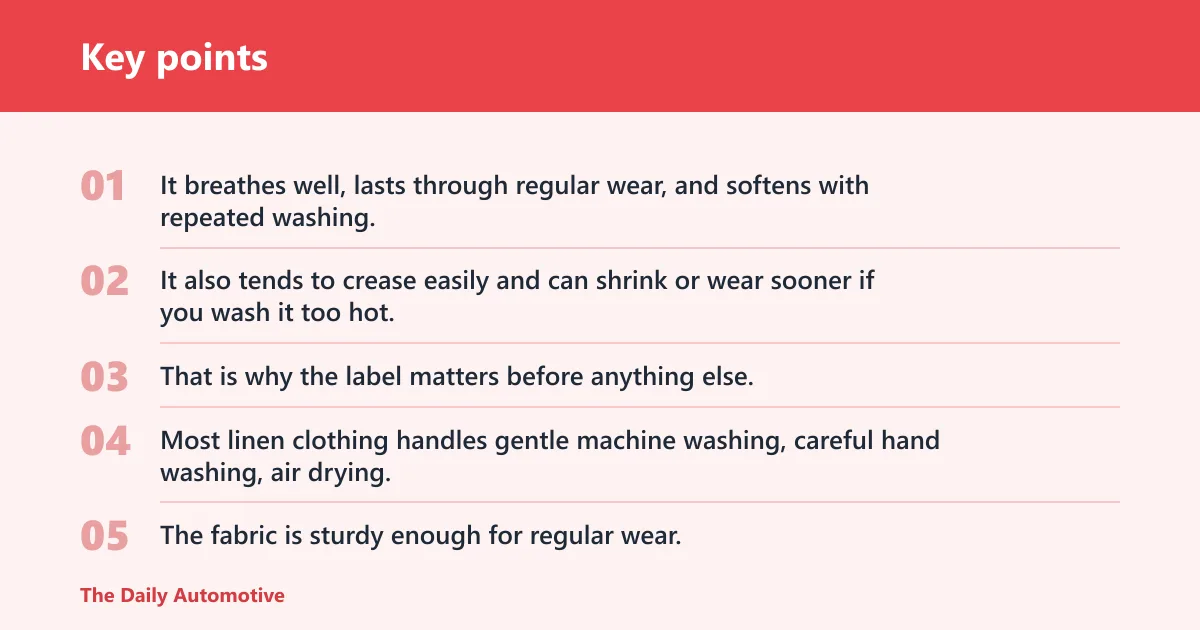


Linen is made from flax fiber. It breathes well, lasts through regular wear, and softens with repeated washing. It also tends to crease easily and can shrink or wear sooner if you wash it too hot, spin it too hard, or dry it too aggressively. That is why the label matters before anything else.
What linen can handle
Most linen clothing handles gentle machine washing, careful hand washing, air drying, and low heat finishing. The fabric is sturdy enough for regular wear, but it responds best to less stress rather than harsh wash chemicals or aggressive mechanical action. Lower force usually means better shape retention.
What damages linen faster
Heat, rough agitation, bleach, fabric softener, sharp zippers, and Velcro all increase the risk of wear. Overdrying can make linen feel stiff and can lock in deep creases. Repeated harsh washing can also shorten the life of lighter shirts and thin woven pieces.
Why care labels still matter
Check the care label first. Manufacturers sometimes blend linen with other fibers, add linings, or finish garments in ways that change the wash or dry limits. A lined dress, for example, may need a more cautious cycle than an unlined shirt even if both are mostly linen.
Linen care matrix
This matrix gives the quickest route by garment type and failure point. Use it after you confirm the care label and before you choose a cycle, dryer setting, or finishing method.
| Garment type | Wash method | Drying method | Finishing method |
|---|---|---|---|
| Shirts | Machine wash on a gentle cycle up to 30°C; turn inside out; use mild detergent | Air dry in a shaded, well-ventilated area; remove while slightly damp | Steam for light creases; press collars and cuffs on low-to-moderate heat |
| Trousers | Machine wash gently up to 30°C, or hand wash if the fabric feels thin or structured | Hang by the waistband or lay flat to prevent knee marks and sharp fold lines | Press seams and hems while slightly damp; steam for touch-ups |
| Dresses | Use a delicate cycle up to 30°C; turn inside out and avoid items with zippers or Velcro nearby | Air dry flat or on a hanger in shade; support weight so the neckline does not stretch | Steam first; iron only where the label allows and focus on hems and bodice seams |
| Bedding | Machine wash on a gentle cycle up to 30°C; wash sheets separately when possible | Air dry naturally; keep the area well ventilated and avoid direct sun | Fold as soon as dry or slightly damp; press large panels only if needed |
| Linen blends | Follow the most delicate fiber in the blend; use a shorter gentle cycle and low spin | Air dry whenever possible; low tumble only if the label permits it | Use the lowest effective heat and test a hidden area first |
| Shrinkage, stiffness, and deep wrinkles | Wash cooler, shorten the cycle, and reduce spin speed; avoid overloading the drum | Stop drying while still slightly damp; do not leave it balled up in the dryer | Steam or press while damp; reshape and smooth seams before hanging or folding |
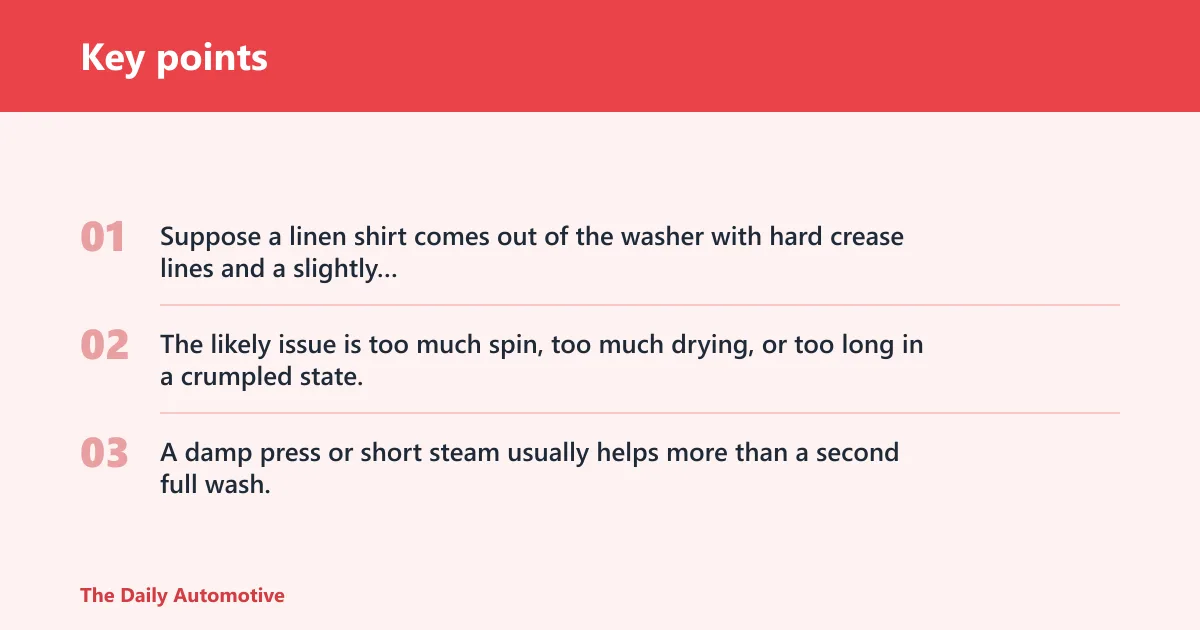
Suppose a linen shirt comes out of the washer with hard crease lines and a slightly tight collar. The likely issue is too much spin, too much drying, or too long in a crumpled state, not the fiber itself. A damp press or short steam usually helps more than a second full wash.
How should you wash linen?
Wash linen with the least force that still gets it clean. Hand washing is the gentlest cleaning method, and machine washing can work well on a delicate cycle up to 30°C with low spin. For dirt, sweat, and body oil, spot treatment before washing often prevents unnecessary full washes.
Machine wash settings
Use a gentle program up to about 30°C, with a short cycle of about 30–45 minutes and a low spin speed of up to 600. Turn garments inside out before washing, and keep them away from pieces with sharp zippers or Velcro. A small load moves more freely and usually creases less.
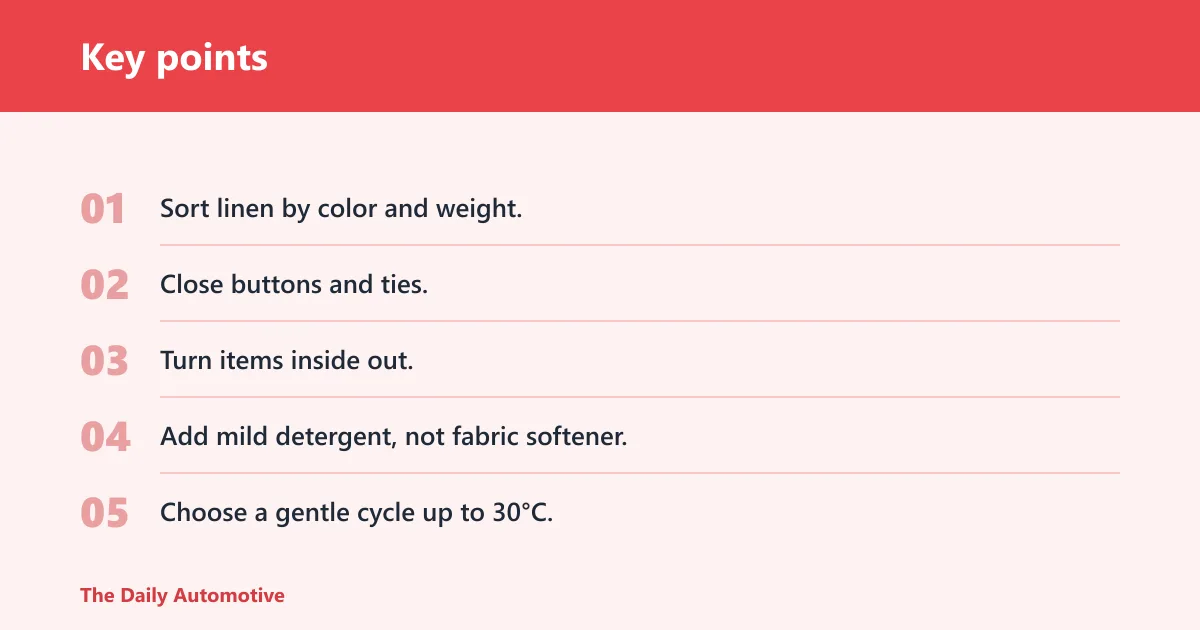
- Sort linen by color and weight.
- Close buttons and ties.
- Turn items inside out.
- Add mild detergent, not fabric softener.
- Choose a gentle cycle up to 30°C.
- Set spin speed to 600 or lower.
- Remove the load promptly after the cycle ends.
Hand wash steps
Hand washing works best for delicate pieces, thin linen, or items with trims. Use lukewarm water no more than 30°C, soak gently, rinse in cold water, and press out water instead of wringing. Avoid rubbing or squeezing hard, since that can distort the weave and weaken the cloth.
When to pre-treat stains
Spot clean when possible, especially for sweat and body-oil stains around collars, cuffs, and underarms. Pre-treating before washing reduces unnecessary washing and can help prevent yellowing from setting in. Keep the treatment light and targeted so the surrounding fabric does not get overworked.
Which detergent should you use?
Use a gentle detergent made without harsh chemicals, perfumes, or dyes. Avoid enzyme-heavy powders if the garment is delicate or heavily structured, because a stronger formula can be more than linen needs. Skip fabric softener and bleaching agents. Both can work against the fiber and its finish.
What to buy
Look for a mild detergent labeled for delicate clothes. A neutral, low-additive formula is the safer pick for most linen clothing and bedding. If the item is blended, check whether the care instructions call for a special formula or a lower-temperature wash.
What to avoid
Avoid products with heavy perfume, dyes, bleach, or aggressive stain-fighting additives unless the care label clearly allows them. Those ingredients may leave residue, dull the fabric, or make the cloth feel harsher after drying. That matters more on shirts and dresses than on heavier table linen.
Hard water and odor problems
Hard water can make linen feel stiff and can leave soap residue behind. If odor lingers after washing, the issue is often under-rinsing, overloading, or drying too slowly. A cleaner rinse, a less crowded load, and prompt air drying usually help more than adding extra detergent.
How do you dry linen without damage?
Air drying is the best way to dry linen naturally. Use fresh air, a well-ventilated area, and shade rather than direct sun to reduce fading. Remove the item while it is still slightly damp so it does not set in hard fold lines or become overly stiff.
Air-drying setup
Hang shirts and dresses on padded or wide hangers, and spread trousers over a bar so their weight stays balanced. Lay bedding flat or hang it with enough support that the fabric does not stretch. Keep pieces out of direct sun and away from cramped corners.
When a tumble dryer is risky
A tumble dryer can become risky when the label forbids it, when the fabric is thin, or when shrinkage is already a concern. Even on low heat, over-drying can make linen rough and deeply creased. If you use a dryer at all, stop while the item is still damp.
How to prevent hard creases
Shake out each item before hanging or folding it. Avoid sharp fold lines during drying, and do not leave wet linen in a heap. If the garment is already wrinkled after washing, a quick mist of water or a short steam session can help reset the fabric.
How do you finish linen after washing?
Ironing and steaming both work, but steaming is gentler for delicate textiles and for garments that only need light smoothing. Use low-to-moderate heat, and finish linen while it is slightly damp whenever possible. Collars, cuffs, hems, and seam lines need the most attention.
Ironing at the right dampness
Iron when the cloth is still a bit damp or use a pressing cloth if the surface looks prone to shine. Focus on the areas that matter most visually, such as front plackets, hems, and trouser creases. Dry linen can take more effort and may need extra moisture to smooth cleanly.
When steaming is better
Choose steaming for drape-heavy dresses, lightly wrinkled shirts, and pieces that do not need a sharp crease. Steam relaxes fibers with less contact than an iron, so it is often the safer choice for delicate textiles and for garments you want to keep softly textured.
Collars, cuffs, and hems
Press collars and cuffs flat, then smooth hems and seams only where needed. Do not chase every wrinkle; linen naturally keeps a relaxed look. A common first-timer mistake is trying to make every surface perfectly flat, which can lead to over-pressing and a stiff finish.
How should you store linen clothes?
Store linen fully clean and fully dry. Use breathable storage, avoid tight stacking, and keep folded items from getting crushed under heavier clothes. That helps prevent creasing, trapped odor, and musty storage damage. If you plan to wear it again soon, a loose fold or hanger is usually enough.
Folding versus hanging
Hang shirts, dresses, and some trousers if the hanger is wide enough to support the shape. Fold heavier or longer items if hanging would stretch the shoulders or create a long crease at the hem. For bedding, loose folding is usually the most practical option.
Breathable storage
Use cotton garment bags, open shelves, or other breathable storage rather than airtight bins for long periods. Keep the area dry and clean. Plastic can trap moisture and odor if the linen was put away before it was fully dry.
Keeping linen fresh between wears
Let worn linen air out before refolding or rehanging it. Spot clean small marks rather than washing after every wear. That approach helps preserve softness and reduces wear from repeated laundering, especially on lightly worn shirts and trousers.
Frequently asked questions
How do I take care of linen clothes?
Start with the care label, then wash linen gently in cool or lukewarm water with mild detergent. Air dry it in shade when possible, remove it slightly damp, and finish with low heat or steam if needed. Keep it clean, dry, and stored in breathable space.
How do I wash and care for linen without ruining it?
Use the least aggressive method that fits the garment: hand wash delicate pieces, or machine wash on a gentle cycle up to 30°C with low spin. Avoid bleach, fabric softener, and overdrying. The key is to reduce heat, friction, and time in a crumpled state.
How do I take care of linen shirts?
Turn linen shirts inside out, use a gentle wash, and pay attention to collars and cuffs. Air dry them on a hanger in shade, then steam or lightly iron while still a bit damp. Treat sweat marks early so they do not turn into stubborn yellowing.
Is linen hard to take care of?
No. Linen is usually straightforward if you keep the wash gentle and the heat low. The main risks are shrinkage, stiffness, and deep wrinkles, not complicated cleaning rules. Once you learn the cycle, detergent, and drying limits, the routine becomes easy to repeat.
Is linen easy to care for?
Yes, especially compared with fabrics that need dry cleaning or high-heat finishing. Linen gets softer with every wash, and many items can be air dried and worn with a natural crease. The main habit to avoid is treating it like a tougher cotton blend.
How do I store linen clothes so they last longer?
Store linen dry, fully clean, and never cramped. Use breathable shelves, wide hangers, or cotton garment bags, depending on the item. Keep it away from damp spaces and avoid tight stacking, which can lock in fold lines and odor.
Products related to this article
Sponsored / affiliate links. As an Amazon Associate I earn from qualifying purchases. I may earn additional commission from eligible campaigns.