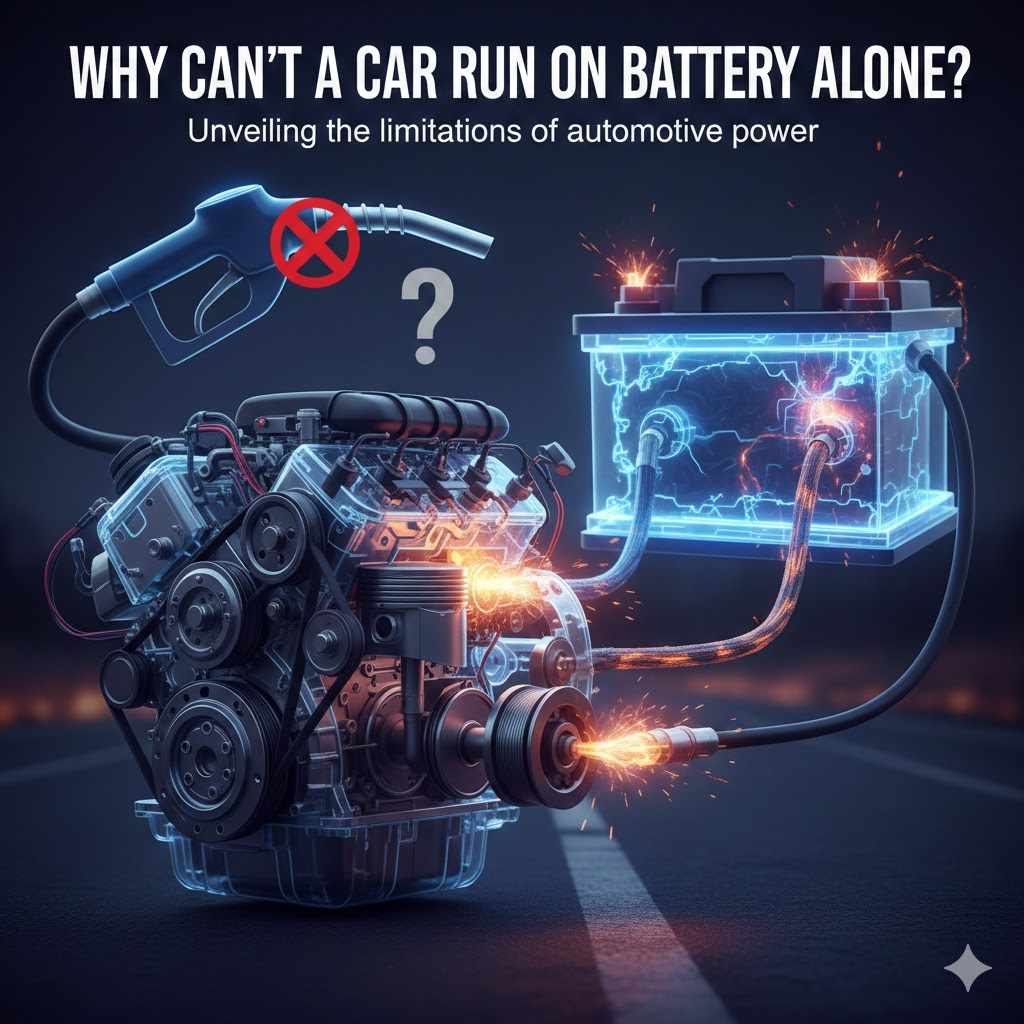
Why Can’t a Car Run on the Battery Alone?
Many people wonder why their car’s battery doesn’t just power the whole vehicle. It seems like a simple power source, right? This common question can feel a bit confusing, especially if you’re not familiar with how cars work. Don’t worry, though! We’ll break down Why Can’t a Car Run on the Battery Alone? in a really easy way. We’ll go step-by-step so you can understand it clearly. Get ready to learn about the other important parts that make your car move.
Understanding the Car’s Power Needs
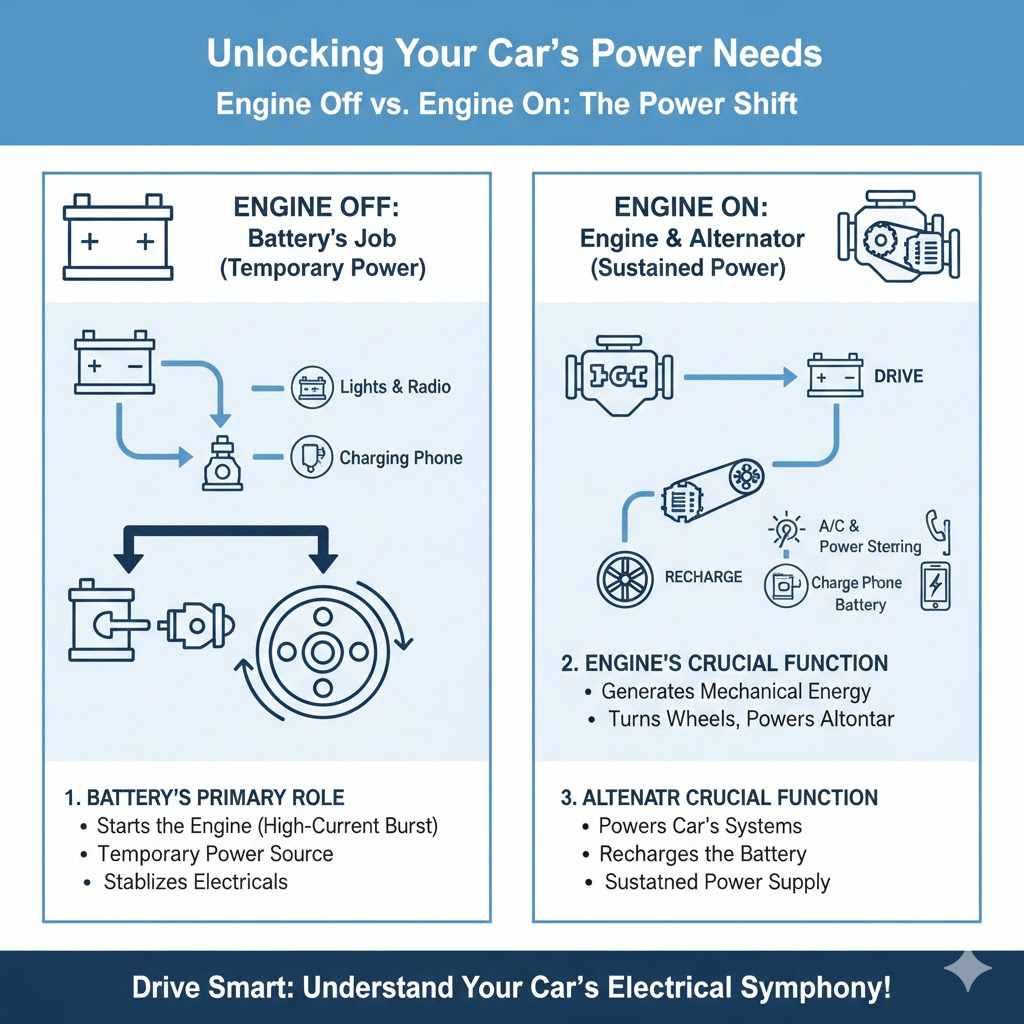
Cars need a lot of power to do everything they do. Think about starting the engine, running the lights, the radio, the air conditioning, and of course, making the wheels turn. The battery is like the car’s starter pack. It gives a big jolt of energy to get things going. But it’s not designed to supply that continuous, high-demand power for long periods. It’s a temporary power source, not a long-term one for the main job of driving.
The Battery’s Primary Role
The car battery’s main job is to provide the initial electrical power needed to start the engine. When you turn the key or push the start button, the battery sends a strong burst of electricity to the starter motor. This motor then cranks the engine, getting it to begin its combustion cycle. Once the engine is running, it takes over powering most of the car’s electrical systems. The battery also acts as a stabilizer for the electrical system, smoothing out power fluctuations.
Starting the Engine Explained
The starter motor is a powerful electric motor that requires a significant amount of electrical current. This current is much more than what the battery can continuously provide for driving. The starter motor engages with the engine’s flywheel, a heavy rotating disk attached to the crankshaft. By spinning the flywheel, the starter motor turns the crankshaft, which in turn moves the pistons and initiates the engine’s combustion process. This entire startup sequence is a high-intensity, short-duration power draw from the battery.
The Engine’s Crucial Function
Once the engine starts, it becomes the heart of the car’s power generation. It converts fuel into mechanical energy. This mechanical energy is then used to turn the wheels. The engine also powers a vital component called the alternator. The alternator is what keeps the battery charged and powers all the other electrical systems while the car is running. So, while the battery is essential for starting, the engine and alternator are responsible for sustained power.
How the Engine Generates Power
An internal combustion engine works by burning fuel, usually gasoline or diesel, inside cylinders. This controlled explosion creates expanding gases that push pistons up and down. These pistons are connected to a crankshaft, which rotates. This rotational motion is the mechanical energy that drives the car. The engine is designed to produce continuous rotational force, allowing the car to move at various speeds.
The Alternator’s Role in Charging
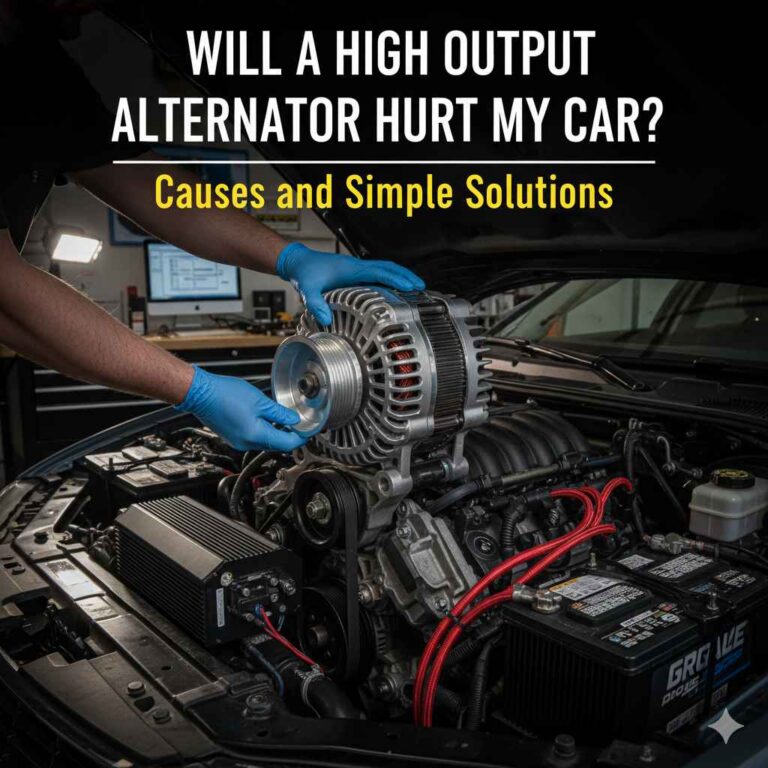
The alternator is a generator driven by a belt connected to the engine’s crankshaft. As the engine runs, the alternator spins, producing alternating current (AC) electricity. This AC electricity is then converted into direct current (DC) electricity by a rectifier within the alternator. This DC power is used to run the car’s electrical accessories, like lights, radio, and climate control. It also recharges the battery, ensuring it has enough power for the next start.
Why the Battery Can’t Handle Sustained Driving
Car batteries are designed for short, powerful bursts of energy. They are not built to handle the continuous, moderate-to-high energy demands of driving. Trying to run a car solely on a battery would deplete it very quickly, and the car would stop. Think of it like a sprint versus a marathon; the battery is great for a sprint (starting the car), but it can’t sustain a marathon (driving for miles).
Battery Capacity and Discharge Rates
Car batteries are rated in ampere-hours (Ah) and cold-cranking amps (CCA). Ampere-hours indicate how much current a battery can deliver over a certain time. Cold-cranking amps measure its ability to deliver a high surge of power for starting in cold weather. However, these ratings are for short durations. The battery’s internal chemistry and construction are optimized for delivering a high load for seconds, not minutes or hours. Prolonged high-current draw would overheat and rapidly discharge the battery, potentially damaging it.
The Electrical Load While Driving
Even when driving, a car uses electricity for many things. Headlights, interior lights, the infotainment system, climate control fans, power windows, and the engine control unit (ECU) all draw power. While some of these loads are intermittent, others are continuous. The battery simply does not have the capacity to power all these systems for an extended period, especially if the engine were somehow not running to recharge it.
The Interconnected System of a Car
A car is a sophisticated system where many parts work together. The battery, engine, alternator, transmission, and all other components are designed to function as a team. The battery’s role is specific and crucial, but it’s just one piece of the puzzle. Without the engine and alternator, the battery would quickly be drained, and the car would be useless for driving.
Components Working Together
Imagine the battery as the pitcher in a baseball game. It delivers a powerful pitch (starting the engine) at the right moment. The engine is the batter, swinging at the pitch and starting the game. The alternator is like a pitcher who then keeps throwing good pitches (generating electricity) to keep the game going and ensure the catcher’s glove (the battery) stays ready. The transmission is like the umpire, directing the game’s flow.
Analogy of a Smartphone Battery
Think of your smartphone. Its battery is designed to power the screen, processor, and other functions. However, if you were to plug it into a tiny power bank that could only provide a trickle charge, you wouldn’t be able to use it for long. The car’s battery is similar; it needs the engine and alternator to provide a steady stream of power. A small battery powering a huge machine for hours is just not feasible.
Exploring Electric Vehicles (EVs)
Electric vehicles offer a different perspective on batteries. EVs use much larger and more sophisticated battery packs than traditional cars. These battery packs are designed to both store energy and deliver it for extended periods to power the electric motor. However, even EVs need to be recharged from an external power source. They don’t run on their battery alone indefinitely without recharging.
EV Battery Technology
EV batteries, typically lithium-ion, are significantly larger and more complex than a car’s 12-volt battery. They store a vast amount of energy, allowing for hundreds of miles of driving on a single charge. These batteries are also managed by advanced battery management systems (BMS) that monitor temperature, charge levels, and cell health to ensure efficiency and safety. The electric motor in an EV is also more efficient than an internal combustion engine, requiring less energy to produce motion.
The Need for Recharging in EVs
While EVs can run for a long time on their battery, they eventually run out of power. When the battery is depleted, the vehicle needs to be plugged into a charging station, just like a smartphone needs to be plugged into a charger. This highlights that even with advanced battery technology, an external power source is necessary to replenish the energy.
Frequently Asked Questions
Question: What is the main job of a car battery
Answer: The main job of a car battery is to provide the powerful burst of electricity needed to start the engine.
Question: How does the engine help power the car
Answer: The engine burns fuel to create mechanical energy, which turns the wheels and also powers the alternator to generate electricity.
Question: What does the alternator do
Answer: The alternator generates electricity to run the car’s electrical systems and recharge the battery while the engine is running.
Question: Can a car run solely on its battery
Answer: No, a car cannot run solely on its battery for extended periods because the battery is designed for short, powerful bursts, not continuous energy supply.
Question: Are electric cars different
Answer: Yes, electric cars use much larger battery packs designed for longer driving ranges, but they still need to be recharged from an external source.
Wrap Up
A car battery is essential for starting, but it can’t power the car alone. The engine and alternator work together to keep the car running and the battery charged. Batteries are built for short, strong energy needs, not long, steady power. This teamwork between parts is what makes driving possible.