How to Fix a Car Running Lean: Causes, Symptoms & Repair Costs
A car running lean means the engine is receiving too much air relative to fuel — disrupting the 14.7:1 stoichiometric ratio and triggering codes like P0171 or P0174. Left unchecked, a lean condition raises combustion temperatures and can damage pistons, valves, and the catalytic converter within weeks. This guide covers the seven most common causes in order of likelihood, how to diagnose which one you have using an OBD-II scanner and fuel trim data, and the repair cost for each fix ($50–$900 depending on the root cause).
Quick Answer
A car running lean has too much air or too little fuel (ideal ratio: 14.7:1 air-to-fuel). The most common causes are vacuum leaks, dirty MAF sensor, bad oxygen sensor, and clogged fuel injectors. Start diagnosis with an OBD-II scanner — P0171 (Bank 1) or P0174 (Bank 2) confirms a lean condition. Repair costs range from $50 for a vacuum hose to $900+ for a fuel pump.
What Does It Mean When a Car Is Running Lean?
Top Tool Pick for Lean Diagnosis
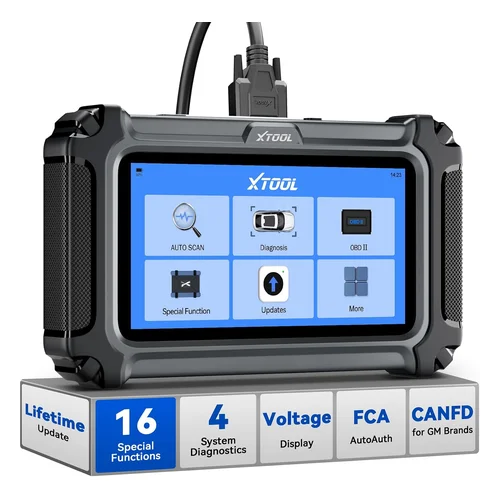
OBD-II Scanner with Live Fuel Trim Data
Reads P0171/P0174 codes and shows live STFT/LTFT values — essential for diagnosing lean conditions without guesswork. Look for a scanner that displays live data streams, not just stored codes.
- Best for: Reading lean codes and monitoring fuel trim in real time
- Why we picked it: Live data mode shows whether the lean condition is load-dependent (vacuum leak) or constant (MAF/O2)
- Main drawback: Basic scanners don’t show O2 sensor waveforms — need a mid-range unit for that
Other essential tools for lean diagnosis and repair
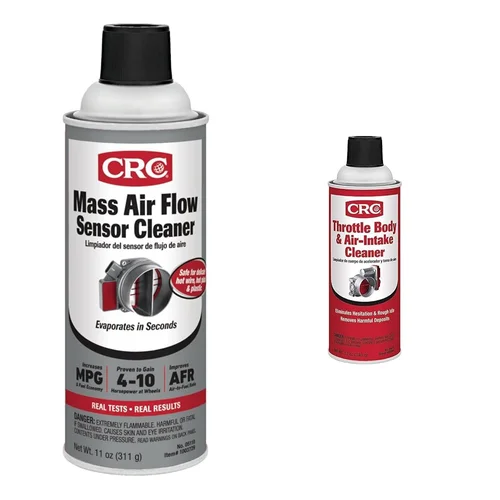 Option 1 MAF Sensor Cleaner Spray
|
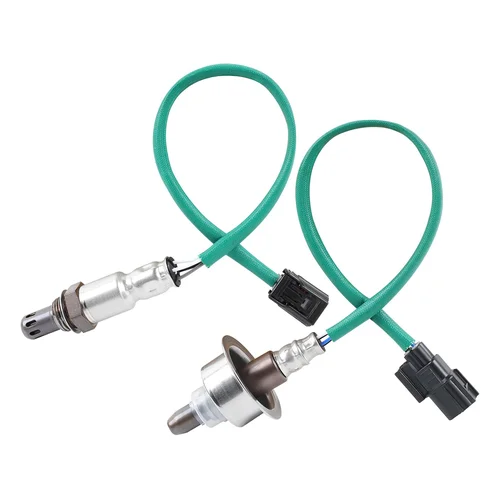 Option 2 Upstream Oxygen Sensor (Bank 1)
|
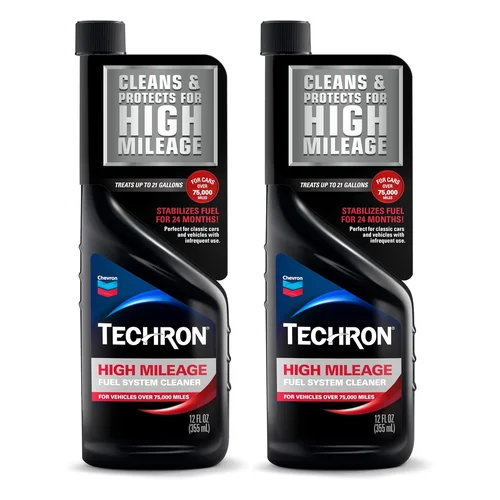 Option 3 Fuel Injector Cleaner Additive
|
As an Amazon Associate we earn from qualifying purchases.
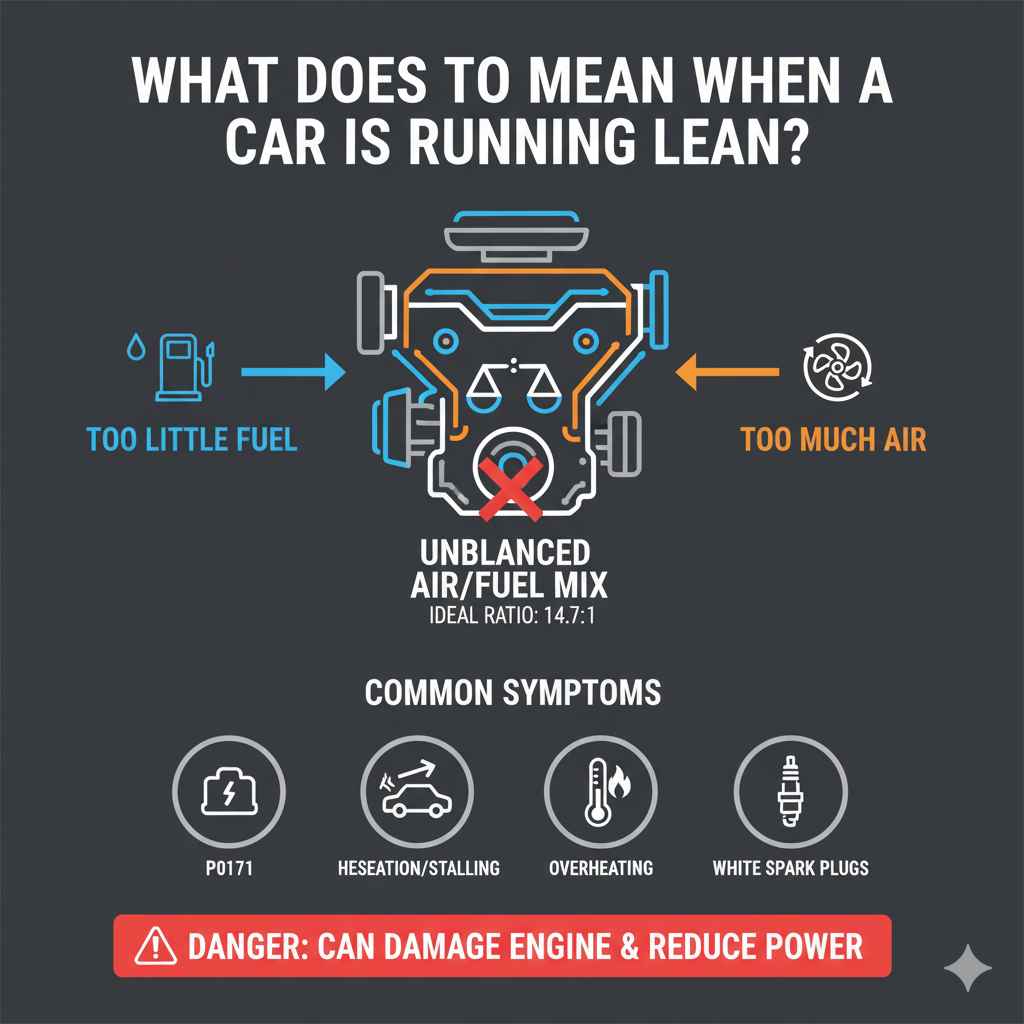
Your car’s engine needs a precise balance of air and fuel — the ideal air-to-fuel ratio is 14.7:1 (called the stoichiometric ratio). When the engine runs lean, it’s getting too much air or not enough fuel. The ECU detects this through oxygen sensor readings and adjusts fuel trim values to compensate. When the adjustment exceeds ±10%, it sets a lean fault code. A lean condition causes misfires, rough idle, poor acceleration, and in severe cases, engine damage from overheating combustion temperatures. If you need to understand what E85 does to a regular car, the principle is similar — wrong fuel mixture = lean or rich condition.
Symptoms of a Lean-Running Engine
A lean condition produces consistent symptoms — knowing all of them helps confirm the diagnosis before spending money on parts:
- Check Engine Light: Usually the first indicator. Codes P0171 (Bank 1) or P0174 (Bank 2) confirm a lean condition. Read with an OBD-II scanner.
- Poor Acceleration: The engine hesitates or bogs under throttle — not enough fuel for the air entering the engine.
- Rough Idle: Shaking or sputtering at a stop, especially when warm. A lean idle often gets worse with AC on.
- Hard Starting: Cranks longer than usual, especially when cold, because the cold-start fuel enrichment isn’t compensating enough.
- Misfires: Engine jerking or popping sounds — unburned air is leaving combustion chambers without igniting.
- White or Light Gray Spark Plugs: Normal plugs show tan/gray deposits. White plugs indicate lean combustion burning too hot.
- Reduced Fuel Economy: Counterintuitively, lean engines often burn more fuel because the ECU keeps adding fuel to compensate via fuel trim corrections.
Common Causes of a Lean-Running Engine
These are ordered by frequency — vacuum leaks and MAF sensor issues account for the majority of P0171 codes. Work through them in this order before replacing expensive parts.
1. Clogged Fuel Filter
A clogged fuel filter restricts fuel flow to the engine. On older vehicles, the filter is often inline under the car or near the fuel tank — see our guide on how to clean a car fuel tank for context on fuel system maintenance. Symptoms: sluggish acceleration and rough idle that worsens at higher RPM (when fuel demand is highest). Replacement cost: $20–$80 DIY.
2. Faulty Fuel Pump
A weak fuel pump can’t maintain adequate pressure. Test with a fuel pressure gauge before replacing — most cars require 30–50 psi at idle. A pump that reads correctly at idle but drops under throttle is failing. Replacement cost: $300–$700 at a shop (requires dropping the fuel tank on most vehicles).
3. Vacuum Leaks
Vacuum leaks are the most common cause of P0171 after MAF issues. Unmetered air enters the engine past the MAF sensor — the ECU doesn’t account for it, so the mixture goes lean. Common leak points: intake manifold gasket, PCV valve hose, brake booster line, and any vacuum hose behind the throttle body. Detection: listen for hissing with engine running, or spray carb cleaner near hose connections (idle RPM change = leak found). Repair cost: $50–$500 depending on location (hose = $50; intake manifold gasket = $300–$500 in labor).
4. Dirty or Faulty Mass Airflow Sensor (MAF)
The MAF sensor measures incoming air volume. A dirty sensor under-reports airflow, causing the ECU to inject too little fuel. Cleaning costs nothing — use MAF sensor cleaner spray (never carb cleaner or brake cleaner, which damage the hot-wire elements). If fuel trim normalizes after cleaning, the sensor was dirty. If not, test sensor output voltage at idle (should be ~0.5–1.0V) and compare to spec. Replacement cost: $50–$150 for the sensor itself.
5. Bad Oxygen Sensor
Upstream (pre-cat) oxygen sensors monitor exhaust gas and signal the ECU to adjust fuel trim. A lazy or failed sensor that reads lean voltage causes the ECU to hold a lean fueling correction. Test with a scanner: a healthy O2 sensor cycles between 0.1V and 0.9V rapidly at warm idle; a bad sensor stays flat (stuck lean at ~0.1V). Replacement cost: $150–$400 depending on vehicle and sensor location.
6. Clogged Fuel Injectors
Deposits on injector tips restrict fuel spray patterns. Mild clogging responds to a fuel injector cleaner additive in the tank. Severe clogging requires professional ultrasonic cleaning ($100–$200 for a set) or replacement. Signs specific to injectors: misfires that affect specific cylinders rather than all equally, and fuel trim values that vary between banks on a V6/V8.
7. Low Fuel Pressure
A failing fuel pressure regulator or kinked fuel line causes chronically low pressure independent of the pump. Test by connecting a fuel pressure gauge to the Schrader valve on the fuel rail — compare reading to your vehicle’s spec (typically 30–65 psi). A regulator replacement costs $150–$400; a kinked line inspection is free.
Cause, symptom, and cost summary:
| Cause | Key Symptom | DIY Fix Cost | Shop Cost |
|---|---|---|---|
| Vacuum leak | Hissing, rough idle, P0171 | $5–$50 (hose) | $150–$500 |
| Dirty MAF sensor | Poor performance, check engine light | $8 (cleaner) | $50–$150 |
| Bad oxygen sensor | Stuck lean code, poor economy | $50–$100 (part) | $150–$400 |
| Clogged fuel filter | Power loss at high RPM | $20–$80 | $100–$200 |
| Clogged fuel injectors | Per-cylinder misfires | $10–$20 (additive) | $100–$400 |
| Faulty fuel pump | Sputtering under load | $150–$300 (part) | $300–$700 |
| Low fuel pressure regulator | Loss of power, stalling | $50–$100 (part) | $150–$400 |
How to Diagnose a Lean-Running Engine
Follow this sequence to identify the cause before replacing parts — skipping steps leads to misdiagnosis and wasted money.
Step 1: Check the Check Engine Light
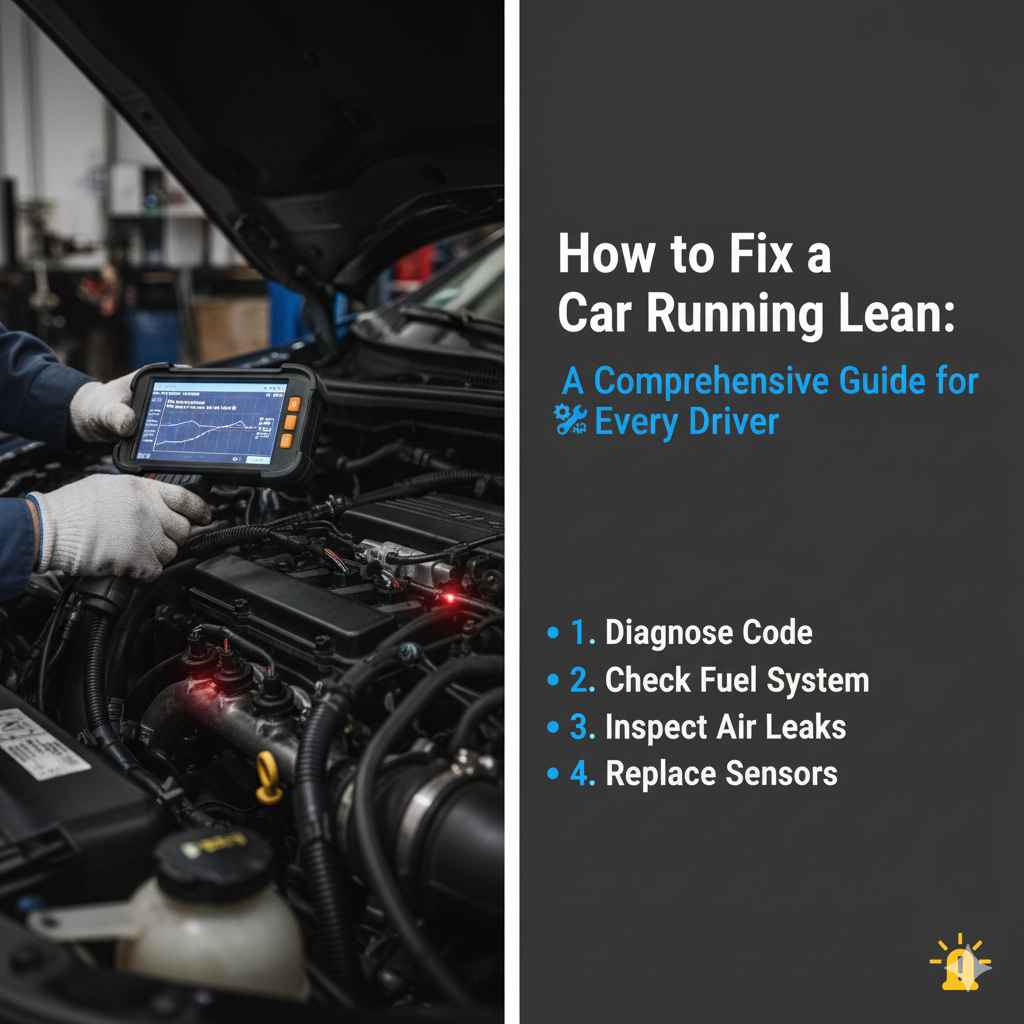
Connect an OBD-II scanner and read codes. P0171 (Bank 1 lean) or P0174 (Bank 2 lean) confirm the diagnosis. Both codes together on a V6/V8 typically indicate a vacuum leak after the MAF or a failing MAF sensor — a single bank code more often points to an O2 sensor or injector issue on that side.
Step 2: Inspect Spark Plugs
Pull one plug per bank. White, chalky deposits or a clean white electrode confirm lean combustion. Normal plugs have tan/light gray deposits. A uniform white color across all plugs suggests a global lean condition (vacuum leak or MAF). White on only one bank points to a bank-specific issue (O2 sensor or injectors).
Step 3: Check Fuel Trims
With the engine warm at idle, read Short Term Fuel Trim (STFT) and Long Term Fuel Trim (LTFT) on your scanner. Values above +10% mean the ECU is adding fuel to compensate for a lean condition. Values above +25% indicate a significant issue. If trims are high at idle but normalize at higher RPM, the cause is usually a vacuum leak (leaks have less effect at higher RPM). If trims are high at all RPMs, check the MAF sensor or fuel delivery.
Step 4: Listen for Vacuum Leaks
With the engine running, listen for hissing sounds near the intake manifold, throttle body, and vacuum hose connections. Spray carb cleaner (or propane from an unlit torch) near suspected leak points — if the idle RPM changes, you’ve found the leak. Check the PCV valve hose, brake booster line, and any rubber hose behind the throttle body first, as these fail most frequently.
Step 5: Test the Fuel System
Connect a fuel pressure gauge to the fuel rail Schrader valve. Start the engine and note the pressure — it should match your vehicle spec (typically 30–65 psi). Pressure that reads correctly at idle but drops under acceleration indicates a weak pump. Pressure consistently 10+ psi below spec suggests a failing regulator or clogged filter.
Step 6: Clean or Test Sensors
Spray MAF sensor cleaner on the sensor’s hot-wire elements and let dry completely (10 minutes) before restarting. Clear the P0171 code and test drive. If the code doesn’t return, the MAF was dirty. If the code returns, test the upstream O2 sensor voltage waveform with your scanner — it should oscillate between 0.1V and 0.9V. A sensor stuck at 0.1–0.2V is failed lean.
How to Fix a Lean-Running Engine
Once the diagnosis points to a specific cause, the fix is usually straightforward. Start with the cheapest and simplest fixes first — a $8 MAF cleaner or a $10 vacuum hose fixes a meaningful percentage of P0171 cases.
Fixing a Clogged Fuel Filter
Relieve fuel pressure first (remove the fuel pump fuse, start the engine, and let it stall). Locate the filter under the car or near the fuel tank, disconnect the fuel lines, and swap the filter. Most filters are push-in or use banjo bolts. Change interval: every 30,000 miles on older vehicles; many modern cars have lifetime in-tank filters. If the fuel lines need to be disconnected for other repairs nearby, inspect the filter at the same time.
Replacing a Faulty Fuel Pump
Confirm pump failure with a fuel pressure gauge before replacing — pumps are expensive and non-returnable once installed. Most in-tank pumps require dropping the fuel tank. Drain the tank as much as possible first. Cost: $150–$300 for the pump assembly; $300–$700 at a shop. Always replace the fuel filter and sock strainer at the same time if they’re accessible.
Repairing Vacuum Leaks
Once you’ve located the leak with carb cleaner, replace the damaged hose or gasket. Rubber vacuum hoses cost $5–$15 each and take minutes to swap. Intake manifold gaskets require more labor but are still a $50–$150 DIY part. Inspect every rubber hose in the intake system while you’re in there — replace any that show cracking or softness, as they’ll fail soon regardless.
Cleaning or Replacing the MAF Sensor
Use dedicated MAF sensor cleaner only — carb cleaner, brake cleaner, or WD-40 will damage the hot-wire elements permanently. Remove the sensor, spray 10–15 short bursts on the wire elements, and allow 10+ minutes to dry before reinstalling. If cleaning resolves the code, do this every 10,000–15,000 miles as preventive maintenance. If the code returns after cleaning, replace the sensor ($50–$150).
Replacing Oxygen Sensors
Use an oxygen sensor socket (has a wire slot) to avoid stripping the bung. Apply anti-seize to the threads of the new sensor. Use OEM or quality aftermarket sensors — cheap sensors often fail within a year. Pre-cat (upstream) sensors directly affect fuel trim; post-cat (downstream) sensors monitor catalyst efficiency. Only replace the upstream sensor for lean-condition diagnosis unless the downstream sensor is also throwing codes.
Cleaning Fuel Injectors
For mild clogging, add a quality fuel injector cleaner additive to a full tank of gas. Drive at highway speeds for 20+ minutes to cycle the cleaner through the system. If misfires persist, have the injectors tested on a flow bench or cleaned ultrasonically at a shop ($100–$200 for a full set). Severe clogging that doesn’t respond to cleaning requires injector replacement ($200–$600 for a set).
Addressing Low Fuel Pressure
If the pressure gauge confirms low pressure with the pump testing normal, the fuel pressure regulator is likely failing. On most vehicles it’s a small diaphragm unit mounted on the fuel rail — check for fuel in the vacuum hose port (indicates a ruptured diaphragm). Replacement cost: $50–$150 for the part. Also inspect the fuel return line for kinking or restrictions — a blocked return line causes excessively high pressure, while a blocked supply line causes low pressure.
Preventing Lean Conditions in the Future
- Replace fuel and air filters on schedule (every 15,000–30,000 miles). A clogged air filter restricts airflow differently than a vacuum leak but can indirectly affect sensor readings.
- Use quality fuel from top-tier brands — detergent additives reduce injector deposits over time.
- Inspect vacuum hoses every 2–3 years — rubber hoses crack with heat cycles regardless of mileage. A 5-minute visual inspection catches most issues before they set a code.
- Clean the MAF sensor annually — especially in dusty environments or if you use aftermarket oiled air filters (K&N style filters are a common cause of MAF contamination).
- Add fuel injector cleaner every 5,000–10,000 miles — preventive maintenance costs $8–$15 per treatment and keeps flow rates consistent.
Why You Shouldn’t Ignore a Lean-Running Engine
A lean condition raises combustion temperatures above design limits. Extended lean operation can burn exhaust valves (replacing a single exhaust valve costs $400–$1,200 in labor), damage or melt pistons on turbocharged or high-compression engines, and destroy the catalytic converter ($800–$2,500 to replace). The check engine light also prevents you from passing emissions testing in most states. A $50–$150 fix left unaddressed can escalate to a $1,500–$3,000 engine repair within months.
Conclusion
Fixing a lean-running engine starts with the right diagnosis — read fuel trims before buying parts. If LTFT is above +10% at idle, check for vacuum leaks first (most common, cheapest fix). If the leak test passes, clean the MAF sensor. If fuel trims are still elevated, test the oxygen sensors and fuel pressure. Working through causes in order of likelihood and cost saves most drivers $200–$500 compared to random parts replacement. Most P0171 lean conditions cost $50–$300 to fix once the correct cause is identified.
Frequently Asked Questions
What does it mean when my car is running lean?
A lean-running engine has too much air relative to fuel — the air-to-fuel ratio exceeds the ideal 14.7:1. The ECU compensates by increasing fuel delivery (positive fuel trim), and when it can’t compensate enough, it sets a P0171 or P0174 lean code. Causes range from vacuum leaks (most common) to a failing MAF sensor, bad O2 sensor, or insufficient fuel delivery.
Can I drive my car if it’s running lean?
Short distances to a shop are generally okay, but extended driving with a lean condition is risky. A lean engine runs hotter than normal — sustained lean operation can burn exhaust valves, damage pistons on turbocharged engines, and destroy the catalytic converter. Get it diagnosed and fixed within a few days, not weeks.
How do I know if my fuel filter is causing a lean condition?
A clogged fuel filter typically causes power loss at high RPM (when fuel demand is greatest) rather than at idle. Test fuel pressure: if it’s within spec at idle but drops under throttle, the filter or pump is restricting flow. A clogged filter also often causes a P0171 code that’s worse during hard acceleration than at idle.
Can a lean-running engine damage my car?
Yes. Lean combustion generates more heat, which can burn exhaust valves, damage piston crowns (especially on turbocharged engines), and clog or melt the catalytic converter substrate. On naturally aspirated engines, minor lean conditions are less immediately destructive, but sustained operation still degrades valves and the catalytic converter over months.
How often should I clean my MAF sensor to prevent lean issues?
Clean the MAF sensor every 10,000–15,000 miles, or any time you service the air filter. If you use an oiled performance air filter (K&N style), clean the MAF every 5,000–7,000 miles — oil mist from these filters deposits on MAF hot-wire elements and causes them to under-read airflow, producing lean codes.
Products related to this article
Sponsored / affiliate links. As an Amazon Associate I earn from qualifying purchases. I may earn additional commission from eligible campaigns.