Why Change Cabin Filter Key Benefits
Thinking about when to change your car’s cabin air filter can seem a bit tricky at first. Many folks wonder, “Why Change Cabin Filter in a Car? Key Benefits” are really worth the effort.
It’s easy to put off, but it’s actually quite important for your comfort and health while driving. Don’t worry if you’re not sure about it. We’ll break down exactly why it matters and what good things happen when you get it done.
Let’s look at what you gain.
Why Change Cabin Filter in a Car Key Benefits
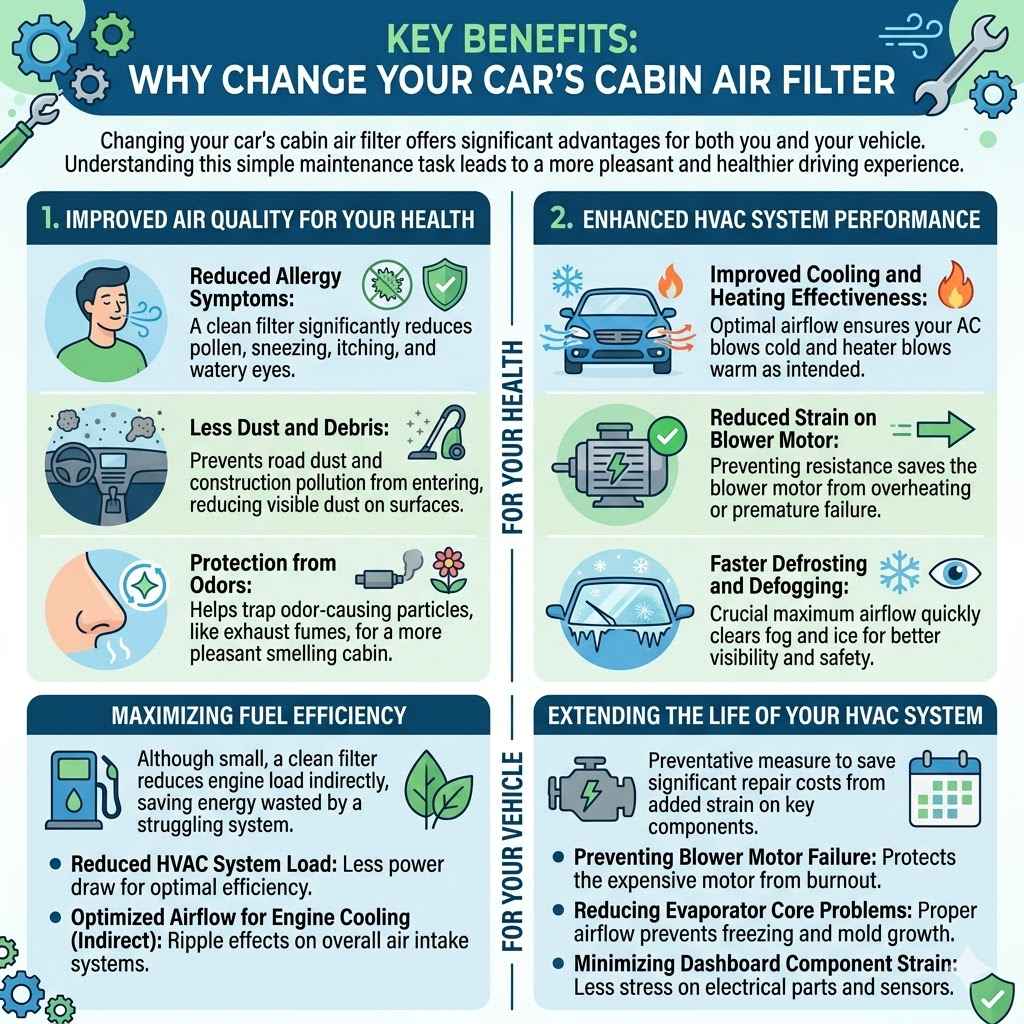
Changing your car’s cabin air filter offers significant advantages for both you and your vehicle. This often-overlooked part plays a vital role in the air quality inside your car. When it becomes clogged with dirt, dust, pollen, and other pollutants, it not only affects the air you breathe but also how efficiently your car’s heating and cooling system works.
Understanding the importance of this simple maintenance task can lead to a more pleasant and healthier driving experience. This section will explore the primary reasons why regular cabin filter replacement is essential.
Improved Air Quality for Your Health
The cabin air filter acts as a barrier, trapping airborne particles before they enter your car’s interior. Over time, this filter can become saturated with dust, pollen, mold spores, and even exhaust fumes. When the filter is dirty, these contaminants can circulate freely within your car.
This can worsen allergies and respiratory issues, making driving uncomfortable or even unhealthy for sensitive individuals. Regularly replacing the filter ensures that the air you breathe is cleaner and fresher.
A clogged filter can also allow smaller particles, like soot and bacteria, to pass through. These tiny particles can be particularly harmful. They can irritate your lungs and throat.
For people with asthma or other breathing problems, this can lead to more frequent attacks or worsened symptoms. Think of it like a sieve; when the holes get blocked, less clean stuff gets through and more junk stays trapped.
- Reduced Allergy Symptoms: Pollen and other allergens are a major concern for many drivers, especially during certain seasons. A clean cabin filter can significantly reduce the amount of pollen that gets into your car. This means less sneezing, itching, and watery eyes while you’re on the road. It helps create a sanctuary from outdoor irritants.
- Less Dust and Debris: Dust from roads, construction sites, and general pollution can quickly accumulate inside your car. A functioning cabin filter prevents most of this dust from entering. This keeps your car’s interior cleaner and reduces the need for frequent dusting. It also means less visible dust on your dashboard and other surfaces.
- Protection from Odors: While not its primary function, a cabin filter can help reduce some odors by trapping odor-causing particles. Exhaust fumes and other unpleasant smells from outside can be kept at bay. A fresh filter contributes to a more pleasant smelling cabin, making your drives more enjoyable.
Enhanced HVAC System Performance
Your car’s heating, ventilation, and air conditioning (HVAC) system relies on the cabin air filter to function properly. A dirty filter restricts airflow, forcing the system to work harder. This can lead to reduced cooling or heating efficiency and increased wear and tear on the system’s components.
A clean filter allows for optimal airflow, ensuring your AC blows cold and your heater blows warm as intended.
When air cannot flow freely, the blower motor has to spin faster and longer to push air through the filter. This extra strain can cause the motor to overheat or wear out prematurely. Replacing the filter regularly can prevent this, saving you from potentially expensive repairs to the HVAC system itself.
It also means you get the desired temperature inside your car much faster.
- Faster Defrosting and Defogging: A clean cabin air filter allows for maximum airflow to your windshield. This is crucial for quickly clearing fog and ice, improving visibility and safety. When the filter is clogged, it takes much longer for warm air to reach the windshield, making it difficult to see in challenging weather.
- Improved Cooling and Heating Effectiveness: With a clean filter, your car’s AC and heater can perform at their best. You’ll feel the cool air circulating more strongly in the summer and the warm air more effectively in the winter. This provides better comfort regardless of the outside temperature and ensures you’re not wasting energy trying to get your system to work.
- Reduced Strain on Blower Motor: The blower motor is responsible for pushing air through your car’s ventilation system. A dirty filter creates significant resistance, making the motor work much harder. This can lead to premature failure of the motor. Replacing the filter protects this component and extends its lifespan, saving you money in the long run.
Maximizing Fuel Efficiency
While the impact might seem small, a dirty cabin air filter can indirectly affect your car’s fuel economy. When the engine is working harder to pull air through a restricted cabin filter, it can sometimes lead to a slight increase in fuel consumption. The relationship is more about the overall system efficiency.
A cleaner system generally means less energy is wasted.
When your HVAC system is struggling due to a clogged filter, it can affect the engine’s overall load. Modern cars have sophisticated systems that manage power distribution. If one component, like the HVAC fan, is drawing excessive power due to resistance, it can subtly influence how the engine performs.
While not a primary factor in fuel consumption, it’s another small way a clean filter helps your car run better.
- Reduced HVAC System Load: As mentioned, a dirty filter makes the HVAC system work harder. This means the system draws more power, which can have a slight effect on fuel efficiency. By keeping the filter clean, you reduce this unnecessary power draw.
- Optimized Airflow for Engine Cooling (Indirect): Although the cabin filter primarily affects interior air, in some vehicle designs, airflow to the engine compartment for cooling can be subtly influenced by overall air intake systems. A restriction anywhere in the air intake path might have minor ripple effects. A clean cabin filter ensures the entire system operates as designed.
Extending the Life of Your HVAC System
Your car’s heating and air conditioning system is a complex piece of machinery. A clogged cabin air filter puts extra stress on key components, particularly the blower motor and the evaporator core. Over time, this added strain can lead to premature wear and eventual failure of these parts.
Regularly replacing the cabin filter is a simple preventative measure that can save you significant repair costs.
The evaporator core, for instance, is a heat exchanger that cools the air. If airflow is poor, moisture can build up, leading to mold and mildew growth, and also potential freezing. A clean filter helps maintain proper airflow, preventing these issues.
This keeps the entire system working efficiently and prevents damage that could necessitate costly repairs or replacements.
- Preventing Blower Motor Failure: The blower motor is directly impacted by the restriction of a clogged filter. It has to work overtime to push air through, leading to overheating and premature burnout. Replacing the filter is a cheap way to protect this expensive component.
- Reducing Evaporator Core Problems: Poor airflow can cause the evaporator core to freeze up or become a breeding ground for mold and bacteria. This not only reduces cooling efficiency but can also lead to unpleasant smells and potential damage. A clean filter maintains proper airflow and helps keep the core functioning optimally.
- Minimizing Dashboard Component Strain: The entire dashboard and HVAC control system are designed to work with a certain level of airflow. When the filter is clogged, the system has to compensate. This can put unnecessary strain on electrical components and sensors related to climate control, potentially shortening their lifespan.
When Should You Change Your Cabin Air Filter
Knowing when to
It’s a good habit to check the filter when you get your oil changed. Most mechanics can easily inspect it for you. If you see a lot of dirt, leaves, or debris trapped in the filter media, it’s definitely time for a
- Manufacturer Recommendations: Always check your car’s owner’s manual for specific recommendations on cabin air filter replacement intervals. This is usually stated in terms of mileage or time, whichever comes first. Adhering to these guidelines is a good starting point.
- Driving Conditions Matter: If you drive in areas with a lot of dust, pollen, or air pollution, your filter will clog faster. For example, driving behind trucks that emit a lot of diesel smoke means your filter is working overtime to clean that out. In such cases, consider replacing it every 6 months or even sooner.
- Noticeable Signs: Pay attention to your car’s performance. If you notice a significant drop in airflow from your vents, a musty smell when you turn on the AC, or if your windows fog up more easily, these are strong indicators that your cabin air filter needs to be replaced.
How to Check and Replace Your Cabin Air Filter
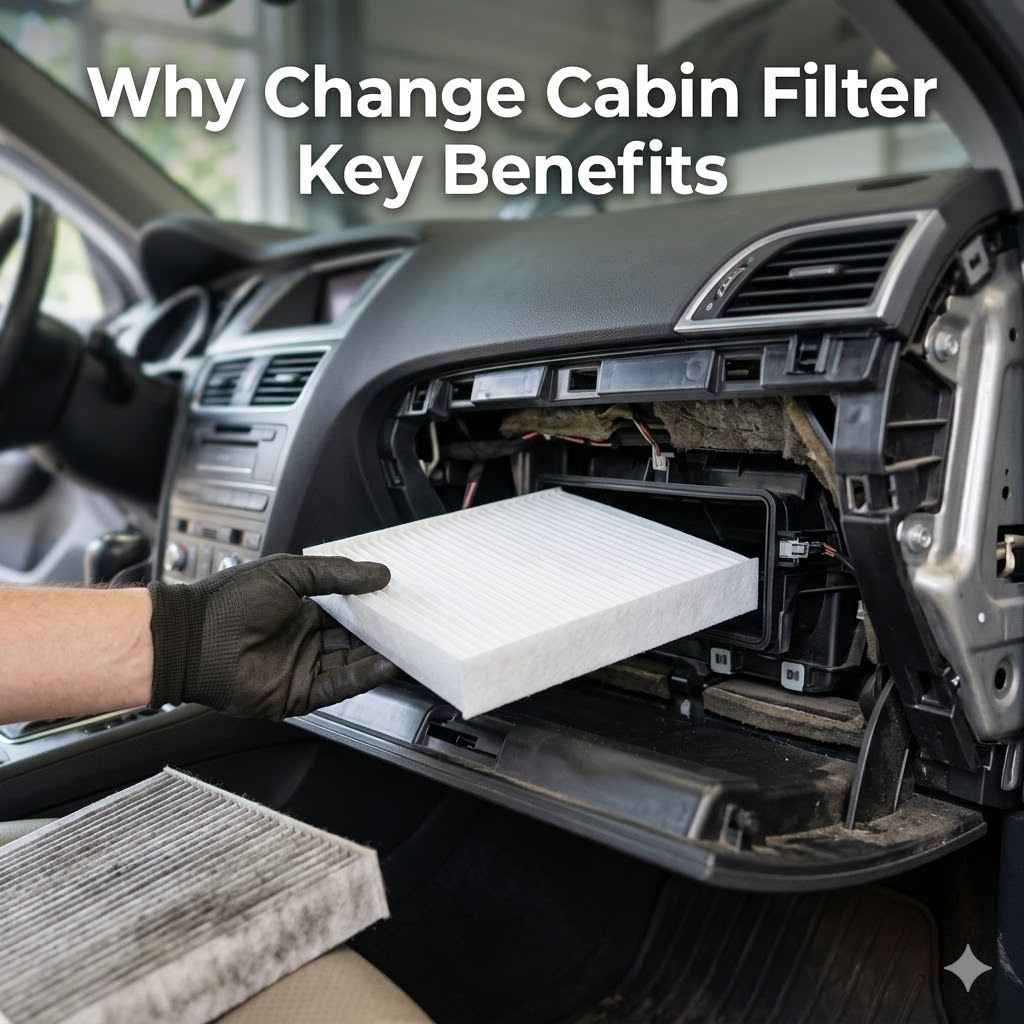
Replacing a cabin air filter is often a straightforward DIY job that most car owners can do themselves. The location of the filter varies by make and model, but it’s commonly found behind the glove box or under the dashboard. You might need a screwdriver or a panel removal tool, but many modern vehicles have tool-free access.
Once you locate it, simply remove the old filter and install the new one, making sure it’s oriented correctly according to the airflow arrows on the filter.
Before you start, it’s helpful to find a video tutorial specific to your car model online. This can show you the exact steps and any quirks of your particular vehicle. Having the new filter ready beforehand is also essential.
It’s a relatively quick task that can save you money on labor costs and ensure you get the benefits of clean air right away.
- Locate the Filter Housing: The cabin air filter is typically found in the passenger compartment. Common locations include behind the glove box, under the dashboard on the passenger or driver’s side, or sometimes near the firewall. Consult your owner’s manual if you’re unsure.
- Remove the Old Filter: Once you find the housing, you’ll usually need to release clips or screws to open it. Carefully pull out the old, dirty filter. Note the direction of the airflow arrow on the old filter, as the new one needs to be installed the same way.
- Install the New Filter: Insert the new cabin air filter into the housing, ensuring the airflow arrow points in the correct direction as indicated by your vehicle or the old filter. Close the housing securely.
Cost-Effectiveness of Replacement
The cost of a cabin air filter is typically quite low, often ranging from $15 to $40 for the part itself. When you consider the cost of potential repairs to your HVAC system caused by a neglected filter, the savings are significant. For example, replacing a blower motor can cost several hundred dollars, while a new evaporator core can cost upwards of $1,000.
The small investment in a cabin air filter provides a substantial return in terms of maintenance prevention.
Labor costs at a mechanic can add another $50 to $150 for replacing the cabin air filter, depending on the vehicle and the shop. Doing it yourself eliminates this labor cost, making it an even more attractive option for budget-conscious car owners. The time it takes to replace it is usually minimal, often under an hour for most DIYers.
- Low Part Cost: A high-quality cabin air filter generally costs between $15 and $40. This is a small price to pay for improved air quality and system protection.
- Avoids Expensive Repairs: Neglecting the cabin air filter can lead to costly issues like a failed blower motor or a damaged AC system. The cost of these repairs can range from hundreds to over a thousand dollars, far exceeding the cost of regular filter replacement.
- DIY Savings: Replacing the filter yourself can save you $50 to $150 in labor costs. It’s a simple maintenance task that empowers car owners to save money and keep their vehicles in good condition.
Examples of Real-World Impact
Consider Sarah, who suffered from severe seasonal allergies. Driving to work became a miserable experience, filled with sneezing and itchy eyes. After her mechanic suggested changing the cabin air filter during an oil change, she noticed a dramatic improvement.
Within a week, her allergy symptoms while driving were significantly reduced. The cleaner air made her commute much more bearable.
Another example is Mark, who noticed his car’s AC was blowing very weakly on hot days. He initially thought he needed an AC recharge. However, upon inspection, his mechanic found a severely clogged cabin air filter.
After replacing it, the AC blew much stronger and cooled the car down quickly. This saved Mark the cost of an unnecessary AC service and ensured his system worked correctly.
- Allergy Sufferer’s Relief: A user on an online car forum shared how replacing their cabin air filter after years of neglect completely transformed their driving experience. They reported a significant reduction in sneezing and congestion, especially during pollen season. This simple act made them feel healthier inside their car.
- Weak AC Performance Resolved: A small business owner noticed their delivery van’s air conditioning was struggling to keep up during summer deliveries. They assumed a major AC repair was needed. A quick inspection revealed a filthy cabin filter, which, upon replacement, restored the AC’s full cooling power. This prevented lost productivity due to driver discomfort.
- Improved Driving Comfort in Dusty Areas: Someone living in a rural area with unpaved roads found that dust was constantly entering their car. After consistently changing their cabin air filter every six months, they noted a significant decrease in dust on their dashboard and a fresher smell in the cabin, leading to a more pleasant driving environment.
Sample Scenarios
-
Scenario 1: The Seasonal Allergy Sufferer
You suffer from pollen allergies. Every spring and summer, driving becomes difficult due to sneezing and watery eyes. You’ve tried various air purifiers for your home but haven’t thought much about your car.
Solution: You decide to change your cabin air filter at the beginning of allergy season. You find a filter online and watch a quick video for your car model. After easily swapping out the old, gray filter for a new white one, you immediately notice a difference. The air coming from your vents feels cleaner, and your allergy symptoms while driving are greatly reduced, allowing you to enjoy your commutes again. -
Scenario 2: The Faint Airflow Issue
You’ve noticed that the air coming from your car’s vents, whether hot or cold, doesn’t blow very strongly anymore. It takes a long time for the car to reach your desired temperature. You’re worried it might be a serious issue with your AC or heater.
Solution: Before scheduling an expensive mechanic visit, you decide to check your cabin air filter. You discover it’s packed with leaves and dirt. After replacing it, the airflow from the vents returns to its original strong setting. Your car heats up and cools down much faster, and you realize a simple filter
Common Misconceptions About Cabin Air Filters
There are a few common ideas people have about cabin air filters that aren’t quite right. Some people think that if their car’s AC still blows air, the filter must be fine. Others believe that only very old cars need them replaced.
The truth is, even new cars benefit from regular changes, and a clogged filter can still blow air, just not very effectively or cleanly.
Another misconception is that cabin air filters are the same as engine air filters. While both are filters, they serve different purposes. The engine air filter protects the engine from dirt, while the cabin air filter protects the occupants of the car from airborne contaminants.
They are not interchangeable, and both need proper maintenance.
- Myth: If air blows, the filter is fine. This is not true. A clogged filter restricts airflow, but it doesn’t stop it completely. The air quality inside your car will suffer, and your HVAC system will work harder.
- Myth: Cabin air filters are only for people with allergies. While allergy sufferers benefit the most, everyone breathes the air inside their car. A clean filter benefits everyone by removing dust, soot, and other pollutants.
- Myth: Cabin air filters last forever. These filters are designed to trap particles and become saturated over time. They need regular replacement to remain effective.
Cabin Air Filter Types and Their Differences
There are generally two main types of cabin air filters: standard and activated carbon (or premium) filters. Standard filters are made of pleated paper or synthetic material and are designed to trap larger particles like dust and pollen. Activated carbon filters go a step further by incorporating a layer of activated carbon.
This carbon layer is highly porous and effective at adsorbing gases and odors, making them ideal for drivers who want to eliminate smells from exhaust fumes, pet odors, or general air pollution.
The choice between the two often depends on your priorities and budget. Standard filters are usually less expensive, while activated carbon filters offer superior odor and gas filtration. If you live in a heavily polluted area, drive in city traffic frequently, or are particularly sensitive to smells, an activated carbon filter might be a worthwhile upgrade.
Both types need to be replaced at regular intervals to maintain their effectiveness.
- Standard Filters: These are the most common type. They are effective at trapping larger particles like dust, pollen, and leaves. They provide a basic level of air filtration for your car’s interior.
- Activated Carbon Filters: These filters have an extra layer of activated carbon. This layer absorbs odors, gases, and fumes from the air. They are excellent for improving air quality in polluted environments or for eliminating unpleasant smells.
- HEPA Filters: Some advanced filters offer HEPA (High-Efficiency Particulate Air) filtration, which can trap even smaller particles, including bacteria and viruses. While more expensive, they provide the highest level of air purity.
Statistics on Cabin Air Filter Impact
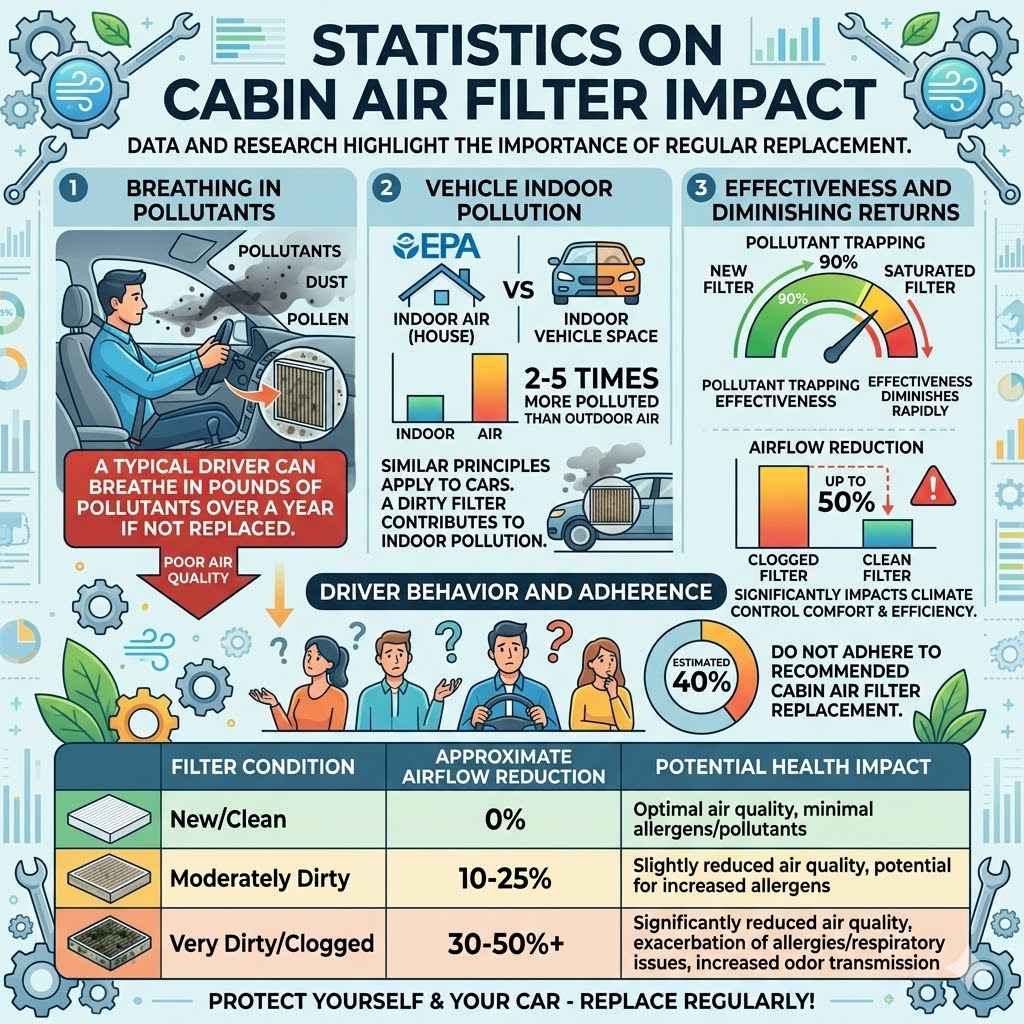
Studies and industry data highlight the importance of cabin air filters. For instance, a typical driver can breathe in pounds of pollutants over a year if their cabin filter is not replaced. The Environmental Protection Agency (EPA) notes that indoor air can be two to five times more polluted than outdoor air.
While this refers to homes, similar principles apply to enclosed vehicle spaces. A dirty cabin air filter can contribute to this indoor pollution.
Some reports suggest that as much as 90% of vehicle pollutants can be trapped by a cabin air filter. However, this effectiveness diminishes rapidly as the filter becomes saturated. Research indicates that a clogged cabin air filter can reduce airflow to the HVAC system by up to 50%.
This significant reduction directly impacts the comfort and efficiency of your car’s climate control system.
A survey revealed that a surprising number of drivers (estimated to be around 40%) do not adhere to recommended cabin air filter
| Filter Condition | Approximate Airflow Reduction | Potential Health Impact |
|---|---|---|
| New/Clean | 0% | Optimal air quality, minimal allergens/pollutants |
| Moderately Dirty | 10-25% | Slightly reduced air quality, potential for increased allergens |
| Very Dirty/Clogged | 30-50%+ | Significantly reduced air quality, exacerbation of allergies/respiratory issues, increased odor transmission |
Frequently Asked Questions
Question: How often should I change my cabin air filter
Answer: Most car manufacturers recommend changing your cabin air filter every 12,000 to 15,000 miles or at least once a year. However, you may need to replace it more often if you drive in dusty or polluted areas.
Question: Can I replace my cabin air filter myself
Answer: Yes, in most cases, replacing a cabin air filter is a simple DIY task. You can usually find tutorials online specific to your car model.
Question: What happens if I don’t change my cabin air filter
Answer: Not changing your cabin air filter can lead to poor air quality inside your car, worsening allergies and respiratory issues. It can also reduce your HVAC system’s efficiency and potentially cause damage to its components.
Question: How much does a cabin air filter replacement cost
Answer: The part itself typically costs between $15 and $40. If you have a mechanic do it, expect to pay an additional $50 to $150 for labor, depending on the vehicle and shop.
Question: Are cabin air filters the same as engine air filters
Answer: No, they are different. The cabin air filter cleans the air you breathe inside the car, while the engine air filter cleans the air going into the engine for combustion.
Summary
Replacing your cabin air filter is a simple yet vital maintenance task. It directly improves the air quality inside your car, reducing allergens and pollutants for a healthier drive. It also ensures your car’s heating and cooling system works efficiently and lasts longer, saving you money on repairs and fuel.
Make it a habit to check and replace your filter regularly to enjoy these key benefits.