Why Is My 2015 Equinox Clock Losing Time?
It can be a little confusing when the clock in your 2015 Equinox starts losing time. You might think it’s a big problem, but often it’s something simple to fix. Many car owners run into this issue, and it can seem tricky at first. Don’t worry, though. We’ll walk through it step by step and get your clock running right again. You’ll learn what’s happening and how to solve it easily.
Common Causes for a 2015 Equinox Clock Losing Time
This section explores why your 2015 Equinox clock might be losing time. It covers various issues that can affect the accuracy of your car’s internal clock. We will look at both simple and more complex reasons.
Battery Issues and Clock Accuracy
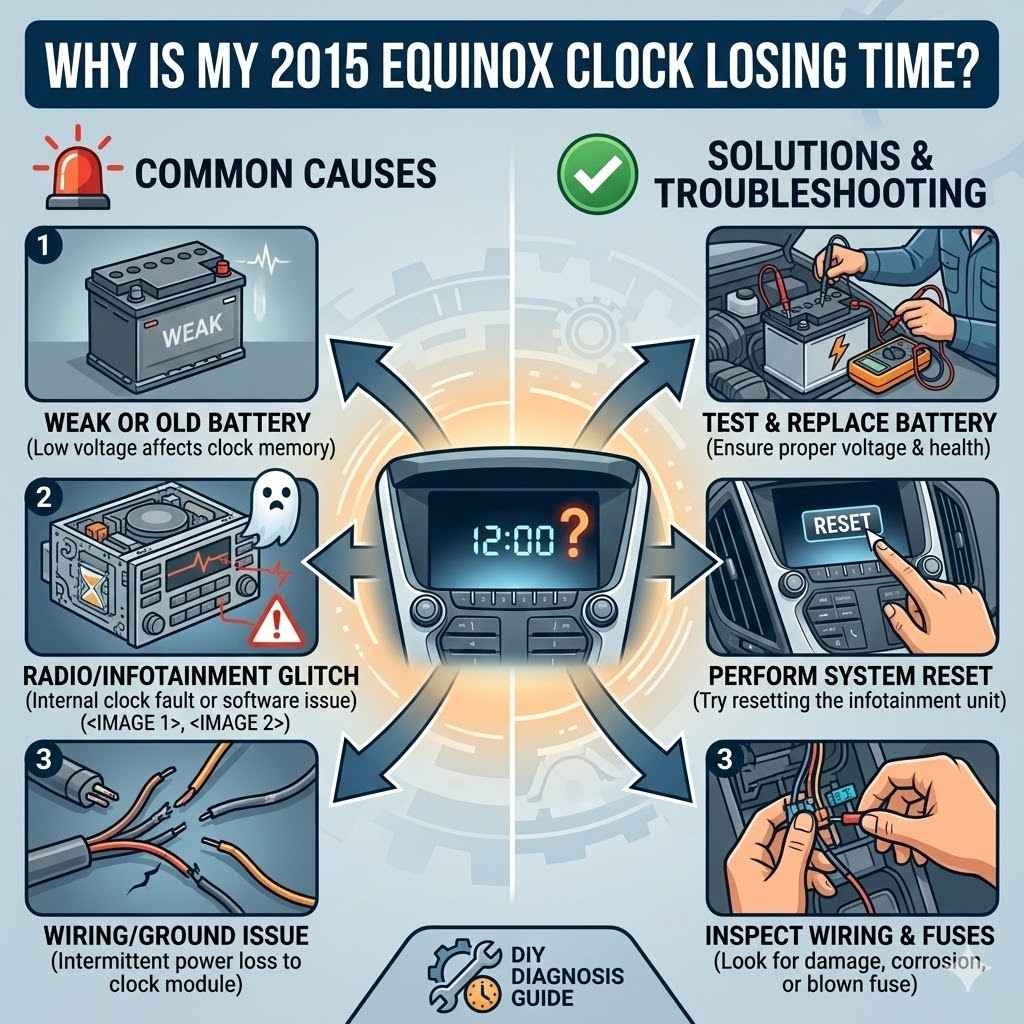
The car battery is vital for all electronic systems, including the clock. When a battery starts to age or has low voltage, it can cause electrical fluctuations. These fluctuations might affect how consistently the clock keeps time. A weak battery can lead to the clock slowing down or even resetting.
A weak battery can cause voltage drops.
When the voltage level in your car drops below a certain point, the clock’s internal mechanism might not get enough power to run at the correct speed. This can make it appear as though it is losing time.
Corroded battery terminals are a problem.
Corrosion on the battery terminals can block the flow of electricity. Even if the battery itself is good, poor connections can result in inconsistent power delivery to the clock and other car systems.
The age of the battery matters.
Car batteries typically last between 3 to 5 years. If your battery is older than this, it’s more likely to cause electrical issues. Replacing an old battery can resolve many odd electronic glitches.
Internal Clock Mechanism Faults
Every car has an internal clock mechanism, often part of the infotainment system or dashboard. Like any mechanical or electronic device, this mechanism can develop faults over time. These faults can impact its ability to keep accurate time.
Component wear and tear.
Over years of use, small electronic components within the clock module can wear out. This wear can cause them to function less efficiently, leading to time discrepancies.
Software glitches.
Modern car clocks are controlled by software. Sometimes, this software can encounter minor bugs or errors. These bugs might cause the clock to drift or lose time. A software update or a reset could fix this.
Environmental factors.
Extreme temperatures, both hot and cold, can sometimes affect the performance of electronic components. This could indirectly influence the clock’s accuracy, especially if the vehicle is frequently exposed to harsh weather.
Power Supply Fluctuations to the Clock
The clock receives its power from the car’s electrical system. If this power supply is not steady, the clock will not keep accurate time. This is different from a general battery issue, focusing specifically on how power reaches the clock module.
Wiring problems.
Loose or damaged wiring connected to the clock can interrupt a steady power flow. This could be a wire that has come undone or a section that has become frayed.
Fuse issues.
A partially blown or damaged fuse related to the clock or infotainment system can also cause irregular power. The fuse might still allow some power through but not enough for stable operation, leading to time loss.
Grounding issues.
A poor ground connection can also disrupt electrical signals. The clock needs a good ground to function correctly, and if this connection is weak or faulty, it can lead to operational problems, including timekeeping.
External Time Syncing Problems (If Applicable)
Some modern cars have systems that can sync their clocks with external sources, like GPS satellites or radio signals. If this syncing feature is not working correctly, the clock might rely solely on its internal mechanism, which could be less accurate.
GPS signal interference.
If your car’s clock syncs via GPS, any interference with the GPS signal can prevent it from updating. This could be due to tunnels, parking garages, or even atmospheric conditions.
Radio signal issues.
Some systems use radio signals for time updates. If these signals are weak or blocked, the clock won’t receive the correct time information.
Infotainment system glitches.
The part of the car’s system that manages time syncing might also experience occasional software problems. This can stop the automatic updates from happening.
Diagnosing Why Is My 2015 Equinox Clock Losing Time
This section provides a step-by-step approach to figure out exactly why your 2015 Equinox clock is losing time. We will cover simple checks you can do yourself.
Checking Your Car Battery Health
Before anything else, it’s wise to check your car’s battery. A failing battery is a common culprit for many electrical quirks. You don’t need to be a mechanic to do a basic check.
Visual inspection of the battery.
Look at the battery itself. Are the terminals clean and free of white or bluish powdery buildup (corrosion)? If you see corrosion, it can be cleaned off.
Checking battery age.
Most batteries have a manufacturing date code on them. If your battery is over 3-5 years old, it might be nearing the end of its life and could be the source of power issues.
Testing battery voltage.
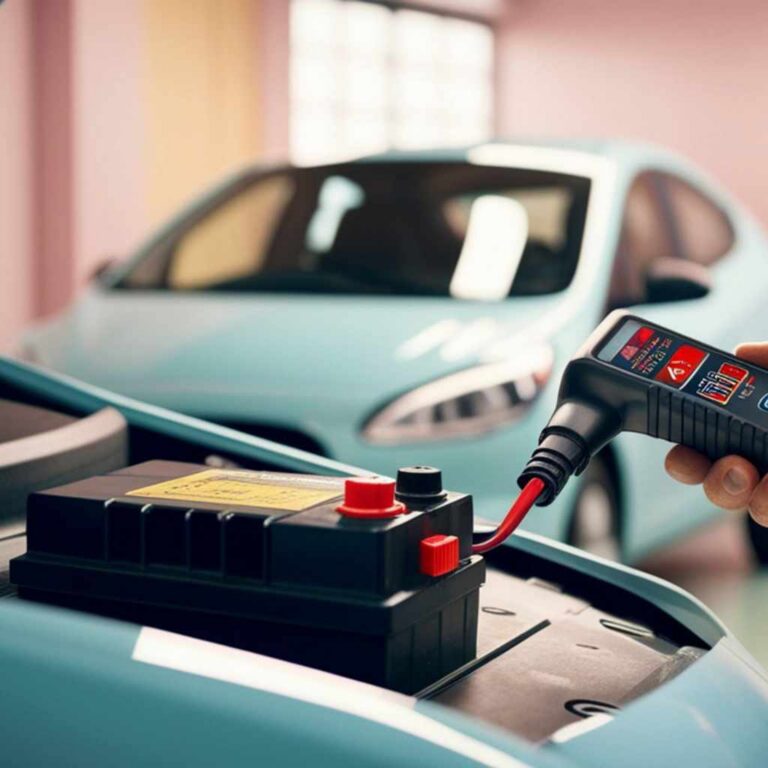
If you have a multimeter, you can test the battery voltage. A fully charged battery should read around 12.6 volts when the car is off. A reading significantly lower might indicate a problem.
Inspecting Fuses and Wiring
The next step involves looking at the fuses and wiring related to your clock. This can be a bit more involved, but it’s still manageable for most car owners.
Locate the fuse box.
Your 2015 Equinox has fuse boxes, usually under the dashboard or in the engine compartment. Your owner’s manual will show you where they are and which fuse relates to the clock or infotainment system.
Check the relevant fuses.
Pull out the fuse labeled for the clock or radio. Look at the metal strip inside. If it’s broken, the fuse is blown and needs
Examine visible wiring.
Carefully check any wires you can easily see leading to the dashboard or infotainment screen. Look for any signs of damage, fraying, or loose connections. Be gentle when touching wires.
Resetting the Clock and Infotainment System
Sometimes, a simple reset can fix software glitches that cause the clock to lose time. This is often the easiest fix.
Accessing the clock settings.
Go into your car’s menu settings. Find the clock or time display option. Many cars have a way to manually set the time, and often a reset function is also available.
Performing a soft reset.
Many infotainment systems have a “soft reset” option within their settings menu. This reboots the system without affecting your car’s main functions. Consult your owner’s manual for specific instructions.
Performing a hard reset (battery disconnect).
As a last resort for software issues, you can disconnect the car battery for about 15-30 minutes. This forces all electronic systems, including the clock, to reboot. Remember to reconnect it properly afterward.
When to Seek Professional Help
If you’ve tried the above steps and your 2015 Equinox clock is still losing time, it’s time to call a professional. Some issues require specialized tools and knowledge.
Persistent accuracy problems.
If the clock continues to be inaccurate after your checks, there might be a deeper electrical fault. This could be a problem with the main control module or a more complex wiring issue.
Uncertainty about the process.
If you are not comfortable checking fuses or wiring, it’s always best to let a qualified mechanic handle it. They have the expertise to diagnose and fix these problems safely.
Complex system failures.
When the clock losing time is accompanied by other electronic issues in the car, it signals a more significant problem. A professional can diagnose the entire system to find the root cause.
Understanding the Electrical System of Your 2015 Equinox
This section explains how the electrical system in your 2015 Equinox works. Knowing this helps you understand why components like the clock behave the way they do.
The electrical system in your 2015 Equinox is a complex network that powers everything from your headlights to the radio and the clock. At its heart is the car battery, which stores electrical energy. The engine’s alternator recharges the battery while the engine is running, ensuring a continuous power supply. This power is distributed through a system of wires, fuses, and relays. Fuses are safety devices that protect electrical components from damage by blowing and breaking the circuit if too much electricity flows through them. Relays act like electrical switches, controlling higher-power circuits with a low-power signal.
The clock itself is a small electronic device, usually integrated into the vehicle’s dashboard or infotainment unit. It relies on a steady flow of 12-volt DC (Direct Current) power from the battery. This power supply is managed through various control modules that govern how and when different components receive electricity. For example, the Body Control Module (BCM) often manages many interior electronics, including the clock display and its timekeeping functions. Any interruption or fluctuation in this power delivery can impact the clock’s ability to maintain accurate time.
The Role of the Alternator
The alternator is crucial for keeping your car’s electrical system running smoothly. It acts like a small power generator. When the engine is on, the alternator spins and creates electricity. This electricity does two main things: it powers all the car’s electrical systems, and it recharges the battery.
Charging the battery.
The battery stores power, but it needs to be replenished. The alternator ensures the battery stays charged so it can provide power when the engine is off. Without a working alternator, the battery would eventually die.
Providing power to components.
While the engine is running, the alternator is the primary source of electricity for your car. This includes the lights, radio, air conditioning, and of course, the clock. A faulty alternator might not supply enough power, causing other systems to behave strangely.
Regulating voltage.
The alternator has a voltage regulator to ensure it doesn’t overcharge the battery or send too much voltage to sensitive electronics. If this regulator fails, it can cause unstable power, which is bad for the clock.
Understanding Fuses and Relays
Fuses and relays are vital safety and control components in your car’s electrical system. They work together to protect your car’s electronics and manage power flow.
Fuses as circuit protectors.
A fuse contains a thin wire designed to melt and break if too much electrical current flows through it. This protects the device connected to that circuit from being damaged by an overload. Your clock will have a fuse, often shared with other dashboard elements.
Relays for efficient power control.
Relays are electrically operated switches. They use a small amount of power to control a much larger amount of power. For example, a relay might turn on your headlights, allowing a low-power switch in the cabin to control the high-current headlights.
Identifying blown fuses.
You can identify a blown fuse by looking at the wire inside. If it’s broken, the fuse needs
The Vehicle’s Control Modules
Modern vehicles like your 2015 Equinox use sophisticated control modules. These are like tiny computers that manage specific functions of the car.
Body Control Module (BCM).
The BCM is a major computer that oversees many interior functions. This includes things like interior lights, power locks, and often the clock and radio settings. If the BCM has an issue, it can affect multiple systems.
Infotainment system integration.
Your car’s clock is typically part of a larger infotainment system. This system manages the display, audio, navigation, and often the clock synchronization. Problems with the infotainment unit can directly impact the clock.
Software updates and glitches.
These modules run on software. Like any computer, they can experience glitches or require updates. Sometimes, a simple software issue can cause a clock to lose time, and a reset or update might be the fix.
Troubleshooting Specific 2015 Equinox Clock Issues
This part focuses on common specific problems you might see with your 2015 Equinox clock losing time and how to solve them.
Intermittent Time Loss
Sometimes the clock might lose time only occasionally. This is often a sign of an unstable power supply.
Loose connections.
A wire that is not securely connected can cause power to be lost intermittently. This might happen when the car goes over bumps or when temperature changes cause parts to expand or contract slightly.
Flickering dash lights.
If you notice other dashboard lights flickering at the same time your clock loses time, it points to a power supply problem. This could be related to the alternator or a weak battery.
Random resets.
If the clock not only loses time but also resets itself completely, it’s a stronger indicator of a power issue. This usually means the clock is losing power for brief moments.
Clock Losing Several Minutes Per Day
If your clock is losing a significant amount of time every day, it suggests a more consistent problem.
Internal clock fault.
The quartz crystal or other timing components inside the clock module might be failing. These components dictate the clock’s accuracy.
Constant voltage drop.
A continuous, small voltage drop in the power supply can cause the clock to run slower over time. This might be due to a failing component in the power delivery system.
Software drift.
In rare cases, software programming errors can cause a gradual drift in timekeeping. This is less common but possible with integrated electronic systems.
Clock Not Setting Properly
Sometimes, the problem isn’t losing time but the inability to set it correctly in the first place.
Infotainment system freeze.
If the infotainment system is frozen or unresponsive, you won’t be able to access the settings to adjust the clock. A system reboot might be necessary.
Buttons or touchscreen not working.
If the physical buttons or touchscreen used to set the clock are malfunctioning, you won’t be able to make changes. This could be a hardware issue with the input device.
Time sync conflict.
If your car is trying to sync the time automatically but failing, it might prevent manual adjustments. Disabling automatic sync might allow you to set it manually.
Example: A Common Scenario
Let’s say you notice your 2015 Equinox clock is always about 15 minutes behind the actual time by the end of the week. You check your battery and it’s four years old and shows some corrosion on the terminals. After cleaning the terminals and ensuring they are tight, you drive for a few days. The clock is now much more accurate, only losing a minute or two over the week. This suggests the corroded terminals were causing a voltage issue that affected the clock’s steady operation.
Another Scenario: The Infotainment Glitch
Imagine your 2015 Equinox clock keeps jumping forward an hour unexpectedly, then later loses 30 minutes. You try to set it, but the touchscreen is sluggish. You decide to perform a soft reset of the infotainment system through the car’s settings menu. After the system restarts, you set the clock again. Over the next week, it stays accurate. This indicates a temporary software glitch within the infotainment unit was causing the erratic time behavior.
Resources and Further Steps
Here are some additional resources and steps you can take if you continue to have trouble with your 2015 Equinox clock.
Consult your owner’s manual.
Your 2015 Equinox owner’s manual is the best first resource. It has specific information about your vehicle’s systems, including how to adjust the clock and where to find fuses.
Online forums and communities.
Many online forums are dedicated to specific car models like the Equinox. Searching these communities can often provide insights from other owners who have faced similar issues and found solutions.
Reputable automotive repair shops.
If you’re not comfortable performing the checks yourself, a trustworthy mechanic can diagnose and repair the problem. They have the tools and expertise to handle electrical issues.
Dealership service center.
For complex issues or if your vehicle is still under warranty, the dealership service center is a good option. They have specialized knowledge and parts for your specific model.
Frequently Asked Questions
Question: How do I set the clock in my 2015 Equinox?
Answer: To set the clock, access the vehicle’s infotainment system menu. Look for settings related to “Clock” or “Time.” You can then manually adjust the hours and minutes. Your owner’s manual will provide the exact steps for your model.
Question: Can a dead battery cause my clock to lose time?
Answer: Yes, a weak or dying battery can cause voltage fluctuations. These fluctuations can affect the clock’s ability to keep accurate time, often making it lose minutes or even reset.
Question: What is the fuse number for the clock in a 2015 Equinox?
Answer: The specific fuse number can vary. You should consult your 2015 Equinox owner’s manual for the fuse box diagram. It will indicate which fuse controls the clock or the infotainment system.
Question: Should I disconnect the battery to reset the clock?
Answer: Disconnecting the battery for about 15-30 minutes can reset the clock and infotainment system. This is a common troubleshooting step for software glitches. Ensure you reconnect the battery terminals securely afterward.
Question: Is it normal for a car clock to lose time over weeks?
Answer: While some minor drift can occur over a very long period, a car clock losing several minutes a week is not typical. It usually indicates an underlying issue with the power supply or the clock’s internal mechanism.
Summary
Addressing why your 2015 Equinox clock loses time often involves checking the battery, fuses, and wiring. Simple resets can fix software glitches. If problems persist, professional diagnosis may be needed. Your car’s electrical system and its components play a key role in accurate timekeeping.