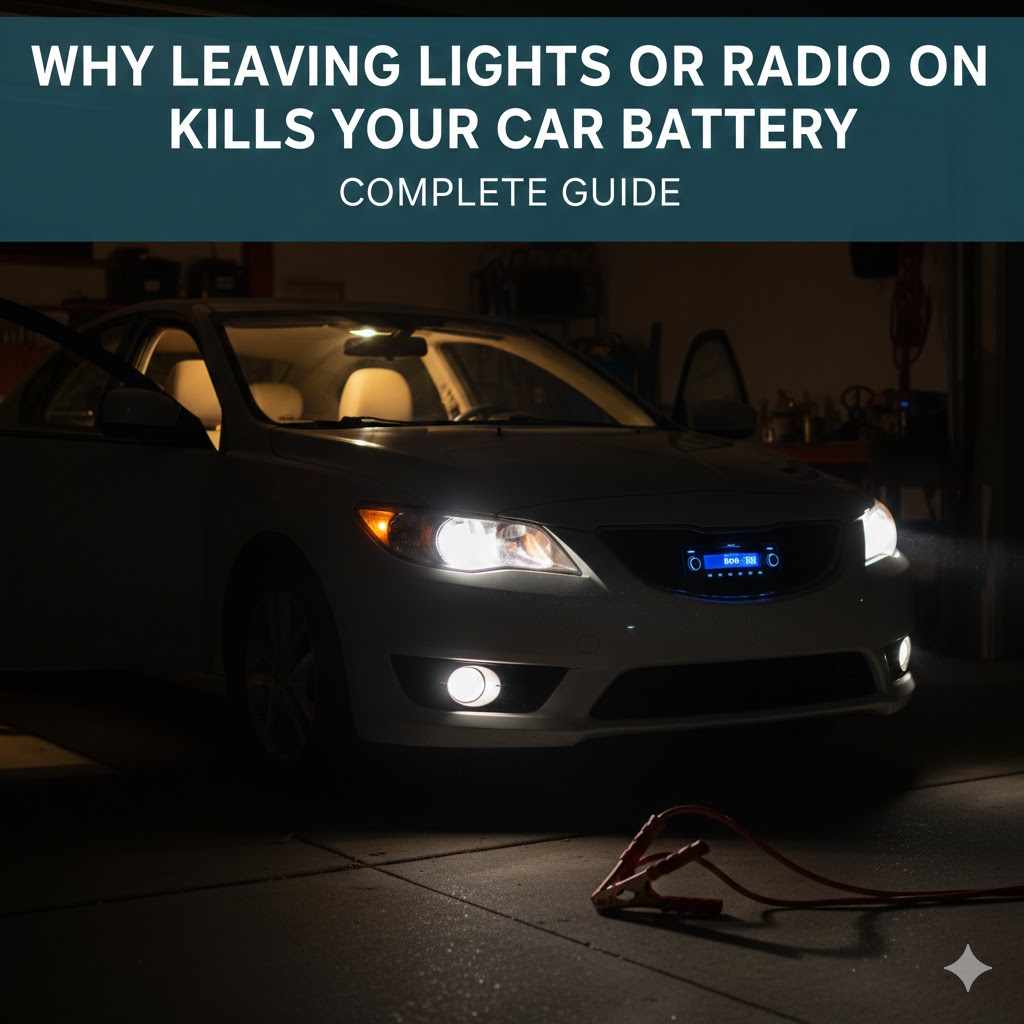
Why Leaving Lights Or Radio On Kills Your Car Battery
It’s a common oops moment for many drivers, especially those just starting out. You dash into a store, forget to turn off the headlights or the radio, and later, your car won’t start. That sinking feeling is understandable.
This guide breaks down exactly Why Leaving Lights Or Radio On Kills Your Car Battery in simple terms. We’ll walk through it step-by-step so you can avoid this frustration again. Let’s get your car back on the road.
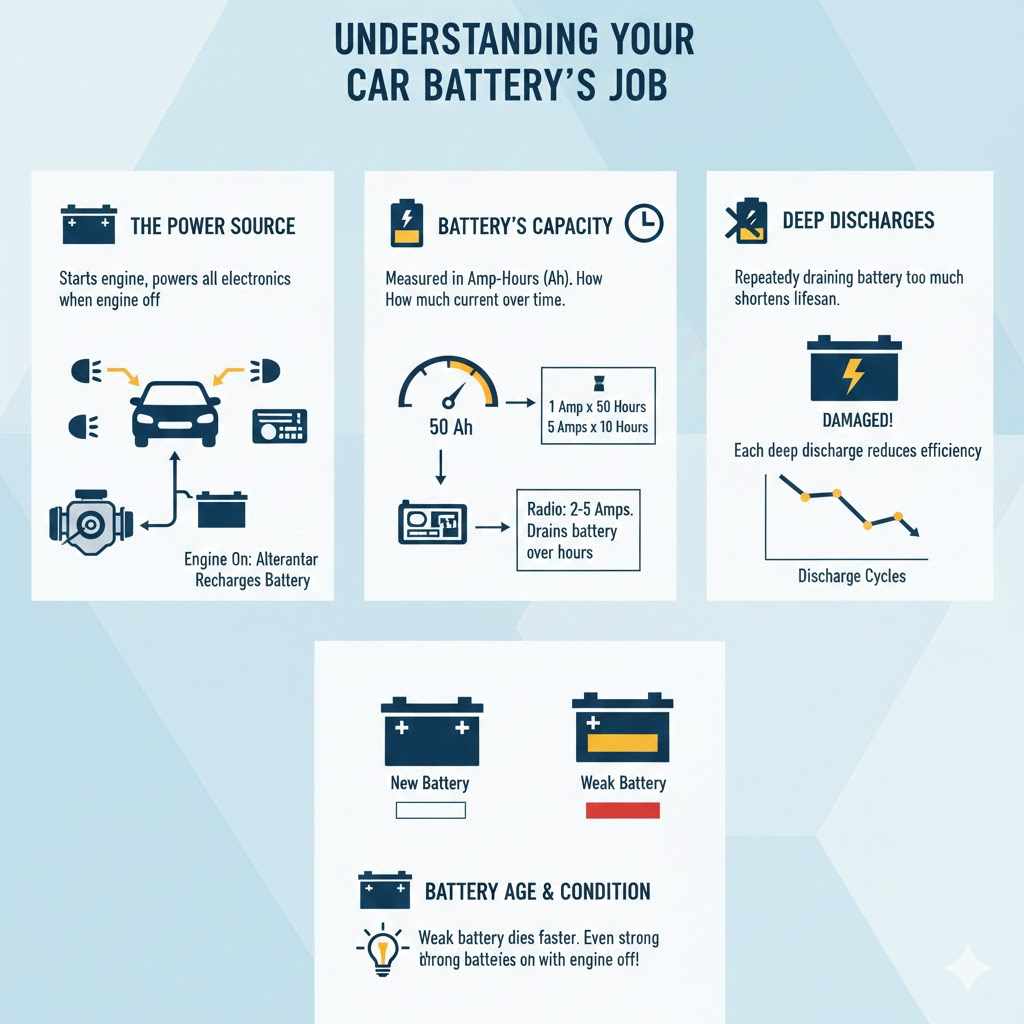
Understanding Your Car Battery’s Job
Your car battery is the heart of your vehicle’s electrical system. It’s not just for starting the engine; it powers everything from your headlights and radio to your dashboard lights and anti-lock brakes when the engine isn’t running. Think of it like a rechargeable energy tank.
When the engine is on, the alternator recharges this tank. However, when the engine is off, the battery has to do all the work of supplying power to anything you leave switched on.
The Battery’s Capacity
A car battery has a limited capacity, measured in amp-hours (Ah). This tells you how much current it can supply over a certain period. For example, a battery rated at 50Ah could theoretically supply 1 amp for 50 hours, or 5 amps for 10 hours.
When you leave accessories like lights or the radio on, they draw power from this limited reserve.
- Amp-Hours Explained
- Amp-hours are a unit of electrical charge. They indicate the amount of energy a battery can store and deliver. A higher amp-hour rating means the battery can power devices for a longer time before running out of juice.
- For instance, a car radio might draw about 2-5 amps when playing. Leaving it on for several hours can significantly deplete a healthy battery’s stored energy.
- Deep Discharges
- A car battery is designed for short bursts of high current to start the engine and then to be kept topped up by the alternator. Repeatedly draining the battery too much, known as a deep discharge, can damage its internal components over time. Each deep discharge makes the battery less efficient and shortens its overall lifespan.
- Battery Age and Condition
- Older batteries or those in poor condition have a reduced capacity. They can’t hold as much charge as a new battery. This means they will die much faster if you leave anything on.
A weak battery might only last an hour or two, while a strong one could potentially last much longer, but even a strong one will eventually be drained.
Why Leaving Lights On Drains Your Battery
Headlights are some of the biggest power consumers in your car. They are designed to be bright enough to see by, which requires a significant amount of electrical energy. When you accidentally leave them on overnight or for an extended period, they are constantly drawing a large amount of amperage from your car battery.
Headlight Power Draw
Most headlights use bulbs that draw around 5 to 10 amps each. If both headlights are on, that’s 10 to 20 amps being pulled from the battery every hour. This can quickly drain even a fully charged battery.
For example, if your headlights draw 15 amps and you leave them on for 6 hours, that’s a total of 90 amp-hours consumed. A typical car battery might have a reserve capacity of around 50-70 amp-hours. This means leaving your lights on for just a few hours could completely drain it.
- Interior Lights
- Don’t forget about interior dome lights or vanity mirror lights. While individually they draw less power than headlights, they can still contribute to battery drain, especially if left on for a long time. Over several hours, even these small drains add up and can be enough to prevent your car from starting.
- Automatic Light Features
- Some modern cars have automatic headlights that turn on at dusk and off at dawn. While convenient, these systems can sometimes malfunction or be accidentally overridden, leading to lights being left on longer than intended. Always double-check your dashboard to confirm your lights are off when you leave the vehicle.
- Parking Lights
- Parking lights are less power-hungry than headlights but can still drain a battery over a long period. They are often left on when parking on the street to make the car visible. If left on all night, they can drain the battery, especially in older vehicles with less efficient electrical systems.
The Radio’s Impact On Your Car Battery
Listening to your car’s stereo system, especially with the engine off, is another common reason for a dead battery. Radios and sound systems, particularly those with powerful amplifiers or subwoofers, can consume a surprising amount of electricity.
Stereo System Power Consumption
A standard car radio might draw about 2-5 amps while playing. This might seem small compared to headlights. However, if you’re listening to music for a few hours, this constant draw adds up quickly.
Consider this scenario: you’re waiting for someone and decide to listen to the radio. If your radio draws 3 amps and you listen for 4 hours, that’s 12 amp-hours used. While this alone might not kill a healthy battery, it’s a significant chunk of its capacity.
If the battery is older or you also forgot other items, this could be the tipping point.
- Aftermarket Stereos and Amps
- Many people upgrade their car’s audio system with more powerful stereos, extra speakers, or amplifiers. These components significantly increase the power draw. An amplifier, in particular, can draw 10-30 amps or even more, depending on its power output.
- Leaving such a system on for even an hour or two can severely drain a battery.
- Standby Power Draw
- Even when the radio is “off,” many modern car stereos have a small standby power draw to maintain memory settings, clock information, or to be ready for instant power-on. While this draw is minimal, it’s a constant drain. If the battery is already weakened, this small, continuous draw can contribute to its eventual depletion.
- Subwoofers and Bass
- Systems with subwoofers, designed to produce deep bass sounds, often require a lot of power. Producing those low frequencies is an energy-intensive process. If you enjoy loud music with heavy bass while the engine is off, your battery is working overtime and can be drained much faster than you might expect.
- Other Electrical Accessories That Drain Batteries
It’s not just lights and radios that can cause your car battery to die. Many other electrical accessories, often overlooked, can also silently drain your battery’s power, especially if they have a faulty switch or are left on accidentally.
Common Culprits
Think about things like power windows, the interior light that stays on when a door is ajar, or even a faulty alarm system. These components are designed to draw power only when needed, but malfunctions can cause them to draw power constantly.
For instance, a door switch that doesn’t correctly signal that the door is closed will keep the interior light on. This might seem minor, but over a long night, it’s another significant power drain. In one case, a driver returned to a dead car after leaving a glove compartment light on.
The glove compartment light itself is small, but the prolonged drain was enough to kill the battery overnight.
- Power Outlets and USB Chargers
- These are convenient for charging phones and other devices. However, if a device is plugged in and drawing power, and the car is turned off, it’s draining the battery. Some chargers even draw a small amount of power when no device is connected, a “phantom draw.” It’s best to unplug chargers when not in use, especially if you know the car will be parked for a long time.
- Aftermarket Alarms and Remote Starters
- While designed for security and convenience, these systems are connected directly to the car’s electrical system and can draw power constantly when armed. If they are improperly installed or develop a fault, they can cause a significant drain. A malfunctioning alarm might repeatedly try to activate, consuming a lot of battery power.
- Faulty Relays or Switches
- Sometimes, a component might not be turned on, but a faulty relay or switch keeps the circuit active, drawing power. This is known as parasitic draw. A mechanic can test for this by checking the amperage draw from the battery with the car off.
Even a small, constant draw can drain a battery over days or weeks.
How Long Can Lights Or Radio Drain A Battery
The time it takes for lights or the radio to drain a car battery depends on several factors. These include the battery’s age and condition, the size of the battery (its amp-hour rating), and how much power the specific accessory is drawing. A healthy, large battery can often withstand a few hours of accessory use, while an older, smaller battery might be drained in less than an hour.
Battery Health Matters
A brand-new battery with a high CCA (Cold Cranking Amps) rating and a good reserve capacity will last much longer than a three-year-old battery that has been through many charge and discharge cycles. Battery testing services at auto parts stores can give you a good idea of your battery’s current health.
Consider this: a car with a fully charged, 60Ah battery and new headlights drawing 7 amps each. If both lights are left on, that’s 14 amps. The battery has about 60Ah to give.
So, theoretically, 60Ah divided by 14A is roughly 4.2 hours until the battery is completely drained. This is a simplified example; real-world conditions and battery performance can vary.
- Typical Drain Times
- For headlights alone, a healthy battery might last 4-8 hours before becoming too weak to start the engine. For a car radio playing at a moderate volume, it could last 8-12 hours or more. However, combining these or using more powerful accessories significantly reduces these times.
- Leaving them on overnight (8-10 hours) is a very common way to kill a battery.
- The Role of Temperature
- Cold weather can exacerbate battery issues. Batteries are less efficient in the cold, meaning they can’t deliver as much power, and their capacity is reduced. So, leaving lights on in freezing temperatures might drain the battery even faster than in warmer weather.
- A weak battery is even more susceptible to failure in the cold.
- Preventing Drain
- The simplest way to prevent battery drain is to make a habit of checking and turning off all lights and accessories before exiting your vehicle. Some cars have audible warnings if lights are left on, but these are not universal. Regular battery maintenance and testing are also key to ensuring its optimal performance and longevity.
What To Do If Your Battery Is Dead
If you find yourself with a dead battery, don’t panic. There are several ways to get your car started again. The most common methods involve jump-starting the battery or using a portable jump starter.
Jump-Starting Your Car
Jump-starting involves using jumper cables to connect your dead battery to a working battery in another vehicle. This allows the good battery to provide enough power to start your car’s engine. Once your engine is running, your alternator will begin recharging your battery.
Here’s a basic rundown:
- Park the working car close to yours, but not touching.
- Connect one red clamp to the positive (+) terminal of the dead battery.
- Connect the other red clamp to the positive (+) terminal of the good battery.
- Connect one black clamp to the negative (-) terminal of the good battery.
- Connect the other black clamp to a clean, unpainted metal surface on your car’s engine block, away from the battery. This is a safety measure to prevent sparks near the battery.
- Start the working car and let it run for a few minutes.
- Try starting your car. If it doesn’t start, wait a few more minutes and try again.
- Once your car starts, remove the cables in the reverse order they were connected.
- Let your car run for at least 20-30 minutes to allow the alternator to recharge the battery.
- Portable Jump Starters
These are compact battery packs that can jump-start a car without needing another vehicle. They are very convenient and a great item to keep in your trunk. Follow the manufacturer’s instructions for use, as they generally work similarly to traditional jumper cables by connecting to the battery terminals.
- Battery Chargers
- If you have the time and access to an electrical outlet, a battery charger can slowly and safely recharge your battery. This is often a better option for older or more sensitive batteries than a quick jump-start. It allows the battery to reach a full charge without overworking it.
- Professional Assistance
- If you’re not comfortable jump-starting or your car still won’t start, calling a roadside assistance service or a mechanic is always an option. They have the tools and expertise to diagnose the problem and get you back on the road safely. They can also test your battery to see if it needs replacing.
Maintaining Your Car Battery
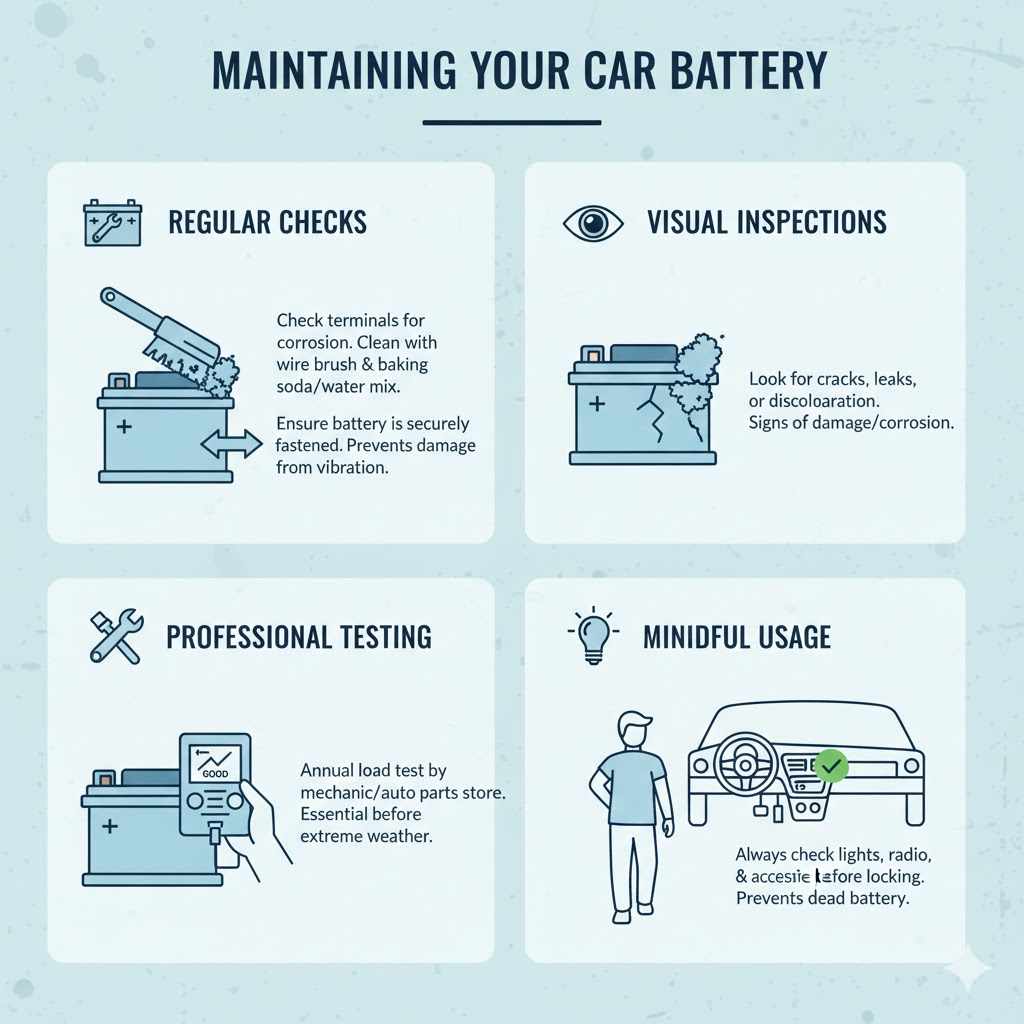
Regular maintenance can help extend the life of your car battery and prevent unexpected dead battery situations. Simple steps can make a big difference in reliability.
Regular Checks
Periodically check your battery terminals for corrosion. Corrosion can build up and prevent the battery from making a good connection, hindering its ability to charge and deliver power. You can clean terminals with a wire brush and a mixture of baking soda and water.
Also, ensure your battery is securely fastened. A loose battery can vibrate, which can damage its internal components and lead to premature failure. Make sure all clamps and brackets are tight.
- Visual Inspections
- Look for any cracks or leaks in the battery casing. These are signs of damage and could indicate that the battery needs to be replaced. If you see any discoloration or fuzzy white/blue buildup on the terminals, it’s corrosion that needs cleaning.
- Professional Testing
- Have your battery tested annually by a qualified mechanic or at an auto parts store. They can perform a load test to check its capacity and ensure it’s performing optimally. This is especially important before extreme weather seasons like winter.
- Mindful Usage
- The most crucial maintenance step is to simply be mindful of what you leave on in your car when the engine is off. Develop a habit of always checking your lights, radio, and other accessories before locking up. This simple habit saves you the trouble and expense of a dead battery.
Frequently Asked Questions
Question: Will leaving my car lights on overnight definitely kill my battery?
Answer: It’s very likely to kill your battery, especially if the battery is older or not fully charged. Headlights draw a lot of power, and leaving them on for many hours will drain its reserve energy significantly.
Question: How long does it take for a radio to drain a car battery?
Answer: A standard car radio might take 8-12 hours or more to drain a healthy battery, but this can be much shorter if the battery is weak, the volume is very high, or it’s an aftermarket system with amplifiers.
Question: Can I jump-start my car if the battery is completely dead?
Answer: Yes, you can usually jump-start a battery that is dead from leaving accessories on. The other car’s battery provides the necessary power to get your engine started so your alternator can recharge it.
Question: Is it bad to jump-start my car often?
Answer: While jump-starting gets you going, frequent jumps might mean your battery is failing or there’s another issue like a faulty alternator. It’s best to have the battery and charging system checked if you need jumps often.
Question: How can I tell if my car battery needs to be replaced?
Answer: Signs include slow engine cranking, dim lights, frequent dead batteries, and corrosion on terminals. A mechanic can perform a load test to confirm if the battery holds a charge properly and needs replacing.
Conclusion
Leaving lights or the radio on is a common mistake that drains your car battery’s power. Accessories draw energy, and when the engine is off, the battery’s limited reserve is depleted. Simple habits like checking your lights and turning off the radio prevent this.
Always be aware of what’s on when your car is parked.