Why White Mold In Your Car Needs Fixing Now
Finding white mold in your car can be a bit of a surprise, and for many people, figuring out exactly why it’s there and what to do about it feels overwhelming. You might wonder if it’s a big problem or just a small nuisance. This guide aims to clear up any confusion.
We’ll show you simple steps to get rid of it and keep it from coming back. Let’s get your car fresh again, so you can drive without worry.
Understanding Why Is There White Mold Inside My Car? Fix Now
This section helps you understand the root causes of white mold growth in your vehicle. Mold, including the white variety, thrives in damp, dark, and poorly ventilated spaces. Cars, with their enclosed environments and exposure to various weather conditions, can easily become breeding grounds for mold.
Identifying the source of moisture is the first crucial step in tackling this issue. Without addressing the underlying dampness, any cleaning efforts will be temporary.
Common Moisture Sources in Cars
Several everyday scenarios can lead to excess moisture inside your car, creating the perfect environment for white mold. These are often overlooked until a problem like mold appears. Understanding these sources empowers you to prevent future mold growth.
Think about what happens around your car and how water or humidity can get in.
-
Leaky Seals Around Windows and Doors
The rubber seals around your car’s windows and doors are designed to keep the elements out. Over time, these seals can degrade, crack, or become loose. This allows rain, snowmelt, or even car wash water to seep into the car’s interior.
Even a small leak can allow enough moisture to accumulate over days or weeks, especially if the car is parked in a humid environment or frequently exposed to water. This trapped moisture can then start to feed mold spores.
-
Spills and Wet Items Left Unattended
Accidents happen, and spills from drinks or food can introduce a lot of liquid into your car’s carpet and upholstery. If these are not cleaned up thoroughly and allowed to dry completely, the residual moisture is a prime spot for mold. Similarly, leaving wet gym clothes, towels, umbrellas, or even damp children’s toys in the car for extended periods can create a localized humid microclimate.
The fabric of these items acts like a sponge, holding onto water and releasing it slowly into the surrounding air and surfaces.
-
Condensation from Air Conditioning and Heating Systems
Your car’s HVAC system can also be a source of moisture. The air conditioning unit naturally dehumidifies the air, but if the drain line that removes condensation becomes clogged, water can back up into the cabin. This is often found near the passenger footwell.
During the heating season, if there’s a leak in the cooling system or if the car’s interior gets very humid from breath or wet clothes, the heating system can exacerbate the humidity by warming moist air, making it feel damp and potentially encouraging mold growth on surfaces.
-
Poor Ventilation and Trapped Humidity
Cars are sealed environments, which is great for keeping out dust and noise, but not so great for airflow. If you often drive with windows up, especially with multiple passengers breathing, or if you live in a humid climate and don’t regularly air out your car, humidity can build up. This trapped moisture condenses on cooler surfaces, such as windows or metal parts, providing the wetness mold needs to grow.
Infrequent airing out means the moisture has no escape route.
The Science Behind White Mold Growth
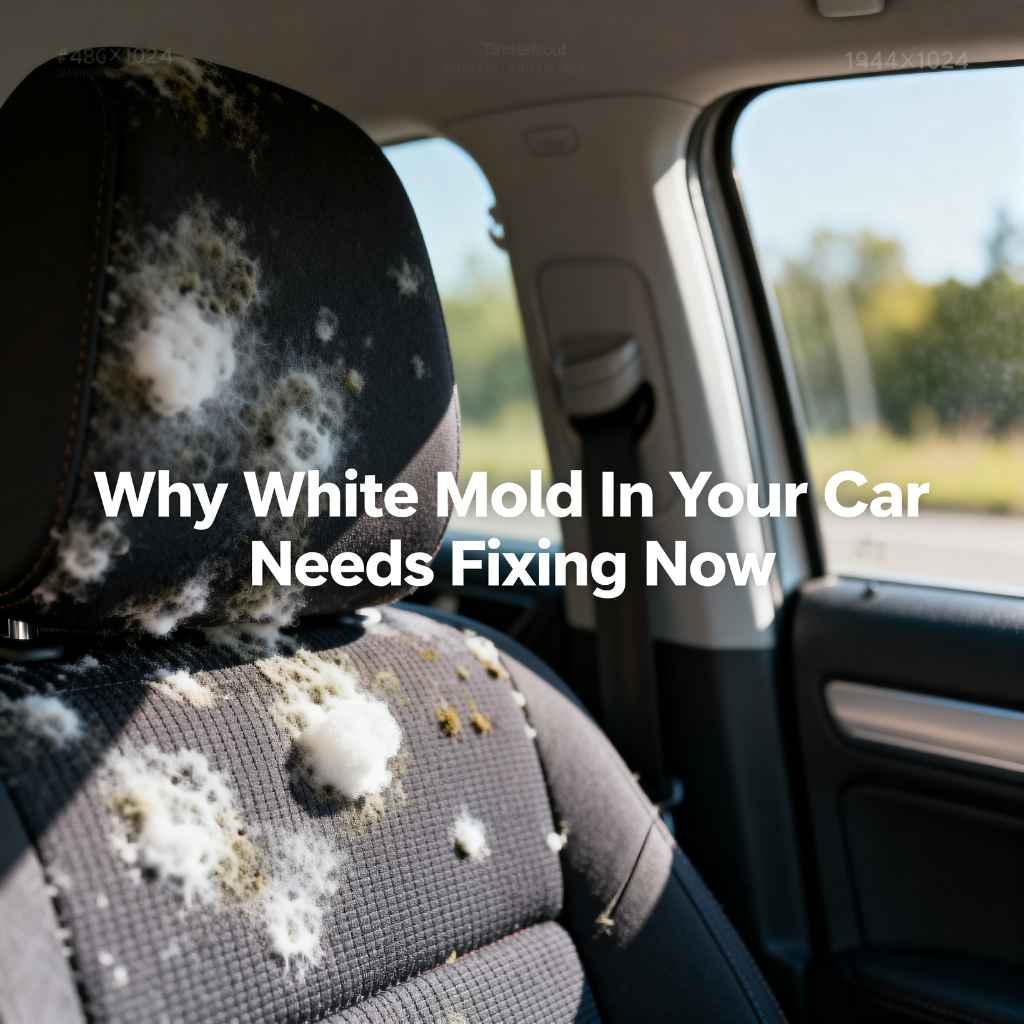
White mold, often appearing as fuzzy or powdery patches, is a type of fungus. Like all fungi, it requires specific conditions to grow and spread. Understanding these basic needs helps you appreciate why it appears in a car and how to stop it.
Mold spores are microscopic and are present almost everywhere in the air, waiting for the right opportunity to land and multiply.
What White Mold Needs to Grow
-
Moisture
This is the most critical factor for mold. White mold needs a water source to survive and grow. In a car, this can come from leaks, spills, condensation, or high humidity.
Without sufficient moisture, mold cannot establish itself. The amount of moisture doesn’t have to be a puddle; consistent dampness on surfaces is enough to fuel its growth. Think of it as a plant needing water; mold is no different in this basic requirement.
-
Food Source
Mold feeds on organic materials. In your car, this includes dust, fabric fibers from upholstery and carpets, paper products, leather, and even dirt. These materials provide the nutrients mold needs to break down and reproduce.
The more organic debris present in your car, the more food is available for mold to consume and spread.
-
Suitable Temperature
Mold generally prefers moderate temperatures, typically between 40 and 90 degrees Fahrenheit (4 to 32 degrees Celsius). Cars often fall within this temperature range, especially during spring, summer, and fall. Extreme cold can slow mold growth, and extreme heat might kill some types, but many can survive or lie dormant until conditions improve.
Cars parked in garages or sunlight can experience fluctuating temperatures but often stay within the mold-friendly zone for long periods.
-
Lack of Ventilation
Still, stagnant air allows moisture and mold spores to accumulate. When air doesn’t circulate, humid pockets can form, and spores can settle and grow undisturbed. Good ventilation helps to dry out surfaces and disperse spores, making it harder for mold to take hold and thrive.
Cars, being enclosed spaces, can easily become stagnant environments if not aired out regularly.
Why Is There White Mold Inside My Car? Fix Now Steps
Now that we know why mold appears, let’s tackle how to get rid of it. This section provides a clear, step-by-step approach to cleaning white mold from your car. It’s designed to be easy to follow, even if you’ve never dealt with mold before.
Safety first is important, so we’ll cover protective gear and safe cleaning solutions.
Safety Precautions Before You Start
Working with mold requires some basic safety measures to protect your health. Mold spores can cause allergic reactions, respiratory problems, and other health issues for some individuals. Therefore, it’s essential to take precautions to minimize exposure before you even begin cleaning.
Protecting yourself ensures the cleaning process is safe and effective.
-
Wear Protective Gear
Always wear gloves to protect your skin from mold and cleaning solutions. An N95 respirator mask is highly recommended to avoid inhaling mold spores. Eye protection, like safety glasses or goggles, will prevent mold spores or cleaning solutions from getting into your eyes.
Wearing old clothing you don’t mind getting stained is also a good idea.
-
Ventilate the Area
Before cleaning, open all car doors and windows to allow for maximum airflow. This helps disperse any airborne mold spores and also allows fumes from cleaning products to escape. If possible, park your car in a well-ventilated area, ideally outdoors, or in a large garage with the door open.
Fresh air is your ally in this process.
-
Identify Affected Areas Clearly
Before you start scrubbing, take a moment to locate all areas affected by white mold. Sometimes mold can hide in seams, under mats, or in less visible spots. A thorough visual inspection will help you plan your cleaning strategy and ensure you don’t miss any patches, which could lead to regrowth.
Step-by-Step Cleaning Process
Follow these steps to effectively remove white mold and restore a fresh interior. Each step builds on the previous one to ensure thorough cleaning. Remember to work patiently and thoroughly to achieve the best results.
Don’t rush the process; a little extra time now saves you trouble later.
-
Prepare Your Cleaning Solution
For white mold, a solution of white vinegar and water is often effective and safer than harsh chemicals. Mix equal parts of white vinegar and water in a spray bottle. Vinegar is acidic and can kill many types of mold spores.
Alternatively, you can use a mild soap and water solution or a specialized mold remover for cars, following the product’s instructions carefully.
-
Apply Solution and Let It Sit
Spray the affected areas generously with your chosen cleaning solution. Do not rinse immediately. Let the solution sit on the mold for at least 10-15 minutes.
This gives the vinegar or cleaner time to break down the mold and kill the spores. For stubborn patches, you might need to apply the solution multiple times or let it sit longer.
-
Scrub the Mold Away
Use a stiff-bristled brush or a scrub sponge to gently scrub away the mold. Work from the outside of the mold patch inward to avoid spreading spores. For fabric surfaces like carpets and upholstery, scrub in small sections.
For hard surfaces, a scrub brush works well. If the mold is deeply embedded, you may need to repeat the spraying and scrubbing process.
-
Wipe and Rinse
Use clean microfiber cloths to wipe away the loosened mold and cleaning solution. Rinse your cloths frequently in clean water or use fresh ones. For carpets and upholstery, you might use a damp cloth to “rinse” the area, carefully blotting up excess moisture.
Avoid over-saturating the fabric, as this can lead to more mold problems.
-
Dry the Area Thoroughly
This is a critical step. Use dry microfiber cloths to blot up as much moisture as possible. You can also use a fan or a small dehumidifier inside the car to speed up the drying process.
Parking the car in a sunny spot with windows slightly ajar can also help. Ensure the treated areas are completely dry to the touch before closing the car.
-
Vacuum and Deodorize
Once dry, vacuum the entire interior of the car, paying close attention to the areas where mold was present. This removes any lingering mold spores or debris. You can then use a car-specific deodorizer or an activated charcoal bag to help eliminate any remaining musty odors.
Cleaning Different Car Surfaces
Your car has various surfaces, and each might require a slightly different approach to mold removal. Knowing these distinctions ensures you clean effectively without damaging your car’s interior. Always test any cleaning solution in an inconspicuous spot first.
Carpet and Upholstery
These materials are porous and can harbor mold deep within the fibers. After applying the vinegar solution and scrubbing, blotting is key. Avoid excessive water, which can saturate the padding underneath and cause new mold issues.
A wet-vacuum cleaner can be very helpful here if available. Ensure complete drying with fans or dehumidifiers.
Hard Surfaces (Dashboard, Doors, Plastic Trim)
These are generally easier to clean. A vinegar and water solution or a mild all-purpose cleaner works well. Wipe down thoroughly with a clean cloth.
Ensure all crevices and seams are cleaned, as mold can hide there. Dry these surfaces completely with a clean cloth to prevent water spots.
Leather Seats
Leather is less porous but can still be affected. Use a cleaner specifically designed for leather. Apply the cleaning solution to a cloth first, then wipe the leather.
Avoid soaking the leather. After cleaning, use a leather conditioner to restore moisture and protect the material. Ensure it’s dry before conditioning.
Preventing White Mold in Your Car Long Term
Getting rid of mold is one thing, but keeping it from coming back is the real win. This part focuses on smart habits and simple checks to maintain a mold-free car. Prevention is always easier than cure, especially when it comes to mold in your vehicle.
Regularly Check for Moisture and Leaks
Make it a habit to periodically inspect your car for signs of dampness. Pay attention after heavy rain or car washes. Feel the carpets, especially under the floor mats and in the trunk.
Check the seals around windows and doors for any visible cracks or signs of wear. If you notice any dampness, address the source immediately. Early detection saves a lot of trouble and prevents mold from taking hold.
Key Inspection Points
-
Floor Mats and Carpets
Lift your floor mats regularly. Feel the carpet underneath for any dampness or musty odors. This is a common spot for water to collect from shoes or leaks.
-
Trunk Area
The trunk can collect water from leaks in the seals or from items stored there. Check the spare tire well for any signs of moisture or mold.
-
Window and Door Seals
Visually inspect these seals. Look for any gaps, tears, or areas where they don’t seem to be making contact. A simple water test after a car wash or rain can reveal leaks.
-
Sunroof (if applicable)
Sunroof drains can get clogged. Check for any pooling water or dampness in the headliner near the sunroof.
Maintain Good Airflow and Ventilation
A little bit of fresh air goes a long way. Regularly opening your car doors and windows, even for a few minutes each week, can help dry out any accumulated moisture and prevent stagnant air. If you live in a very humid climate, consider using a small car dehumidifier or moisture-absorbing packets.
This simple habit is one of the most effective ways to combat mold formation.
Simple Ventilation Tips
-
Crack Windows
When parked, especially in dry weather, leave your windows cracked open just a tiny bit. This allows for continuous air exchange without letting in too much weather.
-
Air Out After Driving
After a drive, especially with passengers, open doors for a minute to let out humid air. This is particularly helpful after a rainy commute.
-
Use the Recirculation Setting Wisely
While recirculation can be good for heating or cooling quickly, prolonged use can trap humidity inside the car. Switch to fresh air intake periodically.
Clean Spills Immediately and Dry Wet Items
Treat your car interior like you would your home. If a drink spills, clean it up right away. Blot up as much liquid as possible and then use a carpet cleaner suitable for cars to remove stains and odors.
Don’t let wet items linger. Gym bags, wet umbrellas, or damp jackets should be removed from the car promptly and dried. These small actions prevent moisture from becoming a larger problem.
Consider Professional Detailing and Mold Remediation
If mold is extensive or you can’t seem to get rid of it entirely, professional help is a good option. Auto detailers have specialized equipment and solutions for deep cleaning and mold remediation. They can often reach areas you can’t and have powerful tools like steam cleaners or ozone generators that effectively kill mold and neutralize odors.
Sometimes, a professional touch is the most effective long-term solution.
Addressing Stubborn Mold Issues
Sometimes, white mold is more persistent. This section covers advanced techniques and considerations for tackling mold that doesn’t come out with basic cleaning. If you’ve tried the common methods and still see signs of mold, these approaches can help.
Don’t give up; there are still ways to win the battle.
Using Ozone Generators for Mold Deodorization
Ozone generators are powerful tools used in professional mold and odor removal. They work by producing ozone (O3), a gas that oxidizes and breaks down mold spores and other odor-causing molecules. While effective, ozone generators should be used with extreme caution.
They should only be operated in an unoccupied vehicle, as ozone can be harmful to humans and pets. After treatment, the car must be thoroughly ventilated to remove all traces of ozone before anyone enters. This is often a last resort for deep-seated odors and mold contamination.
When to Consider Replacing Damaged Parts
In severe cases, mold can deeply penetrate and damage car parts, such as carpets, foam padding, or even insulation. If a component is heavily infested, mold may have compromised its integrity or be impossible to remove completely. In such situations, replacing the affected part is the only way to ensure the mold is gone for good.
This is especially true for areas with thick padding or insulation, where mold can thrive unseen.
Understanding Different Types of Mold
While this article focuses on white mold, other colors like black, green, or pink mold can also appear. Each type might have slightly different growth patterns or require specific treatments. If you’re unsure about the type of mold or the extent of the infestation, consulting a mold remediation specialist is the safest approach.
They have the expertise to identify and treat various types of mold effectively and safely.
Frequently Asked Questions
Question: How quickly can white mold grow in my car?
Answer: White mold can start growing within 24 to 48 hours in the right conditions, especially if there’s a constant moisture source and organic material to feed on. Small patches can become noticeable within a few days.
Question: Is white mold in my car dangerous?
Answer: Yes, mold spores can cause allergic reactions, asthma flare-ups, and other respiratory issues in sensitive individuals. It’s best to remove it promptly to ensure a healthy environment.
Question: Can I use bleach to clean mold in my car?
Answer: While bleach can kill surface mold, it’s not always effective for porous materials like car carpet and upholstery. It can also damage some materials and produce harmful fumes when mixed with other cleaners. Vinegar is often a safer and more effective alternative for car interiors.
Question: How do I know if the mold is completely gone?
Answer: The best indicators are the absence of visible mold, no musty odors, and a completely dry interior. If the mold returns after cleaning, it means the moisture source or spores were not fully eliminated.
Question: Should I worry about mold if I live in a dry climate?
Answer: Even in dry climates, mold can grow if there are localized sources of moisture. Leaks, spills, or condensation from air conditioning can create damp spots that allow mold to thrive, regardless of the overall climate.
Summary
Dealing with white mold in your car is manageable. It appears due to moisture from leaks, spills, or condensation. By following a simple, step-by-step cleaning process with safe solutions and ensuring thorough drying, you can effectively remove it.
Regular checks, good ventilation, and prompt attention to spills are key to preventing its return. Keep your car dry and clean to enjoy a mold-free ride.