How to Test AC Compressor in Car: Multimeter & Clutch Tests
To test your car’s AC compressor, use a multimeter set to ohms: a healthy clutch coil reads 3–5 ohms, and you should see 10–16 volts at the connector with the AC switched on. If those numbers are off — or the clutch won’t engage at all — the compressor is likely the problem. A failed compressor means no cold air and, if the clutch seizes, potential belt and engine damage. This guide covers the 5-step testing process, key symptoms of a bad compressor, what the readings mean, and repair cost ranges so you know what to expect.
Set a multimeter to ohms and probe the compressor clutch coil terminals — 3–5 ohms means the coil is good. Then switch to DC voltage: with the AC on, you need 10–16V at the connector. No voltage points to a fuse or relay. No click when the AC turns on means the clutch itself is failing.
What Is an AC Compressor and Why Test It?
The AC compressor is the pump that circulates refrigerant through your car’s air conditioning system. Driven by a serpentine belt off the engine, it pressurizes refrigerant gas on the high side and draws low-pressure gas in from the evaporator. When it fails, there’s no refrigerant flow — and no cold air.
How Does It Work?
The compressor uses a clutch — an electromagnetic disk — to engage and disengage from the belt. When you turn on the AC, the PCM sends voltage to the clutch coil, the disk engages, and the compressor starts pumping. If the coil has too much or too little resistance, the clutch won’t engage. If refrigerant pressure is too low, a low-pressure cutout switch prevents the compressor from running at all.
Why Testing Matters
A compressor replacement runs $500–$1,500 installed. Testing first confirms whether the compressor itself is bad or whether a cheaper fix — a blown fuse, faulty relay, or low refrigerant — is the actual cause. Most AC failures are not the compressor; they’re the $10 fuse that feeds it.
Signs Your Car AC Compressor Is Bad
Before reaching for a multimeter, run through these symptoms. If two or more are present, the compressor is the likely culprit.
| Symptom | What It Means | Confirm With |
|---|---|---|
| No cold air at all | Compressor not pumping refrigerant | Check clutch engagement |
| Clutch doesn’t click or spin | Coil failure, fuse blown, or low refrigerant lockout | Multimeter voltage + ohm test |
| Grinding or squealing noise with AC on | Internal bearing or piston failure | Listen with AC on vs. off |
| Oily residue on compressor body or hoses | Refrigerant/oil leak — compressor seal failure | UV dye leak test |
| Clutch spins constantly, AC never cycles off | Stuck clutch or pressure switch failure | Manifold gauge pressure reading |
| AC works intermittently, worse in heat | Marginal clutch coil or thermal cutout | Ohm test when warm vs. cold |
Tools You’ll Need to Test Your AC Compressor
You don’t need a shop full of equipment. These four tools cover every test in this guide:
- Digital multimeter — for clutch coil resistance (ohms) and voltage tests. Any $15–$50 unit works.
- Safety gloves and eye protection — the AC system is under pressure and refrigerant causes frostbite on contact.
- Manifold gauge set — to check high and low-side refrigerant pressure (optional but useful).
- Jumper wire — to manually jump the clutch and isolate electrical problems from mechanical ones.
| Tool | Cost | What It Tests |
|---|---|---|
| Digital multimeter | $15–$50 | Clutch coil ohms, connector voltage |
| Safety gloves + goggles | $5–$15 | Personal protection |
| Manifold gauge set | $40–$120 | High/low-side refrigerant pressure |
| Jumper wire | $5–$10 | Manual clutch engagement test |
Step-by-Step Guide: How to Test AC Compressor in Car
Follow these steps in order. Each one either confirms a problem or rules it out, so you don’t replace parts unnecessarily.
Step 1: Stay Safe and Prep Your Car
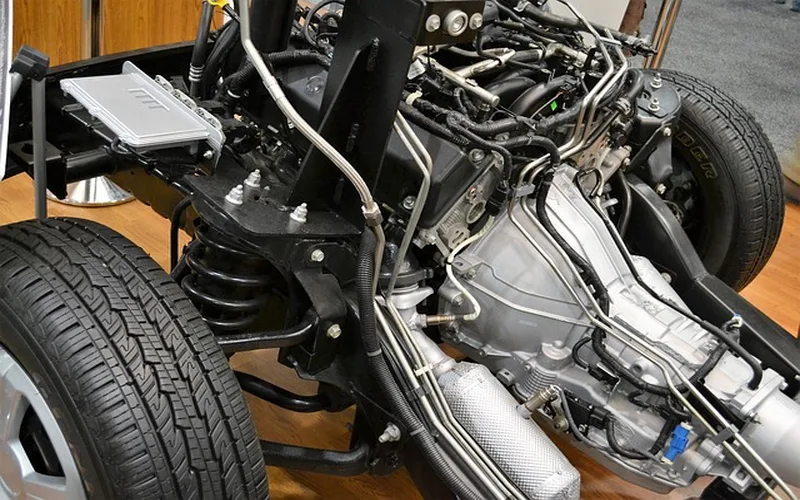
Turn off the engine and let it cool for 15–20 minutes. Pop the hood and locate the AC compressor — it sits near the front of the engine, has a round clutch plate on the front, and two refrigerant lines (one large, one small) running to it. Do not disconnect the battery yet — you’ll need the electrical system active for the voltage test in Step 3.
Step 2: Visual Inspection
Look at the compressor body and surrounding lines before testing anything electrically.
- Oily staining on the compressor body or at hose fittings: refrigerant oil leak — the compressor shaft seal may be failing.
- Physical damage (cracks, dents, broken bracket): compressor needs replacement regardless of electrical readings.
- Belt condition: a glazed or cracked serpentine belt can slip and prevent the compressor from spinning even if the clutch engages properly.
- Clutch air gap: the gap between the clutch plate and pulley face should be 0.015–0.040 inches. A gap wider than 0.040 in. causes slippage and chattering.
Step 3: Test the Compressor Clutch
The clutch is the part that turns the compressor on. Start the engine, turn the AC to max, and watch the front of the compressor. The center clutch plate should spin along with the outer pulley — if only the outer pulley spins freely and the center plate stays still, the clutch is not engaging.
Multimeter ohm test (engine off, battery disconnected):
- Disconnect the compressor’s clutch connector (usually a 2-wire plug).
- Set your multimeter to the ohms (Ω) setting.
- Place one probe on each terminal of the clutch coil connector on the compressor side.
- Read the resistance: 3–5 ohms = good coil. Below 3 ohms = short circuit. Above 5 ohms (or OL/infinite) = open circuit (bad coil).
Jump test: If the ohm reading is good but the clutch still won’t engage with the AC on, use a jumper wire to apply 12V directly from the battery positive to the clutch connector. If it clicks and engages, the coil is fine — the problem is upstream (fuse, relay, pressure switch, or PCM signal).
Step 4: Check Electrical Connections
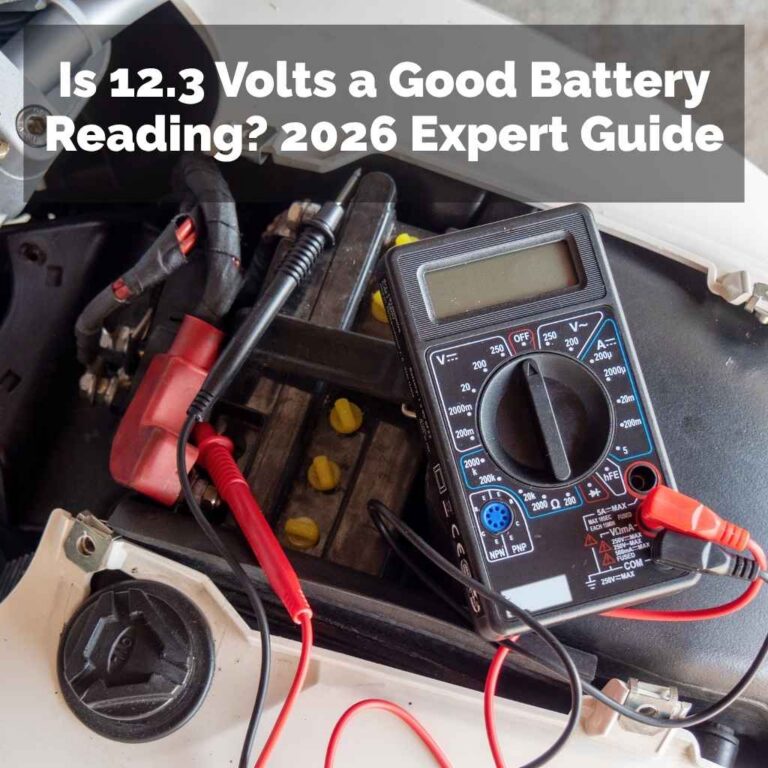
Set your multimeter to DC voltage. Reconnect the battery and start the engine. Turn the AC on max and probe the clutch connector (wiring harness side) with the meter:
- 10–16V present: voltage is reaching the clutch. If the clutch still doesn’t engage, the coil itself is bad.
- 0V or near 0V: no signal reaching the clutch. Check the AC fuse (typically 10–15A in the underhood fuse box), the AC relay, and the low-pressure cutout switch. Low refrigerant trips the pressure switch and blocks voltage entirely.
Step 5: Test Refrigerant Pressure (Optional)
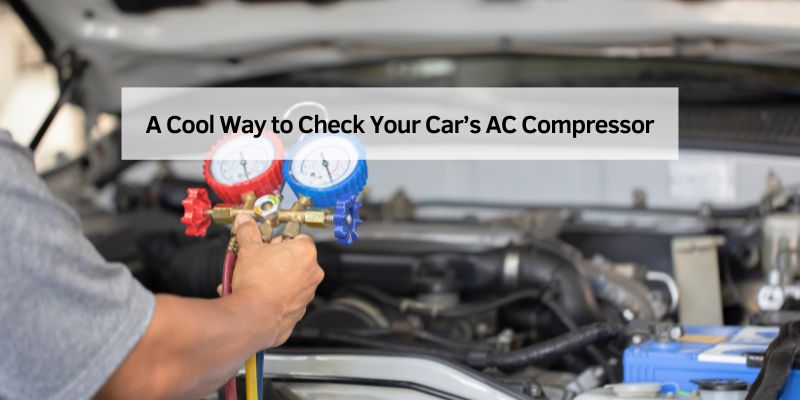
Low refrigerant is the most common reason a compressor won’t engage — the low-pressure switch cuts power to protect it. Connect a manifold gauge set to the low-side service port (larger line, usually on the passenger side). With the engine running and AC on max:
- Normal low-side pressure: 25–45 PSI (R134a at 70–80°F ambient)
- Below 20 PSI: refrigerant is low — the pressure switch will prevent clutch engagement. Recharge or find and fix the leak first.
- 0 PSI: system is empty. Do not run the compressor — it needs refrigerant oil for lubrication.
| Issue | Sign | Fix | Cost |
|---|---|---|---|
| Bad clutch coil | Ohm reading outside 3–5Ω | Replace clutch assembly | $100–$300 |
| No voltage at connector | 0V with AC on | Check fuse, relay, pressure switch | $5–$50 |
| Low refrigerant | Clutch won’t engage, low PSI | Find leak, recharge system | $50–$200 |
| Internal compressor failure | Grinding noise, high-side pressure too high | Replace compressor | $500–$1,500 |
| Worn belt | Squealing, clutch slips | Replace serpentine belt | $80–$200 |
Tools for Testing Your AC Compressor
Digital Multimeter
3–5Ω clutch coil test + 12V voltage check
View on Amazon
3 Way AC Manifold Gauge Set, Fits for R134A R12 R22 and R502 Refrigerants, with 5FT Hose, Acme Tank
Check high/low-side refrigerant pressure
View on Amazon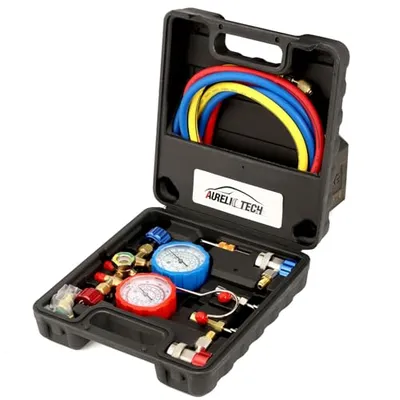
SENSYX HVAC Refrigerant and Combustible Gas Leak Detector, Rechargeable
Locate leaks before recharging the system
View on Amazon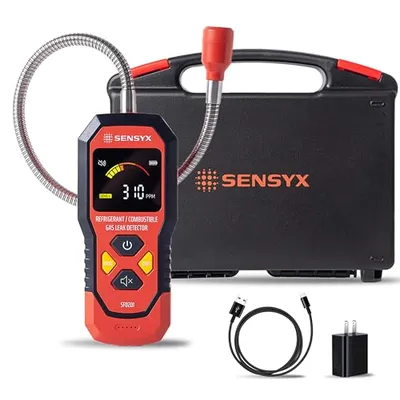
InterDynamics Car A/C Pro Air Conditioner Gauge and Hose, 24 Inch Hose
Recharge if low refrigerant is the cause
View on AmazonCommon Mistakes to Avoid
- Replacing the compressor before testing the fuse and relay — a $5 fuse is the most common cause of no clutch engagement.
- Running the compressor with the system empty — the compressor uses refrigerant oil for lubrication. Running it dry destroys it within minutes.
- Ignoring the clutch air gap — a gap outside 0.015–0.040 in. causes slipping and early clutch wear, not detectable with a multimeter alone.
- Using an analog meter for resistance — digital multimeters give far more accurate ohm readings for the 3–5Ω range you’re testing.
Frequently Asked Questions
What Is an AC Compressor in a Car?
The AC compressor is a belt-driven pump that pressurizes and circulates refrigerant through the air conditioning system. It’s the component that makes cooling possible — without it, refrigerant sits still and the system blows warm air.
How Do I Know If My AC Compressor Is Bad?
The clearest signs are: no cold air from the vents, the clutch plate not spinning when the AC is on, a grinding or squealing noise that starts when you switch the AC on, and oily residue around the compressor body or refrigerant lines. Confirm with a multimeter ohm test and a voltage check at the clutch connector.
Can I Test an AC Compressor Without Tools?
You can do a visual check for leaks and damage, and listen for the clutch click when you turn on the AC. But you can’t confirm whether the coil, voltage, or refrigerant pressure is the problem without a multimeter and ideally a gauge set. Those tools together cost under $60 and rule out the most common causes before you spend money on a compressor.
How Much Does It Cost to Fix an AC Compressor?
A blown AC fuse costs $5–$10. A bad relay is $15–$30. A low refrigerant recharge runs $50–$150. Clutch replacement is $100–$300 in parts. A full compressor replacement with labor is $500–$1,500 depending on the vehicle. Testing first tells you which of these you actually need.
Can I Drive With a Bad AC Compressor?
Yes, but watch for one specific risk: if the clutch seizes rather than simply failing to engage, it can lock up the serpentine belt and stall the engine. If you hear loud grinding or the belt starts squealing badly, stop driving and have the compressor inspected before the belt fails.
What If My Compressor Clutch Doesn’t Engage?
Work through this order: check the AC fuse → check the AC relay → check for voltage at the clutch connector → check low-side refrigerant pressure → test the clutch coil resistance (3–5Ω). Most non-engagement issues are electrical or refrigerant-related, not a failed compressor.
How Often Should I Test My AC Compressor?
Test it at the start of each summer season or any time you notice weaker-than-normal cooling. AC systems lose about 15% of their refrigerant per year through normal permeation, so annual checks prevent the pressure from dropping below the cutout threshold.
Conclusion
Testing your car’s AC compressor takes about 20–30 minutes and requires only a multimeter. Check the clutch coil resistance (3–5Ω), confirm 10–16V reaches the connector with the AC on, and check refrigerant pressure if the clutch won’t engage. Most AC failures are upstream of the compressor — a fuse, relay, or low refrigerant — and those cost under $50 to fix. Eliminate the cheap causes first before considering a compressor replacement. If you’ve also been dealing with the AC blowing cold then warm intermittently, see our guide on why car AC blows cold then warm for related diagnosis steps.
Products related to this article
Sponsored / affiliate links. As an Amazon Associate I earn from qualifying purchases. I may earn additional commission from eligible campaigns.