2026 Ford F-150 Fuse Box Diagram: Cabin and Under-Hood Panels Explained
You are driving down the highway and the radio cuts out. Then the interior lights dim. Then the blower motor for the AC stops pushing air. You pull over, pop the hood, and stare at a black plastic box full of little colored squares. That is the moment you need a 2026 Ford F-150 fuse box diagram, not a vague internet forum post from 2026.
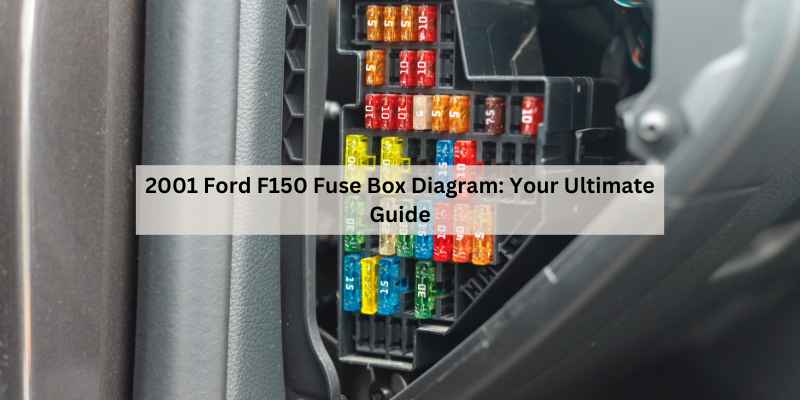
This guide covers both fuse panels on the 10th-generation F-150: the passenger compartment fuse panel under the dash and the power distribution box under the hood. You will get exact fuse numbers, amperages, and what each circuit protects. I also include notes on how the 4.2L, 4.6L, and 5.4L engines share most of the same electrical architecture but have a few critical differences in the under-hood box. By the end, you will be able to diagnose a dead circuit in under ten minutes.
tigwin
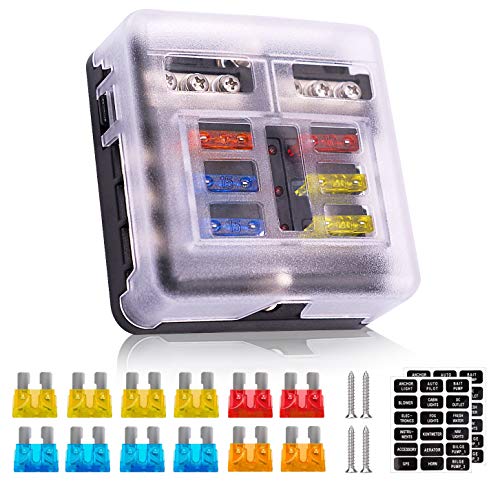
12V Fuse Box 6 Way 12 Volt…
- RAPID FIX --- Red LED warning light on fuse box will light up immediately when the corresponding fuse is blown. It is very safe an…
- SAFE MATERIAL --- Made of environment fire-resist PBT material, this fuse panel meets all the standards of an nice fuse block, whi…
- MAKE WIRING NEAT --- 12 volt fuse block with ground bus kit gives you 6 dedicated fuses and 6 ground locations to keep all of your…
Before you start digging into the factory wiring, consider keeping a small auxiliary fuse block in your truck for aftermarket accessories. A unit like the tigwin 6-way fuse block gives you six fused circuits with a ground bus, which keeps add-on wiring like light bars or extra 12V sockets from turning into a tangled mess under the dash. It is a clean way to protect your work without splicing into the factory harness.
2026 Ford F-150 Fuse Box Location (Cabin & Engine Bay)
The 2026 F-150 has two main fuse boxes. The first is the passenger compartment fuse panel, located behind the kick panel on the passenger side of the dashboard. Open the front passenger door and look at the side of the dash near the floor. There is a small plastic cover you pull straight off—no tools needed. The second is the power distribution box under the hood, on the driver’s side near the battery. It has a black cover with three latches: one on the front, one on the rear, and one on the side facing the fender. Squeeze the latches and lift.
Do not confuse the under-hood power distribution box with the smaller relay box mounted near the fender. The power distribution box is the larger one with the battery cable connected to it. If you open the wrong box, you will see relays but no fuses. The fuse panel under the dash is where most interior electrical problems live.
Passenger Compartment Fuse Panel Diagram (Under Dash)
The cabin fuse panel uses mini blade fuses. The cover has a diagram printed on the inside, but it fades over time. Here is the layout you need.
Fuse 1-15: Interior Lights, Radio, and Instrument Cluster
- Fuse 1 (10A): Instrument cluster, warning chime, and the GEM module. If your gauges are dead, check this first.
- Fuse 2 (15A): Cigarette lighter and OBD-II diagnostic port. A blown fuse here means no power to the scanner.
- Fuse 3 (10A): Interior lamps, dome light, and the map lights.
- Fuse 4 (10A): Radio and CD player. This is a common failure point after a stereo install.
- Fuse 5 (10A): Power mirrors and the memory seat (if equipped).
- Fuse 6 (10A): Instrument cluster illumination. If your dash lights are out but the gauges work, this fuse is suspect.
- Fuse 7 (10A): Climate control head unit. The AC panel will go dark if this blows.
- Fuse 8 (15A): Horn. The relay is under the hood, but the feed for the horn switch comes from here.
- Fuse 9 (10A): Not used on most 2026 models. Leave it empty.
- Fuse 10 (15A): Anti-lock brake system (ABS) module and the brake shift interlock.
- Fuse 11 (10A): Air bag module. If this fuse is blown, the air bag light will be on and the system is disabled. Do not ignore this one.
- Fuse 12 (15A): Rear window defroster (if equipped).
- Fuse 13 (10A): Daytime running lamps (Canada only) or the parking lamp relay.
- Fuse 14 (10A): Trailer tow battery charge relay coil.
- Fuse 15 (10A): Right-hand low beam headlamp.
Fuse 16-30: Power Windows, Locks, and Wipers
- Fuse 16 (10A): Left-hand low beam headlamp.
- Fuse 17 (15A): Left-hand high beam headlamp.
- Fuse 18 (15A): Right-hand high beam headlamp.
- Fuse 19 (10A): Power door locks. If only one door locks, the motor is bad—not the fuse.
- Fuse 20 (20A): Power windows. All four windows run through this single fuse.
- Fuse 21 (15A): Windshield wiper and washer pump. The wiper relay is in the under-hood box.
- Fuse 22 (10A): Power seats and the lumbar support pump.
- Fuse 23 (10A): Rear wiper (if equipped) and the rear washer.
- Fuse 24 (10A): Not used.
- Fuse 25 (10A): Auxiliary battery relay (diesel models only).
- Fuse 26 (10A): Four-wheel drive control module and the electronic shift motor.
- Fuse 27 (10A): Not used.
- Fuse 28 (10A): Not used.
- Fuse 29 (10A): Not used.
- Fuse 30 (10A): Not used.
Power Distribution Box (Under Hood) Diagram
The under-hood box handles high-current circuits. It uses maxi fuses (the big flat ones) and standard relays. The cover diagram lists the fuse numbers, but the text is small. Here is the breakdown.
High-Current Fuses and Relays (Starter, Fuel Pump, ABS)
- Fuse 1 (60A): Main power feed to the cabin fuse panel. If everything inside the truck is dead, this is blown.
- Fuse 2 (50A): Cooling fan motor (high speed).
- Fuse 3 (30A): Starter solenoid feed. The starter relay is next to this fuse.
- Fuse 4 (40A): ABS pump motor.
- Fuse 5 (20A): Fuel pump relay feed. A blown fuse here means the engine cranks but will not start.
- Fuse 6 (30A): Trailer tow electric brake controller.
- Fuse 7 (20A): Electronic shift-on-the-fly 4×4 motor.
- Fuse 8 (30A): Heated seats (if equipped).
- Fuse 9 (20A): Alternator field wire. If the battery light is on and the alternator is not charging, check this.
- Fuse 10 (30A): Windshield wiper high-speed relay.
Relays in this box include the fuel pump relay (R1), the starter relay (R2), the horn relay (R3), and the cooling fan relays (R4 and R5). The layout is printed on the underside of the cover. If the print is worn, use a flashlight at an angle to read it.
2026 F-150 Fuse Chart by Engine Size (4.2L, 4.6L, 5.4L)
Most of the fuse assignments are identical across the three engines. The differences live in the under-hood box, specifically the circuits that tie into engine management.
| Circuit | 4.2L V6 | 4.6L V8 | 5.4L Triton V8 |
|---|---|---|---|
| Fuel pump relay feed | Fuse 5 (20A) | Fuse 5 (20A) | Fuse 5 (20A) |
| Ignition coil feed | Fuse 11 (20A) | Fuse 11 (20A) | Fuse 11 (20A) |
| PCM power relay | R7 | R7 | R7 |
| Injector feed | Fuse 12 (15A) | Fuse 12 (15A) | Fuse 12 (15A) |
| O2 sensor heaters | Fuse 13 (15A) | Fuse 13 (15A) | Fuse 13 (15A) |
| Camshaft position sensor | Not present | Fuse 14 (10A) | Fuse 14 (10A) |
The 5.4L Triton uses coil-on-plug ignition, so it draws more current through the ignition coil fuse than the 4.2L. The 4.2L has a distributor, so it uses a different firing circuit. If you have a 4.2L and your ignition fuse keeps blowing, check the distributor pickup coil before replacing the fuse a third time.
How to Check and Replace a Blown Fuse (Step-by-Step)
You have the diagram. Now you need to confirm the fuse is actually blown. A visual check is not enough—a fuse can crack internally and still look fine.
- Turn the ignition off. Pull the fuse with the plastic fuse puller clipped inside the under-hood box cover. If that puller is missing, use a pair of needle-nose pliers.
- Test with a multimeter. Set the meter to continuity mode. Touch one probe to each of the two metal prongs on the fuse. A beep means it is good. No beep means it is blown.
- Test with a test light. Clip the ground lead to a bare metal chassis point. Touch the probe to each prong with the fuse installed and the key on. One side should light the bulb. If both sides light, the fuse is good. If only one side lights, the fuse is blown.
- Replace with the same amperage. Never use a higher-rated fuse. Using a 30A fuse where a 15A belongs can melt the wiring harness before the fuse blows.
- Reinstall the panel cover. The cover keeps moisture and debris out of the fuse terminals.
If the new fuse blows immediately, you have a short circuit. Do not keep swapping fuses. Find the short first. Check for chafed wires near the battery tray, the door hinge boots, and the rear bumper for trailer wiring.
Troubleshooting Common Electrical Issues (Symptom → Fuse)
Use this table to jump straight to the likely culprit.
| Symptom | Likely Fuse/Relay | Location |
|---|---|---|
| Radio dead, clock blank | Fuse 4 (10A) | Cabin panel |
| Cigarette lighter no power | Fuse 2 (15A) | Cabin panel |
| Horn silent | Fuse 8 (15A) or relay R3 | Cabin panel or under-hood box |
| Windows do not roll down | Fuse 20 (20A) | Cabin panel |
| Engine cranks but no start | Fuse 5 (20A) or relay R1 | Under-hood box |
| Battery light on, low charge | Fuse 9 (20A) | Under-hood box |
| No dash lights at night | Fuse 6 (10A) | Cabin panel |
| Turn signals work but no hazards | Hazard flasher relay | Under-hood box |
| ABS light on | Fuse 10 (15A) or Fuse 4 (40A) | Cabin panel or under-hood box |
One thing to watch: the GEM module controls the interior lights, wipers, and power locks. If multiple unrelated interior circuits fail at once, the GEM itself may be faulty. That module sits behind the glove box and is expensive to replace. Before you go there, check the ground strap under the dash on the driver’s side. A loose ground causes weird electrical gremlins that look like GEM failure.
Frequently Asked Questions (Cigarette Lighter, OBD-II Port, Trailer Wiring)
Which fuse is for the cigarette lighter in a 2026 F-150?
Fuse 2 (15A) in the passenger compartment fuse panel. It also powers the OBD-II diagnostic port. If you plug a scanner in and it does not power up, this fuse is the first thing to check.
Why does my 2026 F-150 keep blowing the radio fuse?
Usually a short in the speaker wires or a damaged radio harness. If you recently installed an aftermarket stereo, check the wiring adapter. A pinched wire against the metal dash frame is the most common cause. The fuse protects the circuit; it is telling you something is wrong downstream.
Is the fuse box diagram the same for 1997-2026 F-150s?
No. The 1997-2026 models have a different cabin fuse panel layout. Ford moved several fuses around for the 2026 model year, specifically the radio and instrument cluster circuits. If you have a 1999, do not use the 2026 diagram. The undercarriage diagram for the F-150 is also different between those years.
Where is the trailer brake controller fuse?
Fuse 6 (30A) in the power distribution box under the hood. The trailer tow relay is located next to it. If your trailer lights work but the brakes do not, check the 7-pin connector ground wire at the bumper first—it corrodes.
Can I use a higher amp fuse to stop it from blowing?
No. This is the fastest way to start an electrical fire. The fuse rating matches the wire gauge. A 10A circuit has thin wire. If you put a 20A fuse in, the wire will melt before the fuse blows. Use the exact amperage listed on the diagram.
If you are adding new circuits for accessories, do not tap into the factory fuse box. Run a dedicated wire from the battery through an inline fuse or an auxiliary fuse block. That keeps the factory wiring safe and makes future troubleshooting easier. For a guide on pulling fuses without breaking the tabs, see this fuse removal guide.
What to Remember When Digging Into the Fuse Box
- Keep a spare set of mini and maxi fuses in the glove box. They cost pennies and save a trip to the parts store.
- Pull the fuse and test it with a multimeter. Visual inspection misses hairline cracks.
- Match the amperage exactly. Never upgrade a fuse to stop it from blowing.
- The 2026 cabin fuse panel layout is different from 1997-2026 models. Do not mix them up.
- If a fuse blows immediately after replacement, you have a short. Stop replacing fuses and start tracing wires.
- Check the GEM module ground strap before replacing the module itself. It is a common false diagnosis.
- For aftermarket accessories, use a dedicated auxiliary fuse block rather than piggybacking on factory circuits.
Products related to this article
Sponsored / affiliate links. As an Amazon Associate I earn from qualifying purchases. I may earn additional commission from eligible campaigns.