How to Remove a Fuse From a Car Fuse Box (Step-by-Step)
Turn the car off, find the fuse panel, and pull the straight fuse out with a plastic fuse puller or a pair of pliers gripping the plastic body, never a metal tool touching both prongs. A blown fuse is one of the most common reasons a radio, power outlet, or set of interior lights suddenly stops working, and checking the metal strip inside takes under a minute once you know which slot to open. This guide covers the tools, the exact steps, the mistakes that crack a fuse box, and how to tell a good fuse from a blown one.
What Is a Car Fuse and Why Would You Remove One?
BEST FOR KEEPING SPARE FUSES ON HAND
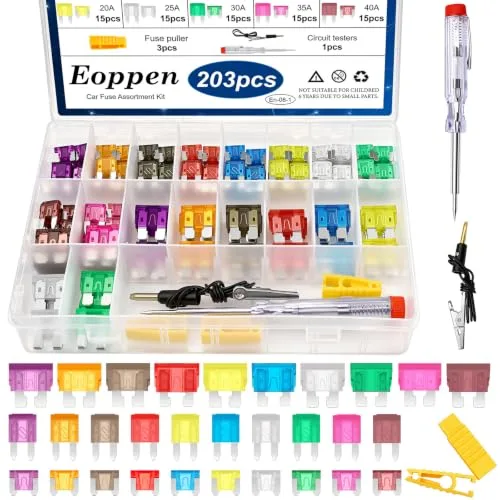 |
Eoppen Car Fuse Assortment Kit with Puller and Circuit Tester – $8.99 This kit covers two steps from the guide below: a plastic puller to grip the fuse, plus enough spare amperages that a blown fuse does not mean a parts-store run.
|
A car fuse is a small safety device that sits between a circuit and the battery. It is built around a thin metal strip rated for a specific amperage, and if that circuit ever draws more current than the rating allows, the strip melts and breaks the connection before the wiring, a sensor, or a control module gets damaged. Pulling the fuse out of the box is the first move in figuring out what actually happened.
Fuses live in one or two boxes on every car: an interior panel near the driver’s footwell or dashboard, and often a second box in the engine bay for higher-current systems like the radiator fan or fuel pump. If something like a power window, the radio, or the horn suddenly stops working, checking that circuit’s fuse is usually faster and cheaper than a shop visit.
Tools You Need to Remove a Fuse
You do not need a full toolbox for this job. Here is what actually helps:
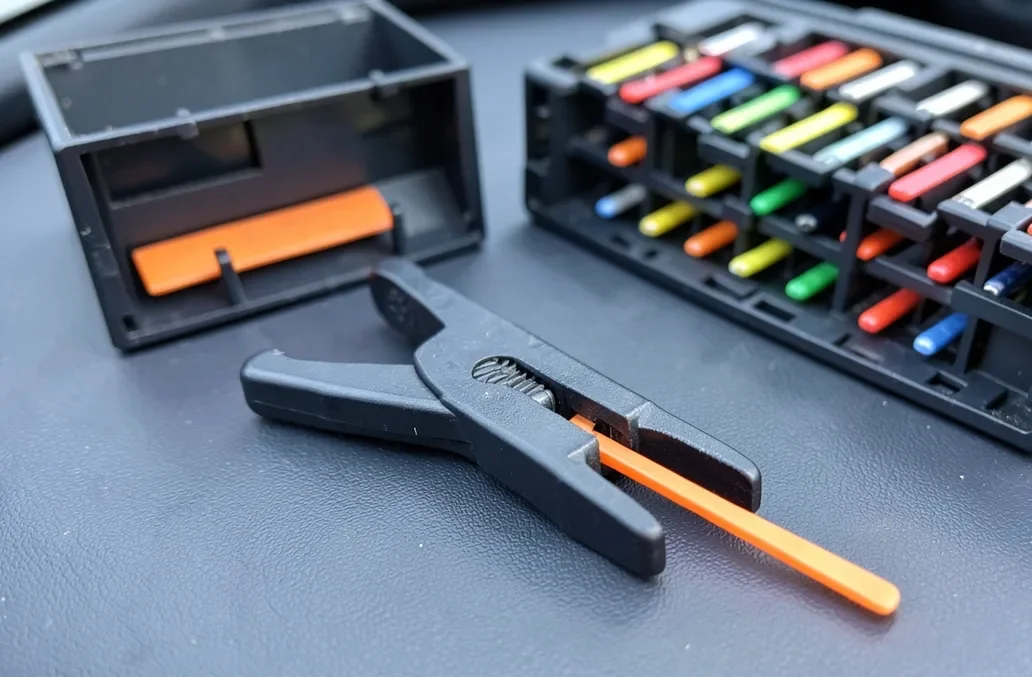
- Fuse puller: a small plastic tool with a two-pronged slot that grips a fuse without touching bare metal.
- Needle-nose pliers: a workable backup, as long as you only grip the plastic body of the fuse, never the metal prongs.
- Flashlight or phone light: fuse boxes are usually tucked in dim spots, and you will need to read the amperage printed on the cover diagram.
- Replacement fuses: keep a few spares in the amperages your car actually uses, based on the cover diagram.
| Tool | Typical Price | What It’s For | Where to Buy |
|---|---|---|---|
| Fuse puller | $3-$10 | Grips a fuse without touching the metal prongs | Auto parts store, or bundled in fuse assortment kits |
| Needle-nose pliers | $8-$15 | Backup if you don’t own a fuse puller | Hardware store |
| Flashlight or phone light | Already own one | Reads the amperage printed on the fuse and cover diagram | N/A |
| Replacement fuses (assorted) | $5-$10 | Swaps in once you confirm the amperage that blew | Auto parts store |
Table 1: the basic tools for a safe fuse pull, roughly ordered from must-have to nice-to-have.
How to Remove a Fuse From a Car Fuse Box
Here is the safe order of operations, start to finish:
- Turn the key off. You do not need to disconnect the battery for a routine fuse pull; the ignition being off is enough on almost every low-amperage circuit.
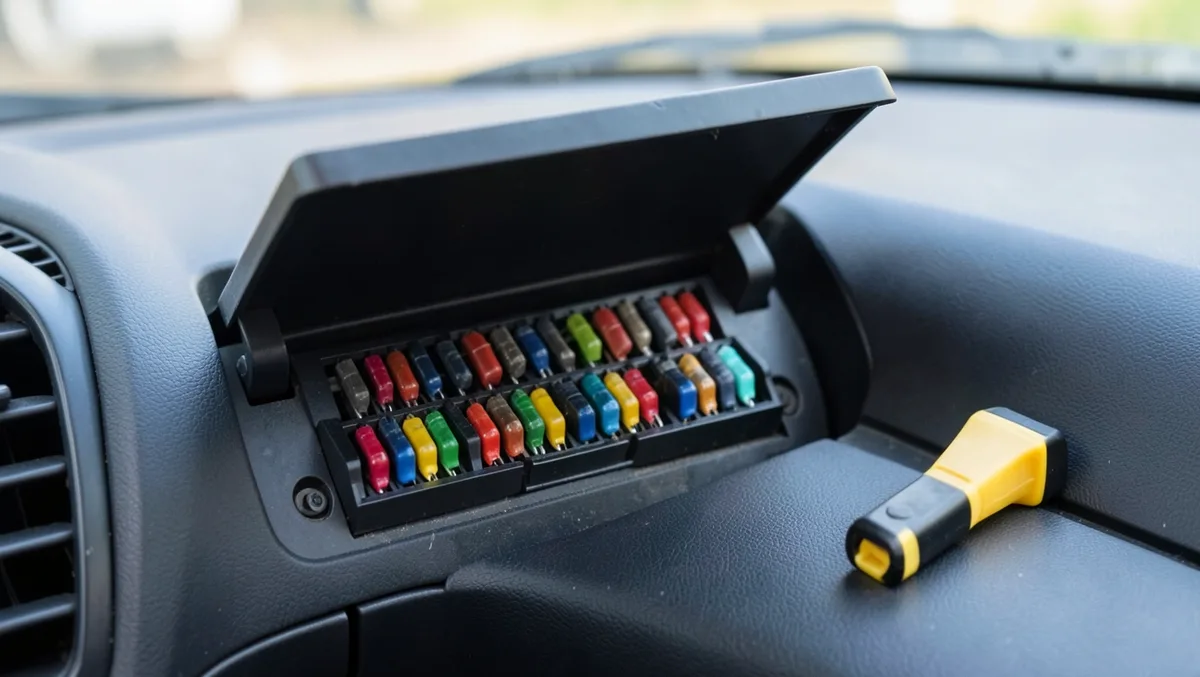
- Find the fuse box. Check the owner’s manual or the diagram printed inside the box cover; most cars have one interior box and one under the hood.
- Pop the cover off. It is held on by simple plastic tabs on nearly every vehicle, so no tools are needed to open it.
- Match the fuse to the diagram. The cover diagram lists which slot controls which circuit and what amperage it should carry.
- Grip it with a fuse puller. Line up the puller’s two prongs with the fuse and pull straight up and out; do not twist or pry sideways.
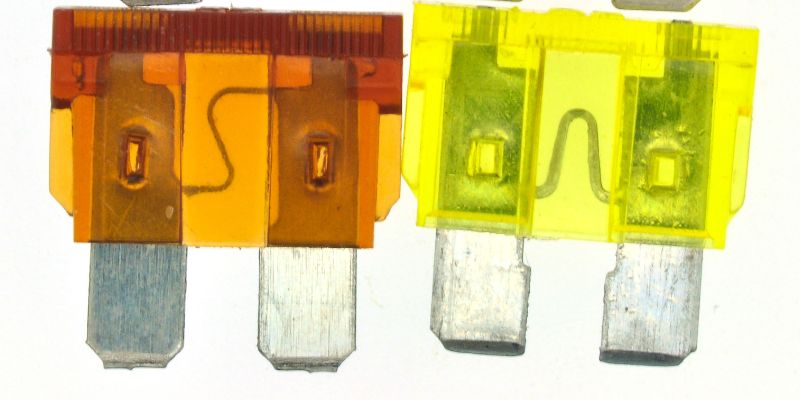
- Inspect the metal strip. Hold it up to the light. A good fuse shows one unbroken strip running across the middle; a blown one shows a gap or a scorch mark.
- Replace with the same amperage. A higher-rated fuse defeats the point of the fuse and can let a real overload keep going until something else fails.
Safety tip: never pry a fuse out with a screwdriver or knife blade. Metal touching both prongs at once can short the circuit and, near a battery, cause a spark.
Benefits and Drawbacks of Pulling Your Own Fuse
Pulling your own fuse is quick, and it is one of the cheapest fixes a car can need; a replacement fuse costs pennies next to a shop’s diagnostic fee for the same swap. It also teaches you where your fuse boxes are and what each circuit controls, which pays off the next time something electrical acts up.
It is not always effortless, though. Fuses tucked into a packed engine-bay box can be hard to reach with pliers, and if a fresh fuse blows again right after you replace it, that is a sign of a short or an overloaded circuit rather than a bad fuse – pulling another one will not fix that on its own.
| Pros | Cons |
|---|---|
| Costs a few dollars instead of a shop visit | Fuses in tight engine-bay boxes can be hard to reach |
| Takes a couple of minutes once you know the slot | A fuse that blows again right away points to a bigger electrical problem |
| Helps you learn your car’s fuse layout | Using the wrong amperage can damage other components |
Table 2: weighing DIY fuse removal against a shop visit.
Common Mistakes to Avoid
A few mistakes come up again and again with fuse work:
- Using a metal tool: a screwdriver or knife can bridge both prongs and cause a short, sometimes with a visible spark.
- Guessing the amperage: always match the number printed on the old fuse or the cover diagram, never whatever fuse happens to be handy.
- Skipping the ignition-off step: pulling a fuse on a live circuit risks a small arc and makes the fuse harder to inspect safely.
- Losing track of which fuse came from where: label each one if you are pulling more than one at a time, so the cover diagram still makes sense when you put them back.
Practical Tips and Common Fuse Types
A few habits make this job faster the next time around:
- Keep a small assortment of spare fuses in the glovebox or center console, in the amperages your car’s diagram lists most.
- A phone flashlight works fine for most interior fuse boxes; you rarely need a dedicated one.
- Photograph the cover diagram once, so you are not hunting for the owner’s manual every time.
Modern cars mostly use blade-style fuses in three sizes, and knowing which one your car has narrows down what to buy:
| Fuse Type | Width | Amperage Range | Common Use |
|---|---|---|---|
| Mini (ATM/APM) | About 11mm | 2A-30A | Compact interior fuse boxes on newer cars |
| Standard (ATO/ATC) | About 19mm | 1A-40A | The most common size: radios, lights, wipers |
| Maxi | About 29mm | 20A-120A | High-current circuits like a cooling fan or starter relay |
Table 3: the three common blade fuse sizes, by width and amperage range.
Alternative Ways to Fix Electrical Issues
A fuse is not always the culprit. If a fresh fuse blows again right away, or the circuit still will not work with a good fuse in place, the next steps are:
- Check the wiring for a chafed or corroded connector near the affected component.
- Test the battery and charging system with a multimeter; a weak battery can make some accessories act erratically without ever tripping a fuse.
- Check what fuse blows when jumping a car backwards if the trouble started right after a jump-start, since reversed cables can take out more than one fuse at once.
Pulling the fuse first is still the right move either way, since it rules out the cheapest, most common cause before you spend time chasing a wiring problem.
Conclusion
Removing a car fuse comes down to three things: turn the key off, grip the fuse with a puller instead of your fingers or a metal tool, and match any replacement to the exact amperage printed on the old one. If the same circuit stops working again with a fresh fuse in place, that is the signal to look at the wiring or the component itself instead of reaching for another fuse.
Frequently Asked Questions
How Do I Find My Car’s Fuse Box?
Check the owner’s manual first; it shows the exact location and often a full circuit diagram. If the manual is not handy, look under the dashboard on the driver’s side and under the hood near the battery. Nearly every car has one panel in each spot, and the inside of each cover usually has its own diagram printed or stamped into the plastic.
What If I Don’t Have a Fuse Puller?
Needle-nose pliers work as a substitute; grip the plastic body of the fuse, not the metal prongs, and pull straight out. A small flathead screwdriver or a bent paper clip can also work in a pinch by gently prying underneath, but go slowly, since these methods make it easier to bend the prongs or slip and touch metal you shouldn’t.
How Do I Know If a Fuse Is Blown?
Hold it up to a light and look at the thin metal strip inside. A good fuse has one continuous strip running from one prong to the other. A blown fuse shows a visible gap, a melted section, or a dark scorch mark where the strip broke. A multimeter set to continuity mode confirms it in a couple of seconds if the break is hard to see.
Can I Use Any Fuse as a Replacement?
No. Always match the amperage rating printed on the fuse you removed or listed on the box’s own diagram, such as this Ford F-150 fuse box diagram. A lower-rated fuse will blow again under normal load, and a higher-rated one can let a real overload keep drawing current well past what the wiring was built to handle, which is a fire risk rather than a convenience.
What If the Fuse Is Stuck?
Wiggle it gently side to side while pulling straight up; do not rock it front-to-back or pry at an angle, since that is what snaps the plastic body. If it still will not budge after a couple of gentle tries, stop. A stuck fuse in a tightly packed box is a reasonable point to hand off to a mechanic instead of risking a cracked fuse block.
Is It Safe to Remove a Fuse Myself?
Yes. Turning the ignition off is enough for a routine fuse check on nearly every low-amperage circuit; you do not need to disconnect the battery for something like a radio or interior light fuse. Stick to a plastic fuse puller or pliers gripping the fuse body, not the metal prongs, and there is no meaningful shock or short risk.
Why Do Fuses Blow?
A fuse blows when its circuit draws more current than the fuse is rated for, usually from a short circuit, a failing component drawing extra current, or a wiring fault. It can also happen after a mistake elsewhere in the electrical system – for example, a fuse can fail right after a jump-start if the cables were connected backwards.
Products related to this article
Sponsored / affiliate links. As an Amazon Associate I earn from qualifying purchases. I may earn additional commission from eligible campaigns.
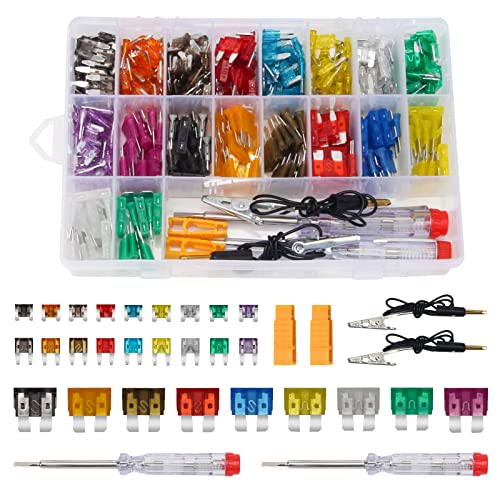 306 PCS Car Fuses Assortment Kit, With 2 Car Fuse Tester and 2 Fuse Puller, Ahier Blade-type Automotive Fuses Replacement Fuses Standard & Mini & Low Profile Mini (2A/5A/10A/15A/20A/25A/30A/35A) (306)
 sdidzad 300 PCS Car Fuse Assortment Kit, Micro & Mini & Standard Blade Fuse Kit, Professional Automotive Replacement Fuses for Car, Truck, RV, Boat (2A 3A 5A 7.5A 10A 15A 20A 25A 30A 35A 40A)