2026 Honda Ridgeline Towing Capacity: Real Specs, Limits, and Owner Advice
You’ve just hooked up a trailer full of lumber or maybe a couple of dirt bikes, and you’re about to pull out of the driveway. Then it hits you: Can this truck actually handle this load safely? The 2026 Ridgeline is a bit of an oddball in the truck world, and figuring out its real limits takes more than a quick glance at a spec sheet.
This guide walks through the exact towing capacity for every 2026 Ridgeline trim, how payload and passengers shrink that number, and what you need to know about hitches, brakes, and cooling before you tow. You’ll also see how it stacks up against the Tacoma and Frontier, plus the common problems owners hit with this specific model year. By the end, you’ll know exactly what your Ridgeline can handle and how to set it up right.
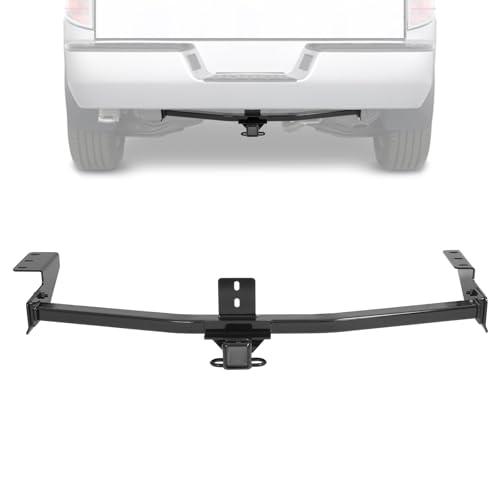
Gelacie
Gelacie Trailer Tow Hitch Receiver Compatible with…
- Fitment: This class 3 trailer hitch receiver is compatible with 2006-2014 Honda Ridgeline
- Function: As a class 3 trailer receiver, it is equipped with a 2" receiver, which is mainly used to expand the vehicle's towing an…
- 5000 LBS: The trailer hitch is rated for 5000lbs gross towing weight, 500lbs gross tongue weight, provides stable support for heav…
If your Ridgeline didn’t come with a factory hitch, you’ll need a solid aftermarket receiver. The Gelacie Trailer Tow Hitch Receiver is a Class III unit built for 2026-2026 Ridgelines. It’s rated for 5,000 lbs gross towing and 500 lbs tongue weight, with a powder-coated steel build that resists rust. It bolts on without welding, though professional installation is recommended if you’re not comfortable under the truck.
Quick Answer: 2026 Honda Ridgeline Towing Capacity
The 2026 Honda Ridgeline has a maximum towing capacity of 5,000 pounds when properly equipped. That figure applies to all trims — the RT, RTL, and RTLX — because they all share the same frame, engine, and transmission.
That 5,000-pound rating assumes a trailer with its own brakes. If the trailer has no brakes, Honda recommends staying well below that, usually around 1,000 pounds. You also need to account for tongue weight, which should be roughly 10-15% of the trailer’s total weight. For a 5,000-pound trailer, that means 500-750 pounds of downward force on the hitch ball.
One thing to remember: this is the absolute maximum, not a comfortable cruising number. Towing 5,000 pounds up a mountain pass in July will stress the truck in ways a flat Midwestern highway won’t.
Towing Capacity by Trim Level (RT, RTL, RTLX)
Good news: trim level doesn’t change the towing capacity. All three 2026 trims — the base RT, the mid-level RTL, and the loaded RTLX — carry the same 5,000-pound rating. Honda didn’t detune the base model or add cooling upgrades to the higher trims.
What changes between trims is comfort and convenience, not capability. The RTL adds leather seats, a power driver’s seat, and alloy wheels. The RTLX throws in a navigation system and rear-seat DVD entertainment. None of that adds or subtracts from towing performance.
That said, heavier trims do carry a bit more curb weight. A loaded RTLX weighs maybe 100-150 pounds more than a base RT. That extra weight comes out of your payload capacity, which we’ll get to in a moment.
Engine, Drivetrain, and Transmission Specs
Under the hood sits a 3.5-liter V6 engine producing 247 horsepower and 245 lb-ft of torque. It’s the same J35 family Honda used in the Pilot and Odyssey of that era, tuned specifically for truck duty.
Power routes through a 5-speed automatic transmission with Honda’s Variable Torque Management. The system can send up to 70% of available torque to the rear wheels and shift power side-to-side between the rear wheels to help with traction. That’s the RT-AWD system, and it’s standard on every Ridgeline.
The transmission is the weak point to watch. The 5-speed automatic is generally reliable, but it runs hot under heavy load. Honda never offered a factory transmission cooler on the 2026 Ridgeline, which is a real oversight for a vehicle rated to tow 5,000 pounds. If you plan to tow regularly, an aftermarket cooler is cheap insurance.
The unibody construction deserves a mention here. Unlike body-on-frame trucks like the Tacoma, the Ridgeline’s frame and body are one piece. That makes it stiffer and less prone to flex, which translates to more stable towing at highway speeds. You won’t get the same truck-like bounce over bumps, but you also won’t feel the trailer pushing the truck around as much.
Payload Capacity and How It Affects Towing
Payload capacity is the weight your truck can carry in the cab and bed combined. For the 2026 Ridgeline, that’s typically around 1,100 to 1,200 pounds, depending on trim and options. You’ll find the exact number on the driver’s side door jamb sticker.
Here’s where people get into trouble. The 5,000-pound towing rating assumes the truck is nearly empty. Add passengers, gear, and a full bed, and your real towing capacity drops fast.
Calculating Your Real-World Towing Limit
Let’s do the math with a real example. Say you have an RTL with a payload capacity of 1,150 pounds.
- You and a passenger: 350 pounds
- Cooler, tools, and camping gear in the bed: 200 pounds
- Tongue weight from a 4,500-pound trailer (at 12%): 540 pounds
Total payload used: 1,090 pounds. You’re under the 1,150-pound limit, but only by 60 pounds. Add a third passenger or a heavier trailer, and you’ve exceeded the GVWR (Gross Vehicle Weight Rating), which is the maximum weight of the truck itself, fully loaded.
The GVWR for the 2026 Ridgeline is 6,050 pounds. Curb weight is roughly 4,500-4,600 pounds. Do the subtraction and you’ll see that payload number again: about 1,150-1,200 pounds.
So here’s the rule: weigh everything. If you’re towing near the max, take your truck and trailer to a public scale. It costs about $10 and tells you exactly where you stand. Guessing is how you end up with a blown transmission or a brake failure on a downhill grade.
Factory Tow Package vs. Aftermarket Installation
The 2026 Ridgeline didn’t have a traditional tow package option like you’d find on an F-150. Every Ridgeline came with the same radiator, alternator, and wiring harness. The only difference between a truck that could tow and one that couldn’t was whether the hitch was installed at the factory or at the dealer.
Honda offered a dealer-installed hitch and wiring kit, but most Ridgelines left the lot without it. That means if you’re buying a used 2026, you’ll likely need to add a hitch yourself.
An aftermarket Class III receiver like the Gelacie hitch runs less than $200 and bolts directly to the frame. A factory-style hitch from Honda costs more, often $400-500, and requires the same amount of labor. For most owners, the aftermarket route makes more sense — same rating, same function, lower price.
You’ll also need a wiring harness for the trailer lights. The Ridgeline’s harness is a simple 4-pin flat connector that plugs into the truck’s existing wiring. If you’re towing a trailer with electric brakes, you’ll need a 7-pin connector and a brake controller, which we’ll cover next.
Towing Safety: Hitches, Brake Controllers, and Cooling
Towing safety starts with the hitch. The 2026 Ridgeline comes with a Class III receiver from the factory, rated for 5,000 pounds. If you’re adding an aftermarket hitch, make sure it’s also Class III with a 2-inch receiver. A 1.25-inch receiver won’t handle the tongue weight of a heavy trailer.
Trailer brakes are non-negotiable above 2,000 pounds. The Ridgeline’s brakes are decent for a truck its size, but they’re not designed to stop an additional 5,000 pounds on their own. If your trailer has electric brakes, you need a brake controller installed in the cab. A proportional controller, like the Tekonsha P3, adjusts braking force based on how hard you’re stopping. That’s much safer than a time-based controller that just pulses the brakes.
Transmission cooling is the other big one. The 5-speed automatic in the 2026 Ridgeline runs hot, especially in stop-and-go traffic or on long uphill grades. Honda didn’t equip this truck with a transmission cooler, which seems like an oversight for a vehicle rated to tow 5,000 pounds. An aftermarket cooler, usually $50-100, installs in front of the radiator and drops transmission temperatures by 30-50 degrees. If you tow more than a few times a year, do this before anything else.
Trailer sway is less of an issue with the Ridgeline than with body-on-frame trucks, but it still happens. A weight-distributing hitch can help if you’re towing a heavy travel trailer, but it’s not always necessary for a utility trailer or boat. The key is proper tongue weight — too little and the trailer will fishtail; too much and the rear of the truck squats.
2026 Ridgeline vs. Competitors (Tacoma, Frontier, Dakota)
The 2026 Ridgeline sat in a weird spot in the mid-size truck market. It wasn’t as rugged as the body-on-frame competition, but it offered a smoother ride and a more car-like interior. Here’s how the towing numbers shake out:
| Truck | Max Towing Capacity | Max Payload | Frame Type | Standard Drivetrain |
|---|---|---|---|---|
| 2026 Honda Ridgeline | 5,000 lbs | 1,150-1,200 lbs | Unibody | RT-AWD (standard) |
| 2026 Toyota Tacoma V6 | 6,500 lbs | 1,500-1,600 lbs | Body-on-frame | RWD or 4WD |
| 2026 Nissan Frontier V6 | 6,300 lbs | 1,400-1,500 lbs | Body-on-frame | RWD or 4WD |
| 2026 Dodge Dakota V8 | 7,000 lbs | 1,400-1,500 lbs | Body-on-frame | RWD or 4WD |
The numbers tell a clear story: the Ridgeline trails the competition in raw towing and payload. But those numbers don’t tell the whole story. The Ridgeline’s unibody frame and independent rear suspension make it more stable at highway speeds with a trailer in tow. You’ll feel less sway and less bounce than in a Tacoma or Frontier, which use leaf springs and a solid rear axle.
For weekend duty — a small boat, a utility trailer, or a couple of ATVs — the Ridgeline is perfectly adequate. If you need to haul a heavy travel trailer or a loaded car hauler, you’re in the wrong truck. That’s the honest trade-off.
Common 2026 Ridgeline Towing Problems and Fixes
Owners have documented a few specific issues with the 2026 Ridgeline that show up under towing load. Knowing these ahead of time saves you from a breakdown on the side of the road.
Transmission overheating. The 5-speed automatic runs hot, and towing pushes it over the edge. Symptoms include delayed shifts, slipping, and a burning smell. The fix is an aftermarket transmission cooler, which you should install before your first serious tow, not after.
Brake wear. The Ridgeline’s front brakes wear faster than most trucks because the truck is heavy and the brakes are undersized for frequent towing. Expect to replace front pads and rotors every 30,000-40,000 miles if you tow regularly. Use high-quality ceramic pads to reduce dust and improve stopping power.
Rear suspension squat. The Ridgeline doesn’t have a traditional leaf spring setup; it uses a torsion beam rear axle. Under a heavy tongue weight, the rear end squats noticeably. Air springs or helper springs can fix this, but they’re an added expense. The simpler solution is to keep tongue weight at the lower end of the 10-15% range.
Electrical gremlins. The factory wiring harness connector can corrode over time, especially in salt-belt states. Check the 4-pin connector for corrosion before every towing season. A quick spray of dielectric grease prevents most issues.
For a broader look at what goes wrong with this model year, check out our guide on 2026 Ridgeline problems.
How to Verify Your Truck’s Exact Towing Capacity
Every 2026 Ridgeline has a towing capacity of 5,000 pounds, but your specific truck might be limited by its condition or modifications. Here’s how to verify what you’re working with:
- Check the door sticker. Open the driver’s door and look for the white and yellow sticker on the door jamb. It lists the GVWR (6,050 lbs) and the payload capacity (typically 1,100-1,200 lbs). This is your starting point.
- Look up the VIN. The VIN doesn’t directly state towing capacity, but it confirms the trim level and any factory-installed options. You can run the VIN through Honda’s owner portal or a service like Carfax to see the original build sheet.
- Check for a factory hitch. If the truck has a hitch from the factory, it’ll be a Class III receiver with a 2-inch opening. Aftermarket hitches are usually stamped with their rating on the side. If there’s no hitch, the truck has no towing capacity until you add one.
- Inspect the cooling system. Look for an auxiliary transmission cooler in front of the radiator. If it’s not there, factor in the cost of adding one if you plan to tow near the maximum.
If you’re buying a used 2026, don’t trust the seller’s word on any of this. Get the VIN, check the sticker, and look under the truck yourself. A truck that’s been in a rear-end collision might have a bent frame, which changes the towing dynamics even if the hitch looks fine.
Frequently Asked Questions
Can a 2026 Honda Ridgeline tow 5,000 pounds?
Yes, but only under the right conditions. The truck needs a Class III hitch, the trailer must have its own brakes, and the combined weight of passengers and cargo in the truck must keep you under the GVWR. On a hot day with a full cab and a heavy trailer, you’ll be right at the edge. A transmission cooler is strongly recommended.
What is the tongue weight limit for a 2026 Ridgeline?
The maximum tongue weight is 500 pounds. That’s about 10% of the 5,000-pound towing capacity. For a lighter trailer, aim for 10-15% of the trailer’s actual weight. A 3,000-pound trailer should have 300-450 pounds of tongue weight.
Does the 2026 Ridgeline need a brake controller?
If your trailer has electric brakes, yes. The Ridgeline’s braking system isn’t designed to stop a heavy trailer on its own. A proportional brake controller is the safest choice because it matches braking force to your deceleration rate. For trailers under 2,000 pounds without brakes, a controller isn’t necessary.
Is the 2026 Ridgeline good for towing a travel trailer?
It’s marginal. A small travel trailer under 4,000 pounds dry weight is doable, but you’ll be close to the truck’s limits with water, propane, and gear. The unibody construction makes it more stable than a Tacoma at speed, but the payload capacity is tight. A pop-up camper or a teardrop trailer is a much better match.
Can you flat tow a 2026 Ridgeline behind an RV?
Yes, the 2026 Ridgeline is one of the few trucks that can be flat towed with all four wheels down. The RT-AWD system has a neutral position that disengages the drivetrain. You’ll need to follow the procedure in the owner’s manual exactly, including the 300-mile towing limit and the 55 mph speed cap. For more details, read our guide on flat towing a Ridgeline.
Final Verdict: Is the 2026 Ridgeline Good for Towing?
For its intended purpose, yes. The 2026 Ridgeline handles light to medium towing duties — boats under 4,000 pounds, utility trailers, small campers — with more stability and comfort than its body-on-frame rivals. The unibody chassis and independent rear suspension make it a better highway tow vehicle than a Tacoma, even if the Tacoma’s rating is higher.
Where it falls short is heavy towing. The 5,000-pound limit is real, but so is the 1,150-pound payload cap. You can’t load up the bed with gear, fill the cab with passengers, and still tow a 5,000-pound trailer. Something has to give.
If you’re towing occasionally and keeping loads reasonable, the 2026 Ridgeline is a smart, comfortable choice. If you need a workhorse that can pull a heavy trailer every weekend, look elsewhere. The F-150’s towing capacity by year shows what a full-size truck brings to the table.
Here’s what to remember before you hook up:
- Maximum towing is 5,000 pounds with trailer brakes; 1,000 pounds without them.
- Tongue weight maxes out at 500 pounds, which is 10% of the tow rating.
- Payload capacity is the real limiter. Weigh your truck and trailer before a long trip.
- Add a transmission cooler if you tow more than a few times a year.
- Install a proportional brake controller for any trailer with electric brakes.
- An aftermarket Class III hitch like the Gelacie bolts on easily and costs less than a factory unit.
- Check the door sticker and VIN to confirm your truck’s condition and rating before buying used.
Products related to this article
Sponsored / affiliate links. As an Amazon Associate I earn from qualifying purchases. I may earn additional commission from eligible campaigns.