2026 Honda Civic Oil Type: Complete Specs, Capacity, and DIY Guide
You just pulled into your driveway after a long commute, and the Maintenance Minder pops up: Oil Life 15%. It’s a simple message, but it triggers a dozen questions. Which oil does the 2026 Civic actually take? Is it different for the hybrid? Can you use any brand, or does it have to be Honda Genuine? Most online advice stops at “use 0W-20,” but that’s only half the story.
This guide covers the full picture for the 2026 model year. You’ll get the exact viscosity for every engine option, precise capacity figures, torque specs for the drain plug, and a step-by-step DIY walkthrough. We’ll also cover the Maintenance Minder reset procedure and what happens if you use the wrong oil. By the end, you’ll know exactly what to buy and how to do the job right.

Bosch
BOSCH 3323 Premium Engine Oil Filter With…
- Exclusive FILTECH media technology screens out and holds on to up to 14 grams of dirt and particles, preventing it from circulatin…
- OE fit ensured through strong steel base plates and housings that prevent warpage, leaks, and poor fit
- Silicone anti-drain back valve ensures engine receives a supply of clean oil when the vehicle is started
Before you head to the store, consider upgrading the filter while you’re at it. The BOSCH 3323 Premium Engine Oil Filter uses FILTECH media that traps up to 14 grams of dirt and a silicone anti-drain back valve to keep oil ready at startup. It’s a solid choice if you want better filtration than a basic economy filter.
2026 Honda Civic Engine Options & Oil Requirements
Honda offers two powertrains for the 2026 Civic, and they do not share the same oil specification. The base and Si models use a 1.5L turbocharged four-cylinder. The Hybrid uses a 2.0L four-cylinder paired with two electric motors. Each engine has its own oil viscosity and capacity.
The 1.5L turbo requires SAE 0W-20. The 2.0L hybrid engine requires SAE 0W-16. Using 0W-20 in the hybrid won’t cause immediate damage, but it will reduce fuel economy slightly and may make cold starts a bit rougher. The opposite—putting 0W-16 in the turbo—is riskier because the oil film is thinner under high heat and load.
Recommended Oil Type & Viscosity (0W-20 vs. 0W-16)
Viscosity is about thickness at temperature. The “0W” part means the oil flows well at -40°F, which is critical for startup wear. The second number (20 or 16) describes the oil’s thickness at 212°F operating temperature. Lower numbers mean thinner oil, which reduces drag on moving parts and improves efficiency.
Hybrid vs. Gas-Only Models
The 2026 Civic Hybrid is the model that confuses people. It takes 0W-16, not 0W-20. Honda made this change to squeeze out every last mile per gallon, since the hybrid’s engine runs less often and at lower loads. The gas-only models (LX, Sport, EX, Si) stick with 0W-20.
Check your owner’s manual if you bought a used 2026 Civic and aren’t sure which engine you have. The VIN’s 8th character indicates the engine type, but the simplest way is to look at the oil fill cap. Honda prints the required viscosity right on it.
Severe Weather & Driving Conditions
Honda’s official chart allows 0W-20 for all ambient temperatures, from -20°F to over 100°F. For the hybrid, 0W-16 is also an all-season oil. You don’t need to switch to 5W-30 for summer heat or 0W-16 for winter. Modern synthetic oils handle a wide temperature range without thinning out dangerously.
The one exception is extreme cold, below -20°F. If you live in northern Canada or Alaska, 0W-16 or 0W-20 still works, but Honda recommends the 0W-16 for hybrids in those conditions because it flows slightly better at startup. Don’t use 10W-30 or 15W-40 in these engines—it will cause hard cold starts and increased wear.
Exact Oil Capacity (Quarts & Liters)
Capacity varies by engine and whether you’re doing a dry fill (new engine) or a regular oil change with filter. Here’s the breakdown:
| Engine | With Filter (Quarts) | With Filter (Liters) | Without Filter (Quarts) |
|---|---|---|---|
| 1.5L Turbo (Gas) | 4.2 quarts | 4.0 liters | 3.9 quarts |
| 2.0L Hybrid | 3.7 quarts | 3.5 liters | 3.4 quarts |
These figures assume the engine is warm and the oil has drained for at least 10 minutes. If you change the oil cold, you might leave a bit more old oil in the pan, so you’ll add slightly less new oil. Always check the dipstick after running the engine for a minute and adjust as needed.
Oil Filter & Drain Plug Specifications
The oil filter is a spin-on cartridge mounted on the engine block. The drain plug is a standard 17mm hex bolt with a crush washer. Torque specs matter here—over-tightening strips the aluminum oil pan threads.
- Drain plug torque: 29 lb-ft (39 Nm)
- Crush washer: Replace every change; part number 94109-14000
- Oil filter torque: Hand-tight plus 3/4 turn, or 18 lb-ft (25 Nm)
OEM Part Numbers & Aftermarket Alternatives
Honda Genuine filters are made by several suppliers and cost around $8-12 at a dealership. The OEM part number for the 2026 Civic is 15400-PLM-A02. Aftermarket options like the BOSCH 3323 are a direct replacement and often provide better filtration media. The Bosch unit has a metal spiral-wound center tube that resists collapse, which matters if you run extended oil change intervals.
Whichever filter you pick, make sure it has an anti-drain back valve. That valve keeps oil in the filter when the engine is off, so the next startup isn’t dry. Cheap filters sometimes skip this, leading to a few seconds of metal-on-metal contact every morning.
Oil Change Interval & Maintenance Minder
Honda doesn’t use a fixed mileage interval. The Maintenance Minder calculates oil life based on engine temperature, RPM, trip length, and driving habits. Typical intervals range from 7,500 to 10,000 miles for normal driving, but city stop-and-go or frequent short trips can drop that to 5,000 miles.
The 1.5L turbo has a known issue with fuel dilution—gasoline can seep past the piston rings into the oil pan, especially in cold weather with short trips. That’s why Honda specifies API SP and ILSAC GF-6 oils, which have better fuel-dilution resistance and low-speed pre-ignition (LSPI) protection. If you do mostly short trips in winter, check your oil level every 1,000 miles and consider changing at 5,000 miles regardless of the Minder.
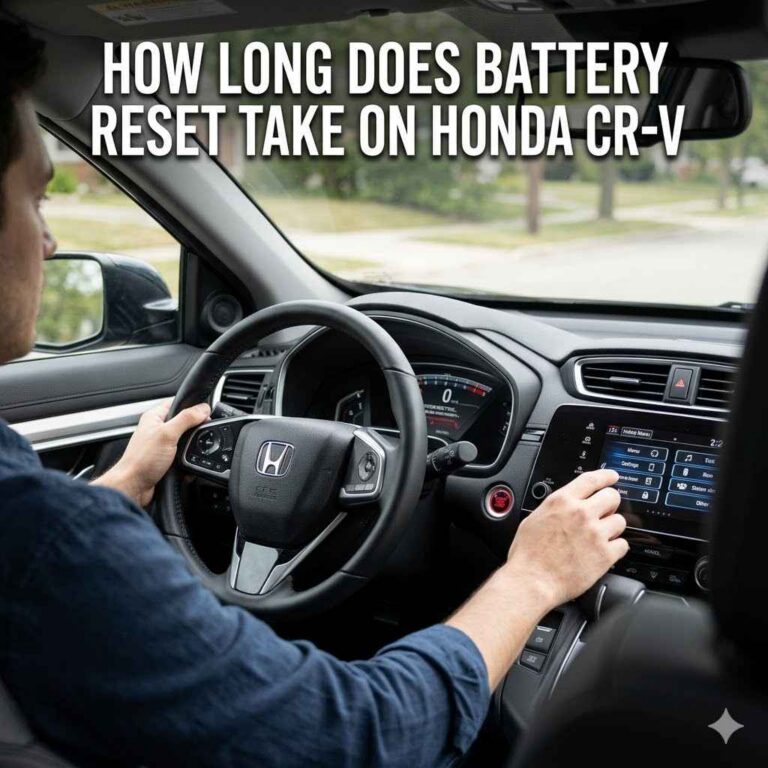
How to Reset the Oil Life Indicator
After an oil change, you need to reset the Maintenance Minder. Here’s the procedure for the 2026 Civic:
- Turn the ignition to ON without starting the engine (press the start button twice without touching the brake).
- Navigate to the oil life screen using the steering wheel controls.
- Press and hold the Enter (center) button for about 10 seconds.
- When the oil life starts flashing, press and hold Enter again for 5 seconds.
- The display will show 100% when the reset is complete.
If you skip this step, the Minder will keep showing the old percentage and you’ll get a false “oil life 0%” warning next week. It takes 30 seconds to do, so don’t ignore it.
Step-by-Step DIY Oil Change Guide
Doing it yourself saves money and takes about 45 minutes the first time. You’ll need a 17mm socket, an oil filter wrench, a drain pan, a funnel, and a torque wrench. Jack stands or ramps are safer than a floor jack alone.

- Warm the engine for 2-3 minutes. Warm oil drains faster and carries more suspended contaminants.
- Raise the car and secure it on jack stands. Never work under a car supported only by a jack.
- Place the drain pan under the oil pan. Loosen the drain plug with the 17mm socket, then unscrew it by hand while pushing slightly inward to avoid a splash.
- Let the oil drain for at least 10 minutes. While it drains, move the pan under the oil filter.
- Remove the oil filter using a wrench. Some oil will spill out—that’s normal. Wipe the filter mounting surface clean.
- Apply a thin film of fresh oil to the new filter’s gasket. This prevents the gasket from sticking to the engine during removal next time.
- Screw the new filter on by hand until the gasket touches, then tighten 3/4 turn. Don’t use a wrench to overtighten.
- Install a new crush washer on the drain plug and torque to 29 lb-ft. The washer is single-use; reusing it risks leaks.
- Lower the car and add fresh oil. For the 1.5L turbo, add 4 quarts, then check the dipstick and top up gradually. For the hybrid, add 3.5 quarts.
- Start the engine and let it idle for 30 seconds. Check under the car for leaks, then shut off and recheck the oil level after 2 minutes.
A torque wrench is worth the investment here. The aluminum oil pan threads strip easily if you overtighten the drain plug, and that repair costs several hundred dollars. The $30 wrench is cheaper than the helicoil kit.
Cost Breakdown: DIY vs. Professional Service
A DIY oil change for the 2026 Civic runs about $35-45 when you buy quality synthetic oil and a good filter. That includes 4 quarts of full synthetic 0W-20 or 0W-16, a Bosch or Mobil 1 filter, and a crush washer.
A dealership charges $70-100 for the same service. Independent shops usually land around $55-75. The difference is mostly labor—a shop charges $20-30 for 30 minutes of work, plus a markup on parts.
DIY makes sense if you have the tools and a safe place to work. It also lets you use your preferred oil brand and filter. The downside is dealing with used oil disposal and the initial tool cost. For most people, doing it yourself once pays for the tools, and the second change is pure savings.
Used Oil Disposal & Environmental Tips
Used oil is hazardous waste. Dumping it down a drain contaminates groundwater and is illegal in every state. One quart of oil can pollute 250,000 gallons of water.
Most auto parts stores (AutoZone, O’Reilly, Advance Auto) accept used oil free of charge, up to 5 gallons per visit. They also take used oil filters—drain them overnight, then place them in a sealed plastic bag. Some municipalities have household hazardous waste collection days if you can’t find a store that takes filters.
Never mix used oil with antifreeze, brake fluid, or solvents. Contaminated oil is much harder to recycle and many collection sites will reject it. Keep your drain pan dedicated to oil only.
Warranty & Oil Spec Compliance (API SP/ILSAC GF-6)
Using a non-Honda brand oil does not void your warranty. The Magnuson-Moss Warranty Act protects you from that. What voids the warranty is using oil that doesn’t meet the manufacturer’s specification, or neglecting changes altogether.
The 2026 Civic requires oil certified to API SP and ILSAC GF-6. These standards cover low-speed pre-ignition (LSPI) protection, timing chain wear, and sludge control. Any oil bottle with the API SP donut or ILSAC GF-6 starburst meets the requirement, regardless of whether it says “Honda” on the label.
Full synthetic is strongly recommended, especially for the 1.5L turbo. Synthetic oil resists thermal breakdown and fuel dilution better than conventional or synthetic-blend oils. The extra $10 per change is cheap insurance for a turbocharger that spins at 150,000+ RPM.
Keep your receipts and log the mileage for each oil change. If you ever need warranty work on the engine, the service advisor will ask for proof of maintenance. A simple notebook entry or a photo of the odometer and oil bottle is enough.
Frequently Asked Questions
Can I use 0W-20 in the 2026 Civic Hybrid?
Yes, in an emergency, but it’s not ideal. The hybrid’s engine is designed for 0W-16 to maximize fuel economy. Using 0W-20 will increase friction slightly and may drop your MPG by 1-2%. It won’t cause mechanical damage in the short term, but you should switch back to 0W-16 at the next change.
How often should I change the oil in a 2026 Civic?
Follow the Maintenance Minder, which typically triggers between 7,500 and 10,000 miles. If you drive mostly short trips, in heavy traffic, or in extreme cold, change it at 5,000 miles. The 1.5L turbo is more sensitive to fuel dilution, so err on the side of shorter intervals in winter.
Does the 2026 Civic require full synthetic oil?
Honda recommends full synthetic, and it’s the right choice for both engines. The 0W-16 for the hybrid is only available as a synthetic. For the 1.5L turbo, synthetic blend might meet the API SP spec, but full synthetic provides better high-temperature stability and fuel-dilution resistance. Spend the extra few dollars.
What happens if I use 5W-30 instead of 0W-20?
Using 5W-30 in a 2026 Civic is a bad idea. The thicker oil at operating temperature increases engine drag, reduces fuel economy, and may cause the variable valve timing (VVT) system to operate sluggishly. It won’t destroy the engine immediately, but it’s outside the manufacturer’s specification and could contribute to premature wear. Stick with 0W-20 or 0W-16.
Is the oil filter the same for all 2026 Civic trims?
Yes, all 2026 Civic trims use the same oil filter, including the hybrid and the Si. The part number is 15400-PLM-A02 for OEM, and the Bosch 3323 is a direct aftermarket replacement. The filter mounts in the same location on both engines.
What to Remember Before You Start
- Gas models (1.5L turbo) take 0W-20; the hybrid takes 0W-16. Check the oil fill cap if you’re unsure.
- Capacity is 4.2 quarts with filter for the turbo, 3.7 quarts for the hybrid. Add slowly and verify with the dipstick.
- Torque the drain plug to 29 lb-ft and replace the crush washer every time. Overtightening strips the pan.
- Use oil certified API SP and ILSAC GF-6. Brand doesn’t matter for warranty; specification does.
- Reset the Maintenance Minder after each change or the dashboard will keep nagging you.
- Recycle used oil and filters at any auto parts store. It’s free and keeps 250,000 gallons of water clean per quart.
- For the 1.5L turbo, check oil level monthly in winter—fuel dilution can raise the level and thin the oil.
If you’re curious about whether synthetic oil is worth it across the Civic lineup, our synthetic oil guide breaks down the cost-benefit. And if you’re dealing with a leak between the engine and transmission, this diagnostic article will help you identify the source before it turns into a bigger repair.
Products related to this article
Sponsored / affiliate links. As an Amazon Associate I earn from qualifying purchases. I may earn additional commission from eligible campaigns.