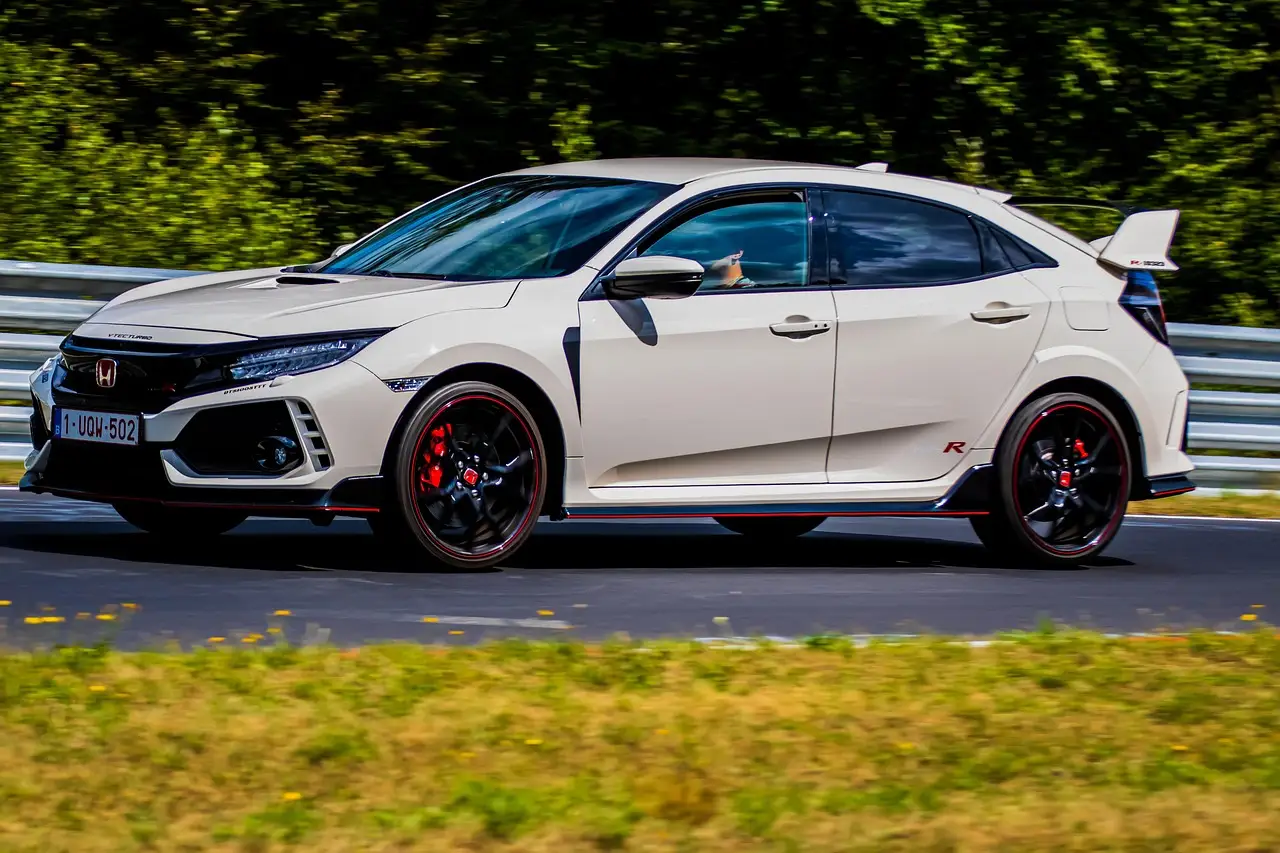
Honda Civic Sedan vs Hatchback: Trunk, MPG, and Price
The Civic Sedan is the better value if you want the lowest price and strongest MPG. Choose the Civic Hatchback only if the liftback cargo opening and fold-flat space are worth roughly a $1,500–$2,000 premium. Ignore that trade-off and you can pay more for cargo flexibility you rarely use, or save money and later regret the trunk layout. This guide compares trunk utility, fuel economy, and real pricing so you can pick the Civic body style that fits your budget and cargo needs.
| Factor | Honda Civic Sedan | Hatchback: Trunk, MPG, and Price | Winner |
|---|---|---|---|
| Starting MSRP | 2026: $24,695; 2027: $24,995 | 2026: $27,895 | Honda Civic Sedan |
| EPA fuel economy | 2026: 32 city / 41 highway MPG; 2027: 32 city / 41 highway MPG | 2026: 30 city / 38 highway MPG | Honda Civic Sedan |
| Cargo usefulness | Traditional trunk; better for tidy, separated loads | Liftback opening; more useful for tall, bulky items and rear-seat fold use | Hatchback: Trunk, MPG, and Price |
| Best everyday fit | Commuting, parking, lower entry price | Groceries, luggage, pets, mixed cargo | Tie |
| Best-fit use case | Lowest-cost commuting and parking; budget-focused buyers who want the newest sedan year listed | Weekend hardware-store runs, road trips with awkward luggage, and cargo that benefits from a larger rear opening and folded rear seats | Honda Civic Sedan |
| Ownership priority | Lowest starting price and better EPA fuel economy | More flexible cargo use and a larger rear opening | Honda Civic Sedan |
| Cargo opening / loading shape | More enclosed trunk layout | Liftback cargo opening with more flexible loading | Hatchback: Trunk, MPG, and Price |
Honda Civic Sedan vs Hatchback: what actually changes?



The main difference is simple: the sedan gives you a lower starting price and better EPA MPG, while the hatchback gives you a larger rear opening and more flexible cargo use. Both are Civic daily drivers, but they do not solve the same ownership problem.
Which specs stay the same and which do not
The Civic keeps its commuter focus in both body styles. What changes is the shape behind the rear seats, how cargo loads, and the starting MSRP. Trim level and powertrain can change the price and MPG further, so you should not treat every Civic badge as the same purchase.
How much more does the Civic Hatchback cost?
The 2026 Honda Civic Hatchback starts in the high-$20,000s, which is a few thousand dollars more than the 2026 Civic Sedan. That is roughly a low-teens premium. The hatchback is also $2,900 more than the 2027 Civic Sedan at $24,995, which is about an 11.6% gap.
2026 Civic Sedan vs 2026 Civic Hatchback
This is the cleanest body-style comparison because it stays within the same model year. The hatchback premium buys cargo flexibility, not a different class of car. If you only need a normal trunk for commuting, groceries, and occasional luggage, the sedan keeps more money in your pocket.
2027 Civic Sedan vs 2026 Civic Hatchback
This comparison is still useful if you are shopping today across dealer lots. The 2027 sedan starts lower than the 2026 hatchback by roughly a few thousand dollars, even before trim changes enter the picture. That spread is large enough to matter if you plan to stay near the base model.
Where hybrid pricing changes the comparison
The 2026 Civic Hatchback Hybrid starts at $30,595, while the 2027 Civic Sedan Hybrid starts at $29,695. That makes the sedan hybrid the lower entry point by $900, even though both hybrids sit well above their non-hybrid counterparts. Hybrid pricing changes the decision more than body style alone.

Which Civic body style has more cargo space?
The Civic Hatchback has the cargo advantage because its liftback opening makes it easier to load awkward items, and its rear seats fold to create a more useful pass-through for bulky cargo. The sedan’s trunk is more enclosed and better for separated, tidy storage, but it is less flexible for tall or wide objects.
Trunk space versus hatch opening
Without inventing unverified cubic-foot figures, the key difference is loading shape. A sedan trunk can be plenty usable, yet the opening limits what you can pass through it. A hatchback’s larger rear opening is better for boxes, folded gear, a stroller frame, or an extra-large grocery order.
Rear-seat fold utility for bulkier items
Rear-seat folding matters when cargo is longer than the trunk opening or taller than the trunk lid line. That makes the hatchback the better pick for pets in crates, flat-pack furniture, and road-trip luggage that refuses to fit through a sedan’s narrower opening. The sedan cannot match that flexibility.
What the hatchback does better for groceries, luggage, and pets
Say your weekly shopping includes several large paper bags plus a case of water. The hatchback’s opening makes loading and stacking easier, especially if you want to keep some cargo low and stable. The sedan still works, but it asks you to respect a smaller entry point.
For luggage, the hatchback is also the easier shape when bags are bulky rather than neatly rectangular. For pets, especially crates or carriers that need room to angle in, the hatchback’s opening and folded rear seats are more forgiving.
Is the Civic Hatchback better on gas than the sedan?
No. The non-hybrid Civic Sedan is better on gas than the non-hybrid Civic Hatchback. For 2026, the sedan is rated 32 city / 41 highway MPG, while the hatchback is rated 30 city / 38 highway MPG. The sedan keeps the fuel-economy lead unless you move to a hybrid.
2026 Civic Sedan MPG ratings
The 2026 Honda Civic Sedan is rated 32 city / 41 highway MPG. Those numbers matter if you spend most of your time on a commute with steady highway miles, because the sedan’s efficiency helps reduce fuel stops and running costs over time.
2026 Civic Hatchback MPG ratings
The 2026 Honda Civic Hatchback is rated 30 city / 38 highway MPG. That is still efficient by normal compact-car standards, but it gives up some efficiency to the hatch body style. If you drive a lot, the sedan’s advantage is real and easy to measure.
Hybrid trims change the MPG picture
The 2026 Civic Hatchback Hybrid is rated 50 city / 45 highway MPG, and the 2027 Civic Sedan Hybrid is rated 50 city / 47 highway MPG. Both hybrids greatly improve efficiency, so at that point the body-style choice becomes more about cargo shape than fuel stops.
What the MPG difference means in daily commuting
A few MPG may not sound dramatic on paper, but it compounds over a year of commuting. If your driving is mostly solo and your cargo needs are modest, the sedan’s better EPA rating makes the cleaner ownership math. If cargo usefulness matters more, the hatchback can still make sense.
Side-by-side decision table: trunk, MPG, and price
This table separates what is driven by body style from what is driven by model year or powertrain. That matters, because the 2027 sedan and the 2026 hatchback are not the same pricing story, and the hybrid versions change MPG enough to move the decision.
| Model | Starting MSRP | EPA MPG | Cargo usefulness | Best use case |
|---|---|---|---|---|
| 2026 Honda Civic Sedan | $24,695 | 32 city / 41 highway | Traditional trunk; best for neat, separated cargo | Lowest-cost commuting and parking |
| 2027 Honda Civic Sedan | $24,995 | 32 city / 41 highway | Traditional trunk; same cargo shape as the 2026 sedan | Budget-focused buyers who want the newest sedan year listed here |
| 2026 Honda Civic Hatchback | $27,895 | 30 city / 38 highway | Liftback opening; better for bulky, tall, or awkward items | Groceries, luggage, pets, fold-flat versatility |
| 2026 Honda Civic Hatchback Hybrid | $30,595 | 50 city / 45 highway | Liftback opening with hybrid efficiency | Cargo flexibility plus strong fuel economy |
| 2027 Honda Civic Sedan Hybrid | $29,695 | 50 city / 47 highway | Trunk layout with hybrid efficiency | High-MPG commuting with the lower-cost sedan body |
Choose Honda Civic Sedan if… / Choose Honda Civic Hatchback if…
Choose the sedan if your priority is the lowest starting price, better EPA fuel economy, and easier parking in tighter urban spaces. Choose the hatchback if your daily life includes bulky groceries, luggage, pet carriers, or cargo that benefits from a larger rear opening and folded rear seats.
Choose Honda Civic Sedan if…
Pick the sedan if you want the cheaper starting point, especially on the 2026 Honda Civic Sedan at $24,695 or the 2027 Honda Civic Sedan at $24,995. It also makes the most sense if your cargo is usually a backpack, briefcase, or a few grocery bags and you value the better 32 city / 41 highway MPG rating.
Choose Honda Civic Hatchback if…
Pick the hatchback if rear-seat fold flexibility matters enough to justify the price premium. It is the better call for road trips with awkward luggage, weekend hardware-store runs, or situations where loading height and opening width matter more than the sedan’s fuel advantage.
How the 2026 and 2027 Civic lineup affects your choice
The 2026 and 2027 Civic sedans have the same EPA rating in the figures provided here, but the 2027 sedan starts $300 higher than the 2026 sedan. That means the model-year shift changes price more than fuel economy, while the hatchback comparison stays focused on cargo shape and the higher body-style premium.
What changed between 2026 and 2027 sedan pricing
The 2026 Civic Sedan starts at $24,695, and the 2027 Civic Sedan starts at $24,995. That is a modest increase, but it still matters if you are comparing base models. If your budget is tight, the older sedan is the lower-entry choice among the two sedan years listed here.
Why hybrid trims can narrow the fuel-economy gap
The hybrid versions reset the conversation. The 2026 Civic Hatchback Hybrid and the 2027 Civic Sedan Hybrid both reach 50 city MPG, so the choice shifts away from fuel savings and toward cargo layout, seating utility, and price. In hybrid form, body style becomes the bigger differentiator.
Which model-year pairing makes the cleanest apples-to-apples comparison
For price and MPG, the best comparison is the 2026 Civic Sedan against the 2026 Civic Hatchback. That pairing keeps model-year effects out of the way and shows the pure body-style premium. It also makes the sedan’s MPG advantage and the hatchback’s cargo advantage easier to weigh honestly.
Should I buy a Civic Sedan or Hatchback for daily commuting?
For most commuting, the Civic Sedan is the smarter default because it costs less and returns better EPA MPG. Choose the Hatchback only if your commute includes regular hauling, if you carry gear that needs a wider opening, or if you want one car to do both commuting and cargo duty.
Parking and low-stress ownership
The sedan is usually the easier commuter pick because it pairs a lower price with a simpler trunk shape and better fuel economy. If your routine is mostly solo driving, street parking, and occasional errands, the sedan delivers the cleaner ownership equation.
When cargo flexibility outweighs the MPG gap
Suppose you are dropping off a stroller, two duffel bags, and a folded cooler before a weekend trip. The hatchback’s opening and fold-flat utility make that load easier to manage. In that kind of use, the extra money can be justified by convenience, not by prestige.
Frequently asked questions
Honda Civic Sedan vs Hatchback which has more cargo space?
The Civic Hatchback has more useful cargo space because its liftback opening and fold-flat rear seats handle bulky items more easily than the sedan’s trunk. The sedan can still carry a lot for daily life, but it is the hatchback that wins when shape, height, and loading access matter.
Is the Honda Civic Hatchback better on gas than the sedan?
No. The 2026 Civic Sedan is rated 32 city / 41 highway MPG, while the 2026 Civic Hatchback is rated 30 city / 38 highway MPG. If fuel economy is the top priority, the sedan is the better choice unless you move to one of the hybrid trims.
How much more does the Civic Hatchback cost than the Civic Sedan?
The 2026 Civic Hatchback starts at $27,895, which is $3,200 more than the 2026 Civic Sedan at $24,695. Against the 2027 Civic Sedan at $24,995, the hatchback is $2,900 more. That premium buys cargo flexibility, not a different driving mission.
Which Civic body style is better for road trips and groceries?
The hatchback is better for road trips and groceries when your luggage is bulky, irregular, or numerous. The sedan works fine for ordinary bags and a lighter load, but the hatchback’s rear opening and fold-flat utility make it the easier shape when you are loading and unloading often.
Does the Civic Sedan have a bigger trunk than the hatchback cargo area?
In practical use, no. The sedan has a traditional trunk, but the hatchback’s rear opening gives you a more flexible cargo area for larger objects. Without relying on unverified volume figures, the hatchback clearly wins on loading shape and rear-seat-fold usefulness.
What are the 2026 Honda Civic Sedan and Hatchback MPG ratings?
The 2026 Honda Civic Sedan is rated 32 city / 41 highway MPG, and the 2026 Honda Civic Hatchback is rated 30 city / 38 highway MPG. That makes the sedan the better pick for maximizing fuel economy in non-hybrid form, especially for longer commutes.
Is the Civic Sedan cheaper than the Civic Hatchback?
Yes. The 2026 Civic Sedan starts at $24,695, while the 2026 Civic Hatchback starts at $27,895. That price gap makes the sedan the lower-cost choice unless you specifically need the hatchback’s cargo opening and fold-flat flexibility.
Should I buy a Civic Sedan or Hatchback for daily commuting?
Buy the sedan if commuting is the main job and you want the best mix of price and MPG. Buy the hatchback if your commute is only part of the picture and you regularly haul items that are easier to load through a larger rear opening.
Products related to this article
Sponsored / affiliate links. As an Amazon Associate I earn from qualifying purchases. I may earn additional commission from eligible campaigns.