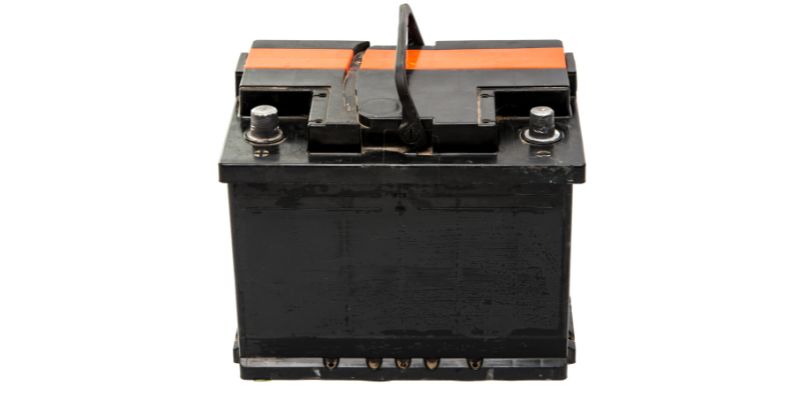
Are AAA Car Batteries Good? East Penn Quality, Specs, and Honest Review
AAA car batteries are reliable mid-tier batteries made by East Penn Manufacturing, one of the largest battery producers in the United States. They are sold exclusively through AAA’s mobile service and NAPA Auto Parts, priced between $150 and $200 — which is higher than comparable Interstate or DieHard batteries ($80–$180) but includes on-site testing, installation, and old battery recycling. The 3-year free replacement warranty is competitive, and AAA members receive a $25 discount plus priority mobile service. This guide covers who makes them, how they compare to alternatives, what the warranty actually covers, and whether they are worth the premium.
AAA car batteries are good, not great. Made by East Penn Manufacturing, they deliver reliable performance with a 3-year free replacement + 6-year prorated warranty. Priced $150–$200, they cost more than Interstate or DieHard — but that price includes mobile installation, battery testing, and recycling. Best value for AAA members who want hassle-free service. If you can install a battery yourself, Interstate from Costco (~$100) offers comparable performance at lower cost.
What Are AAA Car Batteries?
AAA, the American Automobile Association, partners with East Penn Manufacturing to produce their branded batteries. East Penn is one of the largest lead-acid battery manufacturers in the US, based in Berks County, Pennsylvania. Their batteries are sold under the AAA name through AAA’s mobile service, NAPA Auto Parts stores, and AAA-approved repair shops.
AAA offers a range of batteries for different vehicles, from standard sedans to SUVs, in group sizes like 24F, 35, and 48 (H6) to fit popular makes including Honda, Toyota, Ford, and GM vehicles. They are not just a roadside service — their battery program is a significant product line backed by full warranty support and a national service network.
Why Choose an AAA Car Battery?
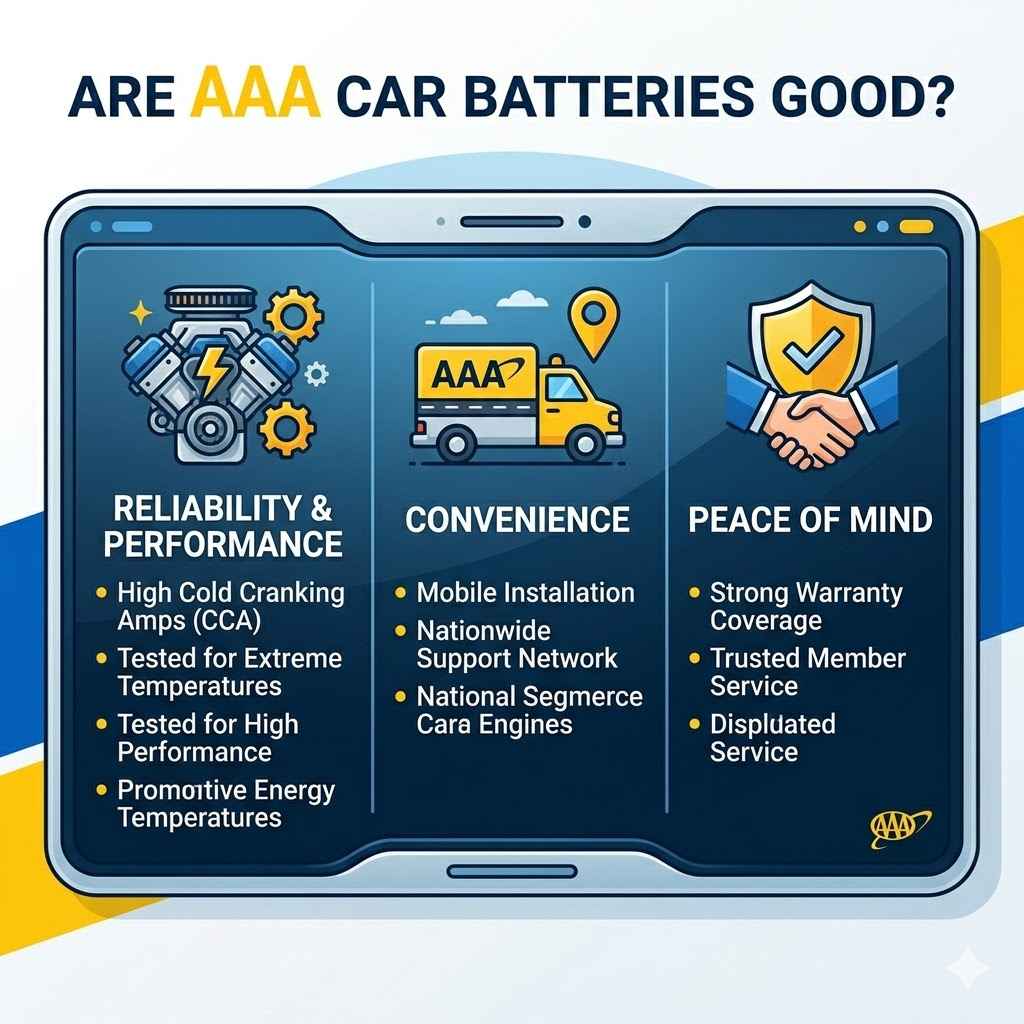
The main reason to choose an AAA battery over a competing brand is the full-service installation model. When you call AAA for a battery, a technician arrives at your location — home, work, or roadside — tests your existing battery, installs the new one, and recycles the old battery on the spot. No tow truck, no waiting at a shop, no installation fee on top of the battery price. The $150–$200 price includes all of that.
For AAA members, a $25 discount applies, and the technician also checks the alternator and starter at no additional charge. The convenience is the primary value proposition — not the battery itself, which is a capable but not exceptional product.
Who Makes AAA Car Batteries?
AAA car batteries are manufactured primarily by East Penn Manufacturing, headquartered in Lyon Station, Berks County, Pennsylvania. East Penn is one of the largest independent battery manufacturers in the United States, producing batteries for dozens of retail and commercial brands. Their manufacturing process involves lead-acid chemistry — either standard flooded or absorbed glass mat (AGM) designs — and their facility is one of the most vertically integrated battery plants in the country, producing everything from lead ingots to finished batteries.
East Penn batteries are known for consistent quality control and fresh stock. When AAA installs a battery, it is typically manufactured within the previous 150 days — recently manufactured batteries perform better and last longer than inventory that has sat on shelves for extended periods. This freshness commitment is a genuine advantage over budget batteries at big-box stores, which can sit in warehouse inventory for a year or more before purchase.
How Are AAA Batteries Made?
AAA batteries are lead-acid batteries, available in two types: standard flooded (conventional) and absorbed glass mat (AGM). Standard flooded batteries are the traditional design used in most older vehicles. AGM batteries use fiberglass mat separators that absorb the electrolyte, making them spill-proof, vibration-resistant, and capable of handling the higher electrical demands of modern vehicles with start-stop technology, push-button start systems, and advanced infotainment.
The batteries are tested for cold cranking amps (CCA), reserve capacity (RC), and leakage resistance before distribution. CCA is the most critical spec for cold-weather starting — a higher CCA rating means the battery can deliver more power in freezing temperatures. AAA Premium batteries in common group sizes typically deliver 700–730 CCA, which is adequate for most passenger vehicles.
Are AAA Batteries Reliable?
AAA batteries are reliable for typical daily driving. Consumer Reports has tested several AAA Premium models (BAT8451RAAA, BAT8448AAA, BAT8435AAA) and rated them satisfactory — solid in reserve capacity and cold-weather starting but not in the top tier alongside brands like Optima or ACDelco. Most owners report 3–5 year lifespans under normal conditions, which is consistent with the industry average for mid-tier batteries.
Where AAA batteries underperform compared to expectations is in extreme heat climates. In consistently hot regions like Arizona and Florida, some users report lifespans closer to 2–3 years. This is partly inherent to lead-acid chemistry (heat accelerates sulfation and water loss) and partly because the standard flooded design is more heat-sensitive than premium AGM batteries. In cooler climates, AAA batteries tend to reach or exceed the 5-year mark.
How Long Do AAA Batteries Last?
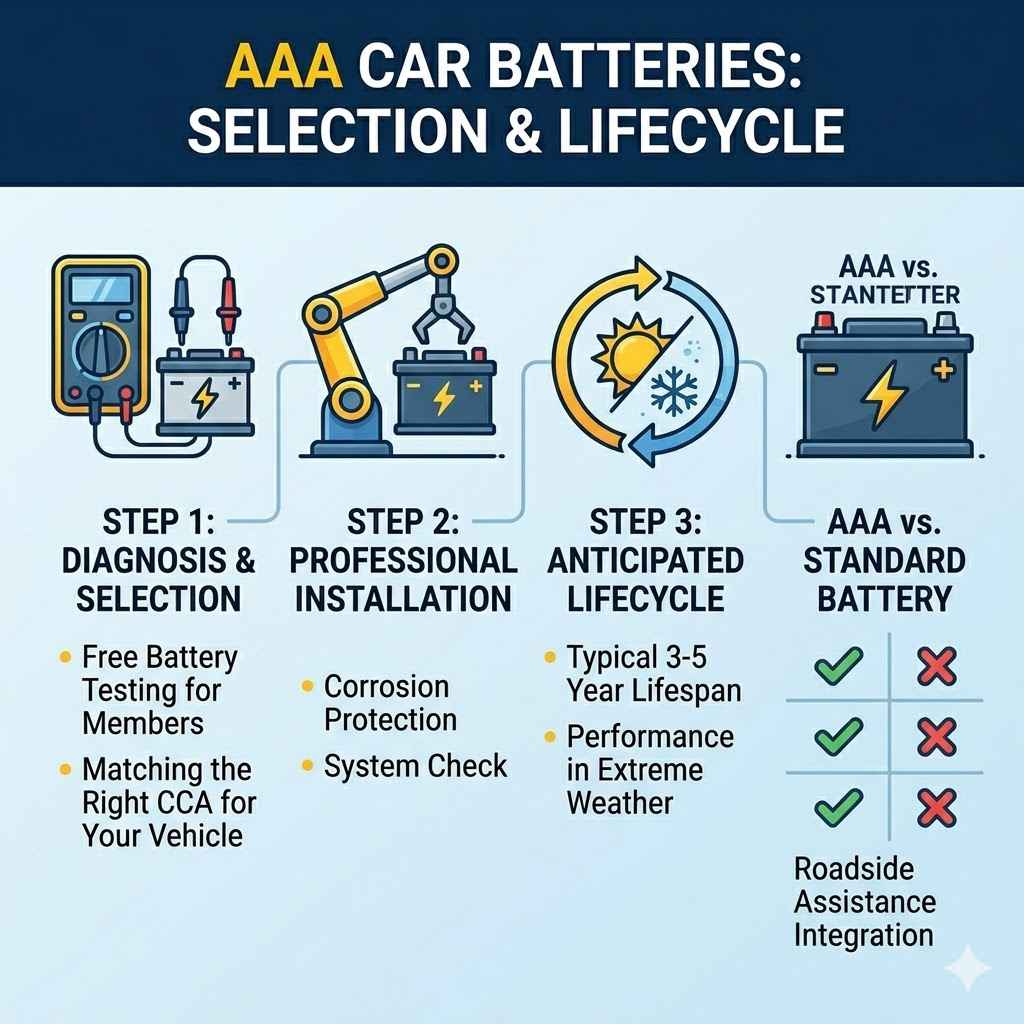
AAA batteries typically last 3–5 years. The primary factors affecting lifespan are climate, driving patterns, and vehicle electrical load. Heat is the most damaging factor — battery electrolyte evaporates faster in high temperatures, and the chemical reactions inside accelerate wear. In hot climates (Arizona, Florida, Texas), expect 3 years. In moderate or cold climates (Midwest, Northeast), 4–5 years is typical.
Short daily trips also reduce battery life significantly. When a car only makes trips under 15 minutes, the alternator does not fully recharge the battery between cycles. Over time, this chronic undercharging causes sulfation — a buildup of lead sulfate crystals on the battery plates — which permanently reduces capacity. Highway driving once a week for 30+ minutes helps prevent this. A battery tender (trickle charger) is recommended if the vehicle sits unused for more than two weeks.
What’s the Warranty Like?
AAA batteries come with a 3-year free replacement warranty followed by a prorated warranty for up to 6 years total. The 3-year free replacement is one of the more generous warranties in the mid-tier segment — DieHard matches it, but Interstate’s standard warranty is 2–3 years depending on the model. Within the free replacement period, if the battery fails for any reason, AAA replaces it at no charge, including mobile service.
The warranty applies to AAA members who purchase through AAA or NAPA. Keep your warranty card and proof of purchase — some users have reported delays in warranty service without documentation. After the 3-year free period, the prorated warranty reduces the replacement cost proportionally based on how much of the 6-year period has elapsed.
How Much Do AAA Batteries Cost?
AAA batteries typically range from $150 to $200, with AGM batteries at the higher end. The price includes delivery, testing, installation, and recycling — costs that add up separately when buying at a parts store. AAA members receive a $25 discount, bringing typical pricing to $125–$175 after the member discount.
For comparison: Interstate batteries at Costco run $80–$120 (not including installation); DieHard batteries at Advance Auto Parts are $130–$180; Optima premium AGM batteries cost $200–$300. If you are comfortable installing a battery yourself in 20 minutes, Interstate or DieHard offer comparable performance at meaningfully lower out-of-pocket cost. If you want someone to come to you and handle everything, AAA’s all-in pricing is reasonable.
How Do AAA Batteries Compare to Other Brands?
Here is how AAA batteries stack up against the main alternatives for everyday drivers:
- Optima: Top-tier AGM batteries with spiral cell design. Last up to 6 years and handle vibration better than any competing design. Cost $200–$300. Appropriate for performance vehicles, off-road use, or high-electronics vehicles. Overkill for standard commuters.
- DieHard (Clarios): Made by the same Clarios group that produces many OEM batteries. Reliable, 3-year warranty, $130–$180. Performance comparable to AAA at often-lower price, but requires self-installation or separate labor cost.
- Interstate: Popular through Costco and independent shops. Priced $80–$120, 2–3 year warranty depending on model. Good 4–5 year lifespan. No mobile installation included, but the low price makes self-installation worthwhile for most buyers.
- EverStart (Walmart): Budget option at $70–$100. Made by Clarios. 2-year warranty. Adequate for older vehicles or budget-constrained buyers, but Consumer Reports consistently places them below mid-tier competitors in longevity.
AAA batteries fall between DieHard and Interstate in price, and roughly equal to both in objective performance. The premium over Interstate is almost entirely a service charge — you are paying for the mobile installation and AAA brand support, not significantly better battery chemistry.
Table: AAA vs. Other Car Batteries
| Brand | Price Range | Warranty | Lifespan | Best For |
|---|---|---|---|---|
| AAA | $150–$200 | 3-year free, 6-year prorated | 3–5 years | Convenience, mobile service |
| Optima | $200–$300 | 3-year free | 4–6 years | Performance, high-electronics vehicles |
| DieHard | $130–$180 | 3-year free | 3–5 years | Everyday drivers, Advance Auto Parts |
| Interstate | $80–$120 | 2–3 years free | 4–5 years | Best value for self-installers |
| EverStart | $70–$100 | 2-year free | 2–3 years | Budget buyers, older vehicles |
Are AAA Batteries Good for All Cars?
AAA offers batteries for most cars, trucks, and SUVs in standard group sizes (24F, 35, 48/H6, 51R, and others). Their website and mobile service use your vehicle’s year, make, model, and engine to match the correct group size and cold cranking amp specification. For vehicles with start-stop technology, heavy factory electronics, or luxury features that require AGM batteries, AAA offers AGM options at the higher end of their price range.
Specialty vehicles — classic cars, diesel trucks with high CCA requirements, European vehicles that spec proprietary AGM batteries (BMW, Mercedes) — may require confirmation before booking. AAA’s mobile service carries a wide range but cannot stock every possible fitment. For most mainstream vehicles (Honda, Toyota, Ford, GM, Hyundai, Kia), AAA’s standard and AGM offerings cover the requirement.
How Does Climate Affect AAA Batteries?
Climate is the single biggest factor in battery lifespan — more impactful than brand or price tier. Heat speeds up internal chemical reactions and evaporates electrolyte, causing plates to sulfate and capacity to drop. In regions with sustained summer temperatures above 90°F (Arizona, Florida, Texas), batteries of any brand typically last 3 years. Cold weather reduces cranking power temporarily but does not degrade the battery the way heat does — batteries in northern climates regularly reach 5+ years.
AAA batteries are designed for all-weather performance with competitive CCA ratings for cold starts. In freezing temperatures, a fully charged AAA Premium battery will start most vehicles reliably. If you live in an extremely hot climate, upgrading to the AGM version rather than standard flooded reduces heat sensitivity and is worth the additional cost.
What About Maintenance?
AAA’s standard batteries are sealed maintenance-free — there are no water level checks or electrolyte additions required. AGM batteries are completely sealed with no serviceable components. The only routine maintenance needed is terminal inspection and cleaning: check for white or blue-green corrosion buildup at the terminals every 6 months (or at every oil change), and clean with a mixture of baking soda and water using a stiff brush if corrosion is present. Corrosion increases resistance and can prevent the battery from delivering its full starting current.
Keeping the battery hold-down bracket tight reduces vibration damage. Short daily trips (under 15 minutes) chronically undercharge the battery — taking one longer highway drive per week helps maintain charge. If the vehicle sits for more than two weeks, connect a battery tender to prevent deep discharge, which permanently damages battery health at the cell level.
Is the AAA Mobile Service Worth It?
For most AAA members, yes — particularly in situations where the vehicle is disabled and unable to be driven to a shop. The mobile service dispatches a technician who tests the existing battery (to confirm replacement is necessary), installs the new battery on site, and recycles the old one. Response time varies by region but is typically 30–60 minutes. The technician also checks the alternator and starter output at no additional charge, which can catch a failing charging system before it kills the new battery.
For non-emergency replacements — when the vehicle is still driveable and you have time to shop — the mobile service adds cost without much additional benefit over going to a shop. In that scenario, purchasing an Interstate battery at Costco and having it installed at any auto parts store for $15–$20 is a meaningfully cheaper option with comparable battery performance.
Are There Any Downsides to AAA Batteries?
The main drawback is cost. At $150–$200, AAA batteries are priced higher than Interstate or EverStart alternatives that deliver similar lifespan and performance. You are paying primarily for the service package — mobile installation, testing, recycling — not for a superior battery product. Buyers who are comfortable with a 20-minute DIY battery swap have no strong reason to pay the AAA premium.
Availability is limited to AAA mobile service and NAPA — you cannot buy AAA batteries at Walmart, AutoZone, or O’Reilly. In rural areas with limited AAA service coverage or NAPA locations, the convenience advantage disappears. The 3-year free warranty requires maintaining your AAA membership and retaining proof of purchase — without both, warranty claims can be delayed.
Tips for Getting the Most Out of Your AAA Battery
- Keep it charged: Short trips under 15 minutes do not fully recharge the battery. Take one 30-minute highway drive per week to maintain full charge.
- Clean terminals: Inspect terminals every 6 months. Clean corrosion with a brush and baking soda solution. Corrosion adds resistance and reduces starting power.
- Secure the battery: Vibration damages internal battery plates over time. Check that the hold-down clamp is tight.
- Avoid heat exposure: Park in shade or a garage when possible. Heat is the top cause of premature battery failure.
- Use a battery tender: If the car sits unused for more than two weeks, connect a trickle charger to prevent deep discharge, which permanently reduces capacity.
Should You Buy a AAA Battery?
Buy a AAA battery if: you are an AAA member, your vehicle is disabled and you cannot drive to a shop, and you want an all-inclusive service where someone else handles the installation. The $25 member discount and included service make the price more defensible in that scenario.
Consider an alternative if: your vehicle is still driveable, you are budget-conscious, or you are comfortable with a basic DIY installation. An Interstate battery from Costco ($80–$120) with a $15 installation at AutoZone will deliver comparable performance at $50–$75 less total cost. The battery type your vehicle needs (flooded vs. AGM) matters more for performance than brand choice within the mid-tier category.
Conclusion
AAA car batteries are a reliable mid-tier option made by East Penn Manufacturing with competitive warranty coverage and a genuinely useful mobile service package. The battery itself is not exceptional — Consumer Reports rates AAA models as satisfactory but not top-tier — but the 3-year free replacement warranty and all-inclusive installation service are legitimate value for members in emergency situations. If cost is the priority and you can install a battery yourself, Interstate or DieHard at lower prices deliver comparable performance. If convenience is the priority and you want someone to handle it completely, AAA’s system is well-designed and dependable.
Frequently Asked Questions
Are AAA car batteries better than Walmart’s?
AAA batteries (made by East Penn) are higher quality than EverStart batteries (Walmart, made by Clarios). EverStart typically lasts 2–3 years with a 2-year warranty. AAA batteries last 3–5 years with a 3-year free replacement warranty. The $50–$100 price difference is partially justified by better chemistry and warranty, and partially by AAA’s mobile installation service.
How long do AAA car batteries last?
Typically 3–5 years. Hot climates like Florida or Arizona shorten lifespan to 3 years due to heat accelerating electrolyte loss. Cooler climates like the Midwest or Northeast can see 5+ years. Driving habits matter too — frequent short trips under 15 minutes cause chronic undercharging, which shortens battery life regardless of brand.
Can I get an AAA battery if I’m not a member?
Yes. Non-members can purchase AAA batteries through the mobile service or at NAPA Auto Parts. However, non-members pay full price ($150–$200) and do not receive the $25 member discount or priority service response. NAPA sells AAA-branded batteries that can be purchased and installed independently at NAPA stores.
What’s the warranty on AAA batteries?
AAA batteries carry a 3-year free replacement warranty followed by a prorated warranty through year 6. Within the 3-year free period, any failure results in a free replacement including mobile service. After year 3, you pay a prorated portion based on how much of the 6-year total period has elapsed. Keep your warranty card and AAA membership active to ensure smooth claims.
Do AAA batteries work in all cars?
AAA batteries cover most passenger cars, trucks, and SUVs in standard group sizes. Their quoting tool matches batteries to your specific year, make, model, and engine. Vehicles requiring AGM batteries (start-stop technology, heavy factory electronics) are covered by AAA’s premium AGM lineup. Specialty vehicles or rare European fitments may need confirmation before service is scheduled.
Products related to this article
Sponsored / affiliate links. As an Amazon Associate I earn from qualifying purchases. I may earn additional commission from eligible campaigns.