When Should You Change Oil on a New Car? Maker Guidance
Most automakers do not tell you to change the oil at 1,000 miles. Toyota’s 2025 guide sets service every 5,000 miles or six months, Subaru’s 2024 booklet every 6,000 miles or six months, and Honda and GM trip the first change from an oil-life monitor with a once-a-year backstop. Below: what each maker says, the break-in oil myth, severe-service rules and how to protect your warranty.
Why Oil Changes Matter for a New Car
 |
Best Oil Drain Pan Pick for a First DIY Change MaxWorks 50965 Low Profile 8.5 Quart (8 Liter) Oil Drain Container If you decide to do your first oil change yourself instead of at the shop, a drain pan with a built-in funnel and sealable plugs keeps the old oil contained and easy to carry to a recycling drop-off. Always check your owner’s manual for the correct oil type and capacity first.
|
As an Amazon Associate we earn from qualifying purchases. Spec-based pick from the listing, not a hands-on test.
A new engine runs on its first fill of oil for a good while, but that oil still ages with heat, short trips and time. Toyota’s guide warns that skipping oil service can cause oil starvation or oil gelling, which can lead to severe damage that is costly to repair. It also tells owners to check the oil level once a month. So the question is not whether to change it, but when the maker says to.
The documents we read for this update (all read on 2026-10-12) point to the same answer: your owner’s manual or maintenance booklet is the authority, and it either gives a mileage and time interval or tells you to follow the oil-life monitor. The table below shows how that looks by maker.
The First Oil Change: Timing Is Everything
Here is the first-service guidance as each maker publishes it. Documents are for specific model years, so treat this as a map of how each brand works, then confirm the numbers in your own manual.
| Maker | Document read (as of 2026-10-12) | What it says about oil changes |
|---|---|---|
| Toyota | 2025 Warranty and Maintenance Guide | Scheduled maintenance every 5,000 miles or six months, whichever comes first. Replace oil and filter after 12 months or 10,000 miles since the last change even if the maintenance reminder has not appeared. Special operating conditions: 5,000 miles or six months. |
| Honda | 2024 CR-V Hybrid owner’s manual (Maintenance Minder) | Remaining oil life is shown as a percentage. “Due Soon” at 15 to 6 percent, “Due Now” at 5 to 1 percent, then “Past Due”. If no message appears more than 12 months after the display was reset, change the oil every year. |
| Ford | Ford support page, Intelligent Oil-Life Monitor | The monitor calculates intervals from use, operating conditions and time since the last service. “Change Engine Oil Soon” means about 5 percent oil life remains; “Oil Change Required” means none remains. The page gives no fixed mileage and points to the owner’s manual. |
| Subaru | 2024 model year Warranty and Maintenance booklet | Engine oil and filter at every 6 months or 6,000 miles, whichever occurs first. Severe driving: every 3,000 miles or 3 months. |
| GM | 2017 Silverado owner’s manual (older, as-of date applies) | Oil life system. After CHANGE ENGINE OIL SOON appears, change within the next 600 miles. Change at least once a year even if the system says no. If the system was reset by accident, change within 3,000 miles of the last change. |
| Hyundai | Hyundai online owner’s manual pages (2025) | Separate normal and severe schedules. The numeric interval sits in your model’s maintenance chart, which the page we read did not show. The normal interval assumes the recommended oil is used. |
Two things stand out. First, no single mileage works for every brand: the same question gets 5,000 miles from one maker, 6,000 from another and a percentage from a third. Second, none of these documents says to do a special early change at 1,000 miles. If your manual says nothing different, the first change is simply the first scheduled one.

Following the Manufacturer’s Schedule
Pull out the owner’s manual or the warranty and maintenance booklet and look for three things: the normal interval, the severe-service interval, and whether your car has an oil-life monitor. Then write the date and odometer reading of your last service somewhere you will find it.
How an oil-life monitor works
GM’s manual says its system works from engine revolutions, engine temperature and miles driven, so the mileage at which a change is indicated can vary considerably. It must be reset to 100 percent after each oil change, and only then. The Ford support page on the Intelligent Oil-Life Monitor describes the same idea: use, operating conditions and time since the last service. Honda adds a visible percentage and a yearly fallback. Our walkthrough on resetting the oil life on a Honda CR-V shows an example of the reset step.
What to do when the manual and a sticker disagree
A quick-lube shop sticker is that shop’s recommendation, often a round number such as 3,000 miles. Your owner’s manual is the maker’s schedule for your engine. When they differ, follow the manual, or the oil-life monitor if your car has one. If a shop wants a shorter interval, ask it to explain why in terms of your driving, not a rule of thumb. Our guide to what an oil change costs shows what you pay for each visit.
Driving Conditions and Oil Change Frequency
Every maker splits its schedule into normal and severe (or special) operating conditions. For a new car this matters more than the odometer, because many new-car owners start with short commutes. The lists we read are consistent:
- Toyota (2025 guide): driving mainly on dirt or dusty roads, towing or heavy loading, extensive idling or low-speed driving over long distances, and repeated trips under five miles in temperatures below freezing (32 F).
- Subaru (2024 booklet): repeated short-distance driving, extremely cold weather and repeated trailer towing are among the severe conditions that move oil and filter to 3,000 miles or 3 months.
- GM (2017 manual): severe service includes mostly heavy city traffic in hot weather, hilly or mountainous terrain, frequent trailer towing, high-speed or competitive driving, and taxi, police or delivery use.
- Hyundai (2025 pages): short trips (under 5 miles normally, under 10 miles in freezing weather), long idling, unpaved or salted roads, towing, and using engine oil that is not recommended.
Toyota adds a useful rule: apply the special schedule only if most of your driving is under those conditions, not if you hit them only occasionally. If your commute is two miles each way, you are the severe-service driver, even in a car with 800 miles on it.
Engine Break-In and How Often to Change Oil After That
The most repeated claim about new cars is that the first oil change must happen very early to flush metal debris from the break-in. We could not find that instruction in any of the Toyota, Honda, Ford, Subaru or GM documents above. What the GM manual does say is that the vehicle does not need an elaborate break-in, and its break-in guidance is about driving: keep speed at 55 mph or less and avoid constant speed and full-throttle starts for the first 500 miles, avoid hard stops for about 200 miles while new brake linings bed in, and do not tow a trailer during break-in.
That is the corrected myth: break-in is a driving habit, not an oil-change deadline. Changing early anyway is a personal choice some owners make, but it is not what these manuals ask for, so check yours before paying for an extra service. After the first change, keep to the same schedule: the interval does not shrink or grow because the car is no longer new.
Synthetic oil does not change this either. Hyundai’s page ties the normal interval to using the recommended oil, and GM warns that failing to use the recommended oil can cause engine damage not covered by the vehicle warranty. Read the oil spec printed on your invoice. For background, see our posts on conventional vs synthetic oil and how long synthetic oil lasts.
Checking Your Oil Between Changes
The schedule assumes you also check the level. The makers differ on how often:
- Toyota: once a month.
- Subaru: weekly, with the engine off.
- GM: at each fuel stop, per its maintenance schedule. The manual also warns that the dipstick handle may be hot enough to burn you, so use a towel or glove.
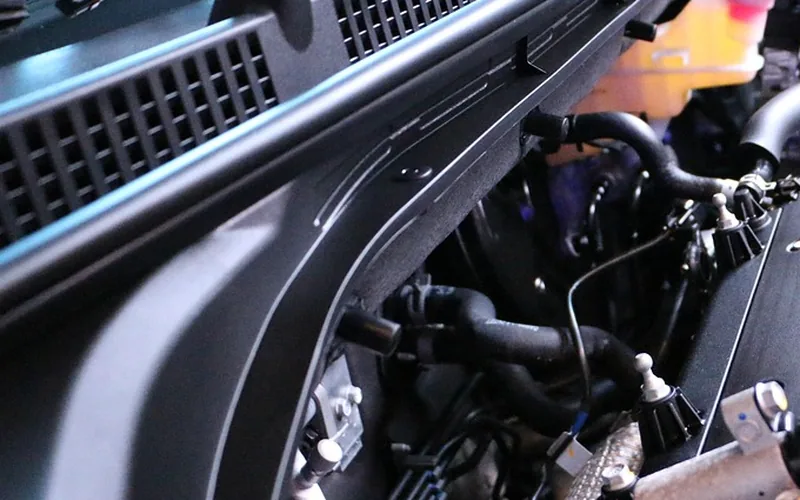
If a low-oil warning appears, check the level first. GM’s manual says that if the oil is not low and the message stays on, take the vehicle to your dealer. If you see an engine oil hot message, treat it as a stop-and-get-help condition rather than something to drive through. Our guide on how often to check your car oil covers the routine.
DIY Oil Changes vs. Professional Service
Doing it yourself is allowed, but the maker’s own warning is blunt. GM’s manual says it can be dangerous to work on your vehicle without the proper knowledge, service manual, tools or parts, and to follow owner’s manual procedures. It also says never to get under a vehicle supported only by a jack, because if it slips off you could be badly injured or killed. If you are not equipped with proper support for the vehicle, the safe choice is a shop. Our guide to lifting a car for an oil change safely at home goes into the setup.

- Stop and see a professional if: you cannot support the car safely without relying on a jack alone, the drain plug or filter will not come loose without excessive force, or oil is leaking after the change.
- Hot oil and parts: the engine, oil and dipstick can be hot. Let the car cool before working, and use gloves.
- Used oil: GM’s manual says to recycle it at a place that collects used oil, not to put it in the trash or on the ground. Most pans with a sealable plug, like the one in the box above, are designed to carry it there.
- Reset the monitor: if your car has an oil-life system, reset it after the change, because it does not reset itself.
This section is general safety guidance based on the manufacturer’s manual we read. It is not a substitute for your own vehicle’s procedure; our editors have flagged it for human review.
Warranty and Records: Keep the Paper Trail
A common fear is that an oil change at an independent shop or in your own driveway voids the new-car warranty. The FTC consumer page on auto warranties (April 2024) says you do not have to use the dealer for repairs or maintenance to keep your warranty in effect, and that it is illegal for a dealer to deny coverage just because someone else did routine maintenance. There is one exception it names: if a warranty covers work or parts for free, the maker can require its own providers or parts.
What protects you is evidence. The FTC page says to keep records and receipts of oil changes, tire rotations and other maintenance, whoever does the work, because they can show the vehicle was maintained and a missing record can lead to a denied claim. GM’s manual says the same in practice: keep parts receipts with the mileage and date of any service work you perform. Keep a simple log with these fields:
- Date and odometer reading
- Who did the work, or “self” for a DIY change
- Oil grade and specification used, plus the filter part number
- Receipt copies for oil and filter, and a photo of the oil-life reset screen if you reset it
Toyota’s guide separately says proper maintenance is required to keep warranty coverage intact, which is why the schedule matters as much as the paperwork. If a shop quotes a service the maker’s schedule does not list, ask for the reason in writing before you agree.
Signs Your Oil Needs Changing Sooner
Any of the following means you should check the level and consult your manual now instead of waiting for the interval: a low-oil or oil-pressure warning, an oil-life message such as CHANGE ENGINE OIL SOON or Oil Change Required, or a maintenance reminder that has reached Due Now. If a warning light stays on after you have topped up the oil, stop driving and have the car checked, since the manufacturer instruction is to take it to a dealer when the oil level is not the cause.
Frequently Asked Questions
When should I change the oil in my brand-new car?
Follow your owner’s manual. In the documents we read, Toyota says service every 5,000 miles or six months, Subaru every 6,000 miles or six months, and Honda, Ford and GM use an oil-life monitor, with Honda and GM adding a one-year limit.
Is the 1,000-mile break-in oil change necessary?
None of the Toyota, Honda, Ford, Subaru or GM documents we read call for it. GM’s manual says the vehicle does not need an elaborate break-in and gives driving guidelines instead. Changing early is optional.
What if my oil life monitor says 0 percent?
Honda’s manual calls that Past Due and says to service immediately, and Ford says no oil life remains and the oil should be changed now. Change it as soon as you can and reset the monitor afterward.
Will an independent shop void my new car warranty?
The FTC says it is illegal for a dealer to deny warranty coverage because someone else performed routine maintenance. Keep every receipt, since they show the car was maintained. Check your warranty booklet for any free-work provisions.
How do I know if my driving is severe?
Makers list conditions such as repeated short trips, long idling, dusty or unpaved roads, towing, extreme cold and taxi or delivery use. Toyota says apply the special schedule only if most of your driving is under those conditions.
Can I change the oil myself on a new car?
You can, but follow the owner’s manual procedure, check the oil specification and never rely on a jack alone while working under the car. If you cannot support the car safely, use a shop.
Related Oil Guides
- How much does an oil change cost?
- How to lift a car for an oil change safely at home
- Will high mileage oil hurt a new car?
- How often should you check your car oil?
Bottom line: the first oil change on a new car is the first one your maker schedules, not a special early service. Read the manual, watch the oil-life monitor if you have one, keep a log, and see a professional whenever the safe way to do the job is unclear.
Products related to this article
Sponsored / affiliate links. As an Amazon Associate I earn from qualifying purchases. I may earn additional commission from eligible campaigns.