Car Horn Stuck On? How to Turn It Off Fast
A stuck car horn is almost always an electrical problem, not a broken horn. Pulling the horn fuse from the fuse box silences it in seconds — from there, the horn relay, the steering-wheel button, and water intrusion after rain explain most of the rest. This guide covers the fastest way to stop the noise right now, then how to find and fix whatever is actually causing it.
Why Car Horns Get Stuck
Horns don’t sound on their own — something in the circuit is telling them to. The most common trigger is electrical: a stuck relay, a shorted switch, or water that worked its way into the steering column after a rain and bridged a connection that should stay open. The horn button itself is a frequent culprit too, since spilled drinks, dust, and years of pressing wear down the contact underneath it until it jams closed.
Mechanical causes are rarer but do happen — a swollen or corroded horn unit, or debris lodged in the mounting bracket, can hold the contacts together the same way a stuck button does. Whatever the cause, the fastest move is always the same: kill the power first, diagnose second.
Step 1: Stay Calm and Assess the Situation
A blaring horn is jarring, but it’s rarely dangerous — take a moment before you start pulling parts. Notice whether it’s constant or intermittent: constant blaring usually points to a stuck relay or a jammed button, while intermittent honking is more often a loose or shorting wire.
Where you are matters too. In a residential area, get the horn silenced quickly to avoid disturbing neighbors; in a parking lot or driveway, you have a little more time to work through the fixes below methodically instead of guessing.
Step 2: Try the Obvious Fixes First
Start with the simplest possibilities. Press the horn button firmly a few times — a stuck button will sometimes free itself with a firm, direct press. Then wiggle the steering wheel side to side; this can jar loose whatever is holding a stuck contact closed inside the horn assembly.
If that doesn’t help, turn the engine off and back on. Restarting resets the vehicle’s electrical system and occasionally clears a momentary short on its own. If you’re driving when the horn starts, pull over safely first — these quick checks take only a few seconds and can save you from a more involved repair.
Step 3: Disconnect the Horn Fuse
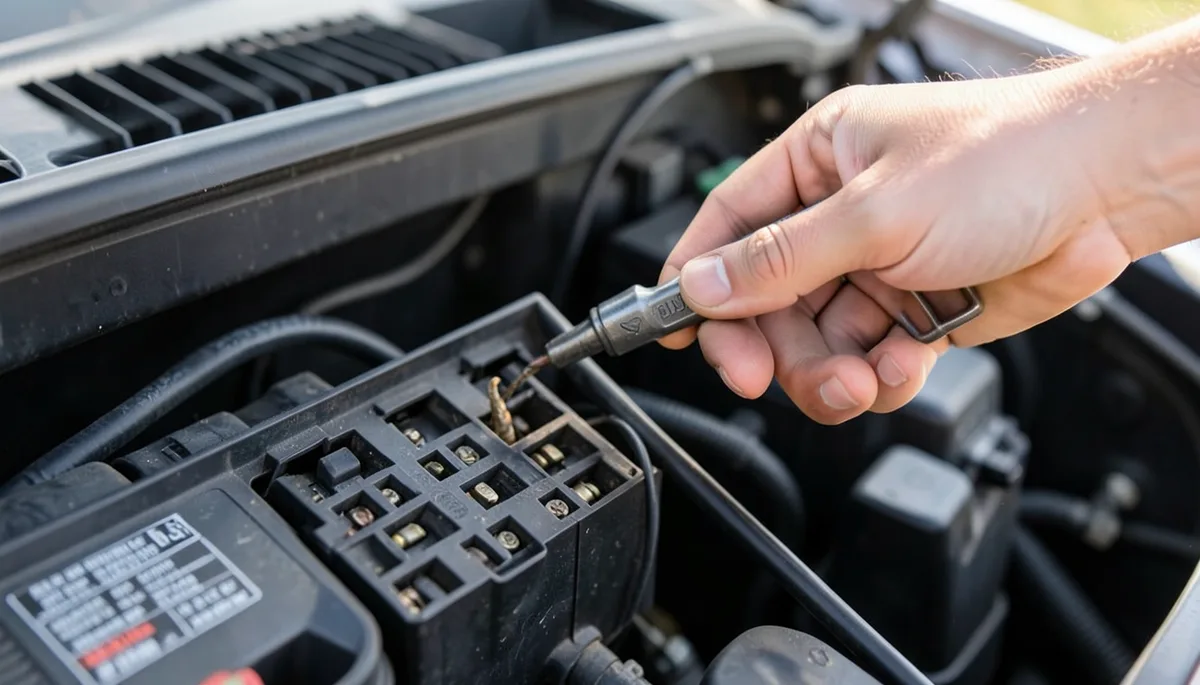
If the quick fixes above don’t stop it, pulling the horn fuse is the fastest reliable way to kill the noise. Every car has at least one fuse box — usually under the hood near the battery, under the dashboard, or both — and the owner’s manual lists exactly which fuse controls the horn along with its amperage.
The horn fuse is typically labeled “Horn” or “H” and rated between 10 and 20 amps. Pull it with a fuse puller or a pair of needle-nose pliers rather than your bare fingers, since some fuse boxes sit close to hot engine components. The horn should stop the instant the fuse comes out — set it aside somewhere safe, since you’ll need to reinsert it once the actual problem is fixed.
Step 4: Disconnect the Battery
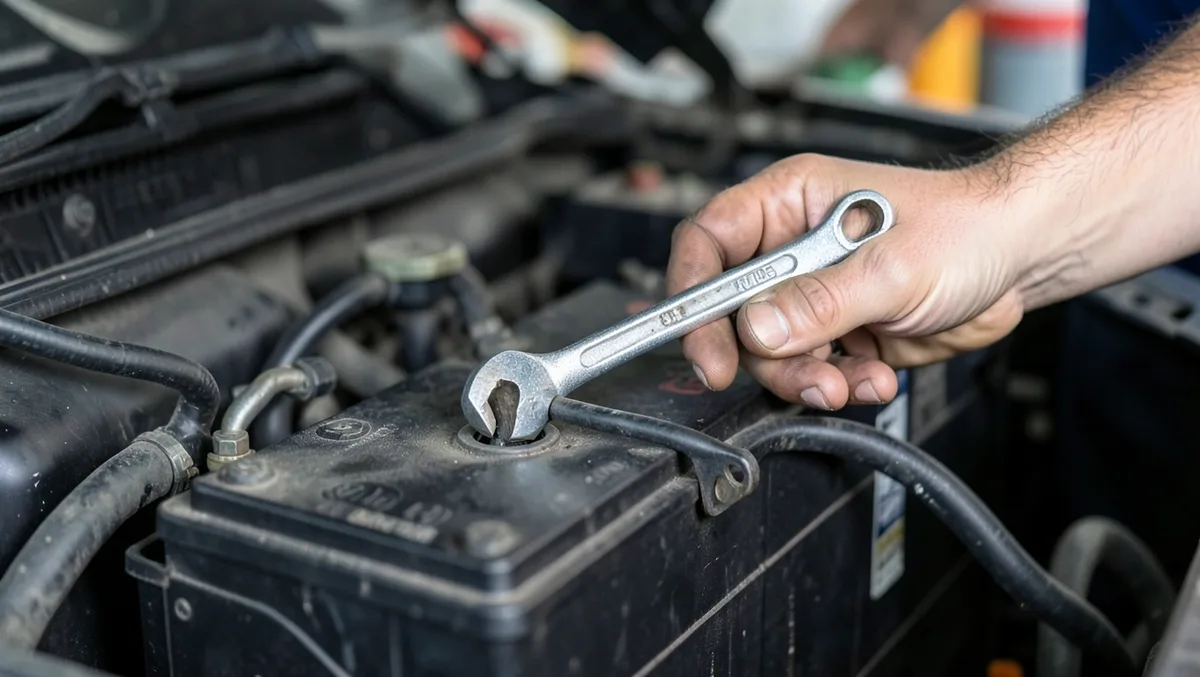
If you can’t locate the fuse, or pulling it doesn’t stop the horn, disconnecting the battery will. Open the hood, find the negative terminal (marked with a “–” and usually wearing the black cable), and loosen the clamp bolt with a wrench until the cable slides free.
Keep the wrench away from any metal surface while you work to avoid an accidental short, and tuck the loose cable somewhere it can’t swing back and touch the terminal. This kills the horn immediately, but it’s strictly a temporary measure — you’ll need to reconnect the battery before the car will start or run any other electronics.
Step 5: Check the Horn Button and Steering Wheel
The horn button itself is one of the most common points of failure. It’s built into the steering wheel assembly, and years of pressing, spilled drinks, or dust buildup can leave the internal contact stuck closed instead of springing back open.
If you’re comfortable working around it, remove the steering wheel cover or horn pad (check the owner’s manual for the exact screws or clips) and look for dirt, moisture, or corrosion on the contact. A cotton swab and rubbing alcohol will often clear light grime and free a stuck contact. Be careful here — steering wheels contain an airbag, so avoid disturbing any wiring you don’t recognize, and stop if anything looks like it’s part of the airbag module.
Step 6: Inspect the Horn Relay
The horn relay lives in the fuse box and acts as the switch between the horn button and the horn itself. When it fails — usually from corrosion after moisture gets in, or simply from age — it can stick closed and keep the horn powered continuously.
The fuse box cover or the owner’s manual will show which slot holds the horn relay, often labeled directly. Pull it and check for rust, a burnt smell, or visible corrosion on the pins. Relays are inexpensive — typically $10 to $20 at any auto parts store — and swapping in a known-good one is usually faster and more reliable than trying to clean a failing one.
Step 7: Check the Horn Itself
Occasionally the horn unit itself is the problem rather than anything controlling it. Horns are usually mounted under the hood near the front grille or behind the front bumper. Unplugging the horn’s wiring connector — it’s normally a single plug — will stop the sound immediately if the unit is the cause.
Inspect it for rust, corrosion, or debris once it’s exposed; a wasp nest or built-up grime inside the horn cup is a surprisingly common find. A replacement horn typically runs $20 to $50, and replacing it yourself is usually just a matter of unbolting the old one and bolting in the new one.
Step 8: Look for Wiring Issues
If the fuse, relay, and horn all check out, the fault is likely in the wiring — a frayed or pinched wire in the steering column, or a loose connector near the horn or fuse box, can intermittently short the circuit and trigger the horn on its own.
This is the one step worth handing to a professional. Wiring runs through the steering column near the airbag system, and tracing an intermittent short without the right tools can take hours — or cause a different problem. A shop can usually diagnose and repair a wiring fault like this for somewhere between $50 and $150.
Common Causes of a Stuck Horn
The table below breaks down the most common causes, how to recognize them, and what actually fixes each one.
| Cause | Symptoms | Fix |
|---|---|---|
| Stuck Horn Button | Horn sounds when turning or pressing the wheel | Clean or free the contact; replace the button or clock spring if it stays stuck |
| Faulty Relay | Constant or random honking | Replace relay ($10–$20) |
| Damaged Horn | Horn sounds weak, distorted, or won’t stop | Clean or replace horn ($20–$50) |
| Wiring Issue | Intermittent or constant honking | Inspect wires, get professional help |
| Water Damage | Horn acts up after rain or a wash | Dry components, check for corrosion |
Keep this table handy while troubleshooting — matching the symptom to the likely cause saves time before you start pulling parts.
Temporary Fixes for a Stuck Horn
When you need the noise gone right now — in a parking lot with people staring, or a driveway at night — pulling the fuse or disconnecting the battery are the two fastest options, and unplugging the horn’s wiring connector under the hood works just as well if you can get to it quickly.
All three are genuinely temporary. They stop the sound but do nothing to fix whatever caused it, so treat them as a bridge to get you through the moment, not a repair — plan to track down the real cause within a day or two.
When to Call a Professional
Bring in a mechanic if you’ve checked the fuse, relay, and horn and the problem is still there, or if you suspect the issue lives in the wiring near the steering column. Airbag components sit close to that wiring, and it’s not worth the risk of working around them without the right training.
A diagnostic visit for a horn problem in the US typically runs $50 to $150 depending on what’s actually wrong — a bad relay is on the cheap end, a wiring repair on the expensive end. Ask the shop for a diagnostic before authorizing repairs so you know exactly what you’re paying for.
Preventing Future Horn Problems
Most future horn failures trace back to the same two things: liquid and moisture. Keep drinks and food away from the steering wheel area, since a spill is one of the most common ways a horn button jams. Address any windshield, sunroof, or door-seal leak quickly too — water that reaches the steering column or fuse box is a leading cause of shorted relays and corroded contacts.
A quick annual check of the fuse box and horn relay for corrosion, especially heading into a wet season, catches most problems before they turn into a horn that won’t stop.
Driving with a Disabled Horn
Pulling the fuse or disconnecting the horn will let you drive, but only as a short-term measure. A horn is a required safety feature in most US states — California and Texas, among others, require a functioning horn for a vehicle to be considered roadworthy — so treat a disabled horn as something to fix within a day or two, not indefinitely.
If you do have to drive without one in the meantime, stay extra alert around pedestrians and other drivers, since you’ve lost one of your main ways to signal a hazard.
Tools You’ll Need for the Job
Most of this job can be done with tools already in a typical home toolbox:
- Screwdriver set: For removing steering wheel covers or accessing the fuse box.
- Wrench: To disconnect the battery.
- Fuse puller: Often included in the fuse box, or use needle-nose pliers.
- Owner’s manual: To find the fuse and relay locations.
- Flashlight: For checking under the hood or dashboard.
- Cotton swabs and rubbing alcohol: For cleaning the horn button.
A full set typically costs under $30 at any hardware or auto parts store if you need to buy everything from scratch.
Conclusion
A stuck car horn almost always comes down to one of four things: a jammed button, a bad relay, water intrusion, or a wiring fault — and pulling the fuse or disconnecting the battery will silence it the moment it starts, regardless of which one it turns out to be. Work through the steps above in order, starting with the fastest fix and moving to the more involved checks only if you need to, and you’ll usually have the actual cause identified within an hour.
FAQs
Why is my car horn going off randomly?
It’s likely a stuck horn button, faulty relay, or wiring issue. Check the steering wheel first, then the fuse or relay.
Can I drive with the horn fuse removed?
Yes, but only temporarily. A working horn is required in most US states for safety. Fix it as soon as possible.
How do I find the horn fuse in my car?
Check your owner’s manual for the fuse box location and diagram. The horn fuse is usually labeled “Horn” or “H.”
What tools do I need to fix a stuck horn?
A screwdriver, wrench, fuse puller, flashlight, and your manual cover most jobs. Cotton swabs and rubbing alcohol help for cleaning.
How much does it cost to fix a car horn professionally?
In the USA, expect $50–$150, depending on the issue. Simple fixes like a new relay are cheaper; wiring issues cost more.
Can water cause a car horn to malfunction?
Yes, water in the steering wheel or horn unit can cause shorts. Dry the area and check for corrosion to prevent issues.
Can I turn off a car alarm horn without the key fob?
If it’s the anti-theft alarm honking rather than the horn button, unlocking the door with the metal key blade hidden inside the fob or starting the engine will usually disarm it, since the alarm system stands down once it sees a valid key. If neither works, pulling the horn fuse (or the alarm system’s own fuse, if your car has one) stops the sound the same way it does for a stuck horn button.
Products related to this article
Sponsored / affiliate links. As an Amazon Associate I earn from qualifying purchases. I may earn additional commission from eligible campaigns.