Arm Rest Cup Holder for Car: Top Console Cover Picks
The best arm rest cup holder for car buyers is a universal console cover with cup holders that leaves the lid fully open, uses a slip-on or strap mount for a tight hold, and accepts your largest drink without crowding the shifter or charging ports. The tradeoff is straightforward: more drink space usually leaves less open armrest space.
Top pick at a glance


Quick picks
Use these by need, not by styling.
- Best for narrow consoles: a slim universal console cover with a low-profile slip-on mount and shallow cup inserts.
- Best for large tumblers: a cover with deeper cup wells, a wider rim opening, and anti-slip cup inserts.
- Best for easy cleaning: PU leather with tight stitching and a smooth wipe-clean surface.
- Best for grab-and-go storage: a seat-gap or wraparound organizer with pockets for phones, keys, and charging cables.
Universal console cover with cup holders
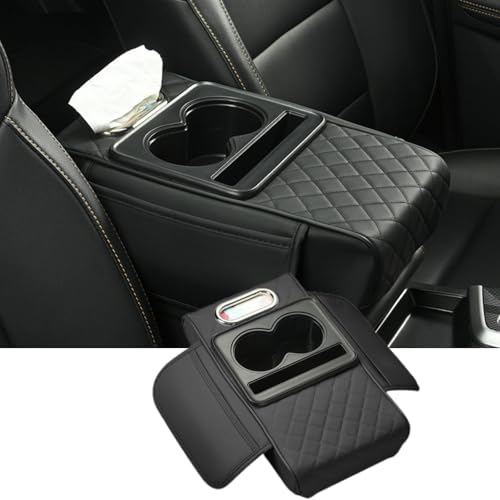
A universal console cover with cup holders usually combines a padded armrest pad, one or more drink openings, and a storage layer that sits over the center console. The useful versions list a fit range by console width and length, use either straps or a slip-on shell, and give you enough lid clearance to keep the armrest functional.
What the design usually includes
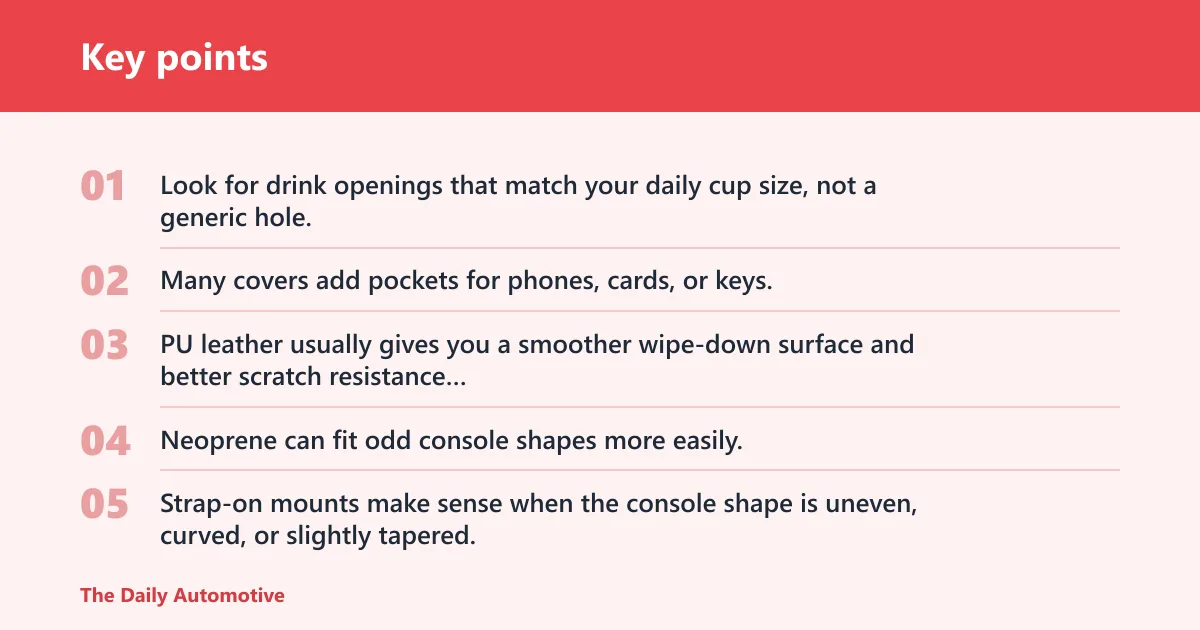
Look for drink openings that match your daily cup size, not a generic hole. Many covers add pockets for phones, cards, or keys, but those extras should not push the cover high enough to block the armrest lid or the console bin.
Material also matters. PU leather usually gives you a smoother wipe-down surface and better scratch resistance than soft fabric. Neoprene can fit odd console shapes more easily, but it may hold dust more readily and show seam wear sooner if stitching is light.
When strap-on and slip-on mounts make sense
Strap-on mounts make sense when the console shape is uneven, curved, or slightly tapered. They can cinch down and resist sliding under braking better than loose covers. Slip-on styles work best on consoles with a cleaner rectangular profile and enough friction for the shell to stay centered.
Anti-slip backing matters either way. Rubberized or textured grip material can help keep the cover from shifting when you turn or stop, but it also needs to match the console surface. Smooth glossy plastic, for example, needs more grip than matte vinyl.
When to choose PU leather or neoprene
Choose PU leather if you want a surface that wipes clean after drink condensation and road dust. Choose neoprene if your console has an odd shape or if you want a softer wrap that fits more forgivingly around seams and corners. Check the stitching quality either way, because weak seams fail before the surface material does.
Console fit table
This checklist focuses on the main checks that can help avoid common purchase failures. Measure your console, compare it with the listing, and reject the product if any one of the three core checks does not line up.
| Fit check | What to measure | Pass rule | Common failure mode | What it means |
|---|---|---|---|---|
| Console width and length | Top width, top length, and the usable flat area around the lid | Cover dimensions match the listing range with room for mounting | Too wide, too long, or tapered at the wrong point | The cover sits crooked, slides, or blocks the bin lid |
| Armrest lid clearance | Height from the console top to the lid’s highest open point | The lid opens fully without hitting the pad or cup wall | Lid stops partway open | You lose armrest use and may damage the hinge |
| Cup diameter and mount type | Largest drink diameter and the opening depth of the cup holder | Your cup fits with enough depth to stabilize it | Tumbler rattles, leans, or cannot enter the insert | Spills become more likely under braking or cornering |
Simple pass/fail rule: buy only if the cover matches your console width and length, the lid opens fully, and your largest cup sits deep enough to stay upright. If any one of those three fails, pass on the product.
Suppose your console is 7.5 inches wide and the cover listing starts at 8 inches. That extra half inch may sound minor, but it can make the cover twist, expose the seam, or block the lid edge. A small mismatch often causes the biggest fit complaints.
Will it fit my car?
Fit depends more on console shape than on trim level or color. Different vehicle body styles can have different console lengths, lid angles, and sidewall curves, so a universal cover that fits one may fail in another. Measure the console top, not just the visible pad.
Sedans versus SUVs versus trucks
Sedans often have shorter consoles and tighter cabin packaging, which makes armrest lid clearance more important. SUVs frequently have taller consoles with more storage volume, but the lid shape may be broader or more contoured. Trucks can have wider armrests and deeper bins, yet their consoles may include shifters, drive-mode controls, or charging ports that reduce usable space.
If the console tapers toward the front, a wraparound style may sit better than a flat slip-on cover. If the console top is nearly rectangular, a simple universal cover is easier to center and less likely to interfere with the armrest lid.
Why console shape matters more than trim color
Leather trim, fabric trim, and synthetic trim can all look similar from the outside while hiding very different console geometry. The part that matters is the actual footprint: width, depth, and the height of the lid when it opens. A cover can match the cabin look and still fail on the hinge path.
When to measure before you buy
Measure before you buy if your console has a split lid, an offset hinge, a tall storage bin, or a charging port near the front edge. Those features often create the exact failures buyers complain about: blocked lid travel, awkward elbow position, or a cup holder that sits too close to the shifter.
How do you choose the right material and cup size?
Start with the drink you actually carry. The right cup holder diameter should accept your standard cup size without wobble, and the insert depth should hold the cup low enough to reduce tipping. Then choose a surface material that resists scratches, handles moisture, and wipes clean without breaking down at the seams.
Scratch resistance and water resistance
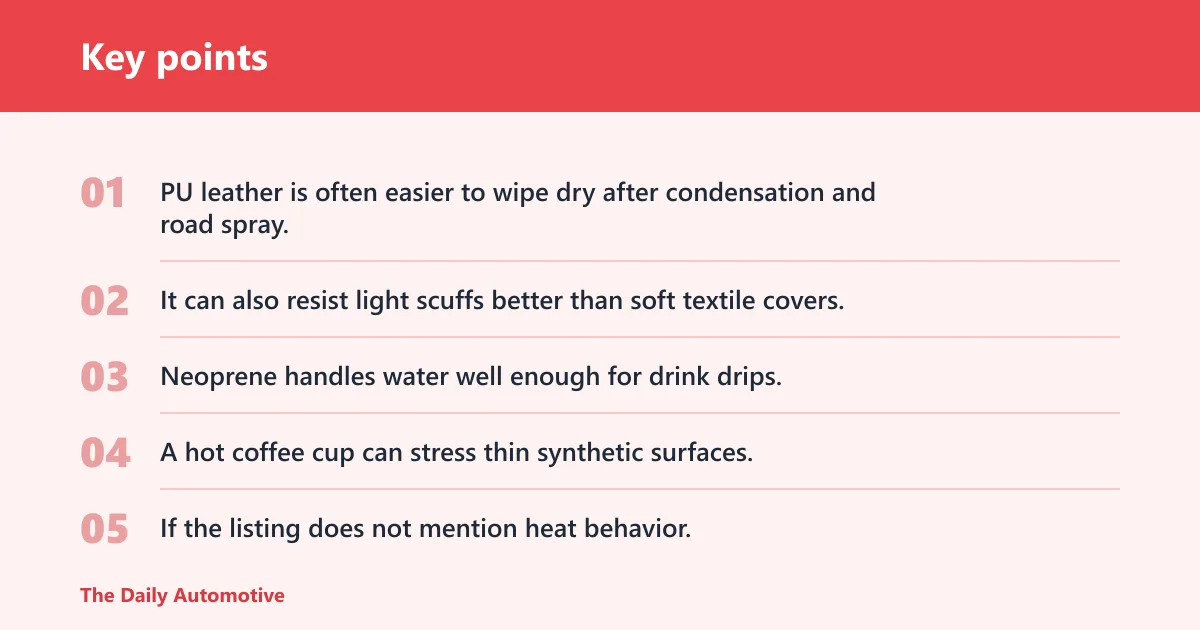
PU leather is often easier to wipe dry after condensation and road spray. It can also resist light scuffs better than soft textile covers. Neoprene handles water well enough for drink drips, but it may show wear sooner on high-friction edges, especially where a buckle or strap rubs the same spot repeatedly.
Heat resistance matters too. A hot coffee cup can stress thin synthetic surfaces, and better materials keep their shape without curling at the rim. If the listing does not mention heat behavior, check the manufacturer’s listing for your model before assuming it can handle hot containers well.
Stitching, seam wear, and easy-clean surfaces
Good stitching keeps the cup holder rim from fraying and helps the cover stay snug after repeated use. Loose thread, uneven seams, or soft edge binding are common early wear points. Easy-clean matters because cup holders collect crumbs, condensation, and dust in the same place.
For cleaning, smooth PU leather is usually the fastest wipe-down choice. Textured or fabric-backed covers need more brushing and can trap grit in seams. If you often carry cold drinks, choose a surface that lets you wipe moisture away without soaking into the padding.
Cup depth, insert shape, and tumbler stability
Diameter is only half the story. A tall tumbler with a narrow base may still wobble if the insert is shallow or flared too widely at the top. Deeper inserts usually hold better, and ribbed or grippy liners can reduce side-to-side movement under braking.
A common mistake is choosing a console cover without checking whether the armrest still opens and closes smoothly. A 3.5-inch opening may accept the drink, but if the insert is shallow and the console lid opens into the cup wall, it can fit on paper and still fail in the car.
Should you choose a seat-gap organizer?
Choose a seat-gap or console organizer if your main goal is storage, not armrest padding. These designs usually drop into the gap beside the seat or wrap around the console side and add pockets for a phone, keys, cards, or cables. They are useful when the console top is too small for a full cover.
Drop-in versus wraparound styles
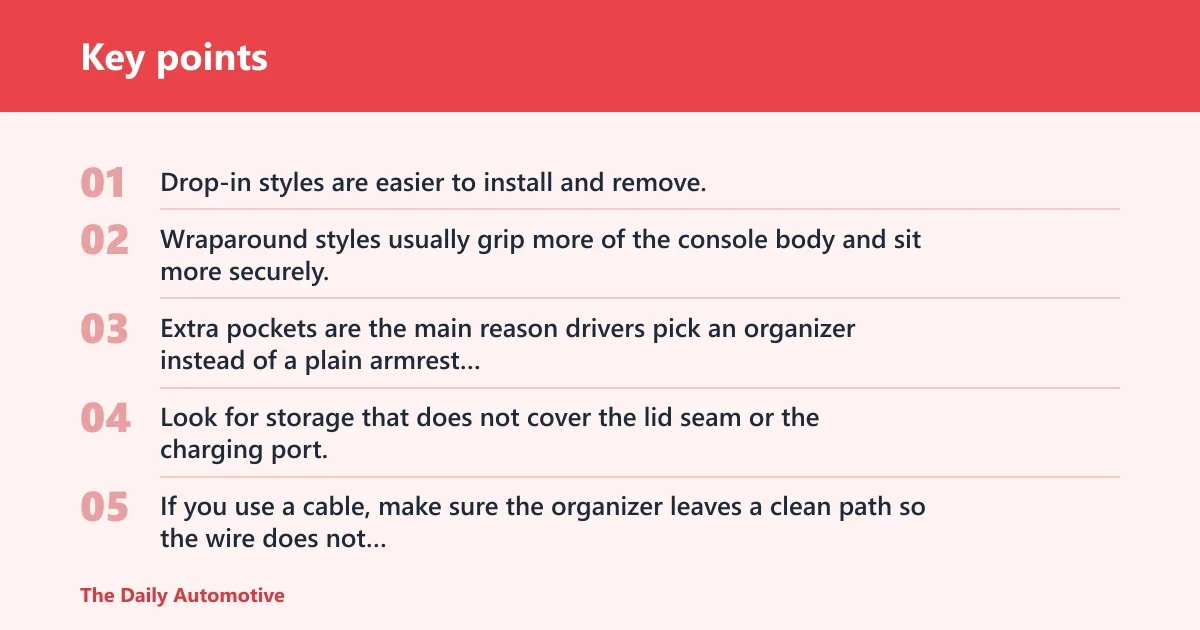
Drop-in styles are easier to install and remove, but they can shift if the seat gap is wide or uneven. Wraparound styles usually grip more of the console body and sit more securely, though they may interfere with armrest movement if the fit is too tight or the side pockets are bulky.
Phone, key, and cable storage
Extra pockets are the main reason drivers pick an organizer instead of a plain armrest pad. Look for storage that does not cover the lid seam or the charging port. If you use a cable, make sure the organizer leaves a clean path so the wire does not pinch under the cover edge.
When an organizer blocks the armrest or storage bin
If the organizer rises above the lid line, the armrest can feel higher and less comfortable on long drives. If it extends too far forward, it may block the storage bin or make the lid open only halfway. That is the failure that turns a convenience item into clutter.
Picture a compact SUV with a 6.5-inch console top and a phone cable running from the front port to the cup holder. A wraparound organizer with a bulky side pocket can press into that cable path and stop the lid from opening fully. A slimmer slip-on cover would avoid the pinch point.
Installation should be simple, but the manual matters if the product includes straps, clips, or adhesive pads. Start with a clean console surface, center the cover before tightening anything, and confirm that the lid opens freely before you load the cup holders or pockets.
- Measure the console width, length, and lid opening height.
- Clean the surface so grit does not reduce grip.
- Place the cover centered on the console.
- Attach straps or slide the shell into place.
- Open and close the lid fully to check clearance.
- Insert your largest cup and confirm it sits upright.
- Move the shifter and use the charging port to confirm access.
If the product uses anti-slip backing, press it down evenly rather than forcing one edge first. That helps the pad seat flat and reduces the chance of a corner lifting under braking. Reposition it before you tighten straps if the first placement leaves the lid path off-center.
Frequently asked questions
What is the best arm rest cup holder for a car?
The best choice is a universal console cover with cup holders that preserves lid opening, keeps the armrest usable, and fits your largest daily drink. A good listing states console width and length, cup opening size, and mounting method clearly. If those details are missing, check the manufacturer’s listing for your model before buying.
Will an arm rest console cover fit my car?
It will fit only if the console width, length, and lid height match the product’s range. Vehicle type matters too: sedans, SUVs, and trucks often have different lid shapes and side contours. Measure the console top and the full lid-open clearance, not just the visible padding.
Do console covers with cup holders block the center armrest?
They can, especially if the cup wells sit too high or the cover is too thick for the lid hinge path. The lid should open fully without rubbing the pad or cup wall. If the armrest cannot open all the way, the cover is the wrong size or style.
How do I choose the right size arm rest cup holder?
Match the cover to three measurements: console width, console length, and your largest cup diameter. Then check the insert depth and the lid’s open height. A cup that fits the opening but sits too shallow will still wobble, lean, or spill during braking.
Are arm rest cup holders stable for large drinks?
They can be, but only if the insert is deep enough and the diameter is close to the cup’s base and body. Tall tumblers are the most likely to wobble in shallow or overly wide holders. Anti-slip liners help, but they cannot fix a poor-size match.
Which materials are easiest to clean on a car console cover?
PU leather is usually the easiest to wipe clean because it resists light moisture and clears dust quickly. Neoprene is useful for odd-shaped consoles, but it can hold more grime around seams. For either material, tighter stitching and a smooth surface make cleanup faster and more consistent.
Products related to this article
Sponsored / affiliate links. As an Amazon Associate I earn from qualifying purchases. I may earn additional commission from eligible campaigns.