Black Primer for Cars: 3 Tested Picks by Use Case
Use a black primer matched to the substrate: epoxy for bare metal, high-build primer-surfacer over filler, and an adhesion promoter or plastic primer on plastics; for many DIY jobs, these three options cover the main use cases. Pick the wrong type and you can get lifting at the edge, sinkage over filler, weak color holdout, and extra sanding that burns time and material. This guide compares three black primers by adhesion, build, and forgiveness, sorted by bare metal, filler, and plastic-panel work.
Black primer for cars: top pick and quick take
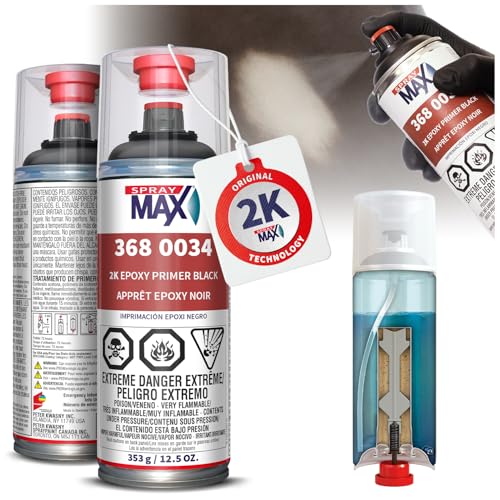


A 2K activated epoxy primer in black is often a strong all-around choice for bare metal because it can be used direct to metal, uses epoxy chemistry, and is commonly chosen for corrosion resistance on repair edges and sand-through spots.
Why this pick leads for bare metal jobs
Epoxy is the right chemistry when the goal is sealing clean metal and slowing corrosion. That makes SprayMax the strongest first choice for stripped panels, repair zones around welded patches, and any area where rust protection matters more than easy sanding.
It is not the right tool for every panel. Epoxy is a poor substitute for a surfacer when you need to bury filler scratches or level orange peel, and it is not the product to use on raw plastic without the right plastic prep and adhesion steps.
What the other two picks do better
Dupli-Color DAP1698 Hot Rod Sandable Primer is the better pick when the job is sanding speed and a smoother hand-sanded finish on smaller panels. SEM 42003 Black High Build Primer is the better pick when you want more build in aerosol form and a black base that can support several coats before color.
Quick picks by repair job
- Best for bare metal and corrosion protection: SprayMax 2K Activated Epoxy Primer Black.
- Best for sanding and build on small panels: Dupli-Color DAP1698 Hot Rod Sandable Primer.
- Best for high-build sealer work: SEM 42003 Black High Build Primer.
That split matters. If you are fixing a sand-through on a door edge, bare metal protection comes first. If you are feathering body filler on a quarter panel, sanding behavior matters more. If you are trying to create an even black base before color on repaired panels, a higher-build primer-sealer is the better fit.
Start with the substrate, then pick the chemistry. Epoxy belongs on bare metal when rust protection matters. Sandable primer-surfacer belongs over filler when you want to level the repair. High-build primer-sealer belongs when you need more film and a uniform base before color.
Epoxy versus sandable primer
Epoxy is about adhesion and corrosion resistance first. Sandable primer is about leveling and finish work first. They are not interchangeable. If you need one can to do both jobs, you usually get a compromise that does neither as well as a purpose-built product.
Do you need 2K primer for a car? Not always. For a small cosmetic repair on an already stable surface, a standard sandable aerosol may be enough. For bare metal, repaired rust areas, or a panel that needs stronger chemical resistance, 2K is the better call.
High-build primer versus sealer
High-build primer gives you more material to sand and shape. A sealer gives you a more even base before color and helps lock down variation from bodywork or old paint. Speedokote is the type of product that belongs in the high-build sealer conversation, but for this shortlist the main decision is whether you need film build or corrosion control more.
Black can matter under dark topcoats because it can help visual consistency, especially when the finish coat is black, charcoal, or deep red. But primer chemistry still matters more than primer color. A black epoxy that holds metal is better than a black surfacer that looks convenient and fails at the edge.
Coverage, cost per panel, and ventilation
Coverage is part of value, not the whole story. Rust-Oleum 249418 covers up to 15 square feet, SEM 42003 covers about 11 square feet at 2 mil dry film thickness, and Rust-Oleum Painter’s Touch 2X Ultra Cover covers about 12 square feet. For a rough cost-per-panel estimate, divide can price by usable square footage after overlap, waste, and extra coats.
If you want a quick comparison framework, Cherry Picks reports 30 products evaluated for car primers and lists an average price of $48.13. That is useful as a market snapshot, but it is not a substitute for matching chemistry to the repair.
Use good ventilation with any 2K product. Mix only what you can spray in the recoat window, keep flash times consistent, and do not skip a respirator rated for paint fumes and isocyanate exposure when the product requires it. Warm, dry air helps flow and cure; cold, damp conditions slow both.
What is the best black primer for cars?
For the widest range of bare-metal repair work, SprayMax 2K Activated Epoxy Primer Black is the best black primer here. It is a two-component epoxy aerosol, so it is built for activation and mixing rather than a simple shake-and-spray workflow, and that chemistry is the main reason it leads for corrosion resistance.
Why it ranks first for bare metal
On clean steel, epoxy gives you a tighter foundation than a sandable aerosol primer. That matters when you are protecting a stripped panel, repair weld, or sanded-through edge that would otherwise flash rust before topcoat. If the surface is metal, epoxy belongs at the front of the process.
Picture a hood corner with a small featheredge repair and fresh bare metal showing through. Epoxy is the better first coat there because it seals the exposed metal before you build anything else on top. It is also the safer choice when you want a black base under a dark topcoat and need adhesion first, build second.
Where it is the wrong choice
Do not use epoxy as a filler surfacer. It is not designed to level sanding scratches or shrink filler defects away by itself. It is also not a shortcut for raw plastic prep; plastics often need a dedicated adhesion promoter or product-specific prep before any primer goes down.
Do not expect a 2K epoxy can to solve contamination problems either. If the panel still has silicone, wax, or loose rust, even a strong epoxy system can fail at the edge. Clean, scuff, and deoxidize first.
Can you use black primer on plastic car parts?
Yes, but only if the black primer is intended for that substrate or you use the proper adhesion promoter first. Raw plastic is where many primer failures start, because the coating may stick at first and then lift later from flex, mold-release residue, or incompatible prep.
Dupli-Color DAP1698 hot rod sandable primer
Dupli-Color DAP1698 is the better of the two aerosol picks for light sanding work on compatible panels when you want fast dry time and a smooth sanded surface. It dries to the touch in about 30 minutes and is handleable in roughly an hour, which makes it practical for smaller DIY repair cycles.
Its strong point is easy sanding, not maximum corrosion resistance. Use it where a surfacer is the real goal, such as a skimmed repair on a small panel after filler work. It is not the first choice for bare steel that still needs real rust defense.
SEM 42003 black High build primer
SEM 42003 Black High Build Primer is the better choice when you need more film build and broader multi-surface coverage in aerosol form. It is a 16 oz aerosol, covers about 11 square feet at 2 mil dry film thickness, and is recommended for 2 to 3 coats. That makes it better suited to building over prepared repairs than to acting as a simple mist coat.
It is listed for steel, aluminum, plastic, SMC, and fiberglass, but that does not erase plastic-prep rules. On raw plastic, you still need to verify compatibility and follow the correct prep steps for that part. If the plastic is flexible or heavily textured, assume extra prep is needed before primer.
Plastic prep and adhesion promoter caveat
A common first-timer mistake is spraying a black primer directly on a bumper cover and treating the result as permanent. The coating may look fine for a while, then lift at an edge or chip where the panel flexes. Use the substrate-specific prep the part requires, not just a black aerosol.
How long before you sand black primer?
Dry time and sand time are not the same thing. Rust-Oleum 249418 dries to the touch in roughly 10 minutes, but that only tells you the surface skinned over; it does not mean the film is ready for finishing. Dupli-Color DAP1698 is touch dry in about 30 minutes and handleable in roughly an hour, which is still not a universal sanding guarantee.
Build, shrinkage, and recoat window
Sand too early and the paper can gum up or drag the film. Sand too late and some repair primers become harder to level cleanly. High-build products also need enough film to avoid sanding through the top layer and leaving ridges or shrink-back later.
On a filler repair, the safer approach is to let the primer firm up fully, then sand with a sanding block or soft pad that matches the panel shape. If the surface is still soft under the top skin, keep waiting. Rushing this step is how you get witness lines and read-through after color.
Which pick sands the easiest?
Dupli-Color DAP1698 is the best of the three for easy sanding. SEM 42003 is the better choice when you need more build, but more build usually means more block-sanding work. SprayMax epoxy is not the sanding-first option; it is the adhesion-and-seal option.
Black primer decision matrix
| Repair job | Substrate | Build level | Sanding ease | Corrosion resistance | Dry time | When to avoid it |
|---|---|---|---|---|---|---|
| Bare-metal repair | Steel or aluminum | Low to medium | Not the main goal | High | Depends on activator and mix | Avoid when you need filler leveling or an easy surfacer |
| Sanded filler repair | Body filler over prepared panel | Medium | Good | Moderate | Dupli-Color: touch dry in about 30 minutes | Avoid on fresh bare metal if corrosion protection is the priority |
| High-build repair on prepared panels | Steel, aluminum, plastic, SMC, fiberglass | High | Moderate | Moderate | Depends on mix, film, and flash | Avoid on raw plastic unless the part prep and adhesion steps are correct |
| Small aerosol touch-up | Compatible metal or prepared composite | Low to medium | Good | Moderate to high, depending on chemistry | Rust-Oleum: roughly 10 minutes to touch; SEM: product-specific | Avoid when you need a true sealer or a 2K system |
Frequently asked questions
Is black primer better for automotive paint jobs?
Black primer is not automatically better than gray or white primer. It can be helpful under dark topcoats because it reduces visible contrast and can make coverage planning easier. For light colors, a lighter primer often makes more sense, so color choice should follow the finish coat, not the other way around.
What black primer works best on bare metal?
SprayMax 2K Activated Epoxy Primer Black is the best fit for bare metal among these picks. It is designed for activation and mixing, which is the tradeoff you accept for better adhesion and corrosion resistance. Use it on clean steel or aluminum, not as a filler-surfacer replacement.
What is the difference between epoxy and sandable black primer?
Epoxy primer is chosen for adhesion and corrosion resistance, especially on bare metal. Sandable black primer is chosen for leveling and finish work after filler or repair. If the panel needs both, epoxy usually goes first, then a surfacer if the repair still needs build.
How long does black primer take to dry before sanding?
That depends on the formula. Rust-Oleum 249418 dries to the touch in roughly 10 minutes, Rust-Oleum Painter’s Touch 2X Ultra Cover in about 20 minutes, and Dupli-Color DAP1698 in about 30 minutes. Touch dry is not the same as fully sandable, so always allow extra cure time before block-sanding.
Products related to this article
Sponsored / affiliate links. As an Amazon Associate I earn from qualifying purchases. I may earn additional commission from eligible campaigns.