Best Voltage Amps to Charge Car Battery
Figuring out the best voltage and amps to charge a car battery can seem tricky, especially if you’re new to car maintenance. You see different numbers on chargers, and it’s hard to know what’s right for your car. Don’t worry, it’s not as complicated as it sounds!
We’ll break down the Best Voltage & Amps to Charge a Car Battery with simple steps. Let’s get your battery back to full power without any confusion.
Understanding Car Battery Charging
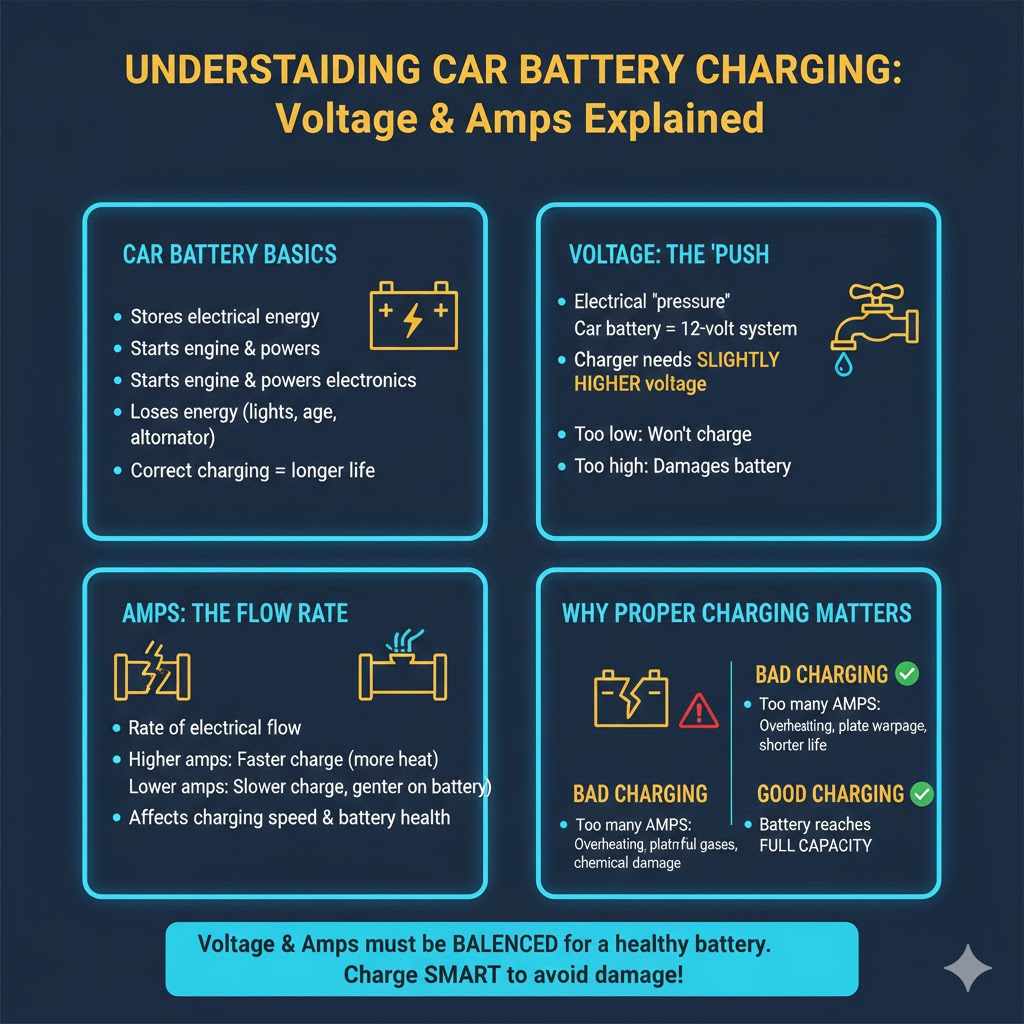
Car batteries are the heart of your vehicle’s electrical system, providing the power needed to start the engine and run accessories. When a car battery needs charging, it’s because it has lost some of its stored energy. This energy loss can happen for various reasons, such as leaving lights on, a weak alternator, or simply from the battery aging.
Knowing how to charge it correctly is vital for its lifespan and your car’s reliability. Incorrect charging can damage the battery, making it less effective or even unusable.
What Are Voltage and Amps
Voltage is like the “push” of electricity. Think of it as the pressure that makes electricity move through wires. A car battery typically runs on a 12-volt system.
This means it’s designed to work with a certain electrical pressure. When you charge a battery, you need to supply a voltage that is slightly higher than the battery’s current voltage to encourage the flow of electricity into it. If the voltage is too low, the battery won’t charge properly.
If it’s too high, it can cause damage.
Amps, or amperes, measure the rate of electrical flow. This is how much electricity is moving at any given moment. When charging a battery, the amperage determines how quickly the battery receives that electrical energy.
A higher amperage will charge the battery faster, but it also generates more heat. A lower amperage charges more slowly but is gentler on the battery, which can be better for its health, especially for older or more sensitive batteries.
Why Proper Charging Matters
Charging a car battery correctly ensures that you don’t harm it. If you use too much amperage, you can overheat the battery, which can warp its internal plates and shorten its life. Overcharging with too much voltage can also cause damage, like releasing harmful gases and damaging the battery’s chemistry.
On the other hand, not charging enough or using the wrong settings means the battery might not reach its full capacity, leading to starting problems later.
The goal is to provide enough voltage to make the electricity flow into the battery and the right amount of amperage to do so safely and effectively. This balance is what keeps your battery healthy and ready to start your car every time you turn the key. We will explore the ideal ranges and how to achieve them.
Best Voltage to Charge a Car Battery
The standard voltage for a car battery is 12 volts. However, when you’re charging a lead-acid car battery, you need to use a charger that supplies a slightly higher voltage. This higher voltage creates a gradient that pushes the electrical current into the battery.
Using a voltage that’s too low won’t charge the battery effectively, while a voltage that’s too high can be damaging. The correct charging voltage ensures efficient energy transfer without stressing the battery’s components.
The 12V System Explained
Most passenger vehicles use a 12-volt electrical system. This system includes the battery, alternator, starter motor, and all the vehicle’s electrical components. The battery itself is made up of six cells, each producing about 2.1 volts, totaling approximately 12.6 volts when fully charged and at rest.
However, for effective charging, a charger must overcome this resting voltage and push current into the battery.
This is why you’ll find that most car battery chargers are designed to output voltages slightly higher than 12 volts. The alternator in your car also operates at a higher voltage than the battery’s nominal voltage to keep it charged while the engine is running. Understanding this basic principle helps clarify why the charging voltage isn’t exactly 12 volts.
Ideal Charging Voltage Range
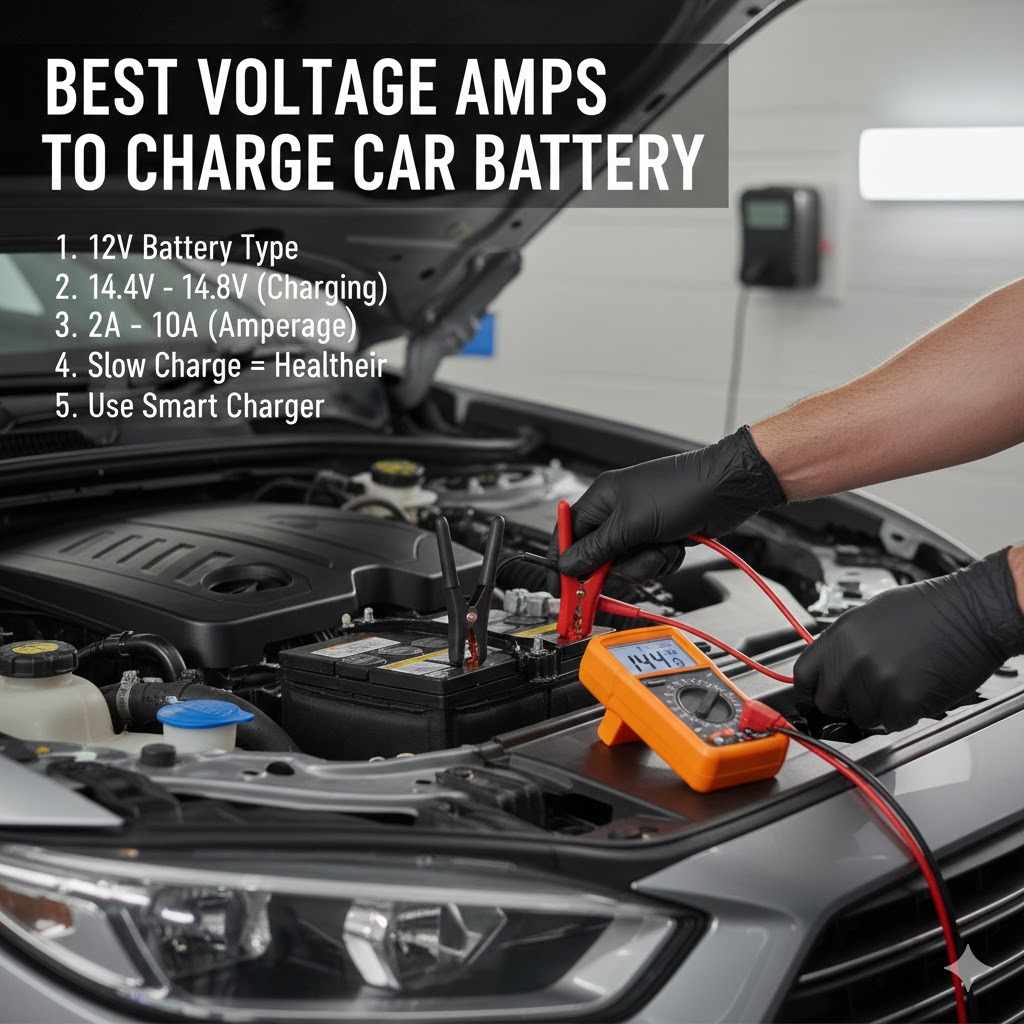
For a typical 12-volt lead-acid car battery, the ideal charging voltage is usually between 13.5 and 14.7 volts. Smart chargers, often called “intelligent” or “automatic” chargers, will manage this voltage range automatically. They start with a higher voltage to initiate the charge and then gradually decrease it as the battery’s state of charge increases.
This prevents overcharging and protects the battery from damage.
A common charging stage is called “bulk charging,” where the charger delivers maximum current at a higher voltage (around 14.4 to 14.7 volts) to quickly bring the battery’s state of charge up. Once the battery reaches a certain level, it moves to an “absorption” phase, where the voltage is maintained while the current slowly drops. Finally, a “float” charge uses a lower voltage (around 13.5 to 13.8 volts) to keep the battery topped up without overcharging.
When To Use Different Voltages
Some older or very specific types of batteries might have slightly different optimal charging voltages. However, for the vast majority of standard car batteries, the 13.5 to 14.7-volt range is safe and effective. It’s always best to check your car’s owner’s manual or the specifications on your battery for any unique recommendations.
If you’re using a manual charger, you’ll need to monitor the voltage yourself and adjust settings accordingly, which is why automatic chargers are generally preferred for ease of use and safety.
Best Amps to Charge a Car Battery
When it comes to amperage, the key is to find a balance between charging speed and battery health. Charging too quickly with very high amperage can generate excessive heat, which is detrimental to a car battery’s lifespan. Conversely, charging too slowly with very low amperage can take a very long time and might not be practical.
The ideal amperage depends on the battery’s capacity and its current state of discharge.
Understanding Amperage and Charging Speed
Amperage is the rate at which electrical current flows. A higher amperage means more electricity is flowing into the battery per second, resulting in a faster charge. For example, a 10-amp charger will theoretically charge a battery twice as fast as a 5-amp charger, assuming all other factors are equal.
However, faster isn’t always better. The battery has limits on how much current it can safely accept.
Think of it like filling a bucket with water. If you use a fire hose (high amps), the bucket fills quickly, but you might splash water everywhere and cause a mess. If you use a garden hose (lower amps), it takes longer, but it’s more controlled and less likely to cause issues.
Recommended Amperage for Different Batteries
For most standard 12-volt car batteries, a charging amperage between 2 and 10 amps is generally recommended. Many modern “smart” or “trickle” chargers operate in the lower end of this range, typically around 2 to 4 amps. These lower amperages are ideal for maintaining a battery’s charge over long periods or for slowly and safely reconditioning a battery that has been discharged.
If you need to charge a significantly dead battery more quickly, you might opt for a charger with a higher amperage setting, such as 8 to 10 amps. However, it’s crucial to monitor the battery for excessive heat during charging. If the battery feels unusually hot to the touch, reduce the amperage or temporarily stop the charging process.
Always follow the charger’s instructions and the battery manufacturer’s guidelines.
The Role of Battery Capacity (Ah)
Battery capacity, measured in Ampere-hours (Ah), tells you how much energy the battery can store. A larger capacity battery can hold more charge and typically requires a higher amperage to charge efficiently in a reasonable amount of time. A common rule of thumb is to set the charger’s amperage to about 10% of the battery’s Ah rating.
For instance, a 70 Ah battery could safely be charged with a 7-amp charger.
This 10% guideline is a good starting point, but it’s not a strict rule. Smart chargers adjust their output automatically based on the battery’s needs, so you often don’t need to worry about setting this yourself. If you’re using a manual charger, knowing your battery’s Ah rating is very helpful for selecting the correct amperage.
Fast Charging vs. Maintenance Charging
Fast charging uses higher amperage (e.g., 8-10 amps or more) to bring a depleted battery back to a usable state quickly. This can be useful in emergencies, but it generates more heat and can put more stress on the battery. It’s not recommended for regular use if battery longevity is a primary concern.
Maintenance charging (also known as trickle charging) uses very low amperage (e.g., 1-2 amps). This is perfect for keeping a battery charged when a vehicle is stored for extended periods, like during winter. It prevents the battery from self-discharging too much and keeps it ready for use without any risk of damage.
Choosing the Right Car Battery Charger
Selecting the correct car battery charger is crucial for maintaining your battery’s health and ensuring it performs reliably. Chargers vary in their features, capabilities, and how they interact with your battery. Modern chargers often offer a level of sophistication that makes the process simple and safe, even for beginners.
Understanding the types of chargers available will help you make an informed decision.
Types of Battery Chargers
There are several types of battery chargers, each with its own advantages. The most common ones for automotive use include:
- Manual Chargers: These require you to set the voltage and amperage yourself. They offer more control but demand more user attention and knowledge to avoid overcharging or damaging the battery.
- Automatic (Smart) Chargers: These are the most popular and user-friendly. They automatically detect the battery’s voltage and condition and adjust the charging rate accordingly. They typically have multi-stage charging processes to optimize charging and prevent damage.
- Trickle Chargers: These deliver a very low, constant current over a long period. They are ideal for maintaining a battery’s charge when a vehicle is not in use for extended periods, such as seasonal storage.
- Jump Starters/Chargers: These are combination devices that can both provide a quick jump start to a dead battery and also function as a charger for slower, more thorough charging.
For most car owners, an automatic or smart charger is the best choice. They simplify the process and offer the highest level of safety for your battery.
Features to Look For
When shopping for a car battery charger, consider these features:
- Multi-stage Charging: Look for chargers that offer at least 3-stage charging (bulk, absorption, float). This ensures a complete and safe charge.
- Battery Type Compatibility: Ensure the charger is compatible with your battery type (e.g., standard lead-acid, AGM, gel, lithium).
- Voltage and Amperage Settings: Even on automatic chargers, it’s good to have options for different charging speeds or battery sizes. Most will have selectable amperage rates.
- Safety Features: Overcharge protection, reverse polarity protection, and short-circuit protection are essential safety features that prevent damage to the charger and your vehicle’s electrical system.
- Digital Display: A clear display can show charging status, voltage, amperage, and battery health, making it easier to understand what’s happening.
Some advanced chargers even have reconditioning modes designed to help recover batteries that have been deeply discharged or sulfated. These features can extend the life of your battery.
Understanding Charger Specifications
When looking at charger specifications, you’ll see numbers related to voltage output and amperage output. For a 12V car battery charger, the voltage output will typically be in the 13.5V to 14.7V range during charging. The amperage output is usually listed as a range, for example, “2A/10A” or “5A/10A”.
This indicates the charger can operate at different amperage levels, often with a slower, more gentle setting and a faster setting.
The listed amperage is usually the maximum output. Smart chargers will only draw as much amperage as the battery can safely accept at any given time. This means a 10A charger might only output 2A when connected to a nearly full battery or a very small battery.
How to Safely Charge Your Car Battery
Charging a car battery involves a few simple steps that, when followed, ensure safety and effectiveness. It’s important to work in a well-ventilated area and take precautions to avoid sparks, as batteries can produce flammable hydrogen gas during charging. Following these steps will help you get the best results without putting yourself or your vehicle at risk.
Preparation Steps
Before you connect any charger, take these precautions:
- Work in a Ventilated Area: Charge your battery in an open space or a well-ventilated garage. Avoid charging indoors in confined spaces due to the risk of hydrogen gas buildup.
- Turn Off All Power: Ensure the vehicle’s ignition is off and all accessories (lights, radio, etc.) are turned off.
- Inspect the Battery: Check the battery for any visible damage, cracks, or leaks. If the battery is damaged, do not attempt to charge it; replace it. Also, check the terminals for corrosion and clean them if necessary.
- Remove Surface Dirt: Wipe down the battery to remove any dirt or debris that could interfere with charging or cause contamination.
- Disconnect the Negative Terminal First: If you are disconnecting the battery from the car, always disconnect the negative (black) terminal first, followed by the positive (red) terminal. This prevents accidental short circuits.
Having the car battery out of the vehicle is often the safest way to charge it, especially if you are not familiar with disconnecting car electronics. However, many modern chargers can be used while the battery is still connected to the car. Always refer to your charger’s manual.
Connecting the Charger
When connecting the charger, follow this sequence:
- Connect the Positive Clamp: Attach the red positive clamp of the charger to the positive (+) terminal of the car battery. Ensure a firm connection.
- Connect the Negative Clamp: Attach the black negative clamp of the charger to the negative (-) terminal of the car battery. Make sure it is securely fastened.
- Avoid Sparks: It’s best to make the final connection at the negative terminal while standing clear of the battery to avoid any potential sparks.
- Connect to Power: Once both clamps are securely connected to the battery, plug the charger into a grounded electrical outlet.
If your charger has manual settings, select the appropriate voltage (12V for most cars) and amperage. For automatic chargers, they will usually start the charging process on their own after being plugged in.
Monitoring the Charging Process
It’s important to monitor the charging process, especially during the initial stages or if using a manual charger.
- Check for Heat: Periodically touch the battery case. It might get slightly warm, but it should never feel excessively hot. If it does, disconnect the charger immediately and allow the battery to cool down.
- Observe the Charger Display: If your charger has a digital display, monitor the charging current (amps) and voltage. You should see the amperage gradually decrease as the battery charges, and the voltage should stabilize within the optimal range (13.5-14.7V).
- Listen for Gassing: Some batteries may make a slight hissing sound as they charge, which is normal. However, if you hear loud boiling or hissing, it could indicate overcharging, and you should stop the process.
Most smart chargers will indicate when the battery is fully charged, often with a light or a message on the display. They will then switch to a maintenance mode to keep the battery topped up.
Disconnecting the Charger
Once charging is complete (or if you need to disconnect it), follow this procedure:
- Unplug the Charger: Disconnect the charger from the electrical outlet first.
- Disconnect the Negative Clamp: Remove the black negative clamp from the battery terminal.
- Disconnect the Positive Clamp: Remove the red positive clamp from the battery terminal.
- Reconnect Battery Terminals (if removed): If you removed the battery, reconnect the positive terminal first, then the negative terminal.
Proper disconnection ensures that no residual current can cause a spark. After charging, if you left the battery out of the car, you may need to reconnect it in the correct order: positive terminal first, then the negative terminal.
Troubleshooting Common Charging Issues
Even with the best intentions, you might encounter issues when charging a car battery. These problems are usually straightforward to resolve if you know what to look for. Understanding common charging problems and their solutions will save you time and frustration.
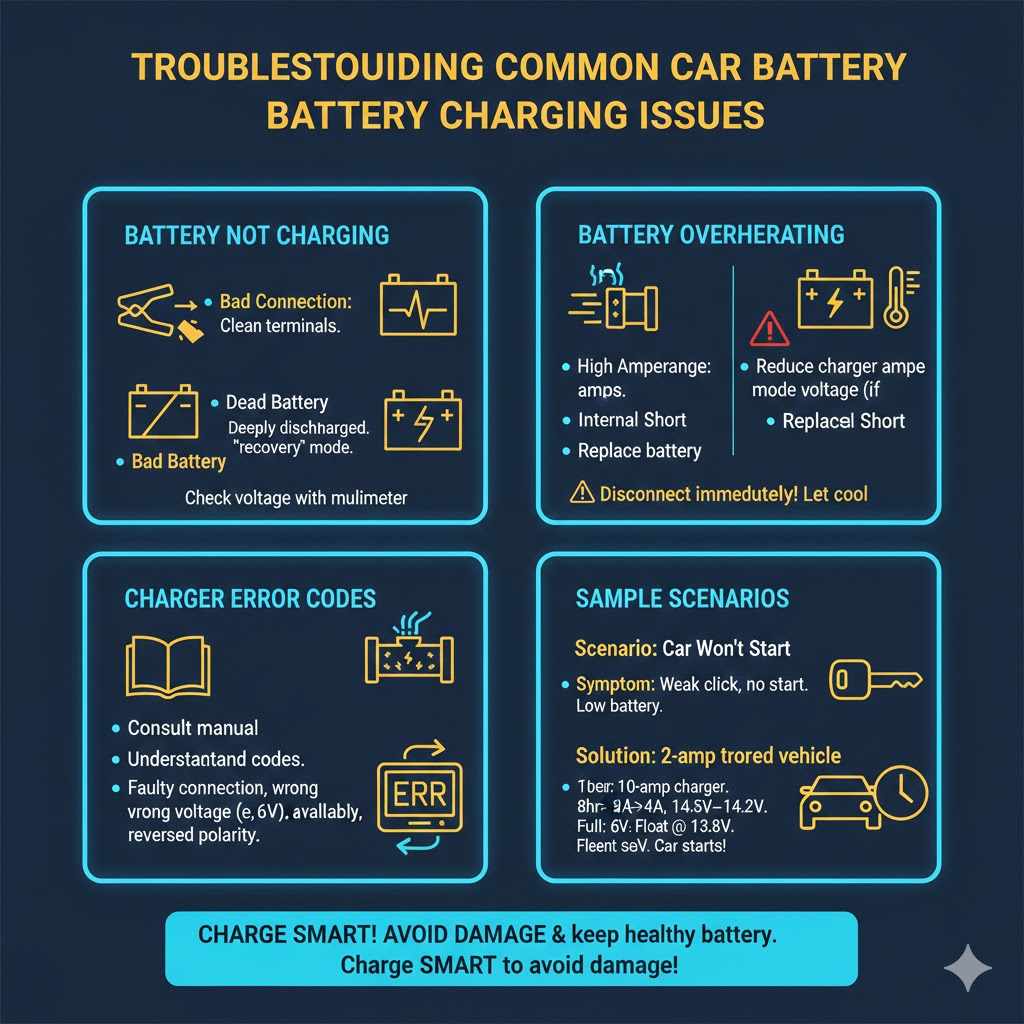
Battery Not Charging
If your charger indicates it’s connected but not charging, or if the battery voltage remains stubbornly low, there could be several reasons:
- Bad Connection: Ensure both the charger clamps and the battery terminals are clean and making good contact. Corroded terminals are a common culprit.
- Dead Battery: If a battery is completely dead (deeply discharged or damaged), some chargers may not be able to initiate a charge. Some advanced chargers have a “recovery” mode for this.
- Faulty Charger: Test the charger on another known-good battery or check its output with a multimeter to ensure it’s working correctly.
- Bad Battery: The battery itself might be beyond recovery. If it’s old or has been discharged too deeply, it might have internal damage that prevents it from holding a charge.
A quick check with a multimeter can confirm if the charger is outputting the expected voltage and if the battery voltage is significantly low.
Battery Overheating
As mentioned, a battery that gets too hot during charging is a warning sign.
- High Amperage: You might be using too high an amperage for the battery’s current state or capacity. Reduce the amperage setting on your charger if possible.
- Sulfation: A heavily sulfated battery (where lead sulfate crystals harden on the plates) can resist charging and generate excess heat. A battery desulfation mode on a charger might help.
- Internal Short: In rare cases, overheating can indicate an internal short circuit within the battery, meaning it needs to be replaced.
If overheating occurs, disconnect the charger immediately and let the battery cool completely before attempting to charge again, ideally at a lower amperage setting. If it persists, the battery may be damaged.
Charger Error Codes
Many modern smart chargers have error codes or indicator lights that alert you to problems. Consult your charger’s manual to understand what these codes mean. Common errors might relate to faulty battery connections, incorrect battery voltage detection, or internal charger faults.
For example, some chargers might show an error if they detect a voltage that’s too low for a 12V battery, suggesting it might be a 6V battery or completely dead. Others might indicate a fault if the polarity is reversed.
Sample Scenario: A Car That Won’t Start
Imagine you go to start your car, and it just clicks weakly or doesn’t turn over at all. The battery is likely low on charge. You connect a 10-amp automatic charger to your 12V battery.
The charger starts at 14.5V and draws about 8 amps. After an hour, the amperage drops to 4 amps, and the voltage is around 14.2V. The charger indicates it’s nearing full charge.
You let it continue, and it eventually switches to a float charge at 13.8V, indicating the battery is full. The next morning, the car starts up strong.
Sample Scenario: Stored Vehicle Battery
You have a car that you only drive occasionally. To keep the battery healthy, you connect a 2-amp trickle charger. The charger maintains a steady voltage of around 13.6V and a very low amperage, just enough to offset the battery’s self-discharge.
This keeps the battery ready for use without overcharging or causing any damage, even if the car sits for weeks.
Conclusion
Frequently Asked Questions
Question: What is the best voltage to charge a 12V car battery
Answer: The ideal charging voltage for a 12V car battery is typically between 13.5 and 14.7 volts. Smart chargers automatically manage this range for safe and effective charging.
Question: What is the recommended amperage for charging a car battery
Answer: For most car batteries, a charging amperage between 2 and 10 amps is recommended. A common guideline is to use about 10% of the battery’s Ah rating.
Question: Can I charge my car battery with a higher amperage charger
Answer: Yes, you can use a higher amperage charger, but it’s best to use the lower setting (if available) or monitor the battery closely for overheating to avoid damage.
Question: What happens if I overcharge my car battery
Answer: Overcharging can damage your battery by causing excess heat, releasing harmful gases, and shortening its lifespan. Modern smart chargers prevent overcharging.
Question: How long does it take to charge a car battery
Answer: Charging time varies greatly depending on the battery’s discharge level and the charger’s amperage. A 10-amp charger might take a few hours for a moderately discharged battery, while a trickle charger could take days.
Wrap Up
Finding the best voltage and amps to charge a car battery is about safety and efficiency. Aim for 13.5 to 14.7 volts and 2 to 10 amps, depending on your battery and charger. Smart chargers simplify this by automatically adjusting settings.
Always connect properly and monitor for heat. Following these simple guidelines keeps your car battery healthy and ready to go.