Car Detailing Brushes: Types, Uses and Buying Guide
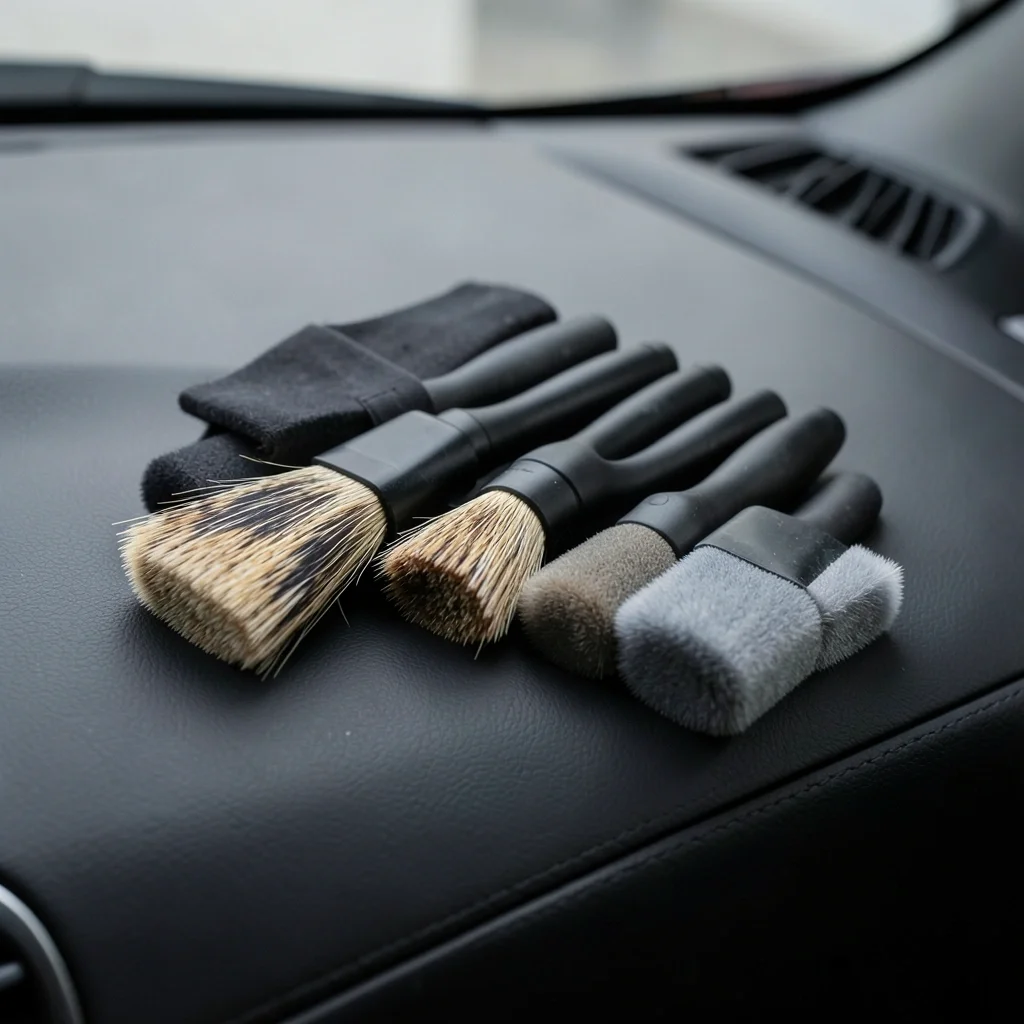
A car detailing brush set works because different surfaces need different bristles. A brush stiff enough to knock brake dust off a wheel will scratch a leather seat, and a brush soft enough for a dashboard will barely touch caked-on grime in a wheel well. Most kits bundle three bristle types — natural boar hair, ultra-soft synthetic, and wire — and each one has a job it is genuinely good at, plus surfaces it should stay away from.
What Is a Car Detailing Brush Set For?
BEST ALL-IN-ONE SET
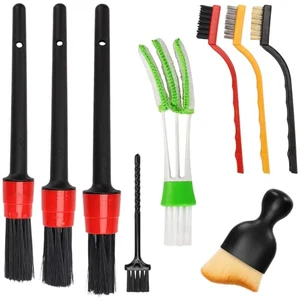 |
Auto Car Detailing Brush Set, 9-Piece – $7.99 Covers all three bristle types in this guide — boar hair, wire, and vent brushes — in one kit.
|
A dedicated brush set earns a spot in your trunk because a car has dozens of small, oddly shaped surfaces that a sponge or microfiber towel cannot reach: the seam around a door emblem, the slats inside an air vent, the stitching on a leather seat, the mesh behind a wheel spoke. A typical set bundles three to nine brushes of different sizes and stiffness so one kit can dust delicate trim and scrub stuck-on brake dust without you switching tools mid-job.
Boar Hair vs. Synthetic vs. Wire: Which Brush for Which Job
The bristle material matters more than the brush’s size or shape. Here is how the three common types actually compare in practice:
| Bristle Type | Best For | Avoid Using On |
|---|---|---|
| Natural boar hair | Leather and vinyl seats, air vents, emblems, badges, dashboard trim | Nothing off-limits — still use light pressure on soft-touch plastics |
| Ultra-soft synthetic | Same delicate spots as boar hair, plus anywhere you want a scratch-free guarantee (it will not shed and holds up when wet) | Heavy caked mud or thick brake dust — it is too soft to break it loose |
| Wire (metal bristle) | Wheel wells, tire tread, rusted or heavily soiled bare metal, engine bay brackets | Painted body panels, clear-coated wheel faces, plastic trim, and wiring — the bristles can scratch or fray these surfaces |
That last row is the one most kits gloss over. A true metal wire brush is genuinely useful for scrubbing baked-on grime off a wheel well liner or a rusty exhaust hanger, but the same bristles will leave fine scratches on clear coat or chew through a plastic clip if you get impatient. If you only want one brush for wheels, reach for a stiff nylon or synthetic wheel brush instead — it scrubs almost as well without the scratch risk on finished surfaces.
How to Use a Detailing Brush Without Scratching Your Car
- Rinse or vacuum loose dirt first. Brushing dry grit against paint or plastic is what actually causes swirl marks — the brush just drags abrasive particles across the surface.
- Match the brush to the surface using the table above before you start, not after you notice a scratch.
- Use light, short strokes and let the bristles do the work. Pressing harder does not clean faster; it just wears the bristles out and stresses the surface underneath.
- Pair the brush with the right cleaner. An all-purpose cleaner (APC) or wheel cleaner spray loosens grime first so the brush is finishing the job, not doing all of it.
- Rinse and dry the brush after each use, especially after wheels or the engine bay, so you are not smearing brake dust or grease onto your dashboard the next time you grab the same brush.
Where Each Brush Belongs on Your Car
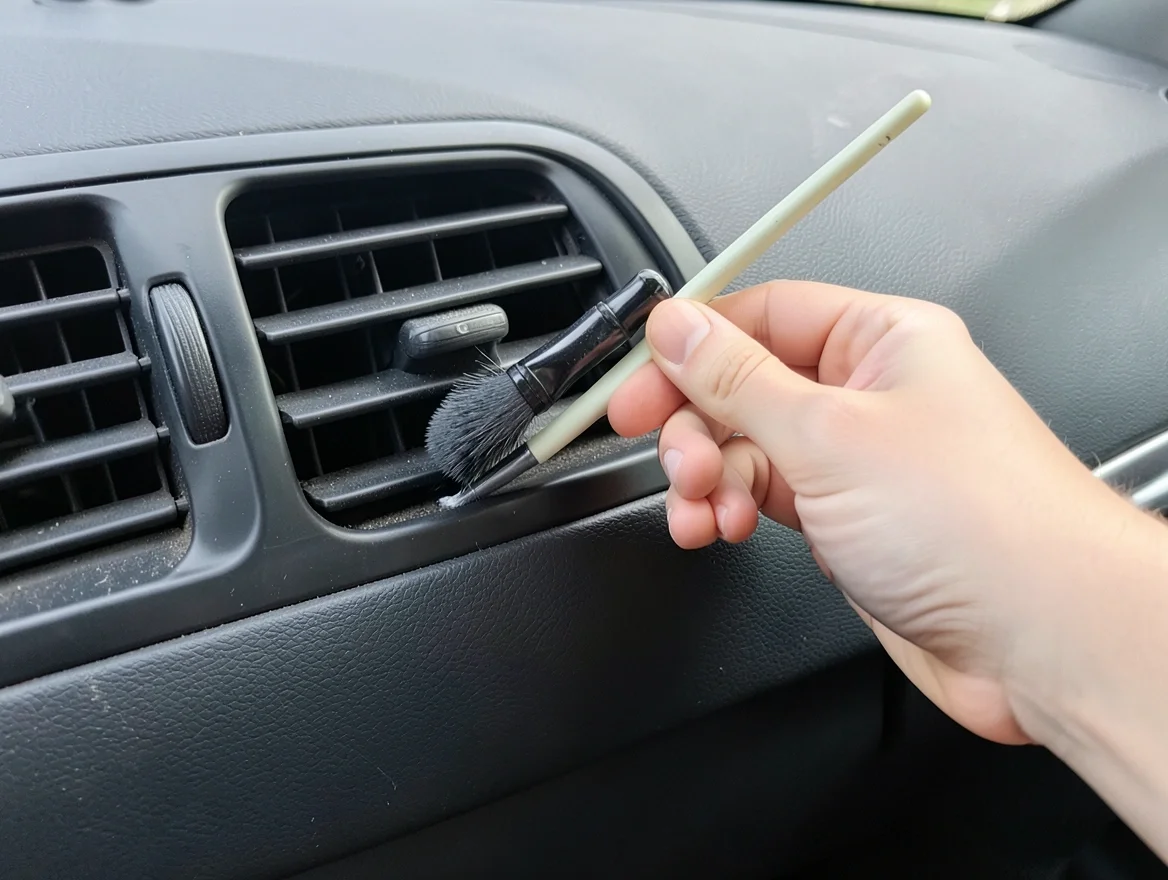
- Dashboard, console and air vents: a narrow boar hair or ultra-soft synthetic brush knocks dust out of vent slats and console buttons that a cloth cannot reach.
- Emblems and badges: a small, tightly-packed boar hair brush gets into the raised letters and grooves without you having to scrape at them with a fingernail.
- Leather and vinyl seats: a soft boar hair or synthetic brush lifts dust out of the stitching before you apply a leather cleaner or conditioner.
- Wheels and wheel wells: a stiff synthetic wheel brush handles the wheel face safely; save the true wire brush for the wheel well liner and tire tread, where it will not touch paint or clear coat.
- Engine bay: a wire or heavy synthetic brush works on bare metal brackets and dried grime, but keep it away from wiring, hoses, and plastic covers — a stiff synthetic brush is the safer default there too.
Frequently Asked Questions
What Is a Car Detailing Brush Set?
A car detailing brush set is a collection of brushes designed for cleaning a car’s interior and exterior. They typically combine natural boar bristles, soft synthetic fibers, and sometimes wire bristles so one kit can handle both delicate and heavily soiled surfaces, including air vents, emblems, wheels, and leather upholstery.
How Do Boar Bristle Brushes Benefit Car Detailing?
Boar bristle brushes are firm enough to lift dust and light grime yet gentle enough not to scratch most interior and trim surfaces. Their natural, tapered fibers hold a bit of static, which helps them pick up dust rather than just push it around, and they reach into crevices like emblem lettering and vent slats that a cloth cannot.
Are Detailing Brushes Safe for Leather Seats?
Yes, as long as you choose a soft-bristle brush — boar hair or ultra-soft synthetic, never wire. Used with light pressure, these brushes lift dust and dirt out of stitching and grain without scuffing the leather, and regular brushing before conditioning helps the leather stay supple longer.
Can Detailing Brushes Clean Car Air Vents?
Yes, air vents are one of the best uses for a small soft-bristle detail brush. Its narrow head fits between the vent slats and its soft fibers pull dust out instead of pushing it further inside, which a vacuum nozzle alone often cannot do.
Is It Safe to Use a Wire Brush on My Cars Paint or Wheels?
No. A true metal wire brush can scratch clear coat, chip paint, and dull the finish on a painted or clear-coated wheel face. Reserve wire brushes for bare, unfinished metal, wheel well liners, and tire tread, and use a stiff nylon or synthetic wheel brush on any surface that still has paint or a protective coating.
What Types of Brushes Are in a Detailing Kit?
A typical car detailing kit includes boar hair brushes, ultra-soft synthetic brushes, and sometimes wire brushes, usually in two or three sizes each. Boar hair and synthetic brushes handle interiors, trim, and delicate exterior details, while wire brushes are reserved for bare metal and heavily soiled non-painted surfaces.
Conclusion
Choosing the right brush for car detailing comes down to matching the bristle to the surface, not grabbing whichever brush is closest. A good brush set works alongside your regular window and glass brushes to cover the spots a towel or sponge cannot reach, from vent slats to wheel wells.
Boar hair and ultra-soft synthetic brushes handle the delicate jobs — dashboards, emblems, vents, and leather — while a true wire brush stays reserved for bare metal and tire tread. Keep that split in mind, rinse your brushes after each use, and a modest brush set will outlast several cars.
Products related to this article
Sponsored / affiliate links. As an Amazon Associate I earn from qualifying purchases. I may earn additional commission from eligible campaigns.
 11-Piece Car Detailing Brushes Set, Auto Tire Tool Kit with Washing Towel, Nylon and Steel Brushes for Interior, Exterior, Dashboard, Seating, and Windows, Durable Car Wash Tools for Wheels
 2 PCS Leather & Upholstery Cleaning Brush for Car Detailing, Leather Cleaning Brush Set with Horsehair Bristles, Soft Interior Brush for Car Seats, Carpet, Upholstery, Furniture, Shoes and Bags