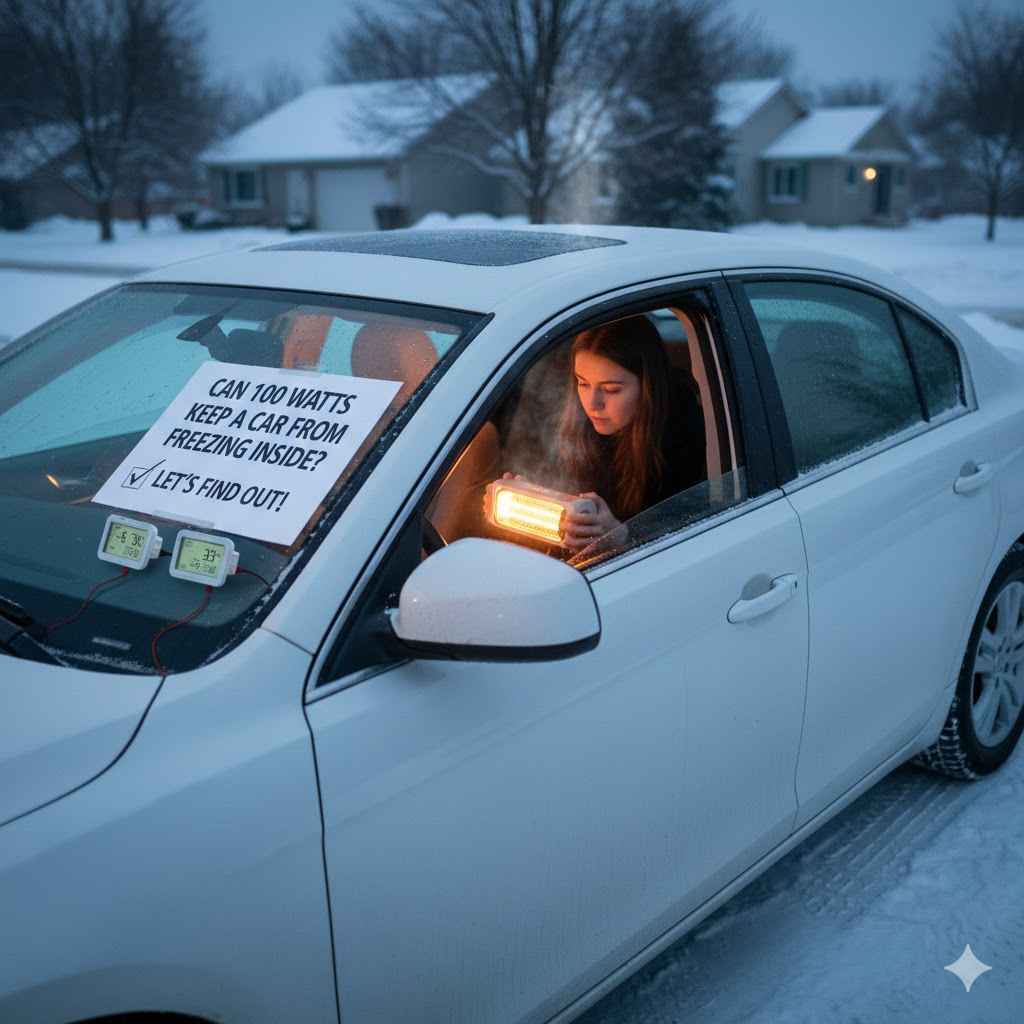
Can 100 Watts Keep a Car From Freezing Inside?
Ever wondered if a small amount of power can make a big difference when it gets really cold? Many people new to car care or winter prep often ask, Can 100 Watts Keep a Car From Freezing Inside? It sounds simple, but figuring out the right way to keep your car warm without using too much energy can be tricky. Don’t worry! This guide will break it down for you step-by-step. We’ll show you how much heat 100 watts can really provide and what you can do with it. Get ready to learn how to beat the freeze!
Understanding 100 Watts Of Heat For Your Car
When we talk about 100 watts, we’re referring to a unit of electrical power. In the context of keeping a car from freezing, this power level usually relates to small heating devices. These are often called “wattage heaters” or “car warmers.” The idea is to use this electrical power to generate enough warmth to prevent ice or frost from forming on your car’s windows or to keep the interior from getting too cold.
For beginners, the challenge lies in relating this specific wattage to tangible results. A 100-watt device is quite small compared to household appliances like ovens or space heaters, which can use thousands of watts. This can lead to confusion about whether such a low power output is sufficient for a relatively large space like a car’s interior, especially in freezing temperatures. It’s like trying to boil a large pot of water with a tiny flame.
The key is to understand that 100 watts is not designed to heat your car to a comfortable indoor temperature. Instead, it’s typically used for more targeted applications, such as preventing condensation or light frost. Think of it as a gentle nudge against the cold, not a full-on battle. The following sections will break down how this power level works, its limitations, and its best uses. We will also look at real-world applications and considerations for using such devices safely and effectively in your vehicle.
What 100 Watts Can Actually Do
A 100-watt heater generates 100 joules of energy per second. In terms of heat, this translates to a specific amount of thermal energy. This amount of heat is modest. It’s enough to slightly raise the temperature of a small, insulated space.
For a car, this means 100 watts can help prevent the absolute lowest temperatures from settling in. It might be enough to stop moisture from freezing on the inside of your windshield. It can also help reduce the formation of thin ice on the outside of windows. However, it won’t be able to heat the entire car cabin to a warm room temperature.
The effectiveness of 100 watts depends heavily on insulation. A well-sealed car with thick windows will retain heat better than an older car with gaps. The outside temperature also plays a big role. In mildly chilly weather, 100 watts might make a noticeable difference. In extremely cold conditions, its impact will be much less.
Limitations of Low Wattage Heating
The primary limitation of a 100-watt heater is its output. It simply cannot generate enough heat to overcome significant cold. If the outside temperature is well below freezing, say 0°F (-18°C) or lower, 100 watts will struggle to keep even a small area warm.
Another limitation is the rate at which heat dissipates. Cars are not perfectly insulated spaces. They have large windows, doors, and many seals that allow cold air to enter and warm air to escape. A 100-watt heater would likely be constantly fighting this heat loss.
Furthermore, the area that can be effectively warmed is limited. A 100-watt device is best suited for localized heating. It might warm the dashboard area or a specific corner of the car. It won’t warm the seats, the back of the car, or the entire cabin evenly.
Power Source and Usage
To use a 100-watt heater in a car, you need a power source. Most cars have a 12-volt electrical system. To get 100 watts from a 12-volt system, you’ll need a current of about 8.3 amps (since Watts = Volts x Amps, so 100W / 12V ≈ 8.3A).
This current draw is important. The car’s cigarette lighter socket or accessory port is usually rated to handle this amount of power, often up to 10 amps or 120 watts. However, it’s crucial to check your car’s manual or the port’s rating to ensure you don’t overload it. Overloading can blow a fuse or, in extreme cases, damage the car’s wiring.
Using a 100-watt heater means drawing power from your car’s battery when the engine is off. If you run it for an extended period without the engine running, you can drain your battery. This could prevent you from starting your car later. It’s generally recommended to use such heaters only when the engine is running to charge the battery, or for short periods.
Can 100 Watts Keep A Car From Freezing Inside? Practical Applications
So, can 100 watts truly keep a car from freezing inside? The answer is nuanced. It depends on what you mean by “freezing inside” and what specific outcome you’re trying to achieve. If you’re hoping to maintain a comfortable temperature, the answer is likely no. However, if your goal is to prevent minor issues like frost formation or to keep critical components slightly warmer, then it might offer some benefit.
The most common and realistic application for a 100-watt heater is to combat condensation and light frost on windows. By placing a small, low-wattage heater near the windshield, it can create a small pocket of warmer air. This warm air can help evaporate moisture that would otherwise freeze.
Another potential use is in preventing the freezing of essential fluids if they are located in a very exposed area of the engine bay, though this is less common for 100-watt units and more suited for specialized engine block heaters. For the interior, think of it as a preventative measure against the worst effects of freezing rather than a complete solution to keep the car warm.
Preventing Frost And Ice On Windows
One of the most practical uses for a 100-watt heater is to prevent frost and ice from forming on your car’s windows. This is especially helpful if you live in an area with temperatures just below freezing, where light frost can quickly turn into a thin layer of ice.
A small, 100-watt heater can be positioned to direct warm air towards the inside of the windshield. This can help reduce the temperature difference between the inside and outside of the glass. When the inside surface is slightly warmer, moisture in the air is less likely to condense and freeze onto it.
Think of it like this: if your windshield is very cold, any humidity in the air will quickly turn into frost or ice. A 100-watt heater can create a small buffer zone of slightly warmer air. This buffer can prevent that immediate freezing. It won’t clear thick ice, but it can stop a light coating from forming in the first place.
For this to be effective, the heater needs to be placed strategically. It should be aimed directly at the windows, particularly the windshield. The car should also be as well-sealed as possible to trap the warmth generated.
Defogging And Condensation Control
Condensation inside a car’s windows is a common problem, especially in cold and humid weather. When the warm, moist air inside your car meets the cold glass surfaces, water vapor turns into liquid droplets, causing fogging. This can significantly reduce visibility and be a safety hazard.
A 100-watt heater can assist in defogging by helping to dry the air or by warming the glass surface. By circulating slightly warmer air, it can help evaporate the moisture clinging to the windows. It’s not a rapid defogger like your car’s built-in climate control system, but it can contribute to reducing fog over time.
The key is consistent, low-level warmth. While not powerful enough to heat the whole car, it can create a localized effect that aids in keeping the immediate area around the heater clear. This can be particularly useful for keeping your driver’s side window or a portion of the windshield clear enough to see out.
Maintaining Battery Health In Mild Cold
While not directly related to keeping the car “warm,” a very slight increase in interior temperature can indirectly help with battery performance in mild cold. Batteries tend to lose some of their cranking power as temperatures drop.
A 100-watt heater, by keeping the interior from reaching extremely low temperatures, can slightly mitigate this effect. It won’t drastically improve battery performance, but in borderline cold conditions, it might help prevent a weak battery from failing to start the car.
However, it’s vital to remember the power draw. Running a 100-watt heater from the battery alone for extended periods will drain it. This would have the opposite effect, making it harder to start the car. Therefore, this application is best when the engine is running or for very short durations.
Real-World Scenarios And Effectiveness
Let’s look at how a 100-watt heater performs in actual situations. These scenarios highlight the practical results you might expect.
Scenario 1: Overnight Frost Prevention
Imagine you park your car overnight in temperatures around 25°F (-4°C). The air is moist. You place a small, 100-watt plug-in heater on the dashboard, aimed at the windshield, and run it for two hours before you go to sleep, then unplug it.
In the morning, you find that the windshield has a very thin layer of frost, but it’s much easier to wipe away than if you hadn’t used the heater. The areas directly in the path of the heater are noticeably clearer. The rest of the car is still cold, but the immediate visibility issue is reduced.
Scenario 2: Preventing Window Fogging During Short Trips
You’re making short trips in your car on a damp day, with temperatures around 40°F (4°C). Each time you get in, the windows start to fog up. You plug in a 100-watt heater that draws power from the car’s accessory port.
After about 10-15 minutes of driving, you notice the fog on the windshield and front side windows has significantly reduced. The heater helps to keep the glass slightly warmer and the air drier, making it harder for fog to form. It doesn’t warm the entire cabin, but it improves visibility where it matters most for driving.
Scenario 3: Extreme Cold Performance
Your car is parked outside in a blizzard with temperatures dropping to 0°F (-18°C). You decide to try using a 100-watt heater to see if it can help. You plug it in and leave it running for several hours while the engine is off.
After this time, you check the car. The interior is still extremely cold. The 100-watt heater has made very little impact on the overall temperature. There might be a tiny spot where it was placed that is slightly less frozen, but the car is essentially still frozen inside. This scenario clearly shows the limitations of low wattage in severe cold.
These examples illustrate that 100 watts is useful for preventing minor inconveniences like light frost and fog. It’s not powerful enough to keep a car warm in freezing temperatures or to defrost thick ice. The key is managing expectations.
Understanding Wattage And Heat Transfer
When we talk about 100 watts in the context of a car heater, it’s crucial to understand what wattage means for heat output. Wattage is a measure of power, and in heating devices, it directly relates to how much electrical energy is converted into thermal energy.
For a 100-watt device, this conversion produces a specific amount of heat. This amount is relatively small when compared to typical home appliances. For instance, a standard space heater might range from 1000 to 1500 watts. A hair dryer usually operates around 1200 to 1800 watts.
The difference in wattage means a significant difference in heating capability. A 100-watt heater will take much longer to warm a space, and it will only be able to warm a very small area. It is not designed for rapid heating or for maintaining comfortable temperatures in large volumes.
How Heat Is Generated
Most small automotive heaters that operate at around 100 watts use a resistive heating element. This is a wire, often made of a special alloy like Nichrome, that resists the flow of electricity. As electricity passes through this wire, it encounters resistance. This resistance causes the wire to heat up.
The heat generated by the wire is then transferred to the surrounding air. This can happen through conduction, convection, or radiation. In a typical car heater, a fan often blows air over the hot element (convection), pushing warm air into the car’s cabin.
The amount of heat produced is directly proportional to the power consumption. So, a 100-watt heater converts 100 joules of electrical energy into heat every second. This is a consistent rate of energy conversion.
Factors Affecting Heat Retention
The effectiveness of any car heater, including a 100-watt one, is heavily influenced by how well the car retains heat. Several factors play a role in this:
Insulation: The type and quality of materials used in your car’s construction matter. Modern cars often have better insulation around the doors, roof, and floor compared to older models.
Window Seals: The rubber seals around your car’s windows and doors are critical. If they are worn or cracked, they allow cold air to enter and warm air to escape easily.
Window Thickness and Type: Single-pane windows lose heat more rapidly than double-pane or specially treated windows designed for insulation.
Car Size: A smaller car will generally require less energy to heat than a larger one.
Exterior Temperature and Wind: The colder it is outside and the windier it is, the faster heat will escape from the car.
A 100-watt heater is working against these factors. In a well-insulated vehicle with good seals, its limited heat output might be more noticeable. In a less insulated vehicle, the heat will dissipate so quickly that the heater’s effect will be minimal.
Direct Versus Indirect Heating
The way a 100-watt heater is used also affects its perceived effectiveness. Most small car heaters are designed for direct heating. This means they are placed in a specific location to warm a particular area.
For example, placing a small fan heater on the dashboard directly facing the windshield provides direct heating to that area. This is more effective for preventing frost or fog on that specific window.
Indirect heating would involve trying to warm the entire cabin volume. A 100-watt heater is not powerful enough for this. It cannot distribute enough heat to raise the temperature of all the air inside the car to a noticeable degree.
Therefore, when considering if 100 watts can keep a car from freezing, it’s important to focus on localized effects rather than whole-cabin warming.
Safety Considerations For Using Car Heaters
Using any electrical device in a car requires attention to safety. Small heaters, even those at a lower wattage, are no exception. Understanding the potential risks and how to mitigate them is crucial for a positive experience.
The main concerns revolve around fire hazards, electrical system strain, and potential damage to the vehicle or its components. It’s important to remember that cars have enclosed spaces, and electrical devices can behave differently than they do in open areas.
Proper installation, regular checks, and mindful usage are key to ensuring that a 100-watt heater serves its purpose without creating new problems. It’s not just about getting heat; it’s about getting it safely.
Electrical System Load
As mentioned, a 100-watt heater draws about 8.3 amps from your car’s 12-volt system. This is a significant amount of current for a single accessory. Car accessory sockets (cigarette lighter ports) are typically fused to protect the wiring.
If you plug in a 100-watt heater and it causes problems, the first thing that might happen is a blown fuse. This is a safety mechanism designed to prevent damage to the car’s electrical system. If a fuse blows, it means the circuit was overloaded.
It’s important to never try to bypass a fuse or
Furthermore, if you’re using a device that draws this much power, it’s best to do so with the engine running. This ensures that the car’s alternator is providing the power, rather than solely draining the battery. Running a high-draw accessory for extended periods with the engine off can lead to a dead battery, leaving you stranded.
Fire Hazards
Electrical heaters, regardless of wattage, can pose a fire risk if misused. The heating element gets hot, and if it comes into contact with flammable materials, it can cause a fire.
In a car, this means keeping the heater away from upholstery, paper products, loose wires, or any other combustible materials. Ensure the heater is placed on a stable surface and is not obstructed.
Also, inspect the heater’s cord and plug regularly for any signs of damage, such as frayed wires or cracked insulation. Damaged cords can lead to short circuits or electrical shocks. If the cord is damaged, do not use the heater.
Overheating is another concern. If the heater’s air vents are blocked, or if it’s designed to be placed directly against surfaces, it can overheat. Always follow the manufacturer’s instructions for placement and operation.
Proper Placement And Ventilation
Proper placement of a 100-watt heater is crucial for both effectiveness and safety. These heaters are often small and designed to be portable.
Avoid Obstruction: Do not block the air intake or outlet vents of the heater. This can cause it to overheat and reduce its efficiency.
Stable Surface: Place the heater on a flat, stable surface where it won’t tip over.
Clearance: Ensure there is adequate clearance around the heater to prevent contact with flammable materials.
Ventilation: While you want to trap heat in the car, some minimal ventilation might be beneficial depending on the heater’s design to prevent excessive moisture buildup or condensation, though this is less critical for a low-wattage device.
Some small heaters are designed to be plugged directly into the car’s socket and may sit quite low. Be mindful of where the hot element is located to avoid accidental contact with your feet or clothing.
Maximizing The Usefulness Of A 100 Watt Heater
Given the limitations, how can you get the most out of a 100-watt heater? It’s all about smart usage and understanding its role. Instead of expecting it to perform miracles, view it as a helpful tool for specific tasks.
The best approach is to use it proactively and strategically. This means anticipating problems like frost or fog and deploying the heater before they become severe. It’s about complementing your car’s existing systems, not replacing them.
Consider the environment your car is in and the specific issues you face. If your primary concern is morning frost on the windshield, then focusing the heater’s output there makes sense. If it’s condensation during short trips, then using it for the first few minutes of driving is practical.
Using Timers And Thermostats
Some 100-watt heaters come with built-in timers or thermostats. These features can significantly improve their usefulness and safety.
Timers: A timer allows you to set the heater to run for a specific duration. For example, you could set it to run for one hour in the morning before you need to leave. This prevents it from running all night and draining your battery or causing overheating.
Thermostats: A thermostat will automatically turn the heater on and off to maintain a set temperature. While a 100-watt heater won’t maintain a high temperature, a thermostat can help prevent the area around it from getting too hot or too cold, optimizing its operation.
Even if your heater doesn’t have these features, you can often use external plug-in timers designed for household appliances. Ensure the timer is rated for the amperage your heater draws.
Combining With Other Methods
A 100-watt heater is most effective when combined with other preventative measures. Think of it as one part of a winter car care strategy.
Car Covers: Using a car cover can provide an extra layer of insulation, helping to keep the interior slightly warmer and reducing heat loss.
Window Covers: Specialized windshield covers can prevent frost and ice from forming on the outside. Some interior dashboard covers can help prevent condensation.
Dehumidifiers: Small, reusable car dehumidifiers can absorb moisture from the air when the car is parked, reducing the likelihood of condensation and fogging.
Regular Maintenance: Ensuring your car’s battery is in good condition and your tires are properly inflated are fundamental for winter driving, regardless of internal heating.
By using these methods in conjunction with your 100-watt heater, you can create a more effective defense against the cold.
When To Rely On Professional Solutions
It’s important to recognize when a 100-watt heater is insufficient. For serious cold weather problems, such as:
Keeping your car starting in sub-zero temperatures consistently.
Preventing the engine block from freezing.
Maintaining a comfortable interior temperature for extended periods without the engine running.
In these situations, you’ll need more powerful solutions. These might include:
Engine Block Heaters: These are designed to warm the engine coolant, making it easier for the engine to start and improving oil flow in very cold weather.
Battery Warmers: These devices wrap around the battery to keep it at an optimal operating temperature.
More Powerful Car Heaters: While not common for continuous use, some heavier-duty portable heaters exist, but they require more power and careful consideration.
Remote Start Systems: These allow you to start your car’s engine remotely to warm it up before you get in.
These solutions typically require more power, often drawing from a household outlet when parked at home or utilizing a more robust vehicle electrical system.
Frequently Asked Questions
Question: Can a 100 watt heater run my car battery down?
Answer: Yes, a 100 watt heater can drain your car battery if it’s run for an extended period with the engine off. It draws a significant amount of current, so it’s best used when the engine is running or for short durations.
Question: Will a 100 watt heater melt thick ice on my car?
Answer: No, a 100 watt heater is not powerful enough to melt thick ice. Its primary function is to prevent light frost or condensation, not to remove established ice layers.
Question: How close should I place a 100 watt heater to my windshield?
Answer: Place the heater close enough to direct warm air towards the windshield but ensure there is adequate clearance to prevent overheating or damaging any surfaces. Always follow the manufacturer’s placement instructions.
Question: Can I leave a 100 watt heater plugged in all the time?
Answer: It is generally not recommended to leave a 100 watt heater plugged in all the time, especially when the engine is off, due to the risk of draining your battery. Using timers can help manage its operation.
Question: Is a 100 watt car heater safe to use in all cars?
Answer: While generally safe if used according to instructions, always check your car’s accessory port’s amperage rating to ensure it can handle the heater’s power draw. Avoid using damaged heaters or cords.
Summary
So, Can 100 Watts Keep a Car From Freezing Inside? The answer is generally no, not in the way most people imagine. A 100-watt heater offers modest warmth, best suited for preventing light frost and reducing condensation on windows. It cannot heat a car cabin to a comfortable temperature in freezing conditions. Use it strategically with other methods for best results.