Can a Car Go Backwards in Drive? Rollback vs. Transmission Fault
A car in Drive can roll backwards on a hill: at idle the torque converter only slips a little torque through, and on a steep enough grade gravity wins. But if the car actively drives in reverse while the selector reads D, that is a shift-cable fault, not physics. This guide covers why rollback happens, whether it damages your transmission, why shifting to R at speed is blocked, and how to diagnose the fault.
Quick Answer
Yes. An automatic in Drive rolls backwards on an incline whenever gravity exceeds the small amount of idle “creep” torque the torque converter passes through. Brief rollback does not damage the transmission because the converter is a fluid coupling, not a locked mechanical link. Hold the car on the brake, not the throttle.
Why a Car in Drive Rolls Backwards on a Hill
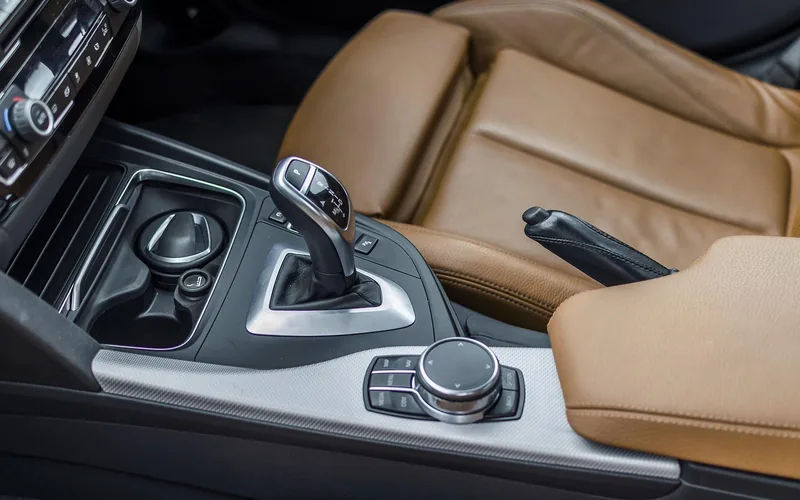
Selecting D does not mechanically lock your wheels against turning backwards. It only tells the transmission to apply the forward clutch packs. Whether the car actually moves forward depends entirely on whether the torque reaching the wheels beats the force of gravity pulling it down the slope.
What “Creep” Torque Actually Is
A conventional automatic connects the engine to the gearbox through a torque converter — a fluid coupling with no rigid mechanical connection between the two halves. At idle, the engine-side impeller throws transmission fluid at the output-side turbine hard enough to produce the gentle forward “creep” you feel on flat ground. That is a small amount of torque, and it is deliberately small.
On a flat surface, creep is enough to move the car. On a steep enough grade — the exact angle depends on your vehicle’s weight, gearing and idle speed — gravity’s component down the slope exceeds it, and the car rolls backwards even though the clutches for first gear are still applied. The fluid inside the converter simply slips. Nothing is being forced or ground. This is also why the same car may hold on a gentle driveway but creep backwards on a steep parking ramp.
Manual-transmission drivers meet a related version of this problem at every hill start, but the mechanism and the fix are completely different — there the clutch is either engaged or it is not. If you drive a stick, see our guide to a manual car that rolls back when starting.
📊 US federal law requires a neutral position between the forward and reverse positions on every shift selector — which is why you cannot move straight from D into R. Source: FMVSS 102, 49 CFR 571.102 (eCFR)
Does Rolling Backwards in Drive Damage the Transmission?
Brief, slow rollback in Drive does not damage an automatic transmission. Because the torque converter is a fluid coupling, there is no rigid driveline connection to shock-load when the wheels turn backwards against applied forward clutches — the fluid absorbs the speed difference by slipping, exactly as it does every time you pull away from a stoplight.
What genuinely costs you money is heat. If you hold the car stationary on a hill by feeding it throttle in Drive rather than using the brake, you are forcing the converter to slip at high stall for as long as you sit there, and slipping fluid turns torque into heat. Sustained high fluid temperature is the single biggest killer of automatic transmissions, because it cooks the friction material and oxidises the fluid.
- Harmless: a foot or two of rollback as you move from brake to accelerator
- Harmless: shifting R to D while still creeping backwards at walking pace
- Avoid: holding the car still on a slope with throttle instead of the brake
- Avoid: reversing at speed and slamming the selector into D while still moving
The practical rule is simple: hold the car with the foot brake, or the parking brake on a long wait, and only move to the accelerator once you are ready to go. If your car rolls back much further than you expect, or the engagement into Drive feels delayed and vague, that is worth investigating alongside other reasons a car is not shifting gears properly.
Your Car Goes in Reverse When You Shift Into Drive — That’s a Fault
Rolling backwards is gravity. Actually driving backwards under power with the selector in D is something else entirely: the position shown on your indicator no longer matches the position of the manual valve inside the transmission. In other words, the lever says Drive, but the transmission has genuinely selected reverse.
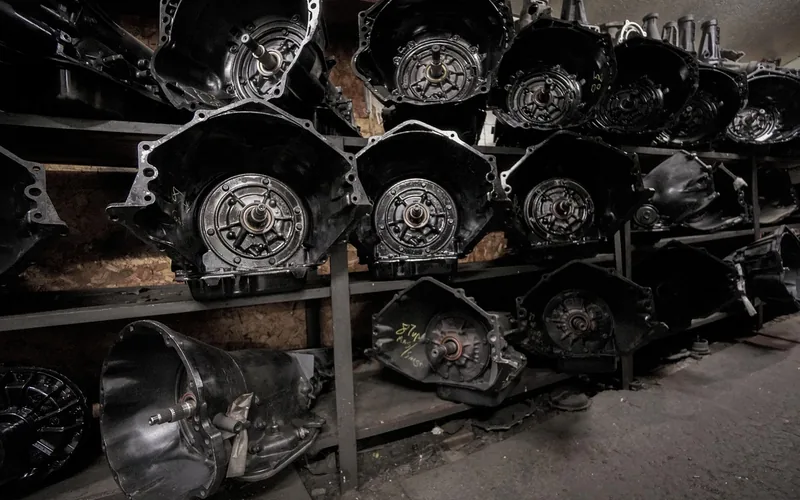
The usual culprit is the shift cable or linkage. The plastic bushing where the cable meets the transmission lever is a common wear item; when it cracks or the cable stretches, the lever at the transmission stops travelling as far as the lever in your hand. The indicator then reads one gear while the transmission sits in the one next door. Because reverse sits directly beside neutral and drive on the selector gate, a relatively small amount of misadjustment is enough to land in the wrong range.
Treat this as an immediate stop-driving fault. A car that can move the opposite way to the gear you selected is a genuine hazard in a parking lot, and it will also fail to start reliably, because the neutral safety switch is referenced to that same lever position.
How to Diagnose a Selector That Does Not Match the Gear
- Confirm the fault is repeatable: Park on flat, open ground with nothing behind you and verify the car moves the wrong way every time, not just once.
- Check the transmission fluid level: Low or badly degraded fluid causes weak, delayed and unpredictable engagement that can mimic a linkage fault.
- Watch the transmission lever while a helper shifts: With the engine off and the wheels chocked, look at the lever on the transmission itself and confirm it moves to a distinct detent for every selector position.
- Scan for transmission trouble codes: Pull codes with an OBD2 scanner that reads the transmission module, not just engine codes — a failed range sensor logs a code that points straight at the cause.
- Inspect the shift cable bushing: Look for a cracked, missing or sloppy plastic bushing at either end of the cable, which is the single most common failure point.
- Book a transmission shop: If the lever travels correctly and fluid is good, the fault is internal to the valve body and needs a specialist.
Best Transmission Diagnosis Pick
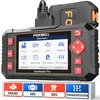
FOXWELL NT604 Elite OBD2 Scanner (ABS, SRS, Transmission)
Step 4 of the checklist above needs a scanner that actually talks to the transmission module — most budget code readers only pull generic engine codes and will show nothing at all on a range-sensor fault.
- Best for: Confirming whether a wrong-gear fault is electronic or purely mechanical linkage
- Why we picked it: Reads transmission and ABS modules, not just the engine, so it covers the codes this specific fault sets
- Main drawback: Diagnostic only — it reads and clears codes but performs no adaptation relearns
Compare more rollback and shift-fault options
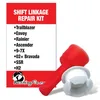 Option 1 BushingFix TB1Kit Shift Cable Bushing Repair Kit
|
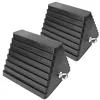 Option 2 MaxxHaul Heavy-Duty Rubber Wheel Chocks (2-Pack)
|
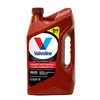 Option 3 Valvoline MaxLife Multi-Vehicle Full Synthetic ATF
|
As an Amazon Associate we earn from qualifying purchases.
Can You Actually Shift Into Reverse While Driving Forward?
No. On any modern automatic, two separate safeguards stop it, and neither of them involves your transmission being destroyed. This is worth stating plainly, because the internet is full of claims that dropping the lever into R at speed will grenade the gearbox, cook the engine and wreck the driveshafts.
The first safeguard is the shift gate itself. Under FMVSS 102, the federal standard cited above, a neutral position must sit between the forward drive and reverse positions on every selector sold in the US. You physically cannot travel from D to R without passing through N, which means an accidental single-notch bump lands you in neutral, not reverse.
The second is a reverse inhibitor. If you do drag the lever all the way to R while rolling forward, the transmission control module refuses the request outright and the gearbox simply goes to neutral — with your reverse lamps lit, which is alarming for the driver behind you but harmless to the car.
“A mechanism called a reverse inhibitor stops the gearbox from engaging reverse, even at speeds of around 5 mph. This function is controlled electronically by the PCM in modern cars, while older vehicles used a hydraulic system to achieve the same effect.”
The genuine risk of grabbing the lever mid-drive is therefore not mechanical carnage. It is losing drive at exactly the wrong moment: in neutral you have no engine braking, no ability to accelerate out of trouble, and on many vehicles a noticeable delay before Drive re-engages. Related engagement problems, such as when a car stalls in reverse, come from separate causes worth ruling out on their own.
How to Stop a Car From Rolling Back on a Hill
The right technique depends on what is between your engine and your wheels. A torque-converter automatic, a manual and an electric motor each hold a slope in a fundamentally different way, and the habit that protects one can wear out another.
| Drivetrain | Why it rolls back | Best way to hold the hill |
|---|---|---|
| Torque-converter automatic | Idle creep torque is lower than the gravity load on the grade | Foot brake for short stops, parking brake for long ones — never the throttle |
| Manual | Clutch is disengaged during the pedal changeover | Handbrake start, or heel-and-toe to overlap brake and throttle |
| Automated manual / dual-clutch | Clutch packs open at rest, so creep is weak or absent | Rely on hill-start assist; hold the brake until the clutch bites |
| EV or hybrid in Creep mode | Software mimics an automatic and supplies only light forward torque | Foot brake, or switch the car to Hold mode |
| EV or hybrid in Hold mode | It does not — motor torque actively holds position | Nothing needed; the motor holds until you press the accelerator |
Most cars built in the last decade also include hill-start assist, which keeps brake pressure applied for a short interval after you lift off the pedal so you have time to reach the accelerator. Some manufacturers extend this into a full automatic hold function that keeps the brakes clamped indefinitely at a standstill — BMW’s version, for example, is explained in our guide to what Auto H means in a BMW. If you are still getting comfortable with selector positions generally, our walkthrough on how to change gear in an automatic car covers the basics.
Frequently Asked Questions
Does rolling backwards in drive damage the transmission?
No, not for the brief rollback that happens during a normal hill start. The torque converter is a fluid coupling, so the wheels turning backwards against applied forward clutches simply makes the fluid slip rather than shock-loading anything solid. The real damage risk is heat from holding the car stationary on the throttle for long periods instead of using the brake.
Why does my car go in reverse when I put it in drive?
Because the selector position no longer matches the position of the manual valve inside the transmission, so the indicator reads D while the transmission has actually selected reverse. The usual cause is a stretched shift cable or a cracked plastic cable bushing. Stop driving the car — it is a genuine hazard — and have the linkage adjusted or the bushing replaced.
Is it bad to shift from reverse to drive while still rolling backwards?
At walking pace it is essentially harmless, because the torque converter absorbs the direction change by slipping. Doing it hard is a different matter: reversing quickly and slamming the selector into Drive while still moving backwards forces a much larger speed difference across the clutches and will shorten their life. Come to a stop first whenever you reasonably can.
What happens if you shift into reverse while driving forward?
Nothing mechanical breaks. A reverse inhibitor blocks the request above roughly 5 mph, so the transmission drops into neutral instead and your reverse lamps come on. On modern cars this is managed electronically by the powertrain control module; older vehicles achieved the same block hydraulically. The real danger is being left coasting in neutral with no drive available.
Do electric cars roll backwards on hills?
It depends on the mode. In Creep mode an EV deliberately mimics an automatic and supplies only light forward torque, so it can roll back on a steep grade just like a petrol car. In Hold mode the motor actively holds the car at a standstill and it will not move in either direction until you press the accelerator. Most EVs also apply hill-hold for a few seconds during the pedal changeover.
Should I hold the car on a hill with the gas pedal or the brake?
Always the brake. Holding an automatic still on a slope with throttle makes the torque converter slip at high stall, and that slip converts engine torque directly into heat in the transmission fluid. Sustained heat degrades the fluid and the friction material faster than almost anything else you can do. Use the foot brake for short stops and the parking brake for longer ones.
The Bottom Line
A car in Drive rolling backwards on a hill is normal physics, not a fault, and brief rollback does no harm because the torque converter slips instead of binding. Hold the slope on the brake rather than the throttle and heat never becomes an issue. The one version of this that is genuinely serious is a car that drives backwards under power with D selected — that is a shift cable or linkage fault, and it needs fixing before the car is driven again.
Products related to this article
Sponsored / affiliate links. As an Amazon Associate I earn from qualifying purchases. I may earn additional commission from eligible campaigns.