Can a Car Have a Clean Title With an Accident? Yes
Yes, a car can have a clean title after an accident if the damage never triggered a salvage, rebuilt, flood, or similar brand. Miss that split, and you can overpay for hidden structural damage or underprice a repairable car. This guide explains how title branding works, which accident records still matter, and how to check the risk before you buy or sell.
Can a car have a clean title with an accident?
Yes. A clean title means the vehicle has not been declared a total loss by an insurance company, and it may also be described as a clear title or clean vehicle history. A minor accident can leave the title clean if the damage never crosses a branding threshold.
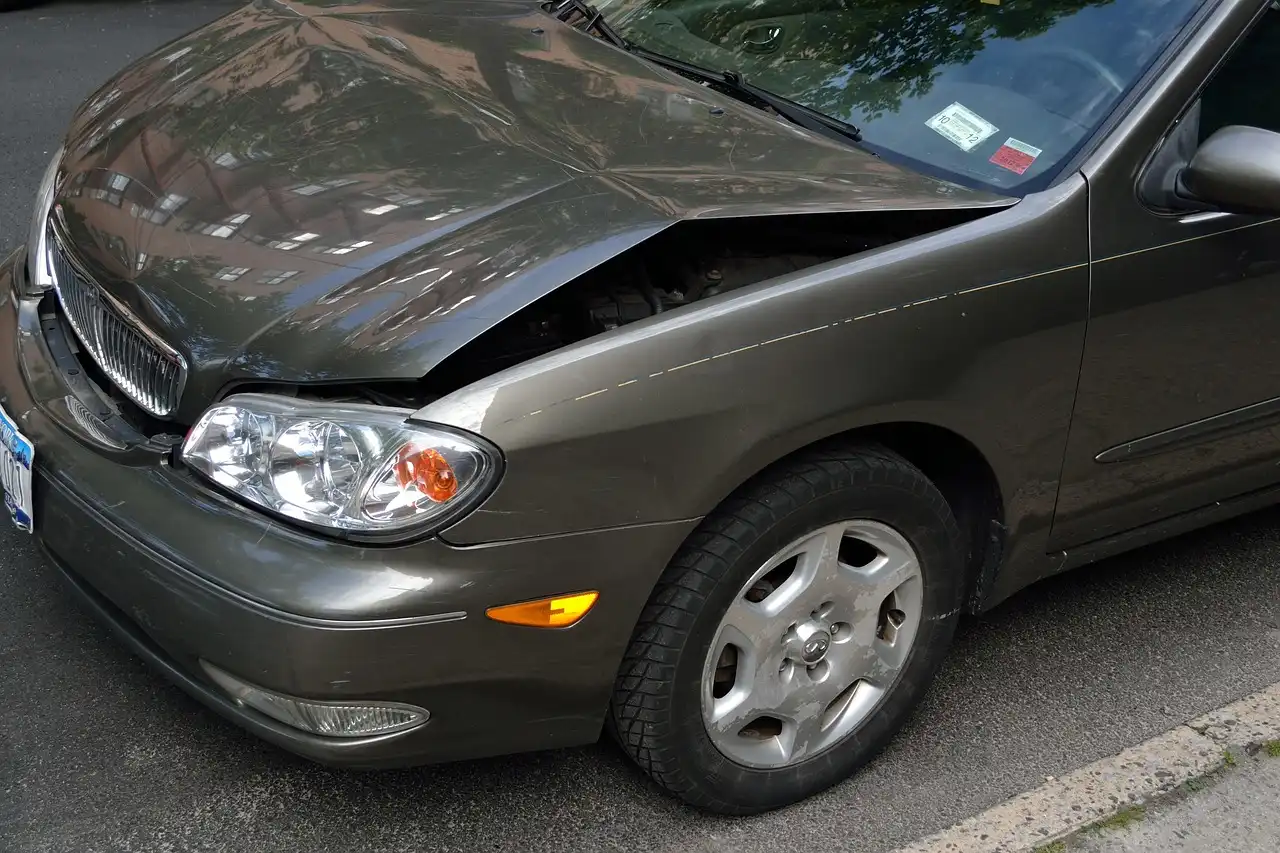
That is the key distinction. Title status follows legal and insurance total-loss rules, not every dent, scrape, or repaired bumper. A car can have accident repairs on record and still keep a clean title if the insurer never branded it as salvage or another loss category.
What clean title means in practice
A clean title signals that the car is not branded as a total loss. It can still have prior repairs, replaced body parts, or cosmetic repainting. Buying a clean-title car often makes registration, insurance, and maintenance easier, but it does not remove the need to inspect the car carefully.
Where total-loss and salvage rules enter the picture
A salvage title is tied to significant damage and repairs that exceed a set percentage of the car’s value. That threshold can vary by jurisdiction and insurer. If the loss calculation crosses that line, the title may be branded even if the car is later repaired.
What kinds of accidents still leave the title clean?
Minor accidents often leave the title clean when they do not cause major structural damage or airbag deployment. Cosmetic bumper repairs, shallow fender damage, and some door skin repairs may never reach the level that triggers title branding.
The same car can have visible repair history and still keep a clean title. The risk changes when the damage touches frame structure, airbags, or flood exposure, because those events are more likely to trigger a total-loss decision or a branded title.
Minor cosmetic damage and bumper repairs
A parking-lot impact that cracks a bumper cover or dents a fender may be repaired without any title change. Still, the bodywork should fit properly after the repair. Hood, trunk, and doors should sit evenly when closed.
Repaired body damage that never crossed a total-loss threshold
Some cars receive substantial body repair and remain title-clean if the repair cost never reached the insurer’s total-loss line. That is why records matter. A repaired quarter panel is not the same risk as a branded loss, but it still deserves a close look.
Why airbag deployment and frame damage raise the stakes
Airbag deployment and structural damage change the inspection burden. They do not automatically mean a salvage title, but they make hidden damage more likely. A car can look complete and still have alignment, safety, or repair-quality problems beneath the surface.

How do you tell if a clean-title car has hidden damage?
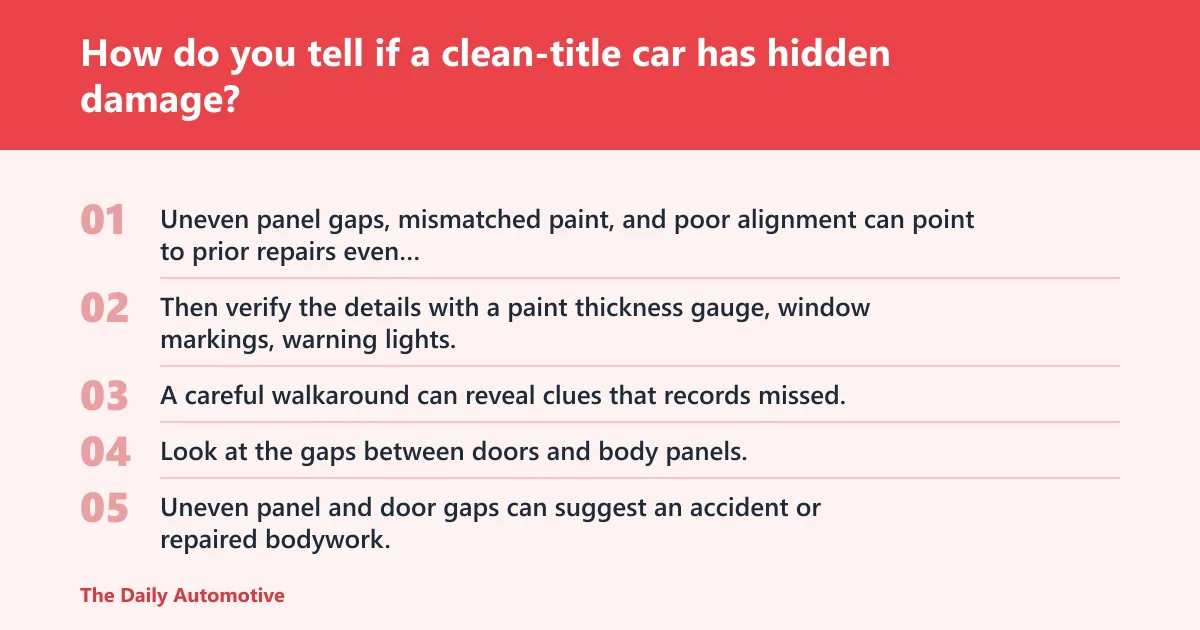
Start with the body. Uneven panel gaps, mismatched paint, and poor alignment can point to prior repairs even if the title stays clean. Then verify the details with a paint thickness gauge, window markings, warning lights, and underbody inspection.
A clean title tells you about branding. It does not prove repair quality. A careful walkaround can reveal clues that records missed, especially on private-party cars where documentation may be thin.
Check panel gaps, paint, and body alignment
Look at the gaps between doors and body panels. Uneven panel and door gaps can suggest an accident or repaired bodywork. Open and close the hood, trunk, and each door. They should latch without rubbing, sticking, or sitting off-center.
Also check for overspray, mismatched texture, and fresh fasteners. Say your left front fender has a thin, even gap but the hood sits high on that side. That can point to prior repair or poor reassembly, even if the title remains clean.
Use a paint thickness gauge with the right ranges
A paint thickness gauge helps separate factory panels from repainted ones. Original paintwork is often around 80-120 microns, repainted panels may be around 150-260 microns, and much higher readings should raise concern. One isolated reading is not proof; multiple high readings across a panel matter more.
Look for window serial number mismatches, warning lights, and repair marks
All windows should match if untouched. Mismatches can suggest replacement after damage. Check for airbag warning lights, odd trim clips, missing labels, and repaired brackets under the hood or trunk. A non-matching VIN in paperwork is another red flag that deserves an explanation.
How do vehicle history reports reveal accidents or salvage titles?
Start with the VIN number. A vehicle history report uses the VIN to look up accident history, title brands, and any reported salvage status. It is the simplest way to find recorded events, but it will not catch every repair or every collision.
Use the report as a screening tool, not a final verdict. If the report shows a salvage title, rebuilt record, or accident entry, compare that data with the car in front of you. A vehicle history report before purchase can save you from buying past damage you cannot see.
What accident entries can and cannot tell you
An accident entry can confirm that some event was recorded, but it may not describe the full damage. It may mention damage to bumpers or fenders, or it may say very little. Some repairs never get recorded, and some reported accidents are minor.
Why a clean report still needs a physical inspection
A clean report does not prove the car was never damaged. It only means the report did not show the event. Records can be incomplete, so you still need body checks, underbody checks, and a professional inspection if anything looks off.
Decision guide: clean title, repaired damage, or salvage title?
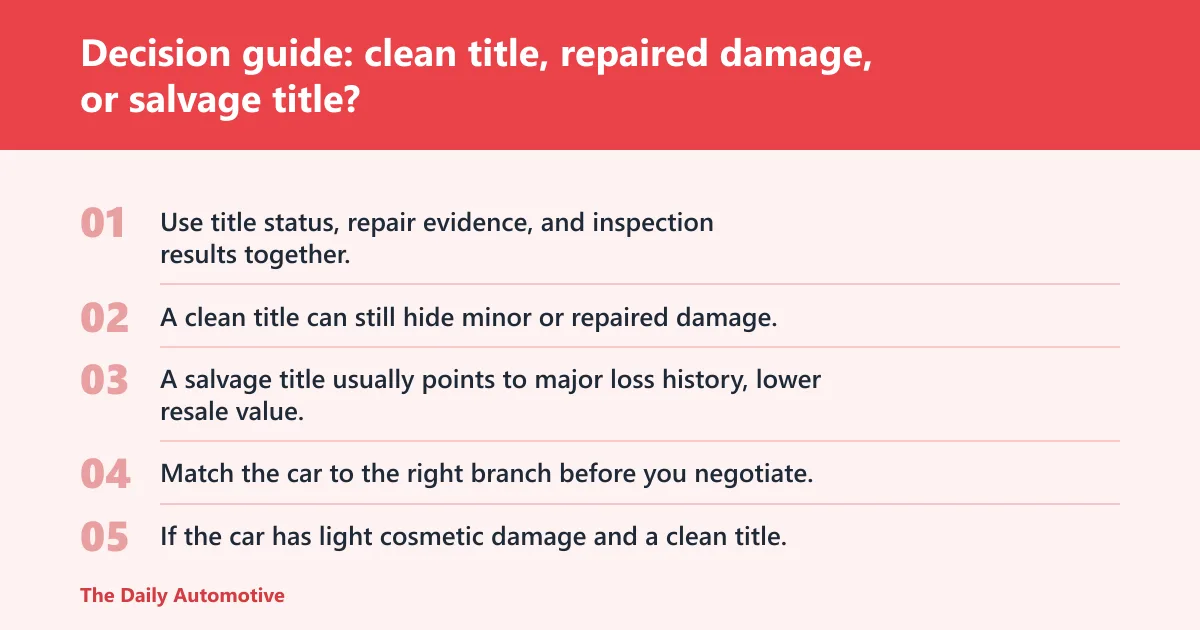
Use title status, repair evidence, and inspection results together. A clean title can still hide minor or repaired damage. A salvage title usually points to major loss history, lower resale value, and possible insurability issues. Match the car to the right branch before you negotiate.
| Branch | What you see | Questions to ask | Documents to request | Red flags |
|---|---|---|---|---|
| Minor cosmetic accident | Clean title, light bumper or fender repair, no airbag deployment | What part was repaired? Was any structure affected? Were OEM parts used? | Repair invoice, photos, alignment sheet if available | Overspray, uneven gaps, paint readings above 300 microns |
| Repaired but title-clean accident | Clean title, visible repainted panel, possible window or trim replacement | Was the damage reported? Was the repair shop reputable? Were safety systems checked? | Vehicle history report, repair records, professional mechanic report | Warning lights, non-matching window serial numbers, hidden corrosion |
| Total-loss or salvage scenario | Salvage title, rebuilt title, flood record, or major structural repair | Was the car inspected after repair? Is it insurable in your state? What parts were replaced? | Title brand paperwork, inspection certificate, repair parts list | Airbag deployment, frame pulls, mismatch in VIN documents, poor rust protection |
Branch 1: minor cosmetic accident
If the car has light cosmetic damage and a clean title, focus on repair quality and normal wear. Ask whether the bumper cover, headlamp, or fender was replaced. Review the body lines and test all electrical items in the repaired area.
Branch 2: repaired but title-clean accident
If the car was repaired after a larger crash but still kept a clean title, request the repair history and a fresh inspection. This is the point where hidden damage matters most. A certified mechanic inspection helps verify roadworthiness after repairs and can reveal frame or suspension issues.
Branch 3: total-loss or salvage scenario
If the car carries a salvage or rebuilt brand, treat it as a higher-risk purchase. Value drops, insurance can be harder to obtain, and repairs may be incomplete or uneven. Require documentation that shows how the vehicle was restored and inspected before it returned to the road.
What should you check before buying a clean-title used car?
Check the title, the history report, and the car itself. For private-party sales, ask for service records, repair receipts, and the seller’s explanation of any accidents. For dealership cars, ask for the reconditioning list and any inspection paperwork they can provide.
If the car shows body repairs, airbag deployment, warning lights, or uneven panel gaps, move to a certified mechanic inspection before money changes hands. That is the best way to verify whether the car is structurally sound and safe to drive.
Private-party buyer checklist
- Verify the VIN on the car, title, and paperwork match exactly.
- Run a vehicle history report before you negotiate.
- Check panel gaps, paint thickness, glass codes, and underbody repair marks.
- Ask for repair invoices, photos, and maintenance records.
- Require a professional inspection if any bodywork or warning lights appear.
Dealership buyer checklist
- Ask for the dealer’s disclosure on prior damage and repairs.
- Compare the VIN on the windshield, door jamb, and sales documents.
- Review the vehicle history report and any reconditioning notes.
- Inspect for overspray, uneven gaps, tire wear, and dashboard warning lights.
- Request an independent mechanic inspection before signing if the car has repair clues.
Frequently asked questions
Can a car have a clean title if it was in an accident?
Yes. A clean title can remain in place after an accident if the vehicle was not declared a total loss and the damage did not trigger a salvage or similar brand. Minor collision repairs, cosmetic damage, and some bodywork can stay off the title even when the car has clear repair history.
Does a clean title mean the car was never damaged?
No. A clean title means the vehicle has not been declared a total loss by an insurance company. It does not necessarily mean the car has a damage-free past. A car can have repaired accident damage, replaced glass, painted panels, or even hidden frame issues while still carrying a clean title.
What kinds of accidents still keep a clean title?
Minor cosmetic accidents often keep a clean title, especially when there is no major structural damage or airbag deployment. Examples include bumper scrapes, light fender damage, and low-speed parking lot impacts. The title usually changes only when loss rules or branding thresholds are crossed.
How do I tell if a clean-title car has hidden accident damage?
Use a layered check. Look for uneven panel gaps, mismatched paint, and paint thickness readings that move past the original 80-120 micron range. Then confirm window serial numbers, warning lights, and underbody condition. If anything looks inconsistent, get a professional inspection.
Can a car with a clean title still have frame damage?
Yes. A clean title does not rule out frame or structural damage if the car was repaired without being declared a total loss. That is why a title alone is not enough. Frame clues, alignment issues, and repair records matter more when you are judging risk.
How do vehicle history reports reveal accidents or salvage titles?
They use the VIN number to pull reported accident entries and title brands from databases tied to insurers, auctions, and state records. A report can show salvage title status or prior damage, but it can miss unreported repairs. That is why a physical inspection still matters.
Products related to this article
Sponsored / affiliate links. As an Amazon Associate I earn from qualifying purchases. I may earn additional commission from eligible campaigns.