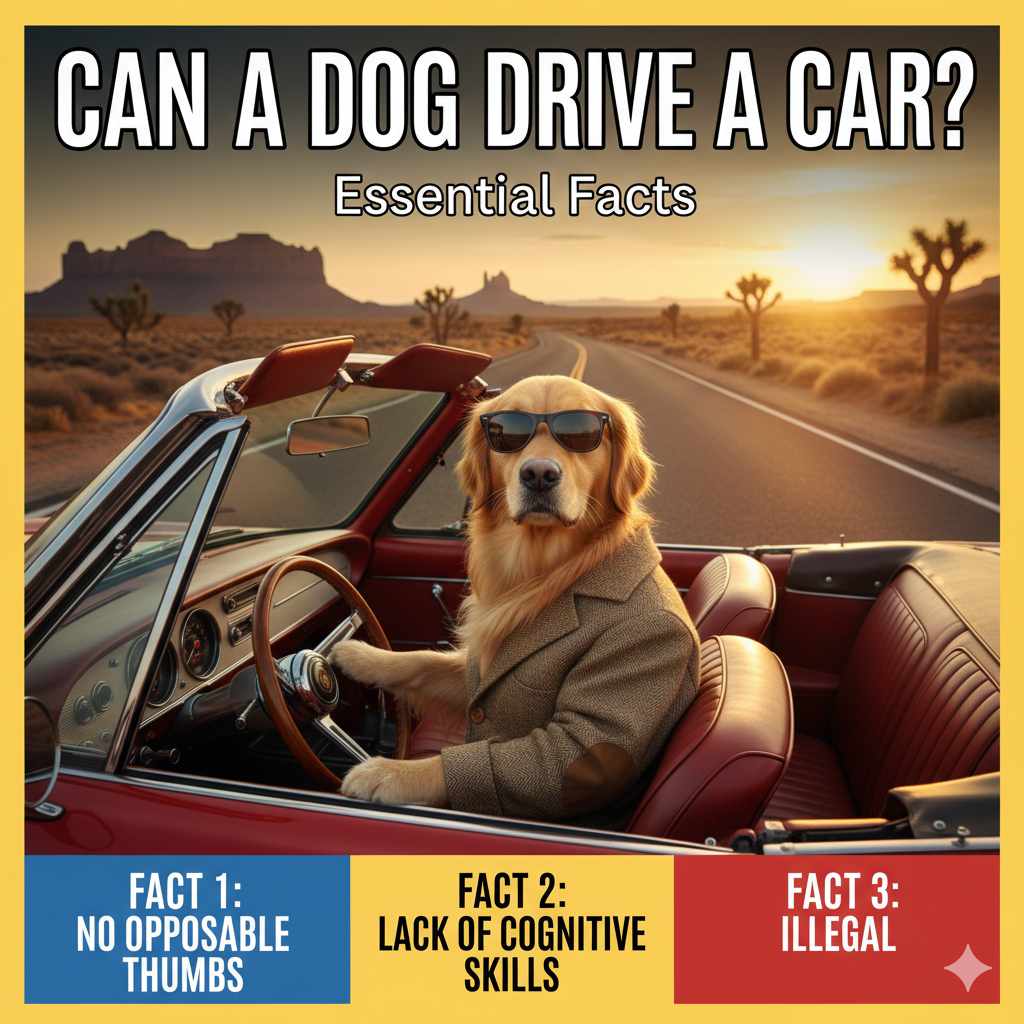
Can A Dog Drive A Car: Essential Facts
Can a dog drive a car? No, dogs cannot drive cars. While intelligent and capable of learning tricks, dogs lack the physical and cognitive abilities necessary to operate a vehicle safely and legally.
Ever seen a funny video of a dog behind the wheel and wondered… could they actually DO it? It’s a fun thought, but the reality is, driving a car is much more complex than it looks, even for us humans! It requires good vision, fine motor skills, and the ability to understand traffic rules. Dogs, with all their amazing qualities, just aren’t built for this kind of task. We’ll explore why, looking at the skills needed to drive and why our furry friends can’t quite make the cut.
Understanding the Complexity of Driving
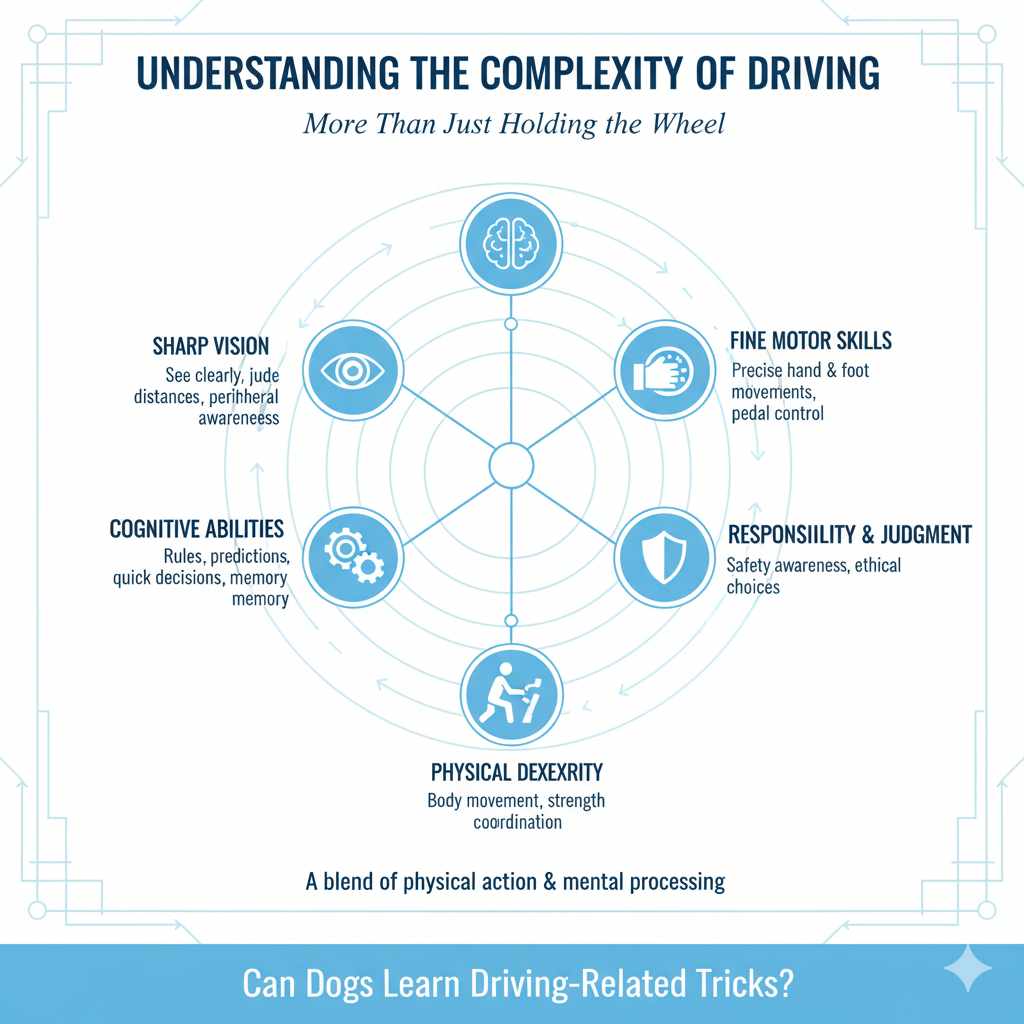
Driving a car isn’t just about sitting in a seat and holding a wheel. It’s a sophisticated activity that involves a blend of physical actions and mental processing. Think about everything that goes into a single trip: watching the road, checking mirrors, using the pedals, steering, reacting to other drivers, and understanding road signs and signals. It’s a lot!
To do this safely and effectively, a driver needs several key abilities:
- Sharp Vision: Being able to see clearly in different light conditions, at various distances, and noticing small details on the road is crucial. Peripheral vision is also super important to be aware of surroundings.
- Fine Motor Skills: Operating the steering wheel requires precise hand movements. Using the accelerator and brake pedals needs controlled foot pressure and coordination.
- Cognitive Abilities: This includes understanding rules of the road, predicting the actions of others, making quick decisions under pressure, and remembering routes.
- Responsibility and Judgment: A driver must understand the serious consequences of unsafe driving and make responsible choices to ensure their safety and the safety of others.
- Physical Dexterity: Reaching pedals, turning the wheel, and shifting gears all demand specific body movements and strength.
These are the fundamental building blocks for anyone behind the wheel. Let’s break down why dogs, wonderful as they are, don’t possess these specific capabilities for driving.
Why Dogs Aren’t Built to Drive
Our canine companions excel in many areas – from loyalty and companionship to scent detection and agility. However, the skills needed for driving simply aren’t part of their natural makeup. Let’s look at some specific reasons:
Physical Limitations
Dogs have bodies designed for running, jumping, and exploring the world with their noses and paws. Their anatomy isn’t suited for controlling a vehicle:
- Paws vs. Hands: A dog’s paws are fantastic for digging and running, but they lack the opposable thumbs and dexterity of human hands needed for precise steering. Imagine trying to grip a steering wheel with furry paws – it’s just not feasible for the fine adjustments required.
- Pedal Reach and Control: Cars have pedals placed for human legs and feet. A dog, no matter how tall, wouldn’t be able to reach the pedals comfortably or apply the correct, controlled pressure needed to accelerate or brake.
- Overall Stature: The seating and control positions in a car are designed for upright human posture and vision. A dog’s body shape and size don’t allow them to sit in a driving position where they can see effectively or reach the controls.
Sensory and Cognitive Differences
While dogs have incredible senses, they are different from ours and not adapted for driving:
- Vision: Dogs see the world differently than humans. While they might have better motion detection, their color perception is limited, and their focus is often different. They don’t naturally scan the road ahead, check mirrors, or interpret traffic signals in the way a human driver does.
- Understanding of Abstract Concepts: Driving involves understanding abstract rules, symbols (like road signs), and complex cause-and-effect scenarios. For example, understanding that hitting the brake pedal stops the car, or that a red traffic light means “stop” is beyond a dog’s cognitive capacity.
- Problem-Solving for Driving: A dog might learn to associate a lever with a treat, but they cannot grasp the complex problem-solving required to navigate traffic, react to unexpected situations, or plan a route.
- Abstract Reasoning: Concepts like “speed limit,” “lane changes,” or “right-of-way” are abstract human constructs that dogs don’t naturally understand.
The Role of Technology and Training
You might have seen videos or heard about experiments where animals, including dogs, were trained to perform actions that mimic driving. For example, trained dogs in New Zealand, as part of an animal welfare initiative by the SPCA, were taught to operate a modified car. However, this is very different from actual driving.
These animals were trained through extensive positive reinforcement to perform specific, simple actions (like pushing a lever or nudging a steering wheel) in a highly controlled, track-like environment. They were not navigating busy streets, obeying traffic laws, or making independent driving decisions. This is a testament to animal intelligence, but it doesn’t mean they can drive a car in any real-world sense.
What Skills Are Really Needed to Drive a Car?
Let’s break down the day-to-day requirements of a driver. This isn’t just about passing a test; it’s about staying safe on the road every time you get behind the wheel.
1. Observational Skills
This is your primary tool. You need to constantly observe your surroundings. This includes:
- Scanning the Road Ahead: Noticing potential hazards, changes in traffic, or road conditions far in advance.
- Using Mirrors: Checking rearview and side mirrors regularly to be aware of vehicles around you.
- Monitoring Other Drivers: Anticipating what other vehicles might do, whether they are signaling, and how they are behaving.
- Watching for Pedestrians and Cyclists: Being extra vigilant in areas where they might be present.
2. Spatial Awareness
This is your sense of where you are in relation to everything else. It includes:
- Judging Distances: Knowing how far away other cars are, or how much space you have to maneuver.
- Understanding Vehicle Dimensions: Knowing the size of your car to fit into parking spaces or navigate narrow roads.
- Lane Position: Keeping your vehicle safely within its lane.
3. Reaction Time and Decision Making
This is where quick thinking is vital:
- Responding to Sudden Events: Slamming on the brakes if another car cuts you off, or swerving to avoid an obstacle.
- Making Splits-Second Choices: Deciding whether it’s safe to change lanes, merge into traffic, or proceed through an intersection.
- Prioritizing Safety: Always making the safest choice, even if it means being a bit delayed.
4. Control and Coordination
This involves the physical manipulation of the vehicle:
- Smooth Steering: Making gradual, precise turns to follow the road.
- Controlled Pedal Application: Gently pressing the accelerator to move forward or the brake to slow down.
- Gear Selection: Shifting gears (if applicable) at the right times.
5. Knowledge of Traffic Laws and Road Signs
This is the rulebook for the road:
- Understanding Speed Limits: Knowing the safe and legal speed for different roads.
- Interpreting Signs: Recognizing what stop signs, yield signs, and other traffic control devices mean.
- Following Traffic Signals: Obeying red, yellow, and green lights.
- Rules of the Road: Knowing who has the right-of-way in various situations.
These complex skills are learned, practiced, and, most importantly, understood by human drivers. Dogs operate on instinct, learned behaviors for specific tasks, and immediate needs, not abstract rules or complex environmental interpretation required for driving.
A Look at Animal Intelligence vs. Driving Capability
It’s easy to be amazed by what animals can learn. Dogs, in particular, are renowned for their intelligence and trainability. They can learn to perform a vast array of tricks and commands, often with remarkable speed. This can sometimes lead people to wonder about their broader capabilities.
What Animals Can Learn
Many animals can be trained to perform complex sequences of behaviors. This often involves:
- Operant Conditioning: A learning process where behaviors are reinforced (rewarded) or discouraged (punished).
- Chaining Behaviors: Linking multiple individual learned behaviors together to create a longer, more complex action.
- Mimicry: Some animals can learn to imitate actions they observe.
For example, certain animals can be trained to push levers, pull ropes, or even use simple tools. Some research has even explored teaching animals basic problem-solving in puzzle boxes or mazes. A canine’s social intelligence also allows them to understand human cues and emotions, making them excellent companions and helpers.
The Crucial Difference for Driving
While impressive, these learned behaviors are fundamentally reactive and task-specific. Driving, however, requires a proactive, comprehensive understanding of a dynamic environment. Here’s the key difference:
- Task-Specific vs. General Comprehension: A dog trained to nudge a steering wheel learns “if I nudge this, I get a treat.” They do not comprehend what steering is, why they are doing it, or how it affects the vehicle’s movement in relation to the outside world. A human driver understands that steering changes direction to avoid obstacles, follow the road, and reach a destination.
- Abstract Reasoning: Driving relies heavily on understanding abstract rules, symbolic representations (like signs and signals), and the potential consequences of actions. Dogs operate more on immediate cause-and-effect and instinct.
- Situational Awareness: A dog cannot grasp the concept of situational awareness – understanding the overall context of their environment and how various elements interact. This is essential for anticipating traffic, weather, and other road users.
The intelligence that makes a dog a loyal friend and a capable working animal is different from the kind of cognitive processing and predictive judgment required to pilot a two-ton metal machine at high speeds. According to the National Highway Traffic Safety Administration (NHTSA), driving is a complex skill that demands constant attention, judgment, and adherence to safety protocols, all of which are beyond the capabilities of animals.
The Legal and Ethical Perspective
Beyond the physical and cognitive limitations, there’s also the matter of legality and ethics. Driving is a privilege granted to humans who have met specific requirements, and for good reason.
Why Humans Drive
- Licensing Requirements: In virtually every country, individuals must pass rigorous tests demonstrating their knowledge of traffic laws and their ability to operate a vehicle safely before being granted a driver’s license.
- Age and Maturity: Driving is restricted to adults who are deemed mature enough to understand the responsibility involved.
- Accountability: Drivers are legally accountable for their actions on the road. This includes responsibility for any accidents or traffic violations.
Ethical Considerations
Allowing or expecting a dog to drive would raise significant ethical concerns:
- Safety of the Animal: The act of trying to make a dog drive would likely be stressful and potentially dangerous for the animal.
- Safety of Others: The primary concern would be the immense risk to public safety. An untrained animal behind the wheel would be a catastrophic hazard.
- Misrepresenting Animal Capabilities: While celebrating animal intelligence is wonderful, misrepresenting it to the point of suggesting they can perform complex human tasks like driving can lead to dangerous misunderstandings.
The legal framework for driving is structured around human capabilities and responsibilities, making it clear that animals cannot and should not be involved in operating vehicles.
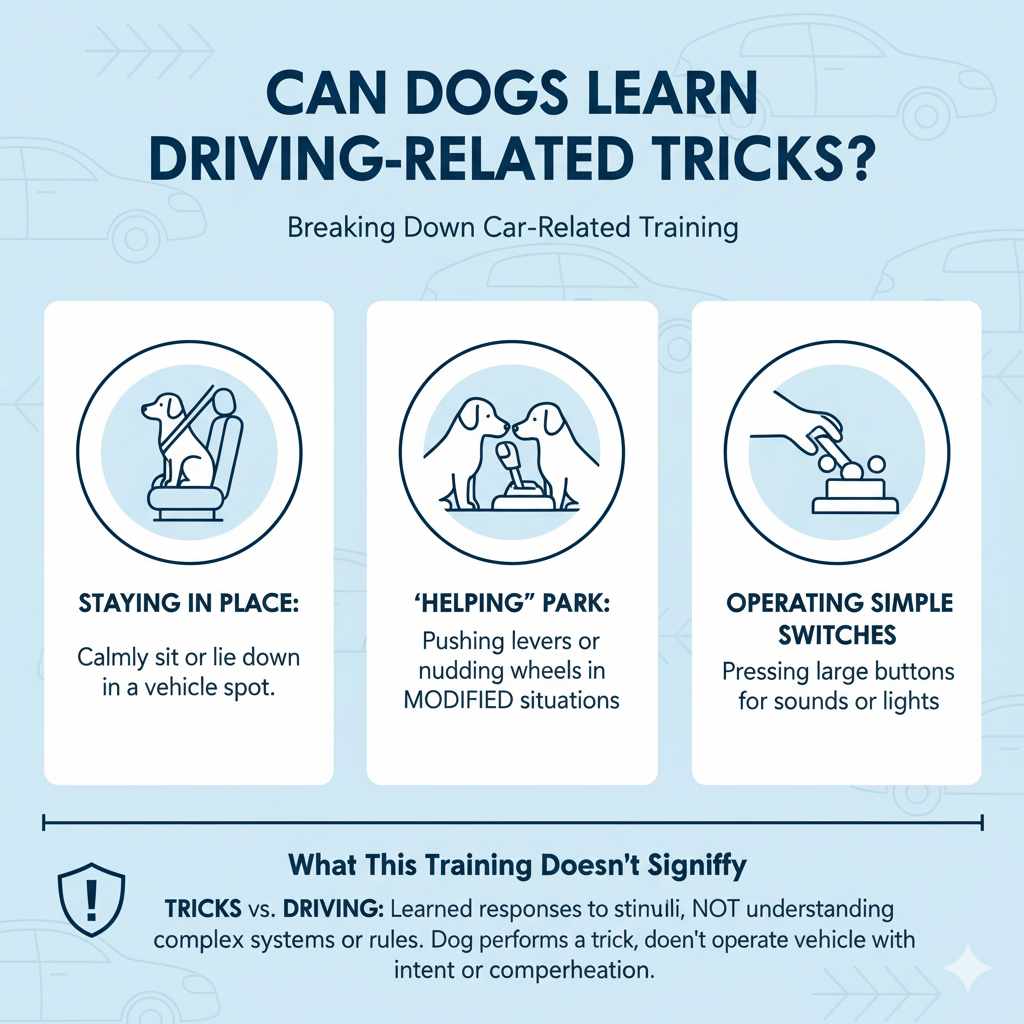
Can Dogs Learn Driving-Related Tricks?
While a dog can’t drive, they can be trained to interact with parts of a car in specific, controlled ways. This is often seen in entertainment or specialized training.
Examples of Car-Related Tricks
- Staying in Place: Teaching a dog to sit or stay calmly in the passenger seat or a designated spot in the vehicle.
- “Helping” Park: Some dogs have been trained to push levers or nudge steering wheels in modified situations for demonstration purposes. This usually involves cues and rewards for very specific actions.
- Operating Simple Switches: In controlled environments, a dog might learn to press a large, easy-to-push button, perhaps to trigger a sound or light.
What This Training Doesn’t Signify
It’s vital to distinguish these tricks from actual driving. These are learned responses to specific stimuli, not an understanding of the complex system and rules of driving. The dog is performing a trick, not operating a vehicle with intent or comprehension.
Frequently Asked Questions (FAQs)
Q1: So, if I see a video of a dog “driving,” is it fake?
A1: Often, such videos are either staged for humor, involve heavy editing, or show a dog performing a very specific, pre-trained maneuver in a controlled environment (like nudging a lever) that is not genuine driving. It’s highly unlikely to be a dog operating a car safely or independently on a road.
Q2: Can dogs learn to steer?
A2: Dogs can be trained to nudge or push a steering wheel with their nose or paws as a learned trick, but they cannot comprehend steering in the context of controlling a vehicle’s direction or responding to road conditions. They lack the fine motor skills and judgment for proper steering.
Q3: Are there any animals that can operate complex machinery?
A3: While some animals can be trained to operate very simple machinery or perform repetitive tasks with levers and buttons (often in research or entertainment), there are no animals capable of operating complex, real-world machinery like cars, planes, or construction equipment that require judgment, adaptation, and understanding of dynamic environments.
Q4: What’s the difference between a dog learning a trick and a human learning to drive?
A4: A dog learning a trick is typically performing a learned action based on cues and rewards. A human learning to drive involves understanding complex rules, spatial judgment, prediction of others’ behavior, fine motor control, and decision-making in a constantly changing environment. The former is task-based; the latter is comprehension-based.
Q5: Could technology be developed to let dogs drive?
A5: While technology can assist drivers (like cruise control), enabling an animal to drive would require technology that translates animal commands into precise vehicle operation, interprets the animal’s understanding of the road, and makes necessary safety decisions. Given the fundamental cognitive differences, this is highly improbable and ethically questionable.
Q6: Is it safe to let my dog sit in the driver’s seat?
A6: It is generally not safe or recommended to let your dog sit in the driver’s seat, even when the car is off. They could accidentally engage controls, be injured if the airbag deploys (if sitting in the passenger seat in a running car), or become a distraction if you are trying to drive. Always use appropriate pet restraints for their safety.
Q7: If dogs can’t drive, why are they sometimes shown in cars in movies or commercials?
A7: This is almost always for entertainment or marketing purposes and is achieved through careful staging, editing, and often, the use of animal trainers. The dog is not truly operating the vehicle; it’s a performance designed to be amusing or engaging for the audience.
Conclusion
The idea of a dog driving a car is an amusing one, sparking our imagination and highlighting the remarkable intelligence our canine friends possess. We’ve explored the intricate skills required for driving – from sharp vision and fine motor control to complex decision-making and understanding abstract rules. We’ve also looked at the physical and cognitive differences that make this task impossible for dogs.
While dogs can be trained to perform incredible tricks and even interact with car controls in highly controlled scenarios, this is a far cry from the independent judgment, comprehension of traffic laws, and constant vigilance needed to navigate the road safely. The legal and ethical considerations also firmly place driving within the realm of human capabilities and responsibilities. Ultimately, the bond we share with our dogs is built on their unique strengths as companions and animals, not on their ability to operate complex machinery.