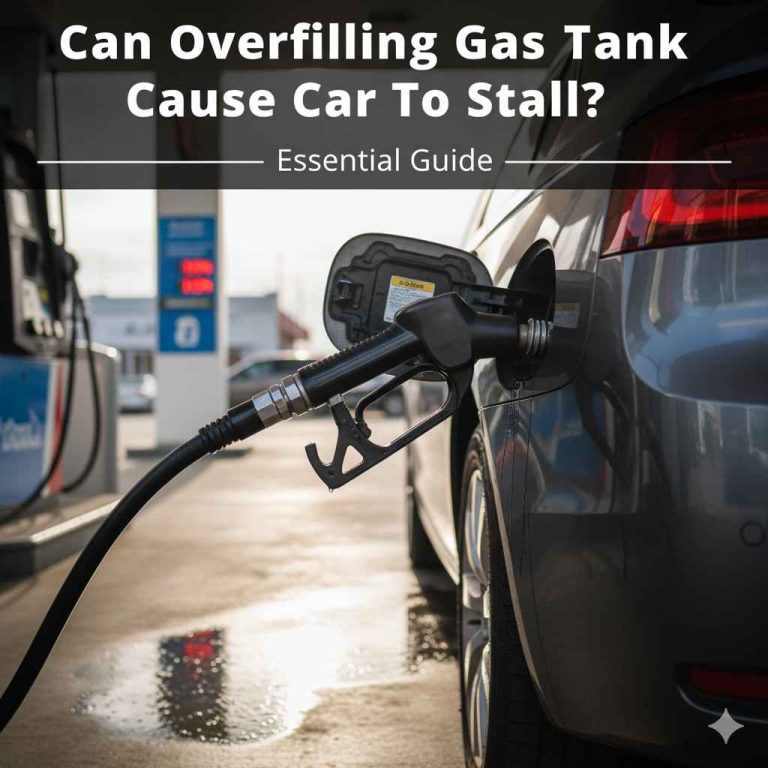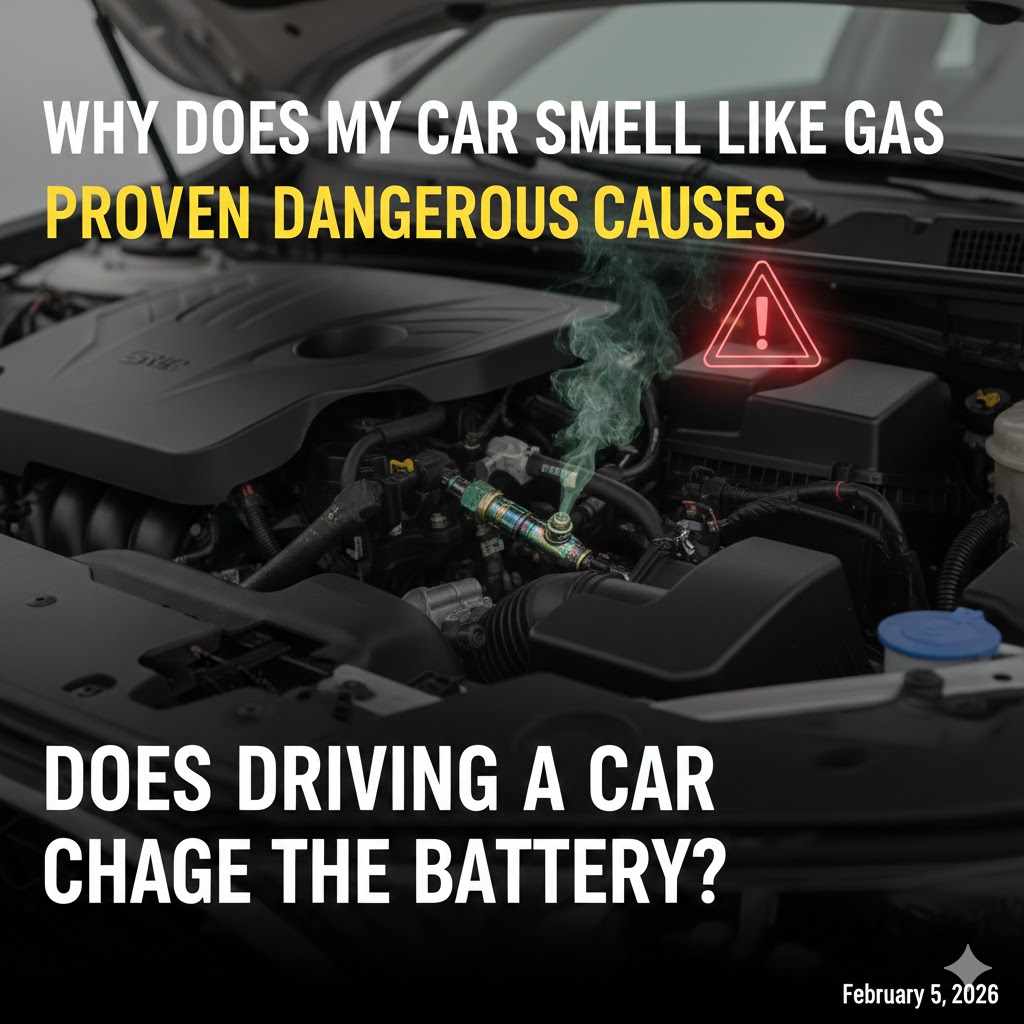
Why Does My Car Smell Like Gas? Dangerous Causes & Fixes
A gas smell in your car usually means a fuel leak — a cracked fuel line, a bad injector, or a leaking tank — though a loose gas cap is the most common harmless cause. Gasoline vapor ignites from a single spark, so a persistent smell is a real fire risk, not something to wait out. This guide covers all seven causes ranked from harmless to dangerous, a flooded-engine fix for a no-start car, real repair costs, and exactly when to stop driving and call a mechanic.
Quick Answer
A gas smell in your car usually means a fuel leak — a cracked line, a bad injector, or a leaking tank — though a loose gas cap is the most common harmless cause. Because gasoline vapor ignites from a single spark, treat any persistent smell as a fire risk: park outside, away from ignition sources, and have it inspected immediately.
Before the “why,” a word on safety. Gasoline is highly flammable, and the fumes are more dangerous than the liquid itself — a small spark from a loose wire or even static electricity can ignite gasoline vapors and start a fire. If you smell gas, the safest first step is always to park your vehicle outdoors, away from buildings or other cars, and turn off the engine.
📊 U.S. fire departments responded to an estimated 200,876 highway vehicle fires in 2022, causing 650 civilian deaths, 857 injuries, and $2.1 billion in direct property damage — a reminder that a persistent fuel smell is never something to shrug off. Source: NFPA Vehicle Fires Report
Common (But Still Important) Reasons for a Gas Smell
Let’s start with the most common and least scary causes. Often, the solution is simple and something you can check yourself in just a few seconds.
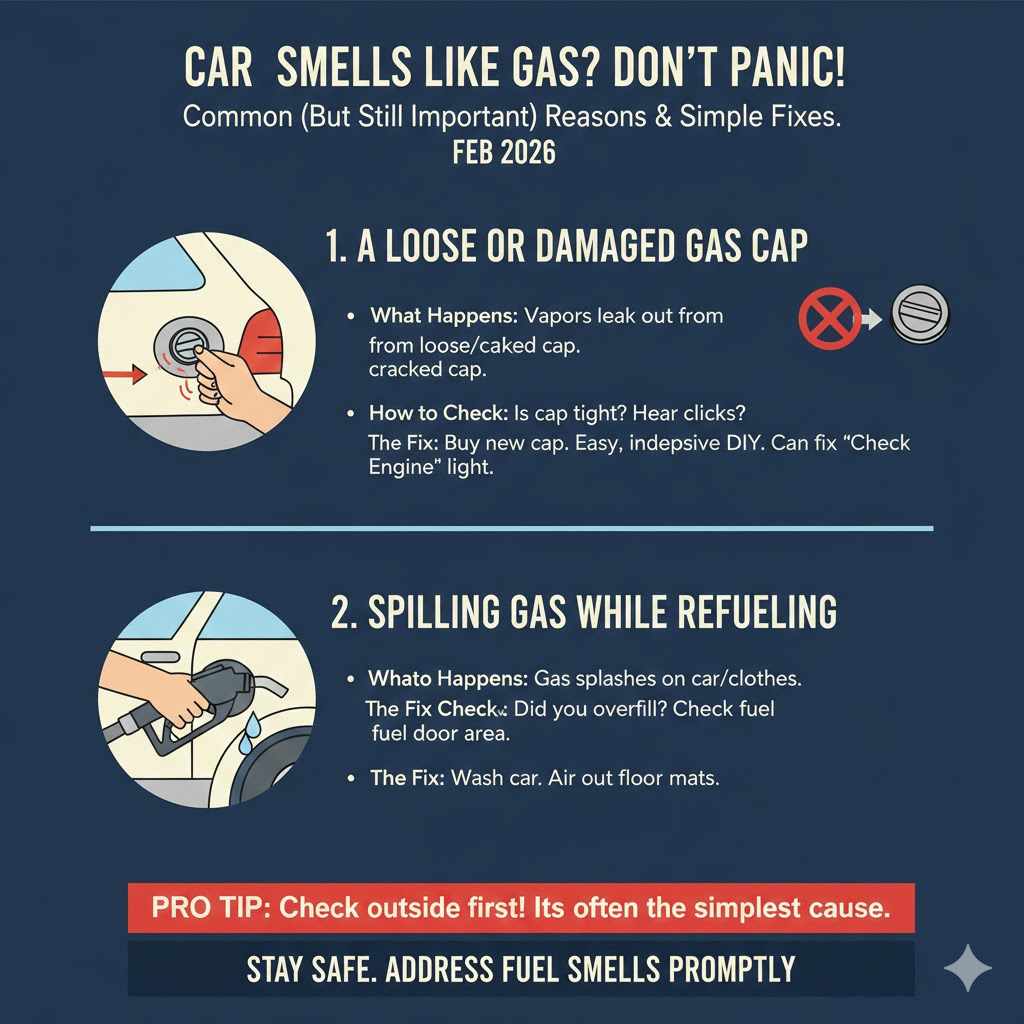
1. A Loose or Damaged Gas Cap
This is the number one reason for a gas smell, and thankfully, it’s the easiest to fix! Your car’s fuel system is pressurized. The gas cap seals the system, preventing harmful fumes from escaping into the air.
- What Happens: If the cap is loose, cracked, or the rubber seal is worn out, gas vapors will leak out. You’ll usually notice this smell around the rear of your car, near the fuel door.
- How to Check: Go to your gas cap. Is it tight? You should hear a few clicks when you tighten it. If it spins freely or looks cracked, it’s time for a new one.
- The Fix: A new gas cap is inexpensive and available at any auto parts store. Simply unscrew the old one and screw on the new one. This simple fix can also resolve a check engine light, as a bad cap can trigger an evaporative emissions (EVAP) system error code.
2. Spilling Gas While Refueling
It happens to the best of us. You’re filling up your tank, get distracted, and a little bit of gas splashes onto the side of your car. The smell can be quite strong and might linger for a day or two.
- What Happens: Gas that spills on your car’s paint will evaporate, creating a strong odor. If it gets on your clothes or shoes, you might bring the smell inside the car with you.
- How to Check: Think back to your last fill-up. Did you overfill the tank or spill some? Check the area around your fuel door for any signs of dried gasoline.
- The Fix: If you spilled gas on your car, you can wash the area with car soap and water to help get rid of the residue. If the smell is on your floor mats, take them out and air them out for a day.
3. A Flooded Engine (Car Cranks But Won’t Start, and Smells Like Gas)
A flooded engine happens when too much raw fuel reaches the cylinders and fouls the spark plugs before they can ignite it. The car cranks, refuses to start, and the whole engine bay smells like raw gasoline. It’s most common on older carbureted engines, but it can also happen on a modern fuel-injected car after several failed cold-start attempts.
- What Happens: Excess fuel floods the cylinders and wets the spark plugs, so there’s no spark to ignite the air-fuel mixture — the engine cranks over but never fires.
- How to Tell: The engine cranks normally, won’t catch, and you smell strong raw gasoline — usually after several back-to-back start attempts in cold weather.
- The Fix (Clear Flood Mode): Most fuel-injected cars have a built-in fix for this.
- Stop cranking and pop the hood for 10–15 minutes to let the excess fuel evaporate.
- Press the accelerator pedal all the way to the floor and hold it there while you turn the key. On most fuel-injected cars, this tells the computer to cut fuel to the injectors so the engine can pump plain air through the cylinders and dry out the spark plugs.
- Release the pedal once the engine catches. If it still won’t start after two or three tries this way, stop cranking and have it towed instead of continuing — repeated cranking can drain the battery and flood the engine further.
Proven Dangerous Causes of a Gas Smell
Now, let’s move on to the more serious reasons your car might smell like gas. These issues involve leaks in the fuel system and are considered dangerous. If you suspect any of these, it’s crucial to stop driving and seek professional help from a qualified mechanic.
1. Leaking Fuel Lines
Fuel lines are the veins of your car, carrying gasoline from the tank to the engine. These lines run along the underside of your vehicle and can be made of metal or reinforced rubber.
- What Happens: Over time, fuel lines can rust, corrode, or become brittle and crack. Road debris or damage can also puncture them. A leak in a fuel line will drip gasoline directly onto the ground or hot engine parts.
-
Symptoms:
- A very strong gas smell, especially when the car is running or just after you’ve parked.
- Visible puddles of gasoline under the car. Gas evaporates quickly but leaves a stain.
- A sudden drop in fuel efficiency. You’ll be visiting the gas station much more often.
- Why It’s Dangerous: A fuel line leak is extremely hazardous. Dripping gasoline can easily come into contact with the hot exhaust system or a spark, causing a fire.
2. A Leaking Fuel Tank
The fuel tank is a large container, usually located at the rear of the car, that holds all your gasoline. While they are built to be tough, they aren’t indestructible.
- What Happens: Rust is a common enemy, especially in areas with harsh winters where roads are salted. A tank can also be punctured by road debris or damaged in an accident. The seals around the fuel pump and sending unit on top of the tank can also fail.
-
Symptoms:
- A strong smell of raw gas, most noticeable at the back of the car.
- A visible puddle or drips of fuel under the rear of the vehicle, especially when parked.
- The check engine light may come on due to a pressure loss in the fuel system.
- Why It’s Dangerous: A leaking fuel tank is a massive fire hazard. A large amount of flammable liquid is exposed, creating a dangerous situation.
“In my experience walking people through this exact question, where the smell is strongest is almost always the fastest clue. A smell that only shows up right after refueling, near the fuel door, is nearly always the cap or a spill — but a smell from the engine bay with the hood up points to an injector, line, or regulator, not the cap.”
3. Leaking Fuel Injectors
Fuel injectors are small nozzles that spray a fine mist of gasoline directly into your engine’s cylinders. They are sealed with O-rings to prevent leaks.
- What Happens: The rubber O-rings on the injectors can become old, brittle, and crack. The body of the injector itself can also crack. This allows fuel to leak out onto the top of the engine.
-
Symptoms:
- A strong gas smell coming from the engine bay. You’ll notice it more when you’re standing in front of the car with the engine running.
- Poor engine performance, such as rough idling, misfires, or trouble starting.
- Worse gas mileage.
- Why It’s Dangerous: Fuel leaking onto a hot engine manifold is a recipe for a fire under the hood. This is one of the most common causes of engine fires.
4. A Faulty Fuel Pressure Regulator
The fuel pressure regulator does exactly what its name says: it regulates the pressure of the fuel being sent to the injectors. It ensures the engine gets the right amount of fuel at all times.
- What Happens: The diaphragm inside the regulator can rupture. When this happens, raw fuel can leak out of the regulator itself or get sucked into the vacuum line connected to it.
-
Symptoms:
- A gas smell coming from the engine bay.
- Black smoke coming from the exhaust pipe. This is a sign of unburned fuel.
- Engine problems like stalling, poor acceleration, and bad fuel economy.
- You might find fuel in the vacuum hose connected to the regulator.
- Why It’s Dangerous: A leaking regulator can drip fuel onto hot engine components. If fuel enters the vacuum line, it can also cause serious engine performance issues.
5. A Damaged Charcoal Canister (EVAP System)
Your car has an Evaporative Emission Control (EVAP) system to trap gasoline vapors from the fuel tank and prevent them from escaping into the atmosphere. A key part of this system is the charcoal canister.
- What Happens: This canister is filled with activated charcoal that absorbs fuel vapors. If the canister cracks (often from road debris) or the hoses connected to it become loose or break, these trapped vapors will escape.
-
Symptoms:
- A persistent gas smell, even when the car is off.
- The check engine light will almost certainly be on, with an EVAP-related error code.
- You might have trouble filling your gas tank (the pump clicks off repeatedly).
- Why It’s Dangerous: While not as immediately dangerous as a liquid fuel leak, escaping vapors are still flammable and harmful to breathe. It also means your car is polluting the environment.
Best Gas Cap Pick
ZONFANT Locking Gas Cap with 2 Keys
A locking gas cap seals the fuel system just as well as your factory cap, plus it stops fuel theft and siphoning — the exact fix this article recommends for the #1 cause of a gas smell.
- Best for: Anyone whose gas cap is loose, cracked, or has a worn seal
- Why we picked it: Comes with keys and fits most vehicles, adding anti-theft protection over a standard cap
- Main drawback: Must confirm thread size fits your specific make and model before buying
Compare more gas-smell fix options
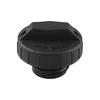 Option 1 Stant Fuel Tank Gas Cap (Non-Locking)
|
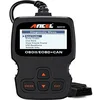 Option 2 ANCEL AD310 OBD2 Scanner Code Reader
|
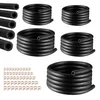 Option 3 10Ft 5-Size Fuel Line Hose Repair Kit
|
As an Amazon Associate we earn from qualifying purchases. A gas cap can fix the smell — a visible fuel line, tank, or injector leak still needs a mechanic.
Summary of Causes, Symptoms, and Danger Levels
Here is a quick reference table to help you identify the potential problem. Remember, any gas smell should be treated as serious until proven otherwise.
| Potential Cause | Common Symptoms | Danger Level |
|---|---|---|
| Loose Gas Cap | Gas smell near the fuel door, check engine light on. | Low |
| Gas Spill During Refueling | Smell appears right after a fill-up, fades over time. | Low |
| Flooded Engine | Cranks but won’t start, strong raw gas smell from engine bay. | Low |
| Leaking Fuel Lines | Strong gas smell under the car, visible drips, poor fuel economy. | High (Fire Risk) |
| Leaking Fuel Injectors | Strong gas smell in the engine bay, rough engine performance. | High (Fire Risk) |
| Leaking Fuel Tank | Puddle of gas under the rear of the car, strong fuel odor. | High (Fire Risk) |
| Faulty Fuel Pressure Regulator | Gas smell from the engine, black exhaust smoke, poor performance. | High (Fire Risk) |
| Damaged Charcoal Canister | Constant gas smell, check engine light on. | Medium |
How to Safely Troubleshoot the Gas Smell: A Step-by-Step Guide
If you feel comfortable, here are a few safe steps you can take to investigate the smell. Your safety is the top priority.
- Park Outdoors and Eliminate Ignition Sources: As soon as you notice the smell, park your car outside in a well-ventilated area, away from buildings, open flames, or anything that could create a spark. Do not smoke or use lighters anywhere near the vehicle.
- Check the Gas Cap: Open your fuel door and check the gas cap. If it’s loose, tighten it until it clicks several times. If it looks cracked or the rubber seal is worn, replace it — a new cap costs about $15 to $40.
- Perform a Visual Inspection for Leaks: With the car parked on a clean, dry surface, look underneath for puddles or drips. Gasoline is clear with a faint rainbow sheen when mixed with water. Check under the engine and along the fuel line path from the tank to the front of the car. If you see an active drip, do not start the car — call for a tow.
- Identify the Location of the Smell: Pinpoint where the smell is strongest. A smell at the rear usually points to the gas cap, fuel tank, or charcoal canister. A smell from the engine bay usually points to a fuel line, injector, or pressure regulator. A smell from the exhaust can mean a faulty pressure regulator or a rich fuel mixture.
- Note When the Smell Occurs: A smell only after filling up usually means the cap or a spill. A smell when you first start the car can mean a leak that worsens under pressure. A constant smell, even with the car off, usually means a leak in the tank or EVAP system.
- Call a Professional Mechanic If Needed: If you see a visible fuel leak, or the smell is strong and persistent with no obvious cause like a loose cap, stop driving the car and call a mechanic. Federal fuel system safety standards (FMVSS 301) exist specifically because fuel leaks are a serious crash and fire risk — this is not a repair to postpone.
These federal standards are why post-crash fuel leaks are taken so seriously: after NHTSA upgraded FMVSS 301 (Fuel System Integrity) for rear-impact crashes, the change was tied to a 50–60% reduction in post-crash fires. The same logic applies day to day — a fuel system that isn’t leak-tight is a fire risk whether the car just crashed or just started.
Estimated Repair Costs
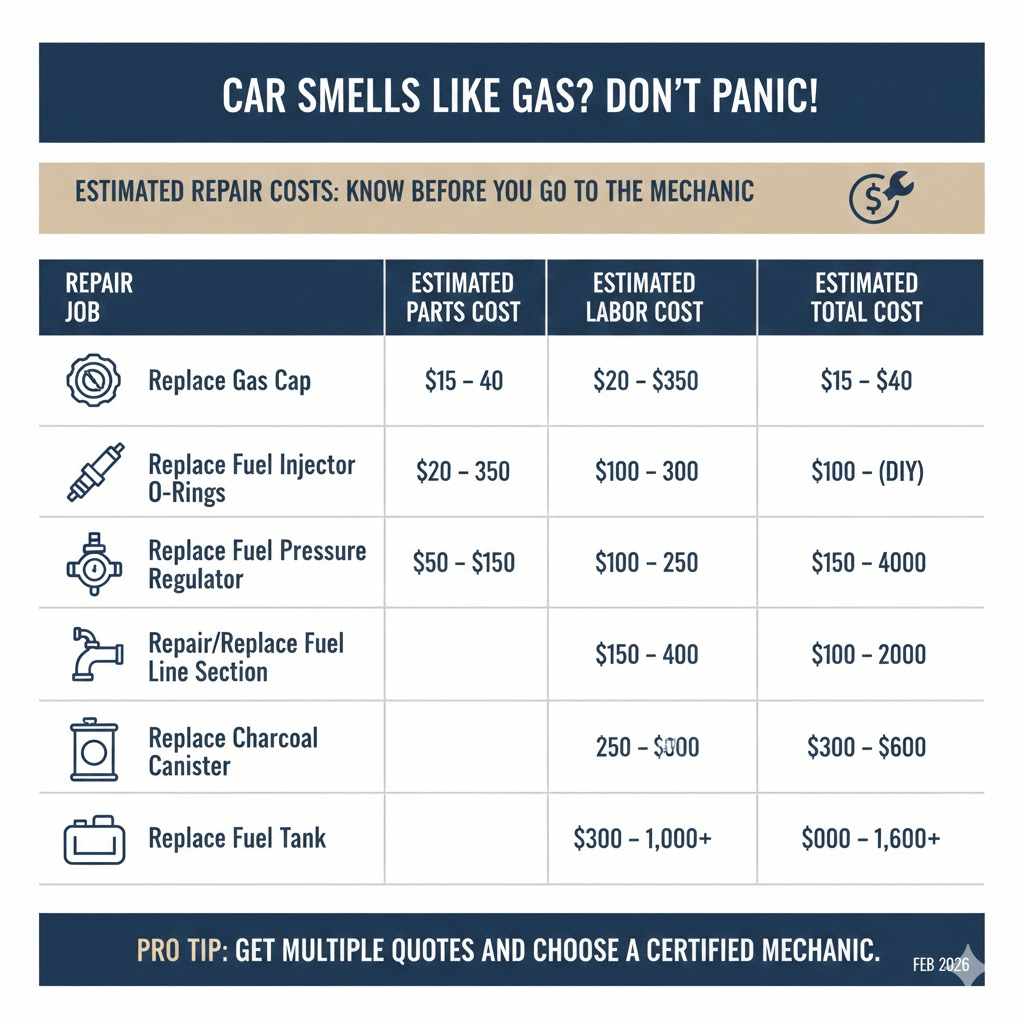
Repair costs can vary widely depending on your car’s make and model, as well as labor rates in your area. This table provides a general idea of what to expect.
| Repair Job | Estimated Parts Cost | Estimated Labor Cost | Estimated Total Cost |
|---|---|---|---|
| Replace Gas Cap | $15 – $40 | $0 (DIY) | $15 – $40 |
| Replace Fuel Injector O-Rings | $20 – $50 | $100 – $300 | $120 – $350 |
| Replace Fuel Pressure Regulator | $50 – $150 | $100 – $250 | $150 – $400 |
| Repair/Replace Fuel Line Section | $30 – $100 | $150 – $400 | $180 – $500 |
| Replace Charcoal Canister | $150 – $400 | $100 – $200 | $250 – $600 |
| Replace Fuel Tank | $300 – $1,000+ | $300 – $600 | $600 – $1,600+ |
Frequently Asked Questions (FAQ)
1. Is it safe to drive my car if it smells like gas?
No, it is not safe. A gas smell indicates a potential fuel leak, which is a major fire hazard. The safest course of action is to park the car outside, away from any ignition sources, and have it inspected by a mechanic as soon as possible.
2. Can a loose gas cap really cause a strong gas smell?
Yes, absolutely. The gas cap is a crucial part of the sealed, pressurized fuel system. If it’s loose or has a bad seal, gasoline vapors will escape. This can create a surprisingly strong smell around the rear of the car and may also trigger your check engine light.
3. Why does my car smell like gas but I can’t see a leak?
There are a few possibilities. The leak could be very small and evaporating before it has a chance to drip onto the ground. This is common with leaks on top of a hot engine (like from a fuel injector). It could also be a vapor leak from the EVAP system, like a cracked charcoal canister, which won’t leave a puddle.
4. What’s the difference between a gas smell inside vs. outside the car?
A gas smell outside the car usually points to a leak somewhere in the fuel system, from the tank to the engine. If the smell is strong inside the cabin, it’s particularly dangerous as you are breathing in toxic fumes. This can happen if a leak near the engine bay has fumes pulled into the cabin through the ventilation system.
5. Can I fix a small gas leak myself?
For your safety, it is highly recommended that you do not attempt to fix a fuel leak yourself unless you are an experienced mechanic. Working with gasoline is extremely dangerous due to the risk of fire and explosion. Professionals have the right tools, training, and safety equipment to handle the job correctly.
6. How much does it typically cost to fix a gas leak?
The cost varies greatly. A simple fix like a new gas cap might only cost $20. Repairing a leaking fuel line could be a few hundred dollars. A more complex job, like replacing a fuel tank, can cost over $1,000. It’s best to get a diagnostic from a trusted mechanic to know the exact cause and cost.
7. Could something else, like an oil leak, smell like gas?
Sometimes, other fluid leaks can be confused with a gas smell. For example, oil dripping onto a hot exhaust manifold can create a sharp, acrid smell. However, the smell of raw gasoline is very distinct. If you think it smells like gas, it’s best to assume it is and take the necessary safety precautions.
Your Next Steps for a Safer Drive
Discovering your car smells like gas can be unsettling, but you’ve already taken the most important step: seeking out information. Remember, this is one car problem you should never ignore. Your safety is paramount.
Start with the simple checks like the gas cap. If that doesn’t solve it, or if you see any signs of a leak, please put your safety first. Don’t drive the car, and don’t hesitate to call a professional mechanic. They have the expertise to find the source of the leak and fix it safely, giving you peace of mind.
By being proactive, you’re not just taking care of your car—you’re protecting yourself and everyone who rides with you. Drive safely, and always listen to what your car is trying to tell you.
Products related to this article
Sponsored / affiliate links. As an Amazon Associate I earn from qualifying purchases. I may earn additional commission from eligible campaigns.