Why Does My Dog’s Nose Drip in the Car? Causes & Fixes
A dog’s nose dripping in the car often seems to come from stress, motion sickness, or airflow irritation if the discharge is clear and stops after the ride; consider a vet visit if it keeps going for more than a day or turns yellow, bloody, or one-sided. Ignoring it can miss infection, a nasal foreign body, or another problem that needs treatment before it gets worse. This article covers the likely causes, what the discharge pattern means, and the red flags that call for a vet visit.
Why does my dog’s nose drip in the car?


A runny nose in the car is usually a travel clue, not a diagnosis. If the dripping starts during the ride and stops soon after, stress, motion sickness, or irritated air are common explanations; if it keeps going off-road, think nasal disease, infection, or a foreign body.
Timing matters. Ride-only symptoms point you toward a travel trigger. All-day symptoms point away from the car itself and toward a problem that needs veterinary attention.
What a dripping nose can mean during travel
Travel can trigger several different responses. A dog may pant from stress, drool from nausea, sneeze from dust or fragrance, or develop true nasal discharge from rhinitis. Those are not the same thing, and the pattern helps separate them.
Canine rhinitis means inflammation of the nasal passages. Common causes include allergies, infection, irritants, and foreign material. It may produce clear, cloudy, or blood-tinged discharge.
Why timing matters: ride-only versus all-day symptoms
If the nose drips only during car rides and settles once the trip ends, motion sickness, stress, or route-related irritants move higher on the list. If the nose keeps running at home, or the discharge becomes thicker or tinted, the problem is less likely to be simple travel upset.
Say your 20-pound mixed-breed dog starts with clear drops from both nostrils five minutes into a trip, then settles after arriving home. That pattern fits a travel trigger better than a chronic nasal condition. A one-sided, bloody drip that continues after parking does not.
Is it motion sickness, stress, or something else?
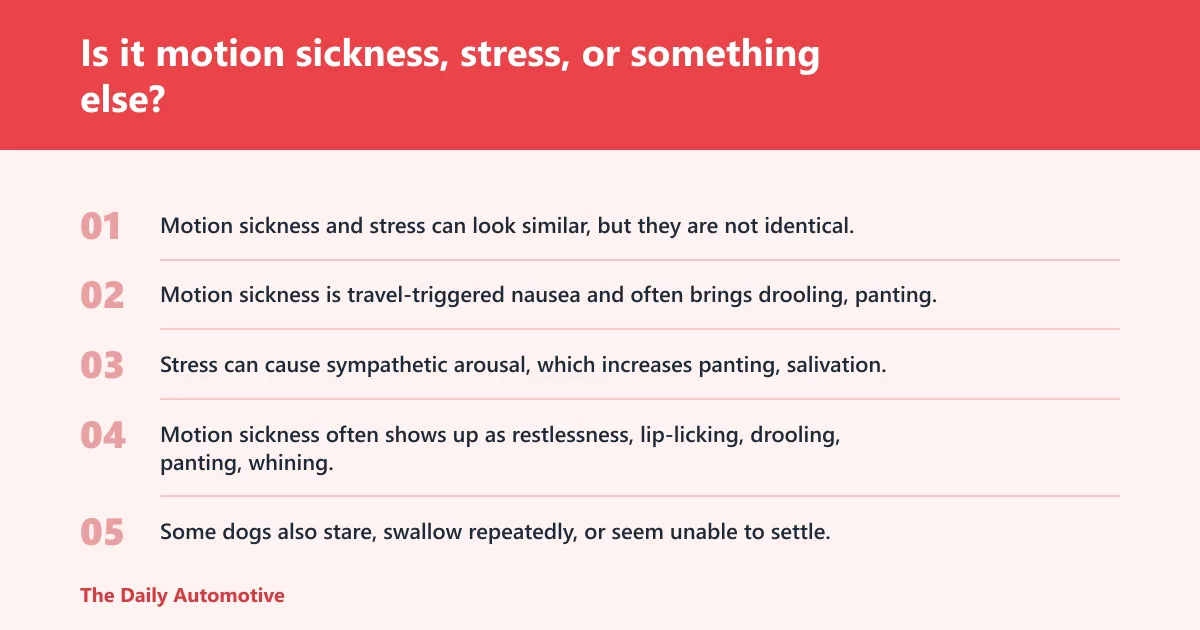
Motion sickness and stress can look similar, but they are not identical. Motion sickness is travel-triggered nausea and often brings drooling, panting, lip-licking, and vomiting. Stress can cause sympathetic arousal, which increases panting, salivation, and sometimes brief nasal dripping without true nausea.
Motion sickness signs to look for
Motion sickness often shows up as restlessness, lip-licking, drooling, panting, whining, and then vomiting. Stop-and-go driving can make it worse. Some dogs also stare, swallow repeatedly, or seem unable to settle.
When nasal dripping appears with drooling and vomiting, nausea climbs the list. If the dog is otherwise normal once the ride ends, motion sickness is a stronger fit than infection.
Stress signs that can look similar
Stress can raise panting and salivation even without nausea. A dog may pace, tremble, tuck the tail, or cling to the floor of the car. Clear moisture at the nose can occur as part of that arousal state, especially on a tense, noisy ride.
This is why a “runny nose” in the car should not be treated as one single symptom. The rest of the body tells the story.
When dripping points to nasal disease instead
If the discharge is present before the engine starts, continues after the ride, or comes with sneezing, coughing, fever, lethargy, or eye discharge, nasal disease moves up the list. Not all runny noses are benign.
A common first-timer mistake is assuming every drip is travel nausea. Check whether the dog is actually nauseous or whether the nose itself is inflamed.
How discharge pattern helps narrow the cause
One-sided versus two-sided dripping is one of the most useful clues. Clear, bilateral discharge often points toward stress, motion sickness, or allergies. One-sided discharge, especially if it starts suddenly, can raise concern for something stuck in the nose or another local nasal problem.
One-sided versus two-sided dripping
Two-sided discharge usually means the problem affects both nasal passages or reflects a whole-body trigger such as nausea, stress, or airborne irritants. One-sided discharge suggests something more localized, such as a foreign body, a polyp, or a unilateral infection.
Clear versus cloudy, thick, or blood-tinged discharge
Clear discharge can happen with irritation, allergies, or early inflammation. Cloudy or thick discharge suggests more significant inflammation or infection. Blood-tinged discharge is a red flag, especially if it appears suddenly or is tied to sneezing fits or one-sided flow.
Symptoms that point to a foreign body or infection
Sudden sneezing fits, pawing at the face, and a new one-sided drip point toward a nasal foreign body. Cough, fever, lethargy, and eye discharge point more toward an upper respiratory infection. Either way, persistence beyond the car ride deserves a vet visit.
Which conditions can cause a runny nose in the car?
Several conditions can produce nasal dripping during travel. The most common travel-related causes are motion sickness, stress, and exposure to irritants. But canine rhinitis, allergic rhinitis, upper respiratory infection, and a nasal foreign body can all show up during a car ride too.
Canine rhinitis
Canine rhinitis is inflammation inside the nose. It can come from allergies, infection, irritants, or foreign material, and it may produce clear, cloudy, or blood-tinged discharge. If the discharge lasts beyond the trip or changes character, rhinitis needs evaluation.
Allergic rhinitis
Allergic rhinitis comes from environmental triggers such as pollen, dust, mold, or fragrances. It often causes bilateral discharge and sneezing. Some dogs show seasonal patterns; others flare on certain routes, especially when windows are open or the air system is moving dusty air.
Upper respiratory infection
An upper respiratory infection can cause nasal discharge and is sometimes contagious. Watch for cough, fever, lethargy, and eye discharge. A dog that seems low-energy or febrile is not having a simple car problem.
Nasal foreign body
A nasal foreign body can cause sudden one-sided drip or sudden sneezing fits. Grass awns, seeds, and small plant material are classic examples. Route-specific onset is a clue, especially if the symptoms start right after outdoor exposure or a walk before the drive.
Brachycephalic airway anatomy
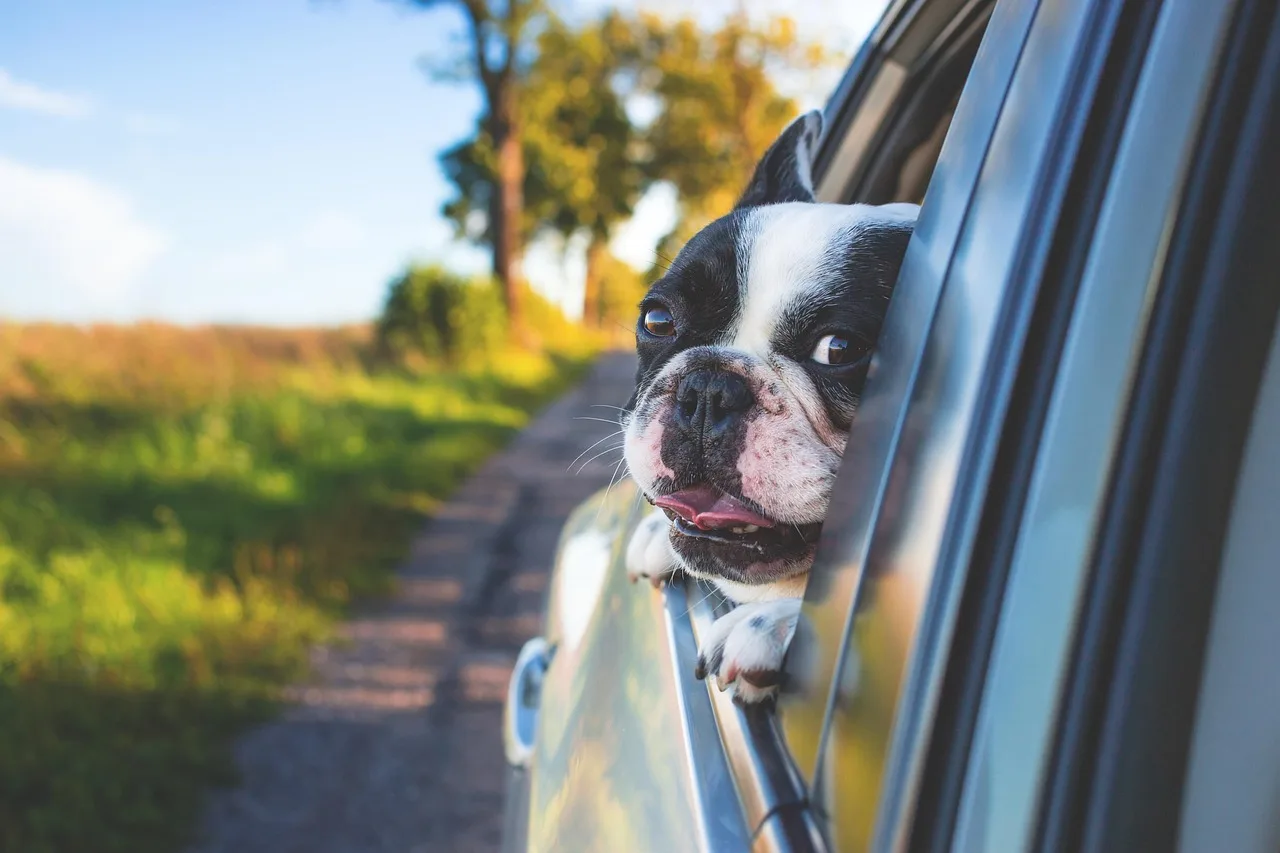
Short-nosed breeds such as pugs, French bulldogs, and Boston terriers may struggle more in cars because brachycephalic airway anatomy narrows airflow and raises heat stress risk. They need extra ventilation, cooler cabin temperatures, and shorter trips when possible.
What can heat, ventilation, and route conditions change?
Cabin conditions can turn a mild issue into a worse one. Poor airflow can increase panting and stress, while heat raises the risk of breathing strain. Dust, mold, and fragrances in the car can also irritate the nose and trigger more discharge.
Why poor airflow can worsen panting and stress
Stale, warm air makes many dogs pant harder. That can increase salivation and make a stressed dog look sicker than it is. Good ventilation helps lower heat load and can reduce the chain reaction that starts with anxiety and ends with more nasal moisture.
How pollen, dust, mold, and fragrances can trigger symptoms
Open windows on a dusty road, air vents blowing stored dust, or a strong fragrance in the cabin can all irritate the nose. If the symptoms happen on one route but not another, an airborne trigger is more likely than a random flare.
Why short-nosed dogs need extra caution
Brachycephalic dogs can have more trouble managing heat and airflow in a moving car. A small rise in cabin temperature or humidity may be enough to make breathing look effortful. For these dogs, a short, cool, well-ventilated ride is safer than a long, stuffy one.
Car-ride triage checklist

Use the pattern, not just the drip, to sort what you are seeing. This checklist helps separate harmless travel upset from signs that need veterinary care.
| Symptom pattern | Most likely cause | What to do on the spot | When to call the vet |
|---|---|---|---|
| Clear, two-sided drip only during the ride | Stress, mild motion sickness, airflow irritation | Slow down the trip, improve ventilation, keep the dog calm, watch for vomiting or sneezing | If it happens on every ride or lasts beyond the trip |
| Clear drip with drooling, lip-licking, panting, vomiting | Motion sickness | Stop if vomiting starts, give a calmer ride setup next time, avoid stop-and-go driving when possible | If vomiting is repeated or severe, or the dog cannot settle after the trip |
| One-sided drip, sudden sneezing fit, pawing at face | Nasal foreign body | Do not probe the nostril; keep the dog quiet and limit more exposure | Same day, especially if the drip is persistent or bloody |
| Cloudy, thick, or blood-tinged discharge | Rhinitis, infection, local nasal injury | Monitor for fever, lethargy, cough, eye discharge, and appetite change | Promptly, especially if symptoms continue after the ride |
| Runny nose plus cough, fever, lethargy, eye discharge | Upper respiratory infection | Limit contact with other dogs and arrange veterinary advice | As soon as possible, because contagious illness is possible |
| Short-nosed dog with noisy breathing or heat stress | Brachycephalic airway strain, overheating risk | Cool the cabin, increase airflow, shorten the trip | Urgently if breathing becomes difficult, weak, or unstable |
What should you do before and during the next ride?
Start with a calmer, cooler setup and watch the pattern closely. If the dog gets stressed, nauseous, or congested despite those changes, the next step is veterinary guidance rather than repeating the same trip conditions.
- Keep the car well ventilated and avoid heat buildup.
- Use a secure, low-stress setup so the dog is not sliding or bracing.
- Reduce stop-and-go driving when possible.
- Skip strong fragrances and clear obvious dust from vents and seats.
- Watch for drooling, lip-licking, sneezing, vomiting, cough, or eye discharge.
- Stop the trip if breathing becomes hard, vomiting repeats, or the dog seems weak.
If a dog only drips on certain routes, note the pattern. Route-specific symptoms can point to pollen, dust, mold, or even a recurrent irritant from the car itself.
If a dog is prone to nausea, shorter rides and calmer pacing are often better than pushing through a long drive. A dog that keeps worsening in the car should not be trained through a medical problem.
What symptoms mean I should call a vet?
Call a vet if the discharge is bloody, thick and pus-like, one-sided and persistent, or present outside the car ride. Breathing difficulty, collapse, repeated vomiting, facial swelling, fever, lethargy, cough, and eye discharge are stronger warning signs than a brief clear drip.
The rule is simple: if the symptom is only in the car and clears quickly, travel causes stay likely. If it persists, worsens, or comes with general illness, the problem is no longer just travel triage.
Frequently asked questions
Is it normal for a dog’s nose to run in the car?
It can be common, but “common” does not mean always harmless. A clear drip that stops after the ride often points to stress, nausea, or airflow irritation. Persistent, bloody, one-sided, or thick discharge is not normal and needs veterinary attention.
Could my dog be nauseous if his nose drips while driving?
Yes. Motion sickness often brings drooling, panting, lip-licking, and vomiting along with nasal moisture. If the drip appears with those signs, nausea becomes a strong possibility. If the dog only has a clear drip and no nausea signs, another trigger may be more likely.
How do I tell motion sickness from allergies in my dog?
Motion sickness usually lines up with the ride and brings nausea signs such as drooling, lip-licking, panting, and vomiting. Allergic rhinitis more often causes bilateral discharge and sneezing, sometimes in seasonal patterns or on certain routes with pollen, dust, mold, or fragrances.
Can heat, humidity, or ventilation cause a dripping nose in the car?
Yes. Poor airflow can increase panting and stress, and warm air can make a dog more uncomfortable in the cabin. Short-nosed breeds are at higher risk because their airway anatomy can make heat and breathing strain worse, so cool, well-ventilated rides matter more.
Products related to this article
Sponsored / affiliate links. As an Amazon Associate I earn from qualifying purchases. I may earn additional commission from eligible campaigns.