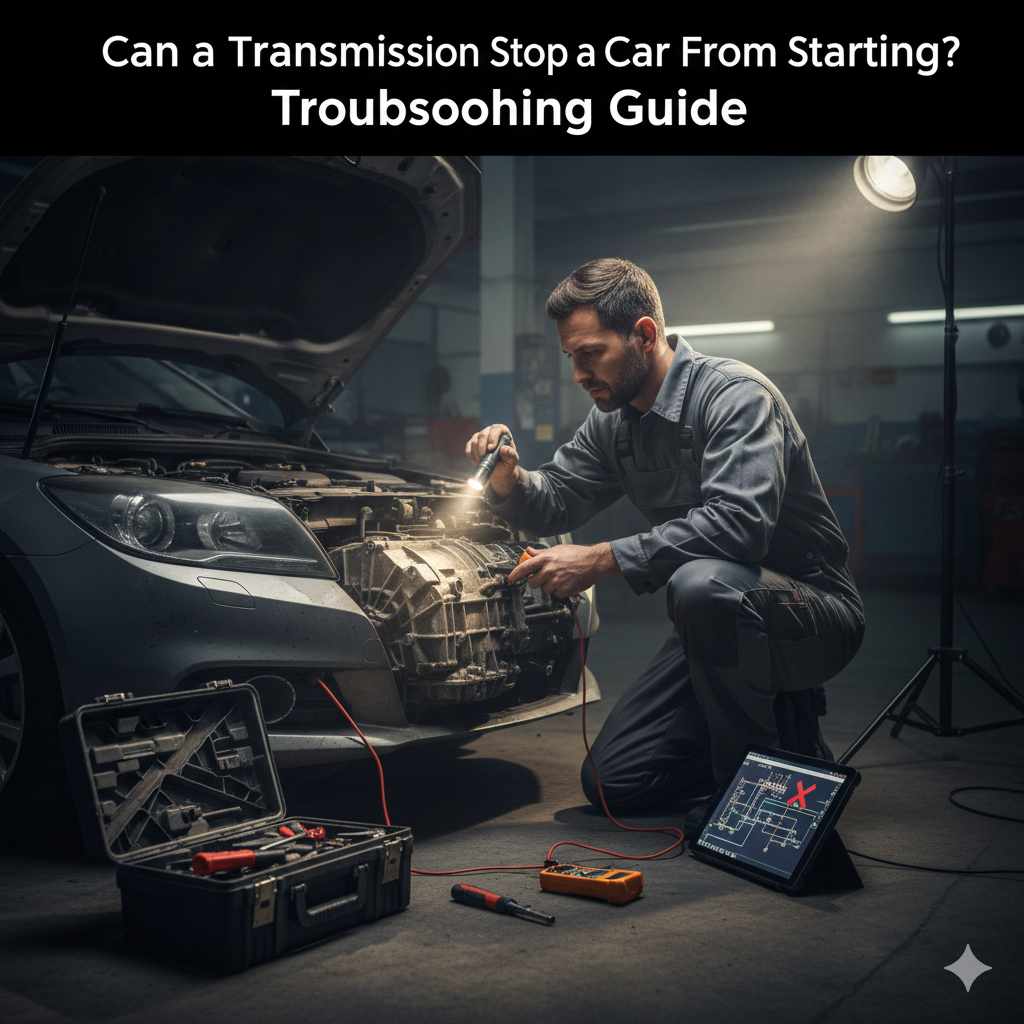
Can a Transmission Stop a Car From Starting? Troubleshooting Guide
Figuring out why your car won’t start can be tough, especially if you’re new to car problems. One question that often comes up is: Can a Transmission Stop a Car From Starting? It’s a common worry! The answer isn’t always simple, but don’t worry. This guide will make it easy to understand and help you check what’s going on. We’ll look at the parts involved and give you some simple steps to follow. So, let’s explore how the transmission and starting issues connect, starting with the basics.
How the Transmission Works and Its Role
The transmission is a super important part of your car. It’s the system that sends power from the engine to the wheels, making your car move. Think of it like a gear shifter on a bike, but way more advanced. The transmission lets your engine work at its best, giving you the right amount of power and speed. It changes the gear ratios, letting you accelerate quickly from a stop or cruise at a higher speed on the highway. Different types exist: automatic and manual. Each has its own way of working, but their main job is the same: transfer engine power. We’ll explore in detail how this system operates and how it interacts with the starting of your car.
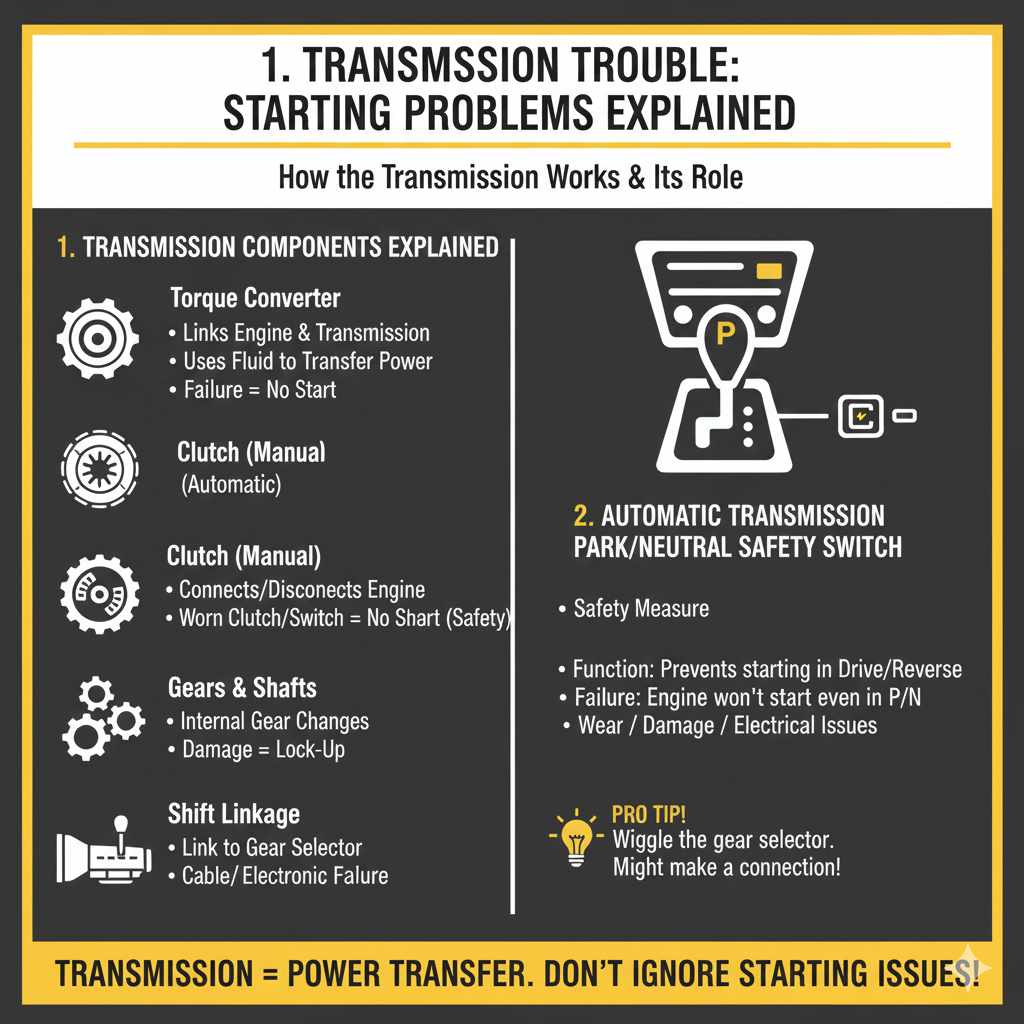
Transmission Components Explained
Several parts work together to make the transmission do its job. It’s a complex system, but knowing the main parts helps you grasp what might go wrong. For automatic transmissions, there’s the torque converter, which connects the engine to the transmission. Inside the transmission, you have gears, clutches, and bands that shift the gears. For manual transmissions, you have a clutch, which you press to change gears. You will also find shafts and a series of gears. All these parts work together to give you the driving experience you want. If one part is damaged, it might cause the car to not start. The interaction of these parts can indeed cause issues with the starting mechanism.
Torque Converter (Automatic): This component links the engine to the transmission in automatic cars. It uses fluid to transfer power, allowing the engine to keep running even when the car is stopped.
If the torque converter fails, the car may not start because the engine’s power can’t be delivered to the transmission, even if other components are working.
Clutch (Manual): In manual cars, the clutch connects and disconnects the engine from the transmission. Pressing the clutch pedal lets you change gears, disconnecting the engine’s power.
A worn-out clutch or a clutch switch problem can prevent the car from starting because the safety system might think the clutch isn’t fully pressed, a safety measure.
Gears and Shafts: These are the internal components that make the gear changes happen. Gears come in different sizes to provide power for acceleration or speed.
Damage to these internal gears can create problems with starting because they can lock up or interfere with the engine’s ability to turn the transmission.
Shift Linkage: This is the mechanical or electronic link between your gear selector and the transmission.
Problems here, like a broken cable or electronic failure, can stop the car from starting if the transmission isn’t correctly put in Park or Neutral.
Automatic Transmission Park/Neutral Safety Switch
A crucial safety feature in automatic transmissions is the park/neutral safety switch. This switch stops the engine from starting unless the gear selector is in Park or Neutral. If the switch malfunctions, it may think the car is not in the correct gear, even if it is. This is a common problem, and it’s something you can check. The park/neutral safety switch is essential because it prevents the car from accidentally starting in Drive or Reverse, which would cause an immediate, uncontrolled movement, potentially leading to an accident.
Function: This switch tells the car’s computer that the gear selector is in Park or Neutral. It’s a safety measure, stopping the car from starting in any other gear.
The park/neutral safety switch is designed to ensure the car can only start when it is safe to do so, preventing any unexpected movement.
Failure: If the switch is faulty, it can prevent the engine from starting, even if the transmission is in Park or Neutral. This can be caused by wear, damage, or electrical issues.
This failure is a common cause of starting issues in cars with automatic transmissions. It’s one of the first things mechanics check when a car won’t start.
Troubleshooting: You can test the switch by moving the gear selector while trying to start the car. Listen for a click or change. Sometimes, you may need to wiggle the gear selector to make a connection.
Checking and possibly cleaning or replacing the park/neutral safety switch is often a simple fix that restores the car’s starting ability.
Could the Transmission Prevent a Car From Starting?
Absolutely! The transmission can stop your car from starting for different reasons. The most common is a fault with the park/neutral safety switch, as discussed above. Also, issues within the transmission itself can cause it to lock up, preventing the engine from turning over. If the transmission is stuck in a gear or there is a serious internal issue, the engine may not be able to crank the engine, which prevents the car from starting. Let’s explore specific scenarios of how the transmission might prevent a car from starting, and explore how to troubleshoot and fix these issues, in detail.
Transmission Problems That Can Affect Starting
Several problems with your transmission can prevent your car from starting. These problems range from easy fixes to more complicated ones that may need professional help. Knowing these potential issues can help you diagnose and troubleshoot the problem. In addition, recognizing symptoms can assist in finding the problem quickly. Here’s a detailed breakdown of the ways that problems within the transmission can impact the starting process.
Faulty Park/Neutral Safety Switch: If the switch malfunctions, it will stop the car from starting. It tells the car’s computer that the car isn’t in Park or Neutral, even if it is.
This is often the first thing to check. You might hear the engine try to start, but it won’t fully engage. Replacing the switch is a common fix.
Transmission Fluid Problems: Low or dirty transmission fluid can damage transmission parts, causing them to lock up. This damage can prevent the engine from turning over.
Regularly checking your transmission fluid is important. If the fluid is low or dark, get it checked and possibly changed to prevent further damage. Clean fluid is very important.
Internal Transmission Issues: Gears, clutches, or bands inside the transmission can break or seize. If this happens, it can prevent the engine from starting.
These issues are more serious, often needing professional repair. Symptoms can include grinding noises, difficulty shifting gears, or no starting.
Shift Linkage Problems: If the shift linkage (the connection between the gear selector and the transmission) is damaged, the car may not know the correct gear.
This can trick the car’s computer, preventing it from starting. Check the shift linkage for any visible damage or disconnects.
Real-Life Examples of Transmission-Related Starting Issues
Let’s look at some real-life cases where transmission problems stopped a car from starting. These examples show how common these issues can be, and how different types of transmission failures can affect the starting of the car. These examples come from people’s actual experiences. You can easily relate to these real-world examples, so you can see how it works.
-
- Case Study 1: The Stuck Gear. A driver reported their car wouldn’t start. After multiple attempts to start the engine, the engine failed to turn over. The mechanic found the transmission was stuck in gear due to internal mechanical failure, and the engine was unable to turn it over. The solution involved transmission repair and the car started immediately. The mechanic was quick to identify the problem and solve it.
This case shows the impact of internal transmission failure that directly prevents the engine from cranking.
-
- Case Study 2: Park/Neutral Switch Blues. A car would only start intermittently. It would start fine in the morning, but would fail later in the day. Sometimes, jiggling the gear selector would help. The problem turned out to be the park/neutral safety switch, which was not making good contact. Replacing the switch fixed the problem.
This example showcases the impact of a faulty sensor that can affect the starting process, despite the transmission itself being in good working condition.
Troubleshooting Steps If Your Car Won’t Start
When your car won’t start, take a deep breath, and don’t panic. There are some simple steps to follow to figure out the problem. This guide will take you step-by-step through the process, covering essential checks and potential solutions. From the basics to more in-depth diagnostic steps, you’ll be well-prepared to deal with the situation. We’ll explore some ways to ensure you can find and fix the issue.
Initial Checks and Diagnostics
When your car won’t start, the first thing is to do a quick check to see what’s going on. These initial diagnostics can often point you in the right direction. Basic checks will help you find the problem. You can avoid costly mistakes by checking the battery and gear selector. Remember, safety first! Before starting any work, ensure your car is parked safely and that you have all the tools needed. These checks are simple, but they are very important.
Check the Battery: Make sure your car’s battery has enough power. A weak or dead battery is a common reason for a car not starting.
Look at the headlights and dashboard lights. If they’re dim or don’t come on, your battery might be dead or low on power. Consider a jump start to test it.
Gear Selector Position: Confirm the gear selector is in Park or Neutral. Even if you think it is, try moving it slightly.
Make sure the shift lever is firmly in Park, or try Neutral. Sometimes, this simple adjustment can make the car start if there is a problem with the park/neutral safety switch.
Listen for Sounds: When you turn the key, listen for any sounds. Does the engine try to crank? Or does it make a clicking sound? This can point to what the problem might be.
A clicking sound may mean a weak battery or a starter problem. If you hear nothing, the electrical system might have an issue. If you hear cranking, your problem may not be the transmission.
Step-by-Step Transmission Troubleshooting
If the initial checks don’t solve the problem, you should proceed with some steps that specifically look at your transmission. Carefully check these components. These detailed steps will allow you to explore the connection between the transmission and the starting mechanism. These checks are important because you can discover hidden issues. Always follow the manufacturer’s recommended service intervals and guidelines.
-
- Inspect the Park/Neutral Safety Switch: Locate the park/neutral safety switch, which is usually found on the transmission. Inspect the switch for damage and corrosion.
You can sometimes test the switch with a multimeter to ensure it’s working. If the switch is bad, it will need to be replaced. Check to see if the wire harness is connected.
-
- Check Transmission Fluid Level: Low transmission fluid can cause problems. Check the fluid level using the dipstick. If it’s low, add fluid.
If the fluid is low or dirty, this could be a sign of a leak or internal damage. Look for leaks around the transmission or underneath your car. Have your mechanic address the leak as soon as possible.
-
- Examine the Shift Linkage: Inspect the shift linkage connecting your gear selector to the transmission. Make sure there are no broken parts or loose connections.
If the linkage is damaged, it might not be putting the transmission in Park or Neutral properly. The linkage can get damaged over time.
-
- Consult a Mechanic: If these steps don’t work, consult a mechanic. They can perform more detailed testing and diagnose complex issues.
You can also use an OBD-II scanner to read any error codes. A mechanic has the expertise and equipment to diagnose and repair any complex issues with the transmission.
The Impact of a Faulty Transmission
A faulty transmission can create various issues for your car. These problems range from difficulty shifting gears to complete failure. If you ignore these signs, it can get worse and lead to major problems. Addressing the issues quickly can save you time and money and keep you safe on the road. Remember, a well-maintained transmission is crucial for your car’s performance and longevity. Ignoring these signs can lead to bigger problems.
Long-Term Effects of Transmission Issues
Leaving transmission issues unattended can lead to a variety of long-term issues that can be damaging to your vehicle and expensive to fix. Many problems come with ignoring your car’s needs. Therefore, quickly addressing any transmission problems is important. Neglecting transmission issues can result in major repairs. This section explores several issues that can happen when your transmission is not properly maintained.
Complete Transmission Failure: If not addressed, minor transmission problems can develop into major failures, requiring costly repairs or even complete replacement of the transmission.
This is one of the most severe consequences of ignoring transmission problems. A complete failure may cause the car to become undrivable.
Engine Damage: In some cases, a damaged transmission can put strain on the engine, potentially leading to engine damage.
This can happen if the transmission locks up or puts extra load on the engine. Engine damage can lead to major, costly repairs.
Decreased Fuel Efficiency: A faulty transmission may make your car use more fuel. This leads to higher fuel expenses and is a drain on your wallet.
The car may have to work harder to maintain speed, which uses more fuel. This can decrease the range of the vehicle.
Safety Hazards: Issues with the transmission, such as difficulty shifting gears or the car getting stuck in gear, can create safety hazards.
These issues can make it hard to control your car, especially in emergency situations. The car may not accelerate quickly or safely.
Preventive Measures for Transmission Health
Preventing transmission issues is much better than trying to fix them. Some easy things can help keep your transmission running smoothly. These easy tips can help prevent costly repairs and keep your car reliable. Taking good care of your transmission is an investment that will benefit your car and your wallet. These preventive steps will help you.
Regular Fluid Changes: Changing the transmission fluid and filter at the recommended intervals is one of the most effective preventive measures.
This keeps the transmission clean and well-lubricated. The frequency of changes depends on your car and driving conditions. Refer to your car’s owner’s manual.
Avoid Harsh Driving: Sudden acceleration, hard braking, and towing heavy loads can put extra stress on your transmission.
If you drive gently, it may help prolong the life of your transmission. Try not to use those driving habits. Doing so can cause damage to the transmission.
Check for Leaks: Regularly check the area under your car for transmission fluid leaks. Leaks can lead to low fluid levels and damage.
Address any leaks quickly to prevent further damage. If you see a leak, have it checked out by a mechanic.
Proper Warm-Up: Allow your car to warm up before driving, especially in cold weather. This helps the transmission fluid flow.
Allowing the car to warm up will help the transmission operate smoothly and effectively. In cold weather, it is important to let the car warm up.
| Preventive Measure | Benefits |
|---|---|
| Regular Fluid Changes | Keeps transmission clean and lubricated. Extends life. |
| Avoid Harsh Driving | Reduces stress on the transmission. Prolongs life. |
| Check for Leaks | Prevents low fluid levels. Reduces wear and damage. |
| Proper Warm-Up | Ensures smooth operation in cold weather. |
Frequently Asked Questions
Question: Can a dead battery cause the car not to start if the transmission is the problem?
Answer: Yes, if the battery is dead, the car won’t start, regardless of any transmission issues. The battery powers the starter motor.
Question: What’s the cost of repairing a transmission if it’s the issue?
Answer: The cost varies greatly depending on the issue, but the average is $1,800 to $3,400.
Question: How can I tell if the park/neutral safety switch is bad?
Answer: The car might not start at all, or it might only start when the gear selector is jiggled.
Question: What are the common symptoms of transmission problems?
Answer: Difficulty shifting gears, slipping gears, leaks, noises, and the car not starting.
Question: Can I drive my car if the transmission is slipping?
Answer: It’s not advisable. Slipping can lead to complete transmission failure and is a safety risk.
Final Thoughts
So, Can a Transmission Stop a Car From Starting? Absolutely, yes! Many things that might look like they come from the transmission can prevent your car from starting. This blog post has explored how transmission parts work and how they connect with starting issues. From the park/neutral safety switch to internal gear problems, the transmission can have a direct impact on whether your car fires up. We looked at common issues, easy troubleshooting steps, and the importance of checking your battery and gear selector. Remember, keeping up with your car’s maintenance, being aware of possible issues, and taking action when you detect issues is essential. Taking care of your car’s transmission is not hard, and it will give you reliable transportation.