Why Does Auto Repair Cost So Much? Invoice Breakdown
Auto repair bills climb because parts carry markup, labor is billed by the hour, diagnostics take paid time, and the shop must cover rent, utilities, insurance, equipment, and taxes. A fair quote usually spells out labor hours, part numbers, fees, and warranty terms, so you can check each line instead of guessing. Skip that breakdown, and one repair can cost hundreds more than it should, or include work you do not need.
What you are actually paying for on a repair bill
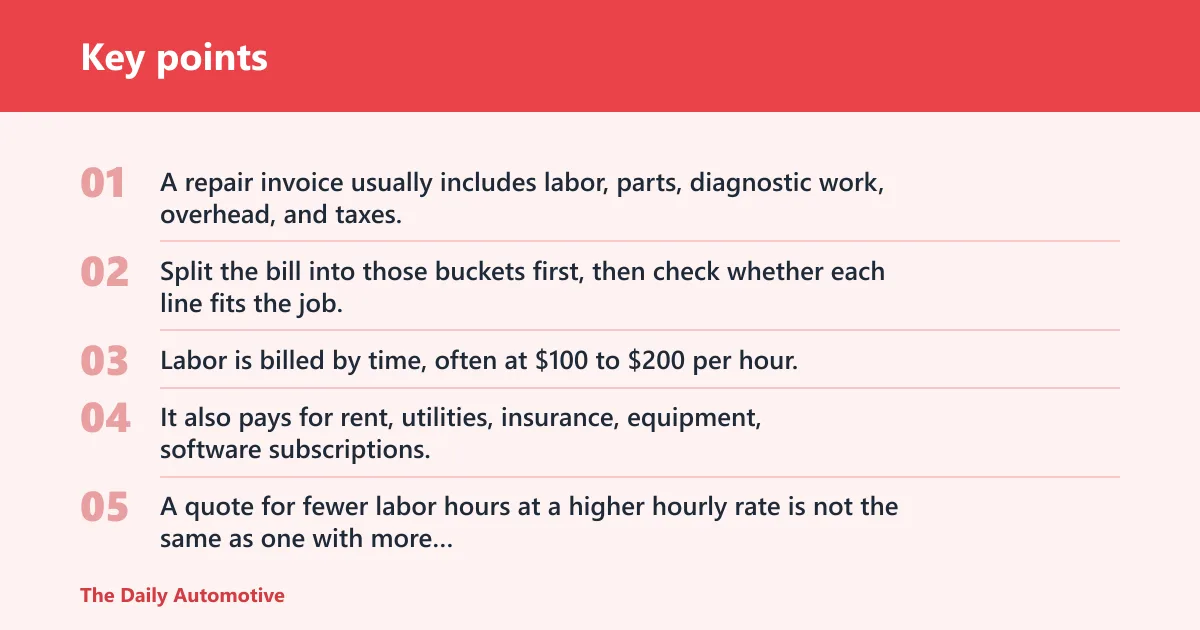


A repair invoice usually includes labor, parts, diagnostic work, overhead, and taxes. Split the bill into those buckets first, then check whether each line fits the job.
Labor hours versus labor rate
Labor is billed by time, often at $100 to $200 per hour. That rate covers more than technician pay. It also pays for rent, utilities, insurance, equipment, software subscriptions, and the time a bay sits empty between jobs.
Hours matter as much as the rate. A quote for fewer labor hours at a higher hourly rate is not the same as one with more hours at a lower rate. The first is cheaper, and the second can still be fair if the repair is harder or the vehicle is more complex.
Diagnostic fee, shop supplies, and tax
Diagnostic fees pay for scan tools, computer diagnostics, and troubleshooting time. They are often listed separately from repair labor when the fault is not obvious or the shop must confirm the problem before ordering parts.
Shop supplies can cover cleaners, rags, grease, sealants, and small consumables. That line should stay small and be explained. Tax should be easy to spot as the final percentage on taxable parts and, in some places, labor.
Parts, markup, and warranty terms
Parts are not always sold at the price the shop paid. The invoice may include markup for handling, return risk, supplier fees, and the time needed to source the right component. Warranty terms matter too, since a longer warranty can raise the total price but reduce your risk later.
Say your brake estimate lists pads, rotors, and a caliper on one axle. If the parts section shows only one lump sum, ask for line items by part number. That makes it easier to compare the quote with another shop and spot inflated markup.
📊 Brake fluid changes can cost $120 to $180. Source: How much does car maintenance cost?.
why does car maintenance cost so much
Car maintenance costs so much because routine service includes labor, parts, disposal fees, and the overhead needed to run a modern repair shop. Even simple work now involves trained technicians, inspection time, and equipment that must be calibrated and maintained.
Common maintenance items have wide price bands because the vehicle, engine layout, and part quality all matter. Oil changes can run from $80 to $140. Tire rotations can be from $30. Brake fluid changes can cost $120 to $180. Spark plug changes can cost $120 to $190.
Tire rotation is recommended every 6 months or 6,000 to 8,000 miles. That is one reason maintenance should be planned, not ignored. A small service now often costs less than fixing uneven tire wear or brake damage later.
Why labor rates run so high
Labor rates are high because the hourly charge includes more than wages. A shop has fixed monthly costs, and those costs sit inside the posted rate whether the bay is full or empty.
Shop overhead built into the hourly rate
Rent or mortgage payments, utilities, insurance, waste disposal, software, and equipment maintenance all sit behind the labor line. If the shop owns alignment machines, lifts, and scan tools, those costs are spread across each billed hour.
Technician pay, training, and certification
Skilled technicians are paid more when they can diagnose complex faults, work on hybrid systems, or handle advanced driver-assistance systems. Ongoing education and certification add cost, and that cost shows up in labor rates. A shop paying for experienced, well-trained staff cannot price labor like a general handyman service.
Why the same job costs more in some regions
Location changes everything. A shop in a high-rent metro area may need a higher labor rate than a shop in a low-cost rural market. Demand, local wage levels, and the types of vehicles common in the area also affect pricing.
why do mechanics charge so much for diagnostic
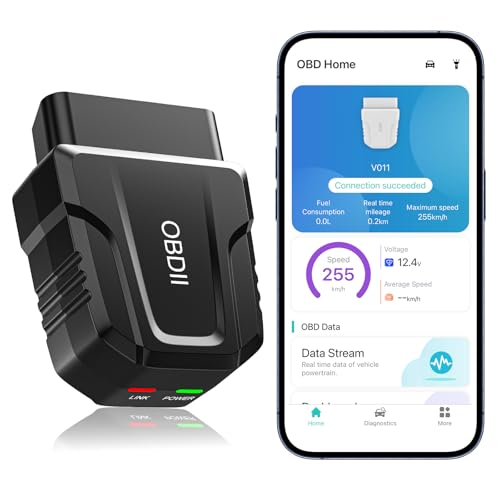
Diagnostic charges cover scan tools, code interpretation, electrical testing, and time spent isolating the actual fault. The fee is often separate because diagnosis can take longer than the repair itself, especially when one warning light can point to several causes.
Scan tools and computer diagnostics
Modern vehicles store trouble codes, live data, and module information that require specialized software to read correctly. The tool may cost thousands of dollars, and the shop needs trained staff to interpret the data without guessing.
Troubleshooting time versus repair time
Replacing a failed part is only part of the job. A technician may need to inspect wiring, test sensors, compare readings, and confirm the fault before ordering anything. That time is billable because it uses shop resources whether or not a part gets installed.
When a diagnostic fee should be credited
A diagnostic fee should often be credited toward the repair if the same shop completes the work, but that policy is not universal. Ask before approving anything. If the quote does not say whether the diagnostic is applied to the repair, treat that as a pricing gap.
why do mechanics charge so much for parts
Parts cost more because shops may buy OEM items, face supplier markups, or pay extra for hard-to-find components. The invoice price also reflects the risk of wrong-fit parts, shipping delays, and warranty handling.
OEM parts versus aftermarket parts
OEM means original equipment manufacturer. Those parts are designed to match the vehicle’s intended fit and function, and they usually cost more than aftermarket parts. Aftermarket parts can lower the total bill, but fit and quality vary more widely.
Availability, supplier pricing, and markup
Some parts are priced higher because inventory is limited, the supplier is far away, or the vehicle uses a special trim or package. Supplier markups are common when a shop must source the item quickly or from a dealer network.
Why some repairs need exact-fit parts
Exact-fit parts matter for sensors, electronic modules, brake hardware, body panels, and some emissions parts. If a cheaper substitute risks misalignment, warning lights, or a comeback repair, the more expensive part may be the correct choice.
Suppose a replacement key fob quote looks steep. That cost is not only the plastic shell and battery. It can include programming, immobilizer pairing, and brand-specific hardware that only works with the vehicle’s security system.
Why modern cars cost more to fix
Modern cars cost more to fix because they contain advanced electronics, specialized systems, and tighter packaging. A simple fault can require more labor time, more testing, and a technician with the right training for that exact brand or model.
Advanced electronics and specialized systems
Lane sensors, cameras, electronic steering, adaptive cruise, and networked modules all add complexity. A fault may not be mechanical at all. It may be a module communication issue or a sensor calibration problem that requires specific tools.
Brand and model differences
Two cars with the same symptom can require very different repairs. Access to the part, the amount of disassembly, and the programming step can change the final bill. Luxury and specialty brands often demand more time and more exact procedures.
How complexity changes labor time
When a technician must remove trim, recalibrate a camera, or access a part buried behind other components, billed hours rise. Complexity also raises the chance of diagnostic work before any repair starts.
What common repairs usually cost more than drivers expect
Drivers often focus on the visible repair price and miss the labor structure behind it. Brake service, keys, body work, and even routine maintenance can grow quickly once diagnosis, parts quality, and reassembly are included.
Brake service: pads, rotors, calipers, per axle pricing
Brake pads can cost $110 to $270 per axle. That range does not include rotors or calipers, which can push the invoice much higher. Per-axle pricing matters because one side of the vehicle is often serviced together, not one wheel at a time.
A brake quote should say whether pads only are needed, whether rotors are being replaced, and whether calipers are included. If the estimate jumps from pads to a full brake job without a reason, ask for the measurement or wear condition that supports the extra work.
Oil changes, tire rotations, and spark plugs
Routine items still vary sharply by vehicle. Oil changes can run from $80 to $140, tire rotations can be from $30, and spark plug changes can cost $120 to $190. Access matters, and so does the number of cylinders and the type of ignition system.
Replacement car keys and body work
Replacement car keys can cost a lot because programming, transponder pairing, and immobilizer security are part of the job. Auto body shops charge so much because panels, refinishing, blending, and frame or structure checks take time and materials beyond the visible dent.
Repair invoice audit worksheet

The fastest way to judge a quote is to treat it like an invoice audit. Break the estimate into parts, compare each piece, and decide whether the total follows from the line items.
| Line item | Sample estimate | What to check |
|---|---|---|
| Labor hours | 3.5 hours | Does the job description explain why this many hours are needed? |
| Labor rate | $160 per hour | Is the rate in the typical $100-$200 range, and does it match the shop type and region? |
| Diagnostic fee | $135 | Is scan time or troubleshooting listed, and is the fee credited if the repair is approved? |
| Parts | OEM brake pads, aftermarket rotors | Are part numbers included, and does the source match the quality level promised? |
| Shop supplies | $18 | Is the amount small and explained, or vague and padded? |
| Tax | Applied to taxable items | Is tax limited to the correct items on the invoice? |
| Warranty | 12 months / 12,000 miles | Is labor and parts coverage written clearly? |
- Check labor hours against the actual job.
- Check the labor rate against the shop type and region.
- Ask for part numbers and part source.
- See whether diagnostics are separate or credited to the repair.
- Confirm shop supplies, tax, and warranty terms in writing.
- Compare the same job across at least two quotes.
Fair-price checklist for comparing quotes
Start with the hours. Then compare the hourly rate, not the final total alone. Ask whether the parts are OEM or aftermarket, whether the diagnostic fee is separate, and whether warranty terms cover both parts and labor. If one quote is much higher, the difference should be visible in the line items.
Red flags that suggest the bill is too high
A quote may be too high if it has vague diagnostics, no part numbers, unexplained fees, or a markup that makes the parts total far above what the repair needs. A practical threshold is simple: when labor hours look inflated, or parts cost far more than the repair’s complexity justifies, ask for a written explanation before approving work.
A common first-timer mistake is approving a repair based only on the bottom line. A $1,200 quote can be fair if it includes several labor hours, OEM parts, programming, and a solid warranty. A $1,200 quote can also be padded if the job needs only one hour and a low-cost part.
Frequently asked questions
why do mechanics charge so much for labor
Mechanics charge so much for labor because the hourly price covers technician pay plus rent, insurance, tools, utilities, and shop administration. A labor rate in the $100 to $200 range is often not pure wages. It is the cost of keeping a trained shop open and equipped.
how much is too much for a car repair
A repair starts looking too high when the labor hours do not match the job, the parts total is inflated without explanation, or the diagnostic fee appears more than once for the same issue. Compare the quote against a line-by-line breakdown. If the math is unclear, ask for it in writing.
why do replacement car keys cost so much
Replacement car keys cost so much because the job often includes more than cutting a key blade. Many vehicles need transponder programming, immobilizer pairing, or remote setup. Brand-specific electronics and security procedures can make the difference between a basic duplicate and a much more expensive programmed key.
Products related to this article
Sponsored / affiliate links. As an Amazon Associate I earn from qualifying purchases. I may earn additional commission from eligible campaigns.