Can I Drive a Newly Purchased Car Without Insurance?
Usually no: you can drive a newly purchased car only if it is already insured, the dealer provides temporary proof, or your policy has been bound before you leave. If you drive uninsured, police can issue tickets, a tow or impound can follow in some states, and you can be on the hook for crash losses yourself. This guide lays out the yes/no rules, the fastest ways to get coverage active, and what paperwork to keep in the car.
Can you drive a newly purchased car without insurance?
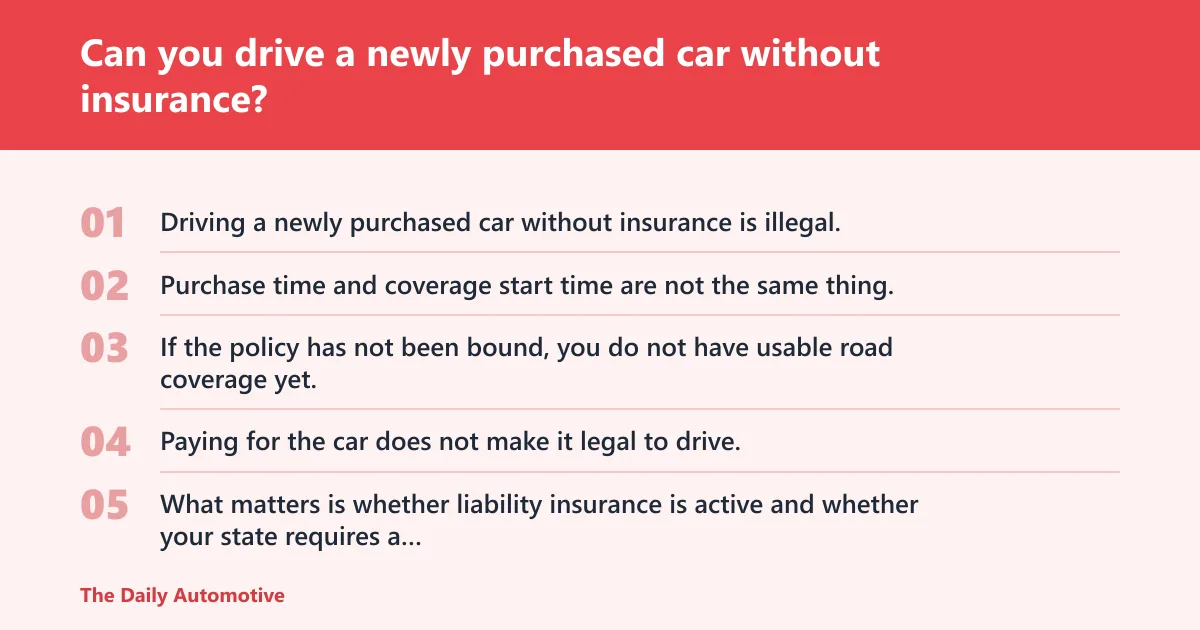
No, not as a general rule. Driving a newly purchased car without insurance is illegal, and auto insurance generally must be active before you drive away. Purchase time and coverage start time are not the same thing. If the policy has not been bound, you do not have usable road coverage yet.
Why purchase time does not equal coverage time
Paying for the car does not make it legal to drive. What matters is whether liability insurance is active and whether your state requires a title, registration, or other filing before road use. Some buyers assume they are covered the moment money changes hands. That assumption is risky.
Liability coverage is the usual minimum. It covers property damage and bodily injury when you are at fault. State rules differ across the US, so the exact minimums and paperwork timing depend on where the car will be driven.
What changes if the car is not yet on the road
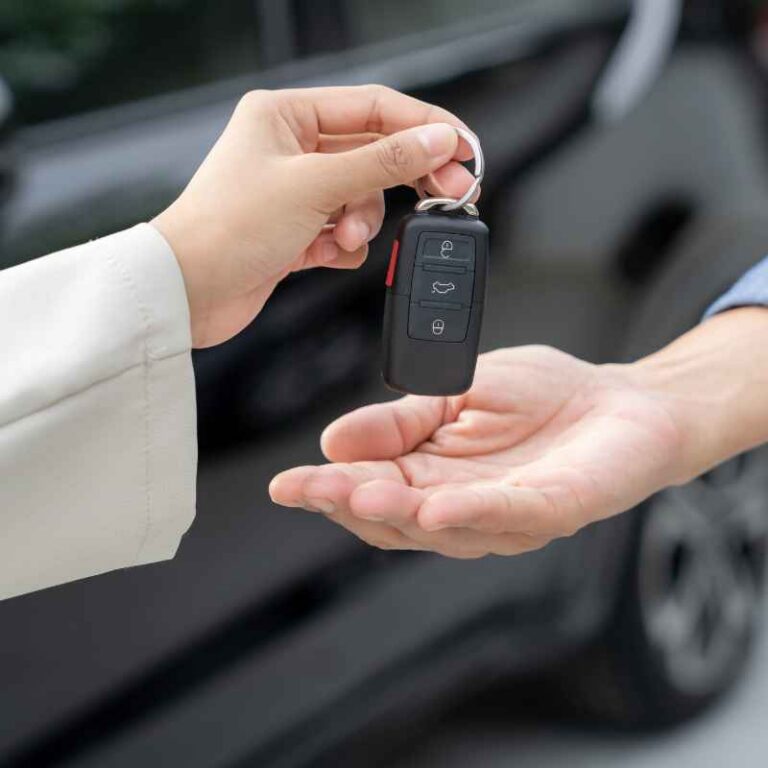
If the car is still on a dealer lot, in a transport yard, or sitting after a private sale, the answer can change based on possession and use. Test driving is one thing. Taking possession and driving home is another. Once you take the wheel on public roads, the car needs the coverage your state requires.
When you can and cannot drive away after buying a car
You can drive away only when insurance is active or when a narrow dealer or state exception applies. You cannot treat a purchase receipt as a substitute for liability coverage. The fastest legal route is to bind insurance first, then complete any required registration or title step, then leave.
Dealer purchase versus private sale
A dealer purchase is often the easiest same-day path because some dealerships may offer drive-away insurance for immediate coverage. That cover is usually time-limited and can depend on the provider, so the scope matters. A private sale usually gives you less help at the curb, which means you should line up your own policy before payment.
Say your compact sedan is sitting at a dealer and you want to drive home. If the dealer offers off-the-lot cover, you still need to confirm the duration, liability limits, and whether the policy starts before you turn the key. If it does not, do not leave yet.
What changes if you are picking up the car later
If you bought the car earlier and plan to pick it up later, the same rule applies. Coverage must be active at pickup time, not just at purchase time. A policy that starts tomorrow does not help you today. A temporary policy with immediate activation can, if the carrier allows it.
Why a test drive is different from taking possession
A dealer test drive is usually covered by the dealer’s arrangements. Taking possession after payment is different because the vehicle is now yours, and the risk shifts to you. Do not assume a test-drive plate, dealer tag, or salesperson’s permission also covers your drive home.

What insurance must be active before you drive

At minimum, liability insurance should be active before the car moves on public roads. State-specific minimums can differ, and some states require proof of insurance before registration or before you can lawfully operate the vehicle. The policy start time matters more than the purchase time.
Liability coverage and state minimums
Minimum insurance requirements typically include liability insurance. That usually means protection for property damage and bodily injury if you cause a crash. Because state laws vary, you should confirm the required minimums in the state where the car will be registered and driven.
| Coverage or step | What it does | Why it matters before driving |
|---|---|---|
| Liability insurance | Pays for property damage and bodily injury when at fault | Usually the minimum required for legal road use |
| Temporary insurance | Short-term cover that can activate immediately | Useful if your annual policy will start later |
| Dealership drive-away insurance | Time-limited off-the-lot cover | May let you leave right away if the dealer offers it |
| Registration or title step | State filing or ownership step tied to the vehicle | Some states want this completed before or alongside driving |
How existing coverage on another car may or may not help
Do not assume your old policy automatically follows the new vehicle. Some policies allow a grace period or automatic substitution, but the rules vary by insurer. If the new car is replacing another one, call the carrier and ask whether the new vehicle is bound and when the change becomes effective.
Non-owner car insurance is not a blanket solution here. It is usually liability-only and is aimed at occasional driving, not a car you now own in every case. If you bought the vehicle, confirm whether the insurer requires a standard auto policy instead.
Can temporary insurance cover a same-day purchase?
Yes, sometimes. Some insurers offer short-term policies lasting a few days or weeks, and some can activate immediately. That can bridge the gap between payment and departure. Availability, duration, and permitted use vary by carrier and state, so you need the binder in force before you drive.
How duration options usually work
Temporary cover is often used when you need a short window for pickup, registration, or a transfer. The exact term may be a few days or a few weeks. If your trip home is tonight, ask for immediate activation and proof that the policy is effective now, not later.
Limits to check before you rely on it
Check the start time, end time, liability limits, and whether the policy applies to your state. Also verify whether it covers only driving or also theft, fire, or damage to the vehicle itself. If the answer is unclear, do not use the policy as a green light to leave.
Does dealership drive-away insurance count?
It can, but only if the dealer actually provides it and the coverage is active when you depart. Dealership-provided drive-away insurance may allow immediate off-the-lot driving, but it is time-limited and provider-dependent. You need to know what it covers before you rely on it.
What dealer-provided cover may include
Some dealer programs are designed to cover the drive home or a brief transfer period. They may satisfy the immediate need for liability coverage, but they are not universal. The dealer should be able to identify the insurer, the effective time, and the expiration time.
Why coverage scope can be narrow
Do not assume dealer coverage is full protection. It may be limited to the trip off the lot, a specific state, or a short period measured in hours or days. If you plan a long drive, an overnight stop, or a registration run, ask whether those uses are included.
Questions to ask before you leave the lot
- When does the drive-away coverage start?
- What liability limits apply?
- How long does it last?
- Does it cover only the trip home?
- Who is the insurer or administrator?
- Do you need separate proof in the car?
Same-day buying checklist: payment to departure
Use this sequence if you want a quick legal route from purchase to road-ready. The order matters. If insurance starts after departure, the car is not legal to drive. If your state needs a registration or title step first, complete that before leaving.
- Confirm payment and purchase documents. Get the bill of sale, buyer’s order, or dealer contract.
- Bind or start insurance. Make sure liability coverage is active now, not later.
- Use temporary cover if needed. Short-term or drive-away cover should be effective before ignition.
- Complete the state-required registration or title step. Follow the local rule for plates, temp tags, or ownership filing.
- Keep your proof of insurance and purchase paperwork in the car. Bring insurance evidence and purchase paperwork before driving off.
Picture a buyer at a private sale on a Saturday afternoon. The seller has the title, the buyer has paid, but the insurance card starts at midnight. That car should stay parked until the policy is live. If the state also requires a temp tag or title transfer filing, that step comes before departure too.
Scenario matrix: dealer sale, private sale, auction, or family transfer
The route changes with the source of the car. Dealer purchases sometimes include off-the-lot help. Private sales and auction pickups usually do not. Family transfers can be simple on paper but still need active insurance and the right registration step.
| Scenario | What changes | Fastest legal path |
|---|---|---|
| Dealer purchase | Dealer may offer drive-away insurance or temporary tags | Bind your policy or verify dealer cover before leaving |
| Private party purchase | Less support at pickup; your insurer must usually be ready first | Start insurance before meeting the seller, then complete title steps |
| Auction purchase | Pickup timing can be strict and transport rules may apply | Arrange insurance and transport before the release date |
| Transfer from a family member | Insurance and ownership paperwork may change at the same time | Confirm the new policy start time, then finish title or registration |
What happens if I drive a new car without insurance?
You can face fines, license suspension, and vehicle impoundment, and you may be personally responsible for damage if a crash happens. The exact penalty depends on state law, but the risk is not minor. If the car is uninsured while still registered to you, you may also stay exposed to penalties tied to that status.
State insurance laws and penalty risk
State rules differ, so the penalty package is not identical everywhere. Some states focus on fines first. Others add suspension or impoundment quickly. The safer rule is simple: if you do not have active liability coverage, do not take the car onto public roads.
A note on registered cars awaiting sale
The Motorway guide says a car should remain insured while it is still registered to you and being driven, viewed, or sold. It also says you could remain liable for fines if the car is uninsured while still registered to you. Motorway advises canceling insurance the day after the sale is finalized, and it mentions a possible cancellation fee of £50 or more.
Frequently asked questions
can i drive a newly purchased car home without insurance
Usually not. Driving home without active insurance can trigger fines, suspension, or impoundment, depending on state law. The only safe exceptions are when your coverage is already active or the dealer gives you valid temporary proof that starts before departure.
can you drive a newly purchased car home without insurance
Usually no. A purchase receipt does not replace insurance, and the policy start time matters more than the moment you pay. Before you leave, confirm liability coverage, any required registration step, and proof that the policy is active now.
how long can you drive a newly purchased car without insurance
There is no safe grace period to assume. Some states, dealers, or insurers may create a narrow exception, but driving uninsured can still lead to penalties immediately. The right question is whether coverage is active before the first mile, not how long you can risk it.
how long can i drive a car without insurance after buying it
In most cases, you should not drive it at all until insurance is active. Temporary policies can last a few days or weeks, but they must begin before you drive. If a dealer provides drive-away cover, check its duration and scope before leaving.
do i need insurance before driving a newly bought car
Yes. That is the safest and generally required answer. Minimum insurance requirements usually include liability coverage, and auto insurance rules vary by state. If you want to drive the car home the same day, bind the policy first or confirm a dealer-provided temporary policy is already active.
Products related to this article
Sponsored / affiliate links. As an Amazon Associate I earn from qualifying purchases. I may earn additional commission from eligible campaigns.