How to Find the Owner of a Car by VIN: What You Can (and Can’t) Do
No. A VIN does not reveal who owns a car. It identifies the vehicle (maker, plant, model year, specs) and unlocks its history and recall status, but a federal privacy law keeps the registered owner’s name and address out of public reach. Only requesters with a legally permitted purpose, such as police, courts, insurers and parties to a lawsuit, can get it from a state motor vehicle agency.
People search this when they bought a used car, were hit by a driver who left, found a car abandoned on their property, or just want to know who owns a car near them. The first three have real, legal routes, which this guide lays out in a table. The last one does not, and we will not describe any workaround: identifying a private person from a vehicle is how stalking and harassment start.
Quick Answer
A VIN cannot legally be turned into an owner’s name or address by the public. The Driver’s Privacy Protection Act lists 14 permissible purposes for releasing that data from motor vehicle records. A VIN-based history report shows the car’s past, not its owner. If you have a real need (an accident, a claim, a lawsuit, a towed or abandoned car), go through police, your insurer, a court or your state agency.
Understanding the Role of a VIN in a Car Ownership Investigation
| Best Used-Car Buying Book Pick | |
 |
Everyone’s Guide to Buying a Used Car and Car Maintenance (paperback, $9.99) Best for: first-time used-car buyers who want a plain-language walkthrough of what to check before paying Why we picked it: it covers both buying a used car and basic car maintenance in one low-cost book, and it was in stock when we checked on 2026-10-12 Main drawback: it is a general guide, so it will not replace a vehicle history report, a title check or a mechanic’s inspection |
As an Amazon Associate we earn from qualifying purchases. Spec-based pick from the listing, not a hands-on test.
The Vehicle Identification Number is a 17-character code stamped on the vehicle itself. It describes the car, not the person. Decoding it gives you the manufacturer, build plant, model year and equipment, which is why it is the right tool for confirming a car is what the seller claims. NHTSA’s free vPIC decoder presents manufacturer-supplied vehicle data, and nothing on it points to an owner. Our guide to decoding a VIN to find your engine walks through reading one.
A VIN is also the key to a free safety check: NHTSA’s recall lookup takes a 17-character VIN and shows open safety recalls, meaning the maker has issued a recall and the repair has not been done (per the FTC). It will not show recalls already repaired.
Why You Usually Can’t Get the Owner’s Name and Address (The DPPA)
The barrier is the Driver’s Privacy Protection Act (DPPA), 18 U.S.C. 2721. It bars state motor vehicle departments, and their officers, employees and contractors, from knowingly disclosing personal information from a motor vehicle record unless the request fits a listed exception. It also sets a stricter tier called “highly restricted personal information”, which needs the person’s own consent except for a handful of uses such as government, court, insurer and employer-licensing functions.
Data point: under 18 U.S.C. 2724, a person whose record was improperly obtained or used can recover actual damages of not less than $2,500, plus punitive damages for willful or reckless disregard of the law and reasonable attorney’s fees. That is why legitimate agencies do not release names on a hunch.
The statute lists 14 permissible uses. Those that matter to ordinary drivers:
- Government, courts and law enforcement doing their official work.
- Legal proceedings: service of process, investigation in anticipation of litigation, and enforcing a judgment or court order.
- Insurers handling claims, anti-fraud work, rating and underwriting.
- Towing and impound operators notifying the owner of a towed or impounded vehicle.
- Licensed private investigators or security services, but only for another purpose on the same list.
- Safety and recalls: vehicle and driver safety, theft, emissions and recall work by manufacturers and similar bodies.
- The person’s own consent: a request backed by the subject’s written consent, which is how owners get their own records released to a lender or agent.
Resale is limited too. Under the same section, most recipients who resell this data must keep five years of records identifying each recipient and the permitted purpose, and hand them to the motor vehicle department on request. Curiosity is not on the list.
What a Vehicle History Report (Carfax, AutoCheck) Actually Shows
History reports combine title, odometer, salvage and (from some providers) accident and service data. The FTC recommends getting one before buying a used car and says it may show ownership history, accidents, repair records and any salvage declaration, but that it is not a substitute for an independent inspection. For the title-based option, the vehiclehistory.gov (the NMVTIS site) lists approved NMVTIS data providers that sell to the public. The U.S. Department of Justice runs NMVTIS to track title and brand history, such as salvage and junk records.
| Source | Reveals owner name or address? | What it shows | Who can use it |
|---|---|---|---|
| NMVTIS report from an approved provider | No (title data, not a people lookup) | Title and brand history, most recent odometer reading, salvage and total-loss records | Anyone, for a provider fee |
| Carfax, AutoCheck, VinAudit | No | Reported accidents, service records, title history, number of owners (named by the FTC as providers that may add accident and repair detail) | Anyone, paid report |
| NHTSA recall lookup and vPIC decoder | No | Open recalls and manufacturer-reported vehicle specs | Free, public |
| State motor vehicle record | Only for a permissible purpose | Registered owner and registration history | Requesters who qualify under the DPPA |
| Police or crash report | Yes, where the agency shares it with involved parties | Parties and vehicles in a crash or theft report | Police, plus the people involved as the agency allows |
Our post on whether Carfax is still free compares what each price tier gives you, and a clean report can still hide damage: see how a car can have a clean title despite an accident.
The Legitimate Route for Each Real Need
Most people who search this have one of the needs below. Match yours to the route, and note what you can actually get at the end of it. This is general information, not legal advice, and rules differ by state.
| Your need | Legitimate route | What you can get |
|---|---|---|
| Buying a used car from a private seller | Seller’s signed title and photo ID, VIN match on dash, door jamb and title, lien check with the lender, plus a history report and inspection | Confirmation the seller can legally sell, the title brand and the car’s history |
| Hit-and-run or crash with a driver who left | File a police report with the VIN or plate details you saw, and tell your own insurer | Police identify the registered owner through their own access, and your insurer pursues the claim |
| A lawsuit over a vehicle | An attorney or the court, using the legal-proceedings purpose | Owner details through a court or a properly purposed records request |
| Insurance claim or fraud question | The insurer or its claims investigator | Owner details held by the insurer under the insurance purpose |
| Your vehicle was towed or impounded | The towing or impound operator and local police non-emergency line | Notice sent to the registered owner by the operator, with no need for you to identify anyone |
| A vehicle abandoned on your property | Local police or the code-enforcement office, then your state’s abandoned-vehicle process | The agency contacts the registered owner and handles notice and removal |
| Your own vehicle’s records | Your state motor vehicle agency, as the subject of the record | Your own registration and title details |
| Curiosity about a neighbor or a car you saw | None | Nothing. If you feel unsafe, tell police and do not try to identify the person yourself |
How to Request Ownership Records From Your State DMV
If one of the permissible purposes genuinely applies to you, such as litigation, an insurance claim or your own record, the process looks like this. Forms, fees and wait times vary by state, so check your state agency’s official page for the current version.
- Find your state motor vehicle agency’s vehicle record request form on its official site.
- Select the permissible-use category that applies to you; most forms require you to name one.
- Enter the VIN or plate number for the vehicle.
- Attach what your purpose requires, such as proof of identity, a court document or a claim number.
- Submit the form and pay the fee your state lists.
- Wait for processing, which varies by state and by electronic or mail submission.
You sign these forms stating your purpose is true. Claiming a false purpose to obtain someone’s information is itself a violation of the DPPA, separate from how the data is later used. If the issue is a stolen vehicle, a police report is the fastest route: see tracking down a stolen car.

When a Licensed Private Investigator Can Help
A licensed investigator can lawfully obtain motor vehicle records, but the DPPA only lets them do so for a purpose on the same list that applies to everyone else, such as pre-litigation investigation or an insurance matter. A PI working a pending lawsuit has a basis. A PI hired to find out who owns a neighbor’s car does not, and a legitimate one will turn the job down and ask your purpose first. Anyone promising an owner’s name from a VIN with no questions asked is selling something the law does not allow.
Verifying Ownership When You’re Buying a Used Car
In a private sale you do not need to look the owner up at all. The seller’s own paperwork should answer it, and a few minutes of checks can save you from buying a car the seller does not own or one with a loan against it:
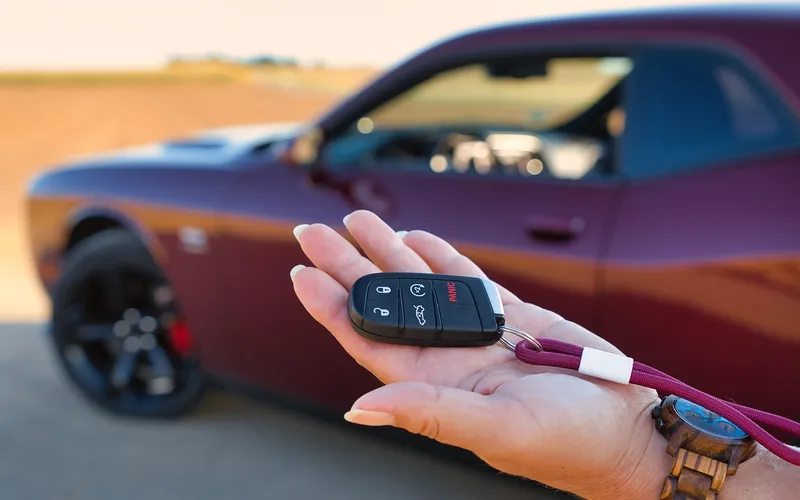
- Match the seller to the title: compare the seller’s photo ID to the name printed on the title. “I’m selling it for a friend” is a red flag unless the title is properly signed over.
- Compare VINs: the VIN on the dashboard and door jamb should match the title exactly. A mismatch can mean a swapped title or a stolen vehicle.
- Check for a lien: if a lender is listed and has not released it, the lender still has a claim on the car. Contact the lender directly. If the seller cannot produce the original, read what to do about a lost car title first.
- Read the title brand: “salvage”, “rebuilt” or “flood” marks cut value and can affect insurance.
- Add a history report and an inspection: the FTC advises both before you buy.
Dealing With an Abandoned Vehicle
An apparently abandoned car on your property or street is a legal process, not a lookup task. Call your local police non-emergency line with the make, color, plate if visible and exact location. Officers can run the plate or VIN through their own systems and contact the registered owner. Waiting periods and notice rules before a vehicle can be towed or sold differ by state, so see our guide to whether you can take an abandoned car and follow your state’s process.
If You Are Worried About Someone Following or Harassing You
If the reason you want to identify a driver is that you feel followed, watched or threatened, do not try to track them down yourself. Write down the plate, make, color, time and place, save any photos or messages, and report it to police. They can lawfully identify a registered owner. Contacting or confronting an unknown person can make the situation worse.
Common Mistakes to Avoid
- Assuming a paid VIN report includes the owner. No commercial report will give you a current owner’s name for this purpose, and that is a legal limit, not a product gap.
- Misrepresenting your reason on a records request. A false purpose is a separate DPPA violation.
- Skipping the VIN-to-title match when buying used. Mismatched VINs are among the clearest signs of a stolen or retitled car.
- Treating a clean report as proof of no problems. Reports include only what was reported, so pair one with a mechanic’s inspection.
Frequently Asked Questions
Can a VIN number tell you who owns the car?
No. A VIN decodes the vehicle’s manufacturer, specs and history, not its owner. The Driver’s Privacy Protection Act bars state motor vehicle departments from releasing an owner’s name or address except to requesters with a permissible purpose, such as law enforcement, insurers and parties to a lawsuit.
How can I run a VIN number for free?
NHTSA offers a free VIN decoder (vPIC) for vehicle specs and a free recall lookup that shows open safety recalls. Neither reveals the owner’s identity.
Can I legally get the registered owner’s name and address myself?
Only if your situation fits one of the 14 permissible purposes in the DPPA, such as a legal proceeding or an insurance claim, or if you are requesting your own record. Simple curiosity is not a permissible purpose.
How can I find out who owns a vehicle in Florida?
Florida follows the same federal rule as every state. Check the Florida Department of Highway Safety and Motor Vehicles official site for its records request process, and expect to state a permissible purpose. Curiosity does not qualify.
Will a private investigator get around the DPPA for me?
No. A licensed investigator may obtain these records only for a purpose that is permitted for everyone else, such as litigation or an insurance matter. A legitimate PI will ask your purpose before taking the job.
What should I do after a hit-and-run if I only have a partial plate or VIN?
Report it to police right away with every detail you have, and tell your own insurer. Police can identify the registered owner through their own access, and your insurer can pursue the claim.
The Bottom Line
A VIN is a strong research tool for the car: decode it, check recalls, and pull a history report before you buy. It is not a back door to a person’s identity. If you truly need the registered owner, the legitimate routes are police, your insurer, a court, a towing operator or your state agency under a permissible purpose, and when you are buying, the seller’s signed title. Anyone offering to skip those steps is offering something the law does not allow.
Products related to this article
Sponsored / affiliate links. As an Amazon Associate I earn from qualifying purchases. I may earn additional commission from eligible campaigns.