Can I Return a Used Car Within 30 Days? Essential Guide
Yes, returning a used car within 30 days is sometimes possible, but it’s not guaranteed. Your ability to return a used car depends heavily on the seller’s return policy, the terms of your purchase contract, and specific state laws. Always review paperwork carefully or ask the dealer directly.
Bringing It Back: Your Guide to Returning a Used Car Within 30 Days
Buying a used car is a big step, and sometimes, despite our best efforts, things don’t work out as planned. You might discover issues you didn’t notice at first, or maybe the car just isn’t the right fit for your daily life. This can leave you wondering, “Can I return a used car within 30 days?” It’s a common question, and one that can cause a lot of stress if you feel stuck with a car that isn’t working for you. The good news is that in some situations, you might have options. In this guide, I’ll break down how returning a used car typically works, what factors you need to consider, and what steps you can take if you’re looking to send a recently purchased used car back. Let’s make this process clear and manageable!
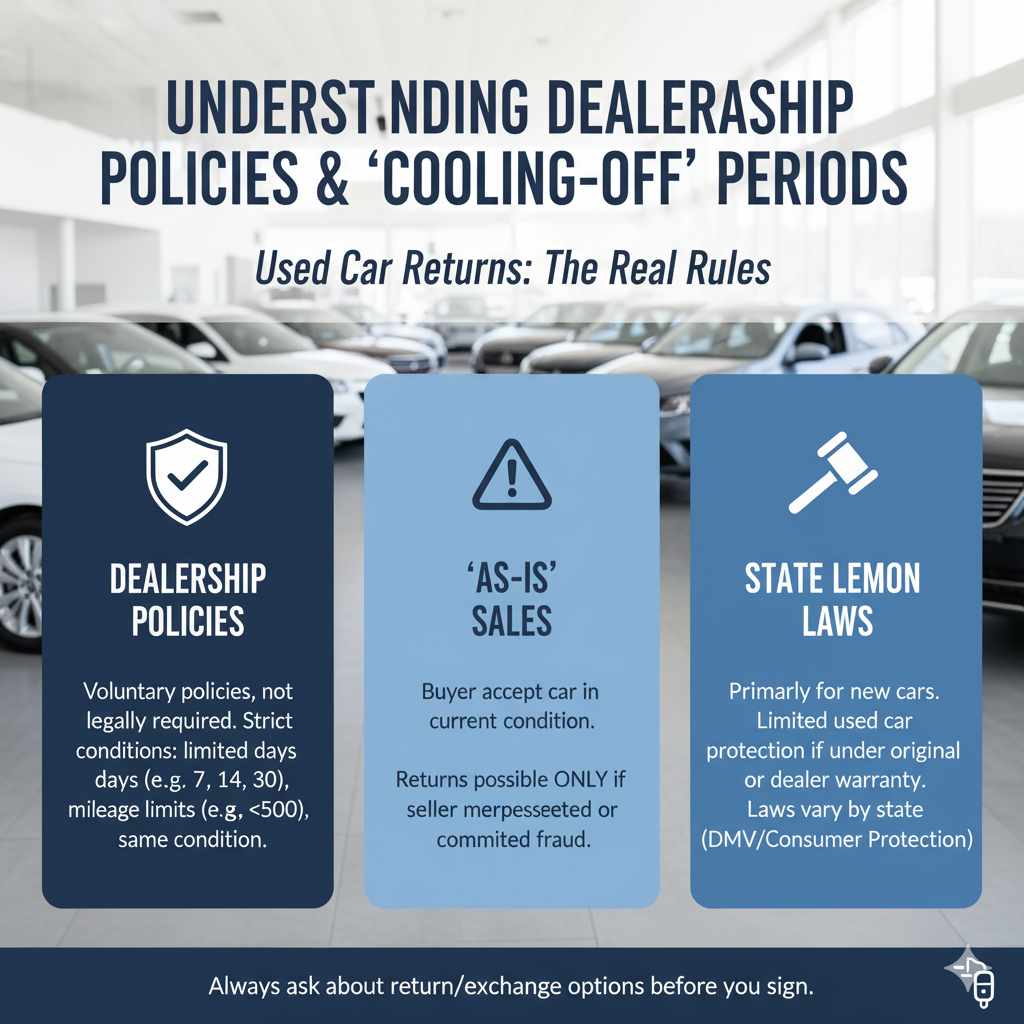
Understanding Dealership Policies and “Cooling-Off” Periods
When you buy a car, especially a used one, from a dealership, the first thing to understand is that there isn’t usually a universal “cooling-off” period that allows you to return any car within a set number of days, like 30. This is different from some other consumer purchases. However, there are specific situations and types of policies that might allow for returns.
Dealership Return Policies: Some dealerships offer their own voluntary return policies. These aren’t legally required but are a service they provide to build customer trust. These policies often come with strict conditions, such as a limited number of days (sometimes 7, 14, or 30 days), a mileage limit (e.g., under 500 miles), and the car needing to be in the same condition as when it was purchased. Always ask about return or exchange options before you sign anything.
“As-Is” Sales: Many used cars are sold “as-is.” This means the buyer accepts the vehicle in its current condition, with any existing faults or problems. If you bought a car “as-is,” your ability to return it is severely limited, often only possible if the seller misrepresented the car or engaged in fraud.
State Lemon Laws: While most state lemon laws primarily apply to new vehicles, a few states offer some limited protections for used vehicles under certain circumstances, particularly if the car is still under its original manufacturer warranty or if the dealer provides a limited warranty. These laws are complex and vary significantly by state. You can often find information about your state’s specific rules through your state’s Department of Motor Vehicles (DMV) or consumer protection agency. For example, the Federal Trade Commission (FTC) discusses consumer protection in auto sales, which can give you a general idea of rights.
The Purchase Contract: Your Binding Agreement
The purchase contract you sign when buying a car is a legally binding document. It outlines all the terms and conditions of the sale, including any warranties, final sale price, and, crucially, any return or exchange policies the dealer might have.
Always Read Carefully: This is perhaps the most important step. Before you sign, read every single word. If you don’t understand something, ask for clarification. Your salesperson should be able to explain it, or you can ask to speak with a sales manager.
Look for Return Clauses: Specifically search for any mention of return policies, exchange options, or buyer’s remorse clauses. If it’s not in writing in the contract, it’s likely not a guaranteed option.
“We Owe You Nothing” Clause: Many contracts contain a clause stating that the buyer has inspected the vehicle and accepts it in its present condition. This reinforces the “as-is” nature of many used car sales.
Financing Implications: If you financed the car through the dealership or their affiliates, returning the car can get complicated. The contract likely includes terms for loan repayment. If the dealer takes the car back, you’ll have to figure out how your loan is handled, which could involve penalties or additional fees.
Common Reasons for Wanting to Return a Used Car
Understanding why people typically want to return a used car can help identify potential issues you might face or arguments you could make if you’re seeking a return beyond a standard policy.
Undisclosed Mechanical Problems: This is a very common reason. You buy the car, and a few days later, a major (and expensive) issue appears, like engine trouble, transmission failure, or significant brake problems. If the dealer knew about the problem and didn’t disclose it, or if they actively tried to hide it, you might have grounds for a return, but this often requires proof of deception.
Bait-and-Switch Tactics: If the car you agreed to buy wasn’t the car you were ultimately given, or if the terms changed significantly after you signed, this could be a basis for dispute.
Inaccurate Advertising or Representation: If the car was advertised with features it doesn’t have, or if the salesperson made false promises about its condition or history that led you to buy it, this could be a valid reason to seek a return.
Buyer’s Remorse: Simply changing your mind because you don’t like the car or found a better deal elsewhere is usually not enough to return a car, especially if it was an “as-is” sale and there’s no explicit return policy.
| Factor | Description | Impact on Return |
|---|---|---|
| Dealership Return Policy | Voluntary policy offered by the dealership. | Generally the easiest way to return, but has strict conditions (time, mileage, condition). |
| “As-Is” Sale | Car sold with no warranty, buyer assumes all risks. | Extremely difficult to return unless fraud or misrepresentation can be proven. |
| Warranty (Dealer or Manufacturer) | Car is covered for certain repairs for a specified period or mileage. | May offer recourse for specific mechanical failures but not usually a full return option. |
| State Laws | Laws specific to your state regarding used car sales and consumer rights. | Rarely provide a broad “return” right for 30 days, but can offer protection against fraud or undisclosed major defects. |
| Purchase Contract | The legally binding agreement between buyer and seller. | Definitive document detailing terms, including any return rights or lack thereof. |
Steps to Take If You Want to Return a Used Car
If you’ve recently bought a used car and are regretting the purchase, don’t panic. Taking a structured approach can help you navigate the situation more effectively.
Step 1: Review Your Paperwork
This is your first and most crucial move. Dig out all the documents you received when you purchased the car.
The Bill of Sale: This document confirms the transaction.
The Purchase Contract/Agreement: This is the main legal document.
Any Addendums or Disclosures: Look for anything that might mention return policies, warranties, or conditions of sale.
Advertisements: If you still have a copy of the ad for the car (online or print), keep it. This might be relevant if the car doesn’t match its description.
Step 2: Check for a Dealership Return Policy
If you bought from a dealership, check the paperwork specifically for a return policy.
Look for Sections on “Returns,” “Exchanges,” or “Buyer’s Remorse.”
Note the Timeframe and Mileage Limits: These policies are often very strict. For example, a 30-day policy might require less than 500 miles driven.
Condition Requirements: The car usually needs to be returned in the same condition, with no new damage or significant wear.
Step 3: Contact the Dealership
If your paperwork indicates a return policy, or if you believe the car has serious undisclosed issues or was misrepresented, contact the dealership as soon as possible.
Be Polite but Firm: Explain your situation clearly.
Refer to Specific Terms: If a return policy is in place, point to the exact clause or condition you believe applies.
Gather Evidence: If you’re claiming misrepresentation or undisclosed issues, have any evidence ready (mechanic’s reports, photos, communication logs).
Step 4: Document Everything
Keep a detailed record of all your interactions.
Dates and Times: When you spoke with whom.
Summary of Conversations: What was said, what was agreed upon.
Copies of Communications: Emails, letters, voicemails.
Photographs/Videos: Of any new damage or issues.
If you are dealing with a recurring mechanical issue, consider consulting a trusted independent mechanic. Resources like the Autoblog guide to essential mechanic tools can show you the kind of professional assessments you might need from a mechanic, even though you’re not planning DIY here. The key is getting an objective, expert opinion on the car’s condition if you suspect it wasn’t sold honestly.
Step 5: Seek Professional or Consumer Protection Help (If Necessary)
If the dealership refuses to honor a clear return policy or if you believe you were a victim of misrepresentation or fraud and they won’t cooperate, you may need to escalate.
Consumer Protection Agencies: Your state’s Attorney General’s office or consumer protection department can offer advice and assistance.
Better Business Bureau (BBB): While not a government agency, the BBB can mediate disputes.
Legal Counsel: For significant financial disputes or clear cases of fraud, consulting with an attorney specializing in consumer law might be necessary.
Special Cases: Private Sales and Rental Car Companies
The process of returning a used car can differ significantly depending on where you purchased it:
Private Sales
When you buy a car from an individual seller, the situation is generally much more difficult for returns.
“As-Is” Standard: Private sales are almost always “as-is” by default, meaning the buyer accepts the car in its current condition with all its faults.
No Legal Obligation to Take It Back: Unless the seller actively defrauded you (e.g., lied about the car’s history, tampered with the odometer), they have no obligation to take the car back.
Contract is Key: If you had a written sales contract, it might include specific terms, but this is rarer in private sales.
Recourse: Your only real recourse is if you can prove the seller committed fraud or gross misrepresentation, which can be hard to do and may require legal action.
Rental Car Companies
If you purchased a used car from a rental car company, their policies might be more structured, but also potentially stricter.
Specific Programs: Rental companies often have “used car sales” departments with specific return or exchange policies.
Conditions Apply: These policies will have strict timeframes, mileage limits, and condition requirements. Be sure to read their advertised terms very carefully.
Commercial vs. Private: Understand that you are dealing with a business that sells many vehicles, and their sales are often more standardized.
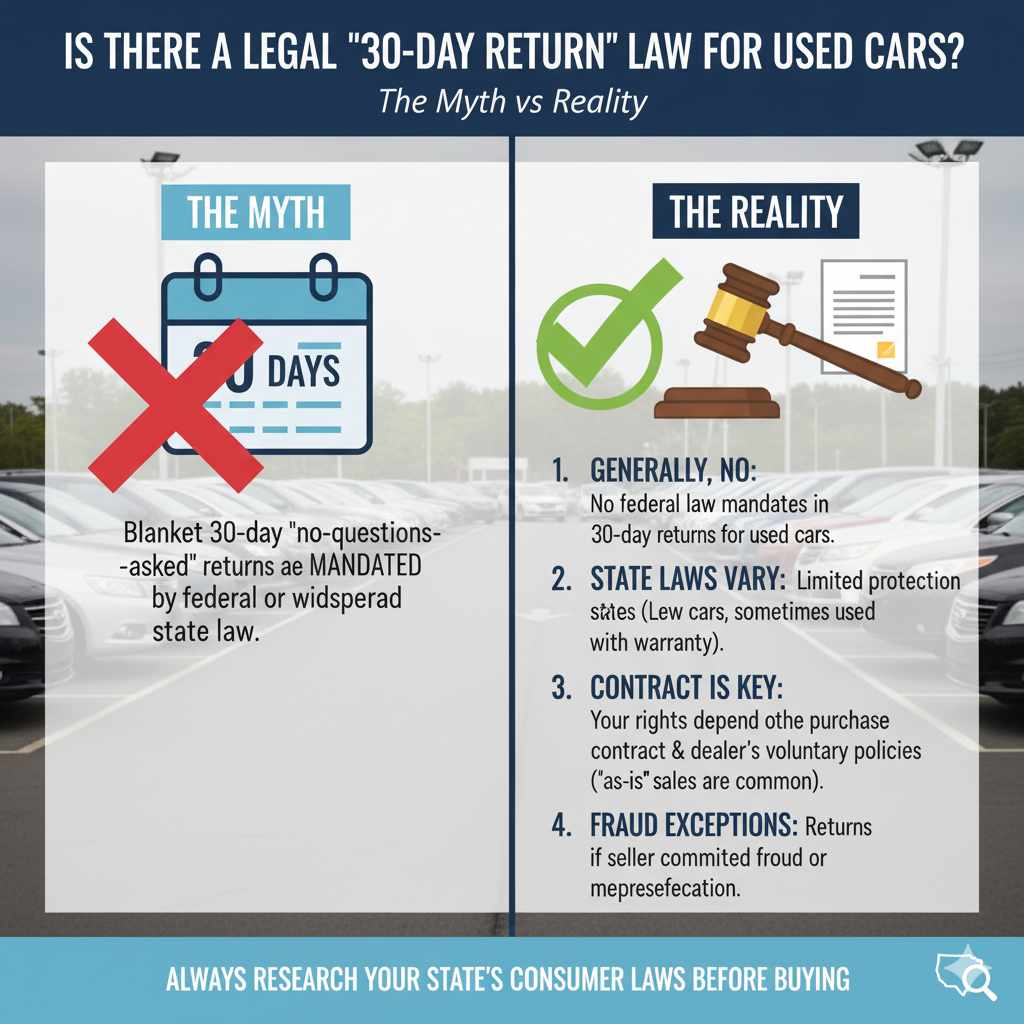
Is There a Legal “30-Day Return” Law for Used Cars?
This is a question that comes up constantly. The short answer is: generally, no, there is no federal or widespread state law that mandates a 30-day “no-questions-asked” return policy for used cars.
While consumers have rights regarding faulty products, cars are a high-value, complex purchase. The marketplace operates on the principle that once a significant transaction like a car sale is finalized, it’s binding, especially if all disclosures were made and the sale was conducted properly.
Lemon Laws Primarily for New Cars: Most state “Lemon Laws” are designed to protect buyers of new vehicles that have persistent, unfixable defects. Some limited protections might extend to used cars still under a manufacturer’s warranty.
Used Car Protection: Protections for used cars usually revolve around preventing fraud, ensuring accurate mileage reporting, and enforcing any express warranties offered by the dealer. They don’t typically grant a blanket right to return.
Contractual Agreements Rule: Your strongest leverage will always be what is written in your purchase contract and any specific return policy the dealership voluntarily offers.
It is essential to be informed about your specific state’s consumer protection laws regarding used car sales. You can often find this information on your state’s Attorney General’s website or your state’s Department of Motor Vehicles (DMV). For instance, some states might have laws requiring “buyer’s guides” to be displayed on used cars at dealerships, outlining warranty information.
Maximizing Your Chances for a Successful Return (If Allowed)
If you’ve found a dealer with a return policy or believe you have grounds for a return due to misrepresentation, here’s how to maximize your chances:
1. Act Quickly: The sooner you address the issue, the better. Many policies have short deadlines.
2. Be Prepared with Evidence: Have your paperwork, mechanic’s reports, and any other supporting documents organized.
3. Understand Exact Conditions: Know if your return is based on a policy with mileage limits, timeframes, or require the car to be in original condition.
4. Negotiate Professionally: Be prepared to negotiate. Sometimes a dealership might offer an exchange for another vehicle or store credit instead of a full cash refund.
5. Know When to Walk Away (or Seek Other Help): If the dealership is being unreasonable and you have a strong case, be prepared to explore consumer protection agencies or legal advice.
FAQs About Returning a Used Car
Here are some common questions many people have when considering returning a used car:
Q1: Do I have a “cooling-off” period to return a used car?
A1: In most cases, no. Unlike some other purchases, there is typically no legally mandated “cooling-off” period for used car sales. Any possibility of return depends on the dealership’s voluntary return policy or specific circumstances like fraud or misrepresentation.
Q2: My used car broke down a week after buying it. Can I return it?
A2: If you bought the car “as-is” and there’s no dealer return policy, returning it might be difficult unless you can prove the dealer knew about the defect and intentionally hid it, or that it was grossly misrepresented. If the car came with a warranty, you would typically seek repairs under that warranty first.
Q3: What if the car was sold with a dealer warranty? Can I return it if it has problems?
A3: A dealer warranty covers specific repairs for a set period. It generally doesn’t grant you the right to return the car. You would work with the dealer to have covered repairs made according to the warranty agreement.
Q4: I bought a used car from a private seller. Can I return it?
A4: It is extremely difficult to return a car bought from a private seller. These sales are almost always “as-is.” You would typically only have recourse if you can prove the seller committed fraud, such as misrepresenting the car’s mileage or hiding significant accident damage.