Can Low Oil Cause Overheating in 2H HJ60?
Lots of folks wonder, Can Low Oil Cause Overheating in 2H HJ60? It’s a common question, especially when you’re new to taking care of your trusty 4×4. The engine in your 2H HJ60 needs oil to work smoothly and stay cool, so not having enough can certainly cause problems. This might seem like a big puzzle, but we’ll break it down step-by-step to make it super simple.
We’ll show you exactly what’s happening and how to fix it.
Why Low Oil Leads to Overheating in Your 2H HJ60
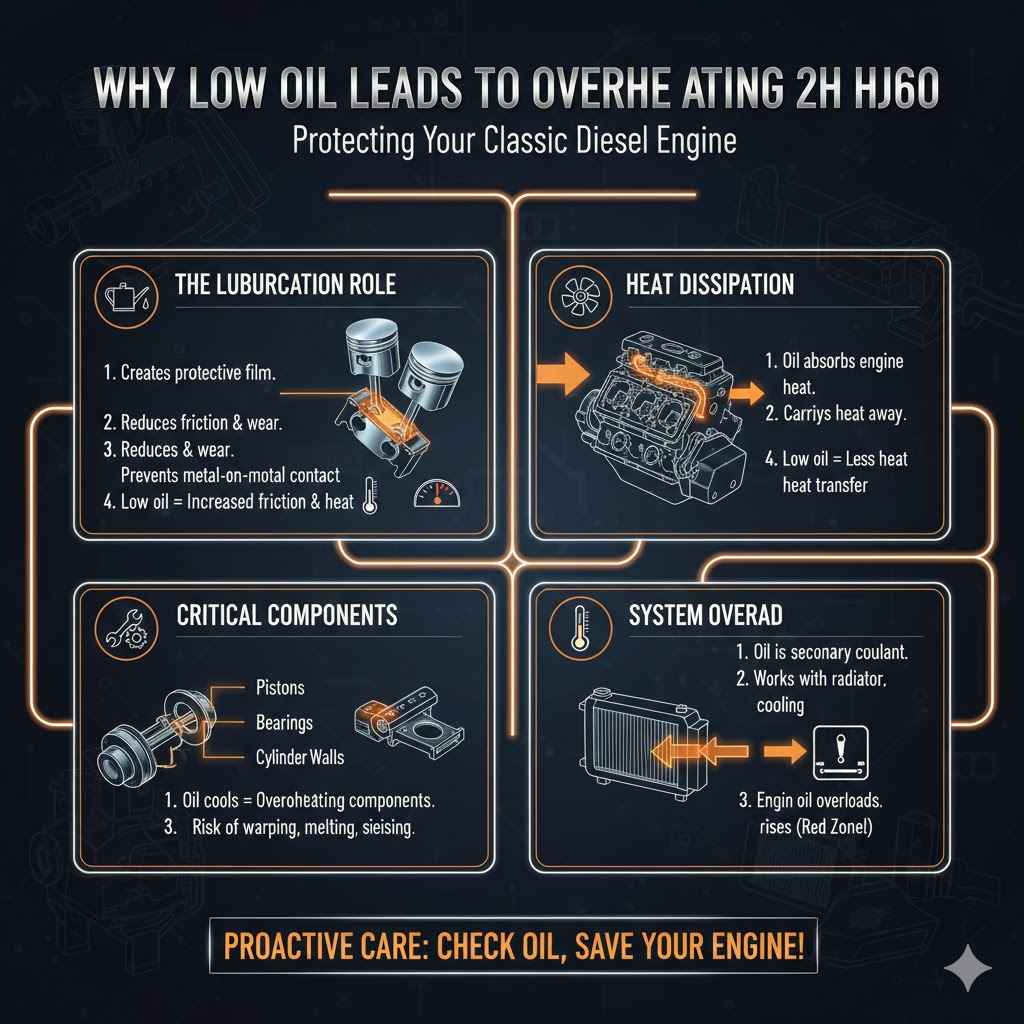
When your 2H HJ60 doesn’t have enough oil, it’s like asking a runner to sprint without water; they’ll quickly get tired and overheat. Engine oil does more than just keep parts from rubbing together. It’s a big part of your engine’s cooling system.
It carries heat away from hot spots inside the engine, like the pistons and bearings, to the oil pan where it can dissipate. Without enough oil, this heat transfer becomes much less effective. This allows temperatures to climb, potentially leading to serious engine damage.
The moving parts also work harder against each other without enough lubrication, creating more friction and thus more heat. It’s a cycle that can quickly spiral out of control if not addressed.
The Lubrication Role of Engine Oil
Engine oil’s primary job is lubrication. It creates a thin film between moving metal parts, preventing direct contact. This film reduces friction, wear, and tear.
Think of it like a microscopic cushion that allows pistons to slide smoothly within cylinders, crankshafts to spin without seizing, and camshafts to turn without grinding. When the oil level is low, this protective film can break down or become insufficient in critical areas. This leads to increased friction between metal surfaces.
More friction means more heat is generated. This heat isn’t just a little extra warmth; it can become significant enough to affect engine performance. Without proper lubrication, parts can start to bind or seize, further increasing friction and heat.
This is especially true for high-stress components operating under load, like during acceleration or climbing hills.
Reduced Friction and Wear
When oil is at the correct level, it coats all moving parts. This coating prevents metal-on-metal contact. This keeps parts from wearing down too quickly.
For example, the pistons moving up and down in the cylinders are completely protected by a thin layer of oil.
Heat Dissipation
Oil also acts as a coolant. It flows through the engine, picking up heat from hot components like the cylinder walls and the bottom of the oil pan. It then carries this heat to areas where it can be released, usually by flowing through the oil cooler or radiating heat from the oil pan.
Engine Cleaning
Oil also has detergents that help clean the engine. It picks up small bits of metal debris and carbon deposits. These are then carried to the oil filter to be trapped.
A low oil level means less oil circulating to perform these cleaning duties effectively.
Oil as an Essential Cooling Component
Many people think the radiator is the only part of the cooling system. However, engine oil plays a vital supporting role. A significant amount of heat is generated within the engine itself, especially from combustion.
The oil circulates throughout the engine, absorbing this heat from the metal components like the cylinder heads, pistons, and crankshaft bearings.
This heated oil then travels away from these hot spots. It’s either cooled by passing through an oil cooler (if equipped) or by radiating heat in the oil pan. If the oil level is low, there’s less oil to absorb and carry away this heat.
This causes temperatures within the engine block and its components to rise much faster. This can quickly overwhelm the radiator’s ability to keep the engine at its optimal operating temperature.
Consider the engine oil like a secondary coolant. It works in tandem with the coolant in the radiator. Low oil levels reduce its capacity to manage engine heat, making the entire cooling system less efficient.
This can lead to the engine temperature gauge climbing into the red zone.
Heat Transfer Mechanism
Oil flows over hot engine parts, absorbing thermal energy. This energy is then transported away from the engine core. It is then dissipated through the oil system, including the oil pan and any dedicated oil cooler.
Without enough oil, this heat transfer process is less efficient.
Oil Cooler Functionality (if equipped)
Some vehicles, especially those used for towing or in demanding conditions, have an oil cooler. This is like a mini-radiator specifically for the engine oil. It further reduces oil temperature before it returns to the engine.
A low oil level means there is less oil to flow through this cooler, reducing its effectiveness.
Impact on Engine Components
Overheated engine components can warp, melt, or seize. This can lead to catastrophic engine failure. Pistons expanding too much can score cylinder walls.
Bearings can lose their structural integrity. These issues are often a direct result of insufficient oil to manage heat properly.
Recognizing the Signs of Low Oil in Your 2H HJ60
It’s important to know what to look for. Your 2H HJ60 will give you clues if its oil level is getting dangerously low. These signs are your early warning system.
Paying attention to them can save you from costly repairs. The most common indicators include the oil pressure warning light coming on, hearing unusual engine noises, and, of course, the engine temperature gauge climbing higher than normal. Don’t ignore these signals; they are your engine asking for attention.
The Oil Pressure Warning Light
The oil pressure warning light is one of the most critical indicators. This light, often red and shaped like an oil can, illuminates when the engine’s oil pressure drops below a safe operating level. Low oil level is the most common cause of low oil pressure.
When there isn’t enough oil in the oil pan, the oil pump pickup can suck in air instead of oil, leading to a significant drop in pressure.
This light means immediate attention is required. Driving with low oil pressure can cause severe internal engine damage within minutes. It means the engine is not getting the lubrication it needs.
This can lead to parts grinding against each other, causing rapid wear and potential seizure. If this light comes on, pull over safely as soon as possible and shut off the engine.
What the Light Indicates
The oil pressure light means the engine is not getting enough oil to circulate properly. This can be due to a low oil level, a faulty oil pump, or a blockage in the oil system. The most common reason for a beginner is simply not enough oil in the engine.
Immediate Action Required
If this light turns on while you are driving, it is a serious warning. You should stop driving immediately in a safe location. Turn off the engine and allow it to cool down.
Then check the oil level. If it is low, add the correct type of oil.
Potential Damage
Ignoring the oil pressure light can lead to catastrophic engine failure. This is because critical engine components are not being lubricated. This causes them to overheat and seize.
The cost of repairing such damage is usually very high.
Unusual Engine Noises
As engine oil levels drop, the lubrication between moving parts becomes less effective. This can lead to increased friction, which often translates into new and unpleasant sounds coming from your engine. These noises are often described as knocking, ticking, or grinding.
They are the sound of metal parts rubbing together more aggressively than they should.
A knocking sound, particularly a deep thudding or pinging noise, can indicate that the main bearings or connecting rod bearings are starved of oil. This means there isn’t enough oil cushioning them. A ticking or clattering sound, especially from the top of the engine, might be related to the valvetrain components like lifters or rockers not receiving enough oil.
Ignoring these sounds is like ignoring a loud alarm; it signals a problem that needs your attention.
Knocking or Pinging Sounds
These sounds often come from the bottom of the engine. They can mean that the crankshaft bearings or connecting rod bearings are not getting enough oil. This lack of lubrication allows for excessive play, causing these parts to knock against each other.
Ticking or Clattering Sounds
These sounds are typically heard from the top of the engine. They can indicate problems with the valvetrain, such as hydraulic lifters not filling with oil. This causes them to collapse and create noise as the camshaft pushes on them without proper cushioning.
Grinding Noises
Grinding sounds are a more severe warning. They suggest that metal parts are rubbing directly against each other. This can happen if the oil film has completely broken down.
This is a sign of extreme wear and potential imminent failure.
The Rising Temperature Gauge
The temperature gauge on your dashboard is a direct indicator of your engine’s thermal status. While the radiator system is the primary means of cooling, engine oil plays a crucial secondary role. When the oil level is low, the oil’s ability to absorb and dissipate heat is significantly reduced.
This means that the engine components that the oil is supposed to cool will retain more heat.
As more heat builds up within the engine block and cylinder head, the overall engine temperature rises. This causes the coolant in the radiator to heat up more quickly. Consequently, the temperature gauge will show a higher reading.
If the oil level is critically low, the engine’s cooling capacity is severely compromised. This can lead to the gauge climbing rapidly into the red zone, indicating an overheating condition.
Direct Thermometer Reading
The temperature gauge is your dashboard’s direct report on engine heat. When the oil is low, the engine’s internal parts get hotter. This extra heat transfers to the coolant, making the gauge read higher.
Overwhelmed Cooling System
Even if your radiator is full and the fan is working, a lack of oil to manage internal heat can overwhelm the system. The oil works with the coolant. When oil cannot do its part, the coolant has to work much harder, and can still fall behind.
Consequences of High Heat
Sustained high temperatures can cause engine parts to expand beyond their normal tolerances. This can lead to warping of cylinder heads, blown head gaskets, or even pistons seizing in their cylinders. It’s a critical situation that needs immediate attention.
How to Check and Maintain Your 2H HJ60’s Oil Level
Keeping your 2H HJ60 properly oiled is one of the simplest yet most important maintenance tasks you can perform. It’s a straightforward process that doesn’t require special tools. Regularly checking your oil and topping it up as needed will prevent many potential problems, including overheating.
We’ll guide you through each step so you can be confident in doing this yourself.
The Oil Dipstick Check Procedure
The oil dipstick is your primary tool for checking the engine oil level. It’s a simple rod, usually with a brightly colored handle, that you pull out to reveal the oil level. It’s crucial to perform this check correctly to get an accurate reading.
First, ensure the engine is off and has been sitting for at least 5-10 minutes. This allows the oil to drain back into the oil pan. Park your vehicle on a level surface; if the ground is sloped, your reading will be inaccurate.
Locate the dipstick, pull it out completely, and wipe it clean with a rag or paper towel. Reinsert the dipstick all the way in, then pull it out again. The oil level should be between the “Min” and “Max” marks on the dipstick.
If it’s at or below the “Min” mark, you need to add oil.
Locate the Dipstick
Find the oil dipstick. It usually has a bright yellow or orange loop or handle. It’s typically located towards the front or side of the engine bay.
Ensure Engine is Off and Cool
Always turn off the engine and let it cool for a few minutes before checking the oil. This ensures that the oil has drained back into the oil pan and that the reading is accurate. A hot engine can give a false high reading.
Wipe, Reinsert, and Read
Pull the dipstick out, wipe it clean with a cloth. Push it all the way back in, then pull it out again. Look at the tip of the dipstick.
There will be markings showing the proper oil level range. The oil level should be within this range.
Topping Up with the Correct Oil
When you need to add oil, using the correct type and viscosity is just as important as checking the level. The owner’s manual for your 2H HJ60 specifies the exact oil recommendation. For the 2H engine, a common recommendation is a multi-grade oil like 10W-30 or 10W-40, depending on the climate.
Always consult your manual for the precise specification.
When topping up, add oil gradually. Don’t just pour the whole bottle in at once. Add a little, wait a minute or two, and recheck the dipstick.
Repeat this until the oil level reaches the “Max” mark. Overfilling can be as detrimental as underfilling, as it can cause foaming and damage to seals. It’s better to be slightly under than significantly overfilled.
Consult Your Owner’s Manual
The absolute best way to know what oil to use is to check your 2H HJ60 owner’s manual. It will tell you the exact viscosity (like 10W-30) and any specific API service classifications required for your engine.
Add Oil Slowly
When adding oil, do it in small increments. Add about half a quart (or liter) at a time. Wait a few minutes for the oil to settle down into the oil pan.
Then, re-check the dipstick to see where the level is.
Avoid Overfilling
Overfilling the engine with oil can cause issues like oil foaming and increased pressure on seals. This can lead to leaks or damage to engine components. Always aim for the “Max” mark, not above it.
Establishing a Regular Checking Schedule
Consistency is key when it comes to maintaining your vehicle’s oil level. Make it a habit to check your oil regularly. A good rule of thumb is to check it every time you fill up with fuel.
This ensures that you catch any potential issues before they become serious problems. Think of it as a quick health check for your engine.
Beyond fuel fill-ups, also check your oil before any long trips or if you notice any of the warning signs mentioned earlier, like the oil light or unusual noises. Regularly inspecting your oil can also give you clues about the engine’s health. For instance, if you notice the oil level dropping very quickly, it might indicate a leak or excessive oil consumption, which warrants further investigation.
Weekly Checks Recommended
A good practice is to check your oil level at least once a week. This frequency is usually sufficient for most vehicles under normal driving conditions. It allows you to catch small leaks or gradual oil consumption early.
Before Long Journeys
Before embarking on any extended road trip, it’s wise to perform a thorough check of all your vehicle’s fluids, including the engine oil. This is especially important if your 2H HJ60 is carrying extra weight or towing a load.
Monitor Oil Condition
While checking the level, also look at the oil’s color and consistency. Fresh oil is typically amber or brown. If it looks black and sludgy, or if you see milky or foamy patches, it could indicate other engine problems that need attention.
Addressing Overheating Issues Related to Low Oil
If you discover that low oil is indeed the cause of your 2H HJ60 overheating, the solution is usually straightforward. The immediate fix is to add the correct type of oil to bring the level up to the proper mark. However, it’s also wise to consider why the oil level was low in the first place and to take preventative measures to avoid future overheating incidents.
Immediate Steps to Take if Overheating Occurs
If your temperature gauge is in the red, pull over to a safe location immediately. Turn off the engine. Do not attempt to open the radiator cap while the engine is hot, as the coolant is under pressure and can cause severe burns.
Allow the engine to cool down completely, which may take 30 minutes or more.
Once the engine has cooled, carefully check the oil level using the dipstick. If it is low, add the recommended oil gradually until it reaches the correct level. After adding oil, you can restart the engine and monitor the temperature gauge closely.
If the temperature remains normal, you can proceed cautiously. However, if the overheating persists or the oil light remains on, further diagnosis is necessary.
Safely Pull Over and Stop
The very first step when your engine overheats is to find a safe place to pull over. Turn off the engine immediately. This stops the heat-generating process and prevents further damage to engine components.
Allow Engine to Cool Down
Never open the radiator cap or attempt to check engine fluids when the engine is hot. The coolant is under high pressure and extremely hot. Wait until the engine has cooled down completely, which can take 30 minutes or more.
Check Oil Level After Cooling
Once the engine is cool, check the oil dipstick. If the oil level is low, add the correct type and amount of oil. If the oil level is correct, the overheating might be due to another issue, such as a faulty thermostat or a problem with the radiator.
Investigating Potential Oil Leaks
If you find that your oil level is consistently low, even after topping it up, it’s important to investigate the cause. The most common reason for a recurring low oil level is an oil leak. These leaks can occur at various points in the engine’s lubrication system.
Common culprits for oil leaks include worn-out gaskets, such as the valve cover gasket or oil pan gasket. Seals around the oil filter or drain plug can also fail. Sometimes, cracks in the oil pan or engine block can develop, though this is less common.
Regularly inspecting the underside of your vehicle for oil spots or drips can help identify a leak early. If you suspect a leak, it’s best to have it professionally inspected and repaired to prevent further oil loss and potential engine damage.
Visual Inspection
Look for visible signs of oil on the engine components or on the ground under your vehicle. Pay close attention to areas around the oil filter, drain plug, valve covers, and oil pan.
Signs of Leaks
Even a small drip can lead to a significant oil loss over time. If you notice dark, oily patches on your driveway or garage floor, this indicates a leak. Fresh oil will be amber or light brown, while old oil is dark brown or black.
Professional Diagnosis
If you cannot pinpoint the source of the leak yourself, it is advisable to take your 2H HJ60 to a qualified mechanic. They have the tools and expertise to find and repair oil leaks effectively.
Preventative Maintenance for Optimal Engine Health
The best way to avoid overheating issues related to low oil is through consistent preventative maintenance. This includes regular oil changes according to the manufacturer’s recommended schedule, using the correct oil and filter, and performing those routine oil level checks we discussed.
Beyond just oil, ensuring your entire cooling system is in good working order is also vital. This means checking your coolant level and condition, inspecting hoses for cracks or leaks, and ensuring your radiator is clean and free of debris. A well-maintained cooling system, coupled with proper engine oil management, will help keep your 2H HJ60 running cool and reliably for years to come.
Regular Oil Changes
Follow the recommended oil change intervals in your owner’s manual. This ensures that the oil is fresh and has its optimal lubricating and cooling properties. Old or dirty oil loses its effectiveness.
Clean Cooling System
Keep your radiator free of bugs and debris. Ensure your coolant is at the proper level and changed according to the service schedule. This helps the radiator do its job effectively.
Inspect Hoses and Belts
Check engine hoses for cracks or bulges. Ensure the drive belts that power the water pump are in good condition. A damaged hose or a worn belt can lead to cooling system failure.
The Relationship Between Oil Viscosity and Engine Temperature
The thickness, or viscosity, of your engine oil is critical to its performance, especially in relation to engine temperature. Engine oil is designed to perform optimally within a certain temperature range. When the engine is cold, the oil needs to be thin enough to flow easily and lubricate parts quickly.
As the engine warms up, the oil needs to remain thick enough to maintain a protective film between moving parts.
The multi-grade oils used in vehicles like the 2H HJ60 (e.g., 10W-30) are formulated to adjust to temperature changes. The “W” stands for Winter, indicating its flow rate at cold temperatures. The second number indicates its viscosity at operating temperature.
If the oil is too thin at high temperatures, it can lead to increased friction and heat. Conversely, if it’s too thick at cold temperatures, it can hinder oil flow and cause wear during startup. Using the manufacturer-recommended viscosity is crucial for maintaining proper lubrication and heat transfer.
How Oil Viscosity Affects Lubrication at High Temperatures
At high engine temperatures, engine oil naturally tends to become thinner. This is why the viscosity rating at higher temperatures (the second number in multi-grade oils like 10W-30) is so important. If the oil’s viscosity drops too much, the protective film it forms between moving parts becomes weak or breaks down.
This breakdown leads to increased friction between metal components like pistons, crankshafts, and bearings. More friction means more heat is generated. This creates a vicious cycle: higher temperatures make the oil thinner, leading to more friction, which generates even more heat.
Without adequate lubrication, these parts can experience accelerated wear, scoring, or even seizure. For instance, if the oil becomes too thin to cushion the connecting rod bearings, they can start to hammer against the crankshaft, producing a knocking sound and leading to premature failure.
Film Strength
The viscosity of the oil determines the strength of the lubricating film it creates. At high temperatures, if the oil is too thin, this film can rupture under pressure. This exposes metal surfaces to direct contact, causing friction and wear.
Friction Coefficient
The type of oil and its viscosity directly influence the friction coefficient between moving parts. Thinner oils at operating temperatures may have a higher friction coefficient if they are not designed to withstand those conditions, leading to more heat generation.
Component Wear
Sustained operation with oil that is too thin at high temperatures will lead to rapid wear on critical engine components. This includes cylinder walls, piston rings, bearings, and camshaft lobes.
The Role of Oil Viscosity in Heat Transfer
Engine oil isn’t just a lubricant; it’s also a vital part of the engine’s cooling system. It absorbs heat from internal engine components and carries it away to be dissipated. The effectiveness of this heat transfer is directly influenced by the oil’s viscosity.
When the oil is at the correct operating temperature and viscosity, it flows efficiently through the engine’s narrow passages, picking up heat. As it circulates, it carries this thermal energy to the oil pan or oil cooler. If the oil becomes too thick (perhaps due to cold temperatures or using the wrong viscosity), its flow rate can be reduced, hindering its ability to pick up and transport heat effectively.
Conversely, if the oil is too thin (due to excessive heat or incorrect viscosity), it might flow quickly but might not carry as much thermal energy per unit volume, and its ability to form a protective, heat-dissipating film can be compromised.
Flow Rate and Heat Transport
The viscosity of oil dictates how easily it flows. Oil that flows well can reach all the hot spots in the engine, absorbing heat. If the oil is too thick, it may not reach all areas as efficiently.
If it’s too thin, it might flow past too quickly to absorb much heat.
Thermal Conductivity
While oil is not as effective a heat conductor as water (coolant), its bulk flow does transfer a significant amount of heat away from engine parts. The volume and flow rate of oil directly impact this heat transfer capacity.
Oil Cooler Efficiency
If your vehicle has an oil cooler, its efficiency also depends on the oil’s viscosity. The oil needs to flow through the cooler at an appropriate rate to exchange heat with the surrounding air or coolant.
Choosing the Right Oil for Your 2H HJ60
Selecting the correct engine oil for your 2H HJ60 is paramount. The manufacturer specifies a particular viscosity grade and quality standard to ensure optimal engine performance and longevity across a range of operating conditions. Using the wrong oil can lead to various problems, including increased wear, reduced fuel efficiency, and, importantly, overheating.
The 2H diesel engine, common in HJ60 models, often recommends a specific multi-grade oil, such as 10W-30 or 15W-40, depending on climate and usage. Always refer to your vehicle’s owner’s manual for the definitive recommendation. Factors like ambient temperature, towing demands, and the engine’s overall condition should be considered.
Investing in high-quality oil that meets these specifications is a small cost for protecting a significant investment like your vehicle.
Owner’s Manual is Key
The owner’s manual is the ultimate guide for oil selection. It will specify the exact viscosity (e.g., 10W-30) and any required performance specifications (API service categories) for your 2H engine.
Climate Considerations
In colder climates, an oil with a lower “W” number (like 5W-30) might be recommended for better cold-start flow. In hotter climates, a slightly higher second number (like 10W-40) might be preferred for better high-temperature film strength.
Diesel Engine Specifics
Diesel engines have unique requirements, especially regarding soot handling and higher operating pressures. Ensure you are using an oil rated for diesel engines if your 2H HJ60 is a diesel model, as specified in the manual.
Common Scenarios and Troubleshooting
Let’s look at some real-world situations and how they might relate to low oil causing overheating in your 2H HJ60. Understanding these scenarios can help you identify potential issues and react effectively.
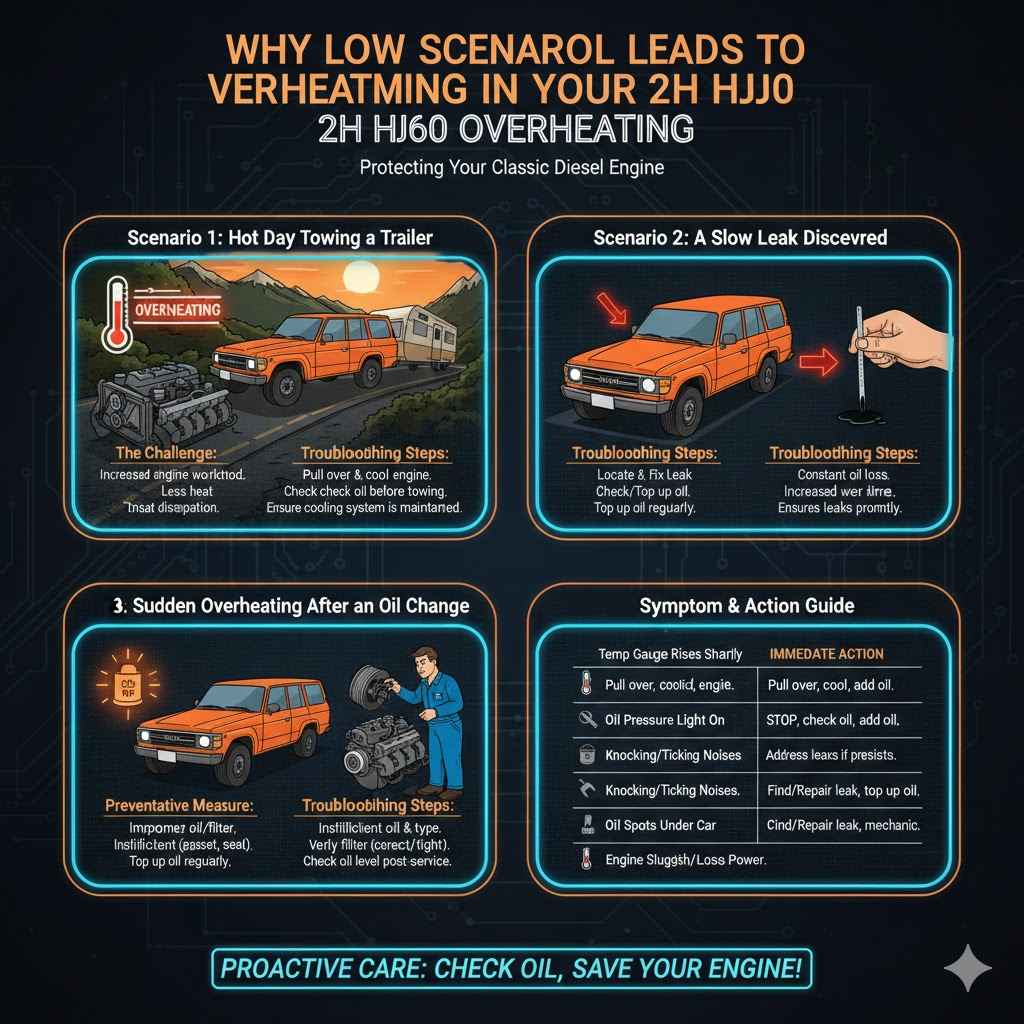
Scenario 1 A Hot Day Towing a Trailer
Imagine you are driving your 2H HJ60 on a very hot summer day, towing a medium-sized trailer. You’ve been driving for a couple of hours, and suddenly, the temperature gauge starts climbing rapidly. You haven’t checked your oil in a while, and you realize the oil level is a bit low.
The extra load from towing, combined with the high ambient temperature, puts significant stress on the engine. The reduced amount of oil is unable to adequately cool the engine under these demanding conditions, leading to overheating.
The Challenge
Towing and hot weather significantly increase the engine’s workload and heat generation. This makes any existing oil deficiency much more likely to cause overheating. The engine has to work harder to move the vehicle and trailer, producing more heat.
The hot weather means less efficient heat dissipation through the radiator.
Troubleshooting Steps
If this happens, pull over safely and let the engine cool. Check the oil level and top it up if necessary. Once cooled, restart the engine and monitor the temperature.
If it stays normal, you can continue cautiously, but it’s a good reminder to check your oil more frequently, especially when towing.
Preventative Measure
Before towing, especially in hot weather, always check your oil level and ensure it is at the full mark. Consider using a slightly higher viscosity oil if recommended for towing, and ensure your cooling system is in top condition.
Scenario 2 A Slow Leak Discovered
You notice a small oil spot under your parked 2H HJ60. After checking, you find the oil level is below the minimum mark. You top it up, but a week later, the level is low again.
You haven’t experienced any major overheating yet, but you’re concerned about the ongoing oil loss and the potential for future problems. This slow leak, if left unaddressed, can gradually deplete the engine’s oil supply.
The Challenge
A slow oil leak means a constant loss of lubricant. Even if it doesn’t cause immediate overheating, it creates a situation where the engine is always operating with less than optimal oil. This leads to increased wear and a higher risk of overheating when the engine is stressed.
Troubleshooting Steps
The immediate step is to find and fix the leak. This might involve replacing a worn gasket, a faulty seal, or tightening a drain plug. In the meantime, continue to check and top up the oil regularly to maintain the correct level.
Preventative Measure
Regularly inspect your vehicle for oil spots. Address any suspected leaks promptly. This ensures the engine always has enough oil for lubrication and cooling, preventing premature wear and overheating.
Scenario 3 Sudden Overheating After an Oil Change
You recently had an oil change, and shortly after, your 2H HJ60 starts overheating. The oil pressure light also flickers on occasion. You suspect something is wrong with the recent service.
This scenario points towards an issue with the oil change itself, most likely either the wrong type of oil was used, or the oil filter was not properly installed or is the wrong size, or not enough oil was put in.
The Challenge
An improper oil change can lead to immediate problems. If too little oil was added, the engine will not be adequately lubricated or cooled. If the wrong viscosity oil was used, it might not perform correctly at operating temperatures.
A faulty oil filter can restrict oil flow.
Troubleshooting Steps
The first thing to do is re-check the oil level. If it’s low, add more. If the level is correct, consider if the correct viscosity oil was used by referring to your owner’s manual.
Also, check if the oil filter is properly tightened and is the correct part number. If you’re unsure, it might be best to have the oil and filter professionally checked or replaced.
Preventative Measure
When getting an oil change, confirm with the mechanic that they are using the correct oil type and filter specified for your 2H HJ60. It’s also a good practice to briefly check the oil level yourself after the service, once the engine has cooled.
| Symptom | Likely Cause (Low Oil Related) | Immediate Action |
|---|---|---|
| Temperature Gauge Rises Sharply | Low Oil Level | Pull over safely, turn off engine, let cool, check oil level, add if low. |
| Oil Pressure Warning Light Illuminates | Critically Low Oil Level | Stop driving immediately, turn off engine, check oil level, add if low. |
| Knocking or Ticking Noises from Engine | Insufficient Lubrication due to Low Oil | Check oil level, add if low, listen for noise reduction. If noise persists, seek mechanic. |
| Oil Spots Under Vehicle | Oil Leak (leading to low oil) | Identify leak source, repair leak, top up oil. |
| Engine Feels Sluggish or Loses Power | Increased Friction from Low Oil | Check oil level, add if low. If issue persists, seek mechanic. |
Frequently Asked Questions
Question: Can I drive my 2H HJ60 if the oil light is on?
Answer: No, you should not drive your 2H HJ60 if the oil pressure warning light is on. This light indicates a critical lack of lubrication, and continuing to drive can cause severe and irreversible engine damage very quickly.
Question: How often should I check the oil level in my 2H HJ60?
Answer: It is recommended to check your 2H HJ60’s oil level at least once a week, and also before any long trips or heavy-duty use like towing.
Question: What happens if I overfill my 2H HJ60 with oil?
Answer: Overfilling can cause the crankshaft to whip the oil into a foam. This reduces its lubricating properties and can lead to increased pressure on seals, potentially causing leaks or damage to the engine.
Question: Is it normal for my 2H HJ60 to consume a little oil over time?
Answer: Yes, it is normal for most engines, including the 2H, to consume a small amount of oil as part of normal operation. However, significant or rapid oil loss usually indicates a problem like a leak or an internal engine issue.
Question: How can I tell if my 2H HJ60’s overheating is due to low oil or something else?
Answer: The best way is to check the oil level first. If the oil level is correct and the engine still overheats, the issue is likely something else, such as a coolant problem, faulty thermostat, or a clogged radiator.
Summary
Your 2H HJ60 can definitely overheat if its oil level is too low. Engine oil is vital for both lubrication and cooling. When the oil level drops, friction increases and heat cannot be removed effectively, leading to higher engine temperatures.
Always check your oil regularly, use the correct type, and address any leaks promptly to keep your engine cool and running smoothly.