Car Won’t Take Gas? EVAP Vent, Filler Neck & Pump Fixes
A car that won’t take gas usually has a venting problem, not a fuel-delivery problem. Fuel goes in only as fast as displaced vapor can leave the tank, so a restricted EVAP vent path, a blocked filler neck or a stuck tank valve makes the nozzle click off early. A second pump rules out the station in minutes. This guide covers that test, GM’s service bulletins on a hard-to-fill tank, EVAP codes, capless fillers and when a fuel smell means stop.
Safety first: if you smell gasoline or see fuel dripping at the filler or under the car, stop, switch the engine off, keep sparks, flames and heat away, and have a shop look at it before you drive. Honda’s manual warns that gasoline is highly flammable and explosive, and a Mazda3 recall report (NHTSA 15V-621) calls fuel leaking from a canister vent a fire risk near an ignition source.
Is It Your Car or the Gas Pump?
A nozzle that clicks off after a few cents can be the car or the station, and one free test separates them: fill at a second pump, ideally at a different station. A fault that follows you from station to station is in the car; one that disappears belonged to the first nozzle.
| What you observe | Points to your car | Points to the pump |
|---|---|---|
| Second pump at another station | Still clicks off early | Fills normally |
| Filler neck | Fuel backs up and the nozzle repeatedly shuts off | One nozzle trips, others do not |
| Check engine light | On, often with an EVAP code | No light, no code |
Won’t take gas also differs from not getting fuel, where the engine cranks but runs poorly; that is a delivery problem, covered below. A little air escaping when you open the cap is not proof of a fault either: Honda’s manual tells owners to wait until the release of air stops.
Best Code Reader Pick for EVAP Checks | |
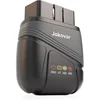 |
Jokovar Bluetooth OBD2 Scanner (iOS and Android) A plug-in code reader whose listing names an EVAP system test and engine diagnostics for most 1996 and newer OBDII-compliant gasoline cars, SUVs and light trucks sold in the US.
|
As an Amazon Associate we earn from qualifying purchases. Spec-based pick from the listing, not a hands-on test.
Fixes to Try at the Pump in Five Minutes
None of these needs tools, and the first four cost nothing. Work through them in order before booking a shop visit.
- Stop at the first click: Do not keep squeezing after the nozzle clicks off; Honda’s manual says additional fuel can exceed the full tank capacity.
- Insert the nozzle fully: Honda and Mazda manuals both say to insert the nozzle all the way.
- Check the cap or capless flap: Fit a cap until it clicks; on a capless car use only the nozzle, or the maker’s funnel for a fuel can.
- Try a second pump at another station: A fault that follows the car from station to station is in the car.
- Scan for EVAP codes: Read current and history codes with an OBD2 scanner.
Why Your Vehicle Won’t Accept Fuel
Filling a tank is an air swap. Per the EPA’s rulemaking, onboard refueling vapor recovery (ORVR) routes displaced vapor into an activated carbon canister, a seal in the fill pipe (usually the incoming liquid itself) keeps vapor from escaping, and the engine later burns the vapors off. ORVR began phasing in with model year 1998, reached 100 percent of new passenger cars in 2000, and covers essentially all new gasoline vehicles under 14,000 lb GVWR after 2006.
That is why venting matters. A MOTOR magazine diagnostic Q&A (August 2006, 2004 Ford F-150) says the nozzle senses vapor pressure in the filler neck and clicks off, and that a vent valve stuck closed will cause refueling problems. The EPA rulemaking on ORVR adds that OBD II systems monitor the purge system and vapor leaks.
Clogged Fuel Tank Vent
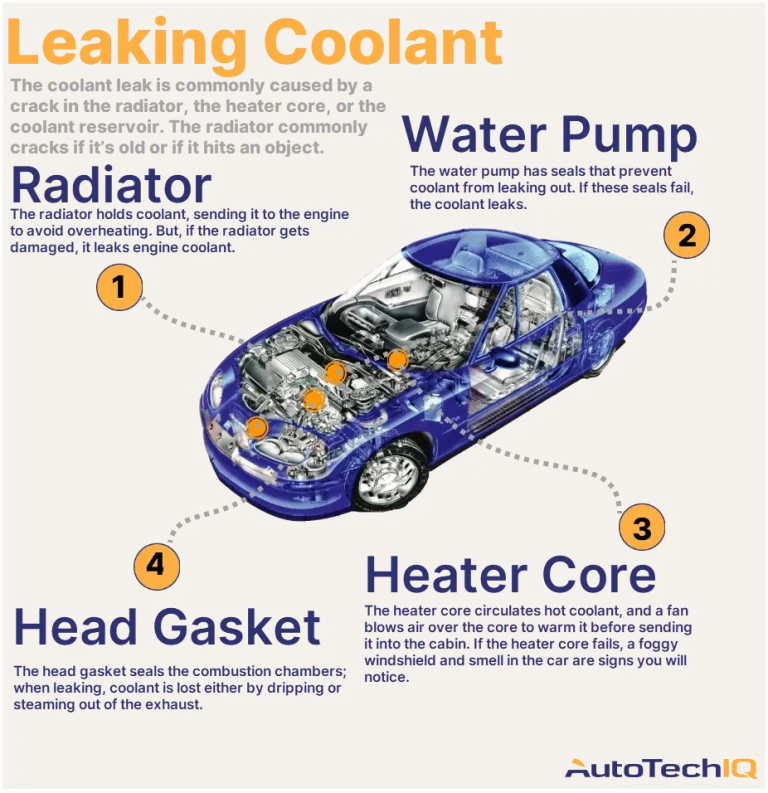
This is the best-documented cause. GM service bulletin 15-06-04-002 (2011 to 2015 Silverado and Sierra) and bulletin 09-06-04-028D (2007 to 2010 Escalade, Avalanche, Suburban 1500, Tahoe, Yukon and Yukon XL 1500) both describe a hard-to-fill fuel tank with a lit check engine light. The canister vent solenoid (CVS) valve draws fresh air through a vent on the conduit beside the fuel filler pipe; dirt and dust can restrict it, and water can corrode the valve or reach the canister and add a restriction during refueling.
GM’s fix is to replace the CVS valve assembly, and not to replace the canister unless it fails a leak test or has taken in excessive dirt, dust or water. The bulletins are written for professional technicians and apply only to the listed models, so use them to know what to ask a dealer, not as a DIY procedure.
MOTOR adds a part few owners know: the EVAP dust separator, part of the vent solenoid, can pack solid with mud on an off-road truck, so the system cannot breathe even with the vent valve open. If a solenoid or canister has already been replaced and the tank still will not fill, the restriction may lie elsewhere. A flooded canister can also upset how the engine runs.
Faulty Fuel Tank Filler Neck
MOTOR notes that many Ford trucks run a vapor vent hose through the filler neck in a tube-within-a-tube arrangement: fuel goes down the inner tube while vapor leaves through the outer one. If the inner tube separates and drops into the outer tube, the passage fills with fuel, the vapor has nowhere to go, and fuel must be added very slowly. The neck is one piece and is replaced as an assembly.
A neck can also leak: NHTSA recall 07V-348 covered filler neck assemblies on 2006 to 2007 Cadillac-based funeral coaches that could leak fuel while refueling, with fire risk near an ignition source. Fuel leaking at the neck is a stop-and-get-help situation, not a slow-fill nuisance.
Stuck Rollover Valve or Check Valve
MOTOR describes three valves. A vapor vent assembly on top of the tank limits overfilling and keeps liquid out of the vapor system in a rollover. A fill limit vent valve routes vapor to the carbon canisters during refueling and closes by float when the tank is full. A check valve in the filler pipe stops fuel flowing back up it.
A fault inside the tank needs a shop with the vehicle raised. A real case is the Mazda3 recall (15V-621): on some 2015 to 2016 cars an improperly fitted shut-off valve cap let fuel into the evaporative breather pipe and charcoal canister. The remedy was free inspection and, where needed, replacement of the canister and a fuel tank component.
Capless Fuel Fillers Fail Differently
Honda’s capless-tank manual says to insert the nozzle straight into the filler pipe, that the tank reseals when you withdraw it, and that after the automatic click-off you wait about five seconds before removing it. Ford describes its Easy Fuel capless filler the same way: removing the nozzle lets a spring-loaded filler close and latch.
The catch is fuel cans. Ford says a portable container needs the white plastic funnel kept in the cargo bin behind the last row of seats, attached to the cover on the tire-changing tools. Without it a capless neck can refuse a jerry can. Check your manual for the equivalent.
Problems with the Fuel Tank Itself
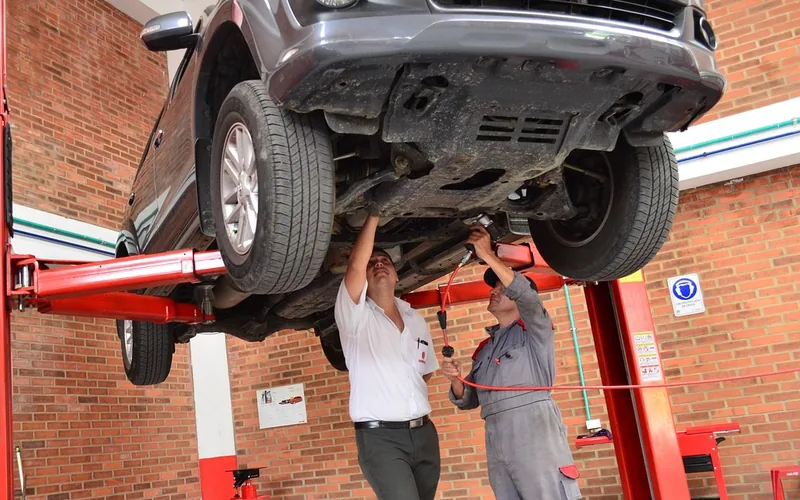
Tank-level faults are the least likely and need a lift inspection. If you also notice a gas smell around the car, treat it as a leak until a shop proves otherwise.
EVAP Trouble Codes That Point to a Refueling Problem
Both GM bulletins say technicians may find P0442, P0446, P0455 or P0449 set as current or in history, together with dust or water at the canister vent solenoid valve.
| Code | Where it appears | What to ask a shop |
|---|---|---|
| P0442, P0446 | Both GM hard-to-fill bulletins | Was the vent path tested for restriction? |
| P0455 | Both GM hard-to-fill bulletins | Did a leak test fail before parts were replaced? |
| P0449 | Both GM hard-to-fill bulletins | Is the vent solenoid circuit itself sound? |

A clean scan does not clear the car: a separated filler inner tube or a mud-packed dust separator is physical, and the bulletins say codes may be found, not that they always are. Do not clear codes to get through an inspection or bypass emissions parts; before a test, read how to tell whether your car will pass emissions.
Gas Pump and Refueling Issues
Faulty Gas Pump Nozzle
A nozzle can only react to what it senses in the filler neck, so one that trips early on every car is a station problem. If your car is the only one affected across several stations, the common factor is the car.
ORVR Vehicles Versus Vacuum-Assist Nozzles
The EPA explains that about 70 percent of Stage II sites used vacuum-assist nozzles, and that on an ORVR car the fill-pipe seal keeps vapor from reaching that nozzle, so the pump draws mostly fresh air into the station’s underground tank. That is a station emissions problem, and EPA waived the Stage II requirement in May 2012. The rule does not say it makes nozzles shut off early, so do not blame it by default.
Incorrect Refueling Techniques
Mazda’s manual says to switch the ignition off, insert the nozzle all the way and withdraw it after refueling stops automatically. Honda adds not to keep adding fuel after the nozzle stops.
Fuel Tank Overflow Prevention
Honda explains the automatic stop leaves space in case fuel expands with temperature. Fuel reaching the charcoal canister is the failure the Mazda recall describes, and an overfilled tank can also make a car stall.
Do Fuel Pump, Fuel Filter or Fuel Line Faults Stop You Filling Up?
No. The fill path runs from the filler opening through the neck to the tank, and the vent path runs through the tank valves to the canister. A fuel pump, filter and fuel lines sit in the line that feeds the engine, outside both paths.
| Component | In the fill or vent path? | What a fault does |
|---|---|---|
| EVAP vent valve, filter, canister | Yes, vent path | Hard-to-fill tank, EVAP codes |
| Filler neck, inner vent tube, check valve | Yes, fill path | Fuel backs up, nozzle shuts off |
| Fuel pump, fuel filter, fuel lines | No, they feed the engine | Delivery problems when running |
If the engine cranks but will not run, look at delivery, starting with a fuel filter serviced at the interval in your manual.
What Decides the Repair Bill When a Car Won’t Take Gas?
Prices depend on the vehicle and the actual fault, so none are quoted here. A shop proposing a canister should say which test failed, since GM says not to replace it unless it fails a leak test or has ingested excessive dirt, dust or water. GM’s labor time for the revised CVS valve repair is 0.8 hours (2007 to 2010 bulletin) or 1.1 hours (Silverado and Sierra), a labor allowance rather than a price. Ask for a written estimate, and check for open recalls by VIN with the NHTSA recall lookup.
Refueling Safety: Static, Fuel Smell and When to Stop
The Petroleum Equipment Institute (PEI) found that static electricity can ignite gasoline vapors at the pump; almost 200 reported incidents appear related to static discharge. Its three rules: turn off the engine, do not smoke, and never re-enter the vehicle while refueling. PEI has documented no incident caused by a cell phone.
Liquid fuel or a strong smell is a hazard, not an inconvenience. Honda says to stop the engine, keep heat, sparks and flame away and wipe up spills at once. If fuel is dripping, do not start the car or create sparks near it, and have it inspected.
How Maintenance Prevents Refueling Problems
- Stop at the first click. Honda says extra fuel can exceed the tank’s capacity.
- Fit the cap until it clicks. Honda and Mazda both say so; see what the gas cap does.
- Keep the maker’s funnel if your car is capless.
- Act on the first slow fill, before water or fuel reaches the canister.
This guide does not cover repair prices, which vary by vehicle, and it does not replace your owner’s manual or a technician’s inspection.
Frequently Asked Questions
Why does my gas pump keep shutting off?
The nozzle senses vapor pressure in the filler neck and clicks off, so anything that stops displaced vapor leaving the tank can trip it early: a restricted EVAP vent path, filler neck or tank valve. Fill at a second station first; if that pump behaves, the first nozzle was the problem.
What should I do if my car won’t take gas at all?
Stop squeezing the trigger, insert the nozzle fully and try a different station. On a capless filler use the nozzle only, and the maker’s funnel for a fuel can. If it still refuses fuel, have the vent path, filler neck and tank valves checked rather than forcing it.
Why won’t my car accept fuel after a fuel filter change?
The filter sits in the line feeding the engine, not in the fill path. Work near the tank can disturb vent hoses, though, so ask the shop to re-check any hose they touched for kinks, misrouting or disconnection.
What trouble code shows up when a car won’t take gas?
Two GM bulletins on a hard-to-fill tank list P0442, P0446, P0455 and P0449, set as current or in history. A physical restriction may store no code, so a clean scan does not clear the vent path.
Is it safe to drive a car that won’t take gas?
Not if you smell gasoline or see fuel dripping: switch the engine off, keep ignition sources away and get it checked. With no smell or leak, treat it as a fault to fix soon, since fuel reaching the canister can cause rough idle, stalling and in the worst case a leak.
Final Thoughts
A car that won’t take gas is far more often a vent or filler restriction than a fuel-delivery fault. Fill at a second pump, check the cap or capless flap, scan for EVAP codes, and ask a shop to test the vent path before replacing expensive parts. If there is any fuel smell or wetness, stop and sort the leak first.
Products related to this article
Sponsored / affiliate links. As an Amazon Associate I earn from qualifying purchases. I may earn additional commission from eligible campaigns.