Can Police Get Keys Out Car: Proven Essential Tips
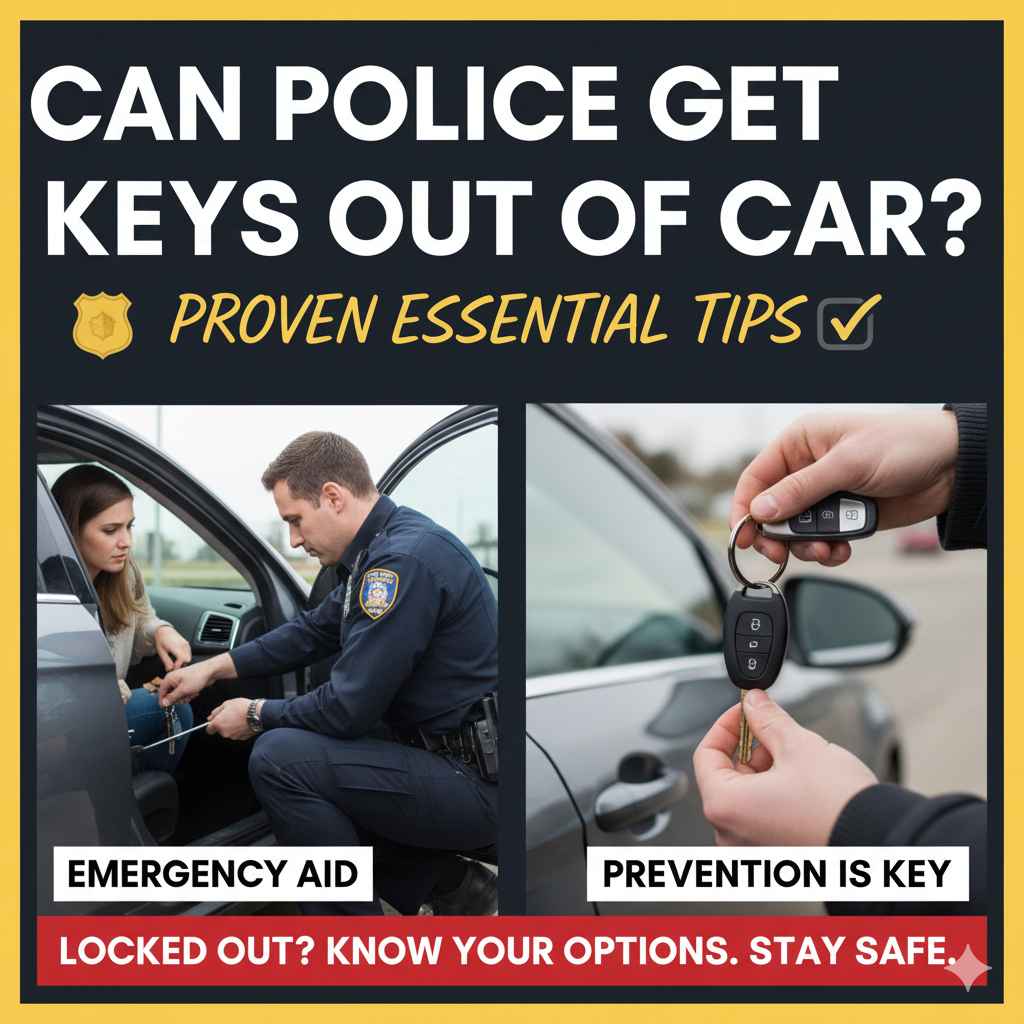
Can Police Get Keys Out of a Car? Yes, with proven techniques and specific tools. This guide explains how officers access locked vehicles safely and efficiently, ensuring your property’s integrity and providing peace of mind in emergency situations.
It’s a situation no driver wants to be in: your keys are locked inside your car, and you need to get them out, fast. Maybe you’re running late, or perhaps there’s a more urgent reason. When the panic starts to set in, one question often arises: “Can police get keys out of a car?” The short answer is yes, but it’s not as simple as just breaking a window. Police officers are trained in various methods to gain entry to vehicles when necessary, while aiming to cause minimal damage. This guide will walk you through how they do it, the tools they use, and what you can expect if you ever find yourself needing their assistance.
Understanding these methods can demystify the process and help you feel more prepared. We’ll cover the common techniques officers employ, from simple tools to more advanced approaches, all designed to resolve the situation quickly and safely. Let’s dive into how law enforcement can help you get back into your car when your keys decide to take a vacation inside.
When Might Police Need to Access Your Car?
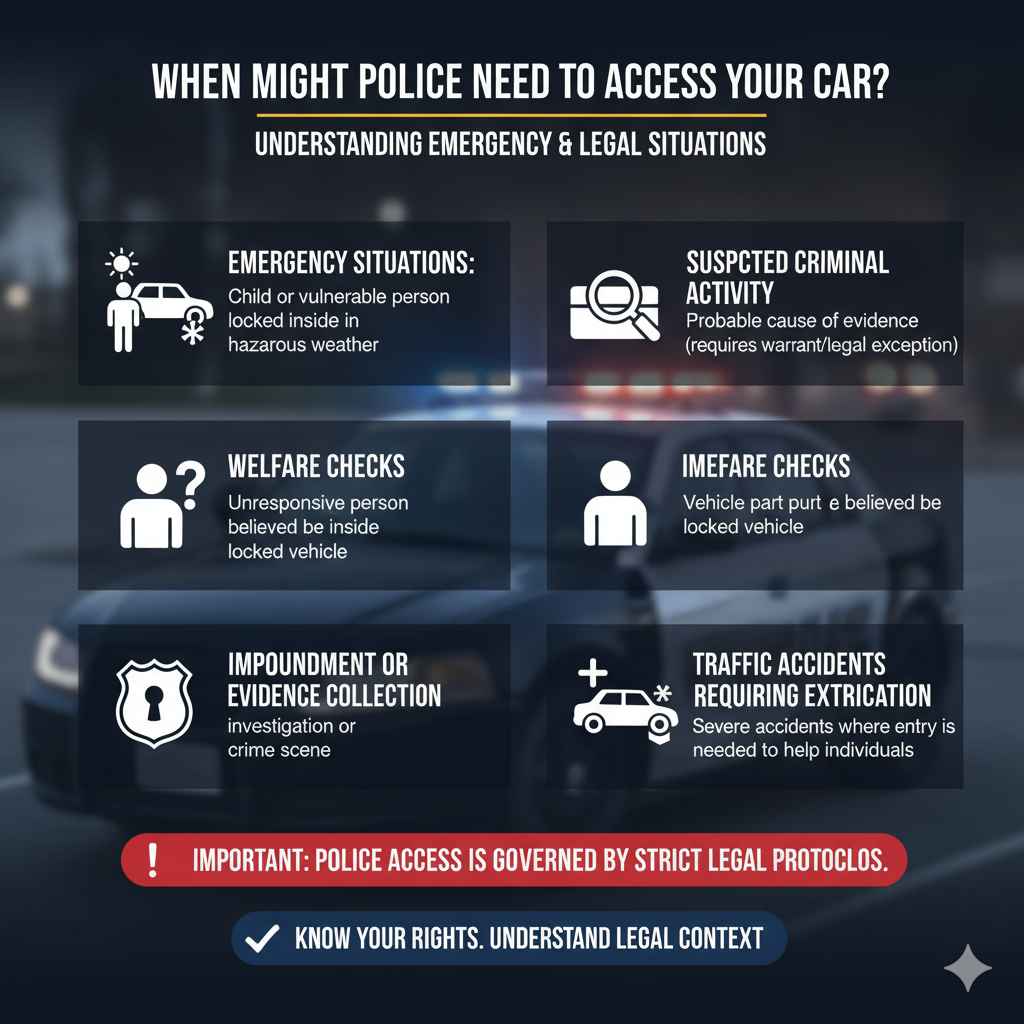
While you typically call the police for more serious matters, there are specific circumstances where they might be authorized or compelled to gain entry into a locked vehicle. It’s important to understand these situations to know when and why this might happen:
- Emergency Situations: If there’s a report of a child or vulnerable person locked inside a vehicle, especially in potentially hazardous weather conditions (extreme heat or cold), police may intervene to ensure their safety.
- Suspected Criminal Activity: If officers have probable cause to believe a crime has been committed and evidence might be inside a locked car, they may seek to gain entry. This often involves a search warrant or specific legal exceptions.
- Welfare Checks: Sometimes, police are dispatched to check on the welfare of an individual. If that person is unresponsive and believed to be inside a locked vehicle, officers may need to access the car.
- Impoundment or Evidence Collection: If a vehicle is being impounded as part of an investigation or a crime scene, officers may need to access it to secure or document its contents.
- Traffic Accidents Requiring Extrication: In severe accident scenarios, police and emergency services work together to extricate individuals from vehicles, which may involve gaining entry by any necessary means.
It’s crucial to remember that police access to your vehicle is governed by strict legal protocols to protect your rights. Unauthorized entry is a violation, but in these emergency or legal contexts, they are equipped to handle it.
How Police Get Keys Out of a Car: Proven Techniques
Police officers are trained and equipped with various tools and methods to access locked vehicles. Their primary goal is to gain entry with the least amount of damage possible. Here’s a breakdown of common techniques:
1. Slim Jim and Similar Tools
One of the most classic methods involves a “slim jim” or a similar tool. These are long, flat, and slender pieces of metal, often with a hook or a specific shape at the end.
- How it works: The tool is carefully inserted between the window glass and the weather stripping of the car door. The officer manipulates the tool to reach the internal locking mechanism or door handle linkage.
- Target: They aim to hook onto the rod that connects the exterior door handle to the lock, or the lock lever itself. A gentle pull or jiggle can disengage the lock.
- Effectiveness: This method is highly effective on older vehicles with simpler locking mechanisms. Modern cars with more complex electronic components or robust security systems can make this technique more challenging or impossible without specialized variations.
2. Wedge and Rod Method
This technique is often used when the slim jim isn’t sufficient or when more precise manipulation is needed for newer vehicles.
- How it works: First, a wedge (often an inflatable air wedge or a plastic wedge) is gently inserted between the car door and the frame. This creates a small gap, just enough to allow access.
- Next Step: Once the gap is created, a long, flexible rod or probe is inserted through the opening. This rod is used to precisely reach the interior door lock button, handle, or release.
- Advantages: This method is less invasive than forcing entry and allows for very targeted manipulation of the lock mechanism. It’s particularly useful for vehicles with flush door handles or complex internal linkages.
- External Resource: For more information on the types of tools used in automotive lockout situations, you can refer to resources like the National Institute of Standards and Technology (NIST), which sometimes discusses the physics behind such mechanisms in educational contexts.
3. Ball and String/Wire Method
A more rustic, yet sometimes effective, method found in older car models involves a ball and some ingenuity.
- How it works: A small hole might be drilled carefully (though this is less common and more destructive), or a gap is created. A string or wire is then passed through. A small ball or knot is tied to the end of the string.
- The Maneuver: The string is guided to loop around the interior lock knob. By pulling the string taut and upwards, the lock can sometimes be disengaged.
- Modern Relevance: This is largely a historical or improvised technique and less likely to be used by professional law enforcement today due to its potential for damage and the availability of better tools.
4. Specialized Lock Pick Tools
While often associated with locksmiths or, unfortunately, criminal activity, law enforcement may possess specialized lock-picking tools for specific, authorized situations. These tools are designed to manipulate the internal pins of a lock cylinder.
- How it works: A tension wrench is used to apply slight turning pressure to the lock cylinder, and a pick is used to manipulate each pin individually. When all pins are correctly set, the lock will turn.
- Application: This is a highly skillful method and is typically reserved for situations where other non-damaging methods have failed, and gaining entry is critical.
- Legality and Ethics: It’s important to note that the use of lock picking tools by individuals without proper authorization is illegal. Law enforcement’s use is strictly regulated and tied to probable cause or emergency necessity.
5. Window Punch or Glass Breaker
In true emergencies, particularly those involving immediate danger to life, officers may resort to breaking a car window. This is almost always a last resort.
- When it’s used: This is reserved for situations where time is critical, such as a child locked in a hot car, or when other methods are proving futile and the situation is escalating. For instance, the U.S. Department of Transportation emphasizes child passenger safety, and emergency responders are trained to act decisively in such situations. For more on child safety in vehicles, the National Highway Traffic Safety Administration (NHTSA) provides vital information.
- Tool: Officer’s typically carry a spring-loaded center punch or a specialized car window breaker. These tools are designed to shatter side or rear windows with minimal force, unlike tempered glass from a windshield.
- Procedure: Police are trained to aim for a corner of the side window, which is the weakest breaking point. Front windshields are made of laminated safety glass and are much harder to break.
- Post-Breakage: After breaking a window, officers will carefully remove shards of glass to prevent injury before reaching inside to unlock the door.
Tools Police Officers Use
To perform these techniques effectively and safely, police departments equip their officers with a range of specialized tools. These aren’t your average household items; they are designed for precision and minimal damage.
| Tool Name | Description | Primary Use |
|---|---|---|
| Slim Jim | Long, thin, flat metal strip, often with notches or hooks. | Reaching internal door lock mechanisms, especially in older vehicles. |
| Car Door Wedge (Air or Plastic) | Used to create a small gap between the door and frame. | Allowing insertion of other tools without damaging the door seal. |
| Long Reach Tool / Probe | Flexible, sometimes rigid rods or poles. | Manipulating interior lock buttons, door handles, or electronic releases through a door wedge gap. |
| Ball and String Tool | A string with a small ball or knot, used with a gap. | Older method for disengaging specific types of lock knobs. |
| Car Window Breaker / Center Punch | Spring-loaded or hammer-like tool with a hardened point. | Shattering side windows in emergencies when other methods fail. |
| Lock Picking Set (Specialized) | Professional tools for manipulating tumbler pins. | Rarely used by patrol officers; more for specialized units if authorized and necessary. |
The selection of tools available to an officer often depends on their specific training, the department’s equipment budget, and the types of vehicles commonly encountered in their jurisdiction. Modern vehicle security systems mean that the older, more forceful methods are less effective and less preferred.
Important Considerations for Drivers
If you find yourself locked out of your car, before you even think about calling the police, consider these points:
1. Assess the Urgency
Is this a minor inconvenience, or is there an immediate risk to someone’s safety (e.g., a child or pet in extreme weather)? If it’s an emergency, call 911 immediately.
2. When NOT to Rely on Police
For a simple lockout with no immediate danger, police are generally not the first responders. They prioritize emergency calls. In this case, your best options are:
- Roadside Assistance: If you have a service like AAA or your insurance policy includes roadside assistance, this is your go-to. They specialize in lockouts and have the right tools for the job.
- Automotive Locksmith: A professional locksmith can also assist, often faster than waiting for general roadside assistance if they are local.
- Spare Key: Do you have a spare key at home or with a friend/family member? This is the easiest solution.
3. Officer Discretion and Liability
Officers typically need a strong justification to forcibly enter a vehicle. They will assess the situation carefully. Even when they use tools like a slim jim or wedge, there’s always a small risk of minor damage, especially to older car components. Their goal is to minimize this, but it’s a possibility to be aware of. If damage occurs during a lawful entry for an emergency, it is usually handled as a necessary consequence of ensuring safety, but policies can vary.
4. Legal Protocols
If police are involved in scenarios beyond immediate emergencies (e.g., suspecting evidence of a crime), they must often follow strict legal procedures, which may include obtaining a search warrant, before they can forcibly enter your vehicle. This ensures your constitutional rights are protected.
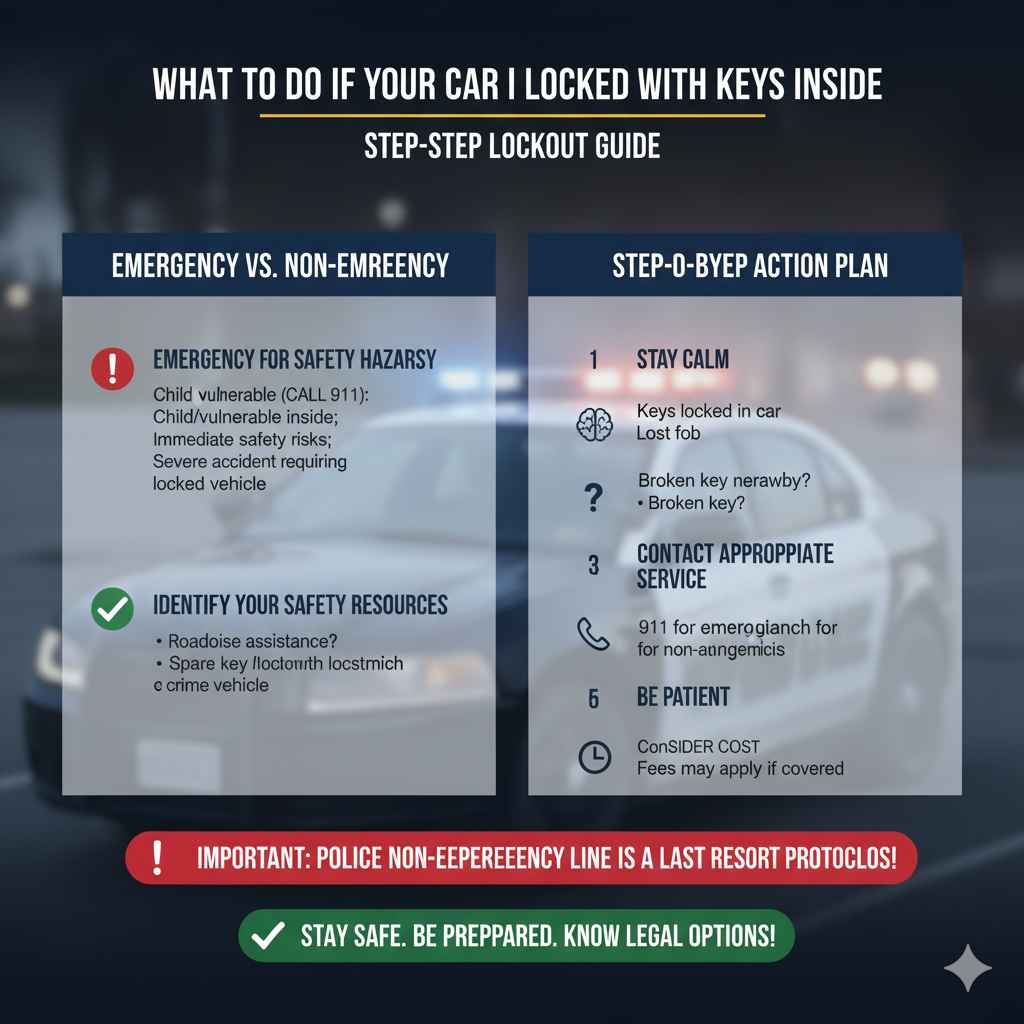
What to Do If Your Car is Locked With Keys Inside
Here’s a practical, step-by-step approach to handle a car lockout:
- Stay Calm: Panicking won’t help. Take a deep breath and assess the situation rationally.
- Check for Safety Hazards: Is anyone or anything vulnerable inside the car? Are you in a safe location? If there are immediate safety risks, call 911.
-
Identify Your Resources:
- Do you have roadside assistance (AAA, insurance provider, car manufacturer’s service)?
- Do you have a spare key nearby?
- Is there a professional automotive locksmith you can call?
-
Contact the Appropriate Service:
- For emergencies: Dial 911 (or your local equivalent).
- For non-emergencies (routine lockout): Call your roadside assistance provider or a reputable locksmith.
- Provide Clear Information: When you call for assistance, be ready to provide your location, car make and model, and a description of the problem.
- Be Patient: Depending on the service you’re using and their current workload, there might be a wait time.
- Consider Cost: Be aware that locksmiths and some roadside assistance services may charge a fee if not covered by a membership or plan.
If you have exhausted all other options and feel the situation warrants police intervention (and it’s not a clear emergency, but perhaps a critical need like getting to an urgent appointment and no other help is available), you can try calling the non-emergency police line for your local department. However, be prepared for them to likely advise you to call a private service first.
Frequently Asked Questions (FAQ)
Q1: Can police break into my car just because I’m locked out?
Generally, no. Police officers are trained to avoid unnecessary damage. For a simple lockout without an emergency, they will usually advise you to call a locksmith or roadside assistance. They typically only intervene with methods that could cause damage if there is an immediate danger or a legal reason (like probable cause for a crime).
Q2: What if a child or pet is locked in my car?
This is considered an emergency. If a child or pet is locked in a vehicle, especially in extreme temperatures, call 911 immediately. Police and emergency services are authorized to take necessary actions to rescue the individual, which may include breaking a window.
Q3: Will police charge me if they have to break into my car?
If police break into your car due to a genuine emergency (like rescuing a child), they typically do not charge you for the entry itself. However, your vehicle repair costs for the damage (e.g., a broken window) would be your responsibility. The focus in an emergency is safety, not recouping costs for damage.
Q4: How much damage can police cause when getting keys out?
Police aim to cause minimal damage. Methods like using a slim jim or wedge and probe are designed to be non-destructive. Breaking a window is a last resort for true emergencies. While they are skilled, there’s always a slight risk of cosmetic damage, especially on older vehicles.
Q5: What should I do if police damage my car while accessing it?
If police access your vehicle in an emergency and cause damage, document it thoroughly with photos and notes. You can then inquire with the police department about their procedures for damages incurred during official duties. In cases of lawful emergency intervention, repair costs are typically borne by the vehicle owner.
Q6: Are there any legal risks for police breaking into my car?
Police officers must operate within legal boundaries. They need probable cause or a warrant to search or forcibly enter a vehicle for investigative purposes. For emergencies like child rescue, their actions are usually protected under necessity and public safety laws. Unauthorized or unjustified forced entry would have legal consequences.
Conclusion
So, can police get keys out of a car? Yes, they possess the training and tools to access locked vehicles when necessary. However, it’s vital to understand that they are not a substitute for a locksmith or roadside assistance for everyday lockouts. Their intervention is typically reserved for genuine emergencies where human safety is at risk, or in specific law enforcement situations requiring vehicle entry.
For routine lockouts, your best course of action is to contact a professional service provider. This ensures your car is accessed efficiently and with the least risk of damage. Knowing the difference between an emergency requiring police attention and a situation best handled by a service specialist will save you time, money, and stress. Stay safe and prepared on the road!