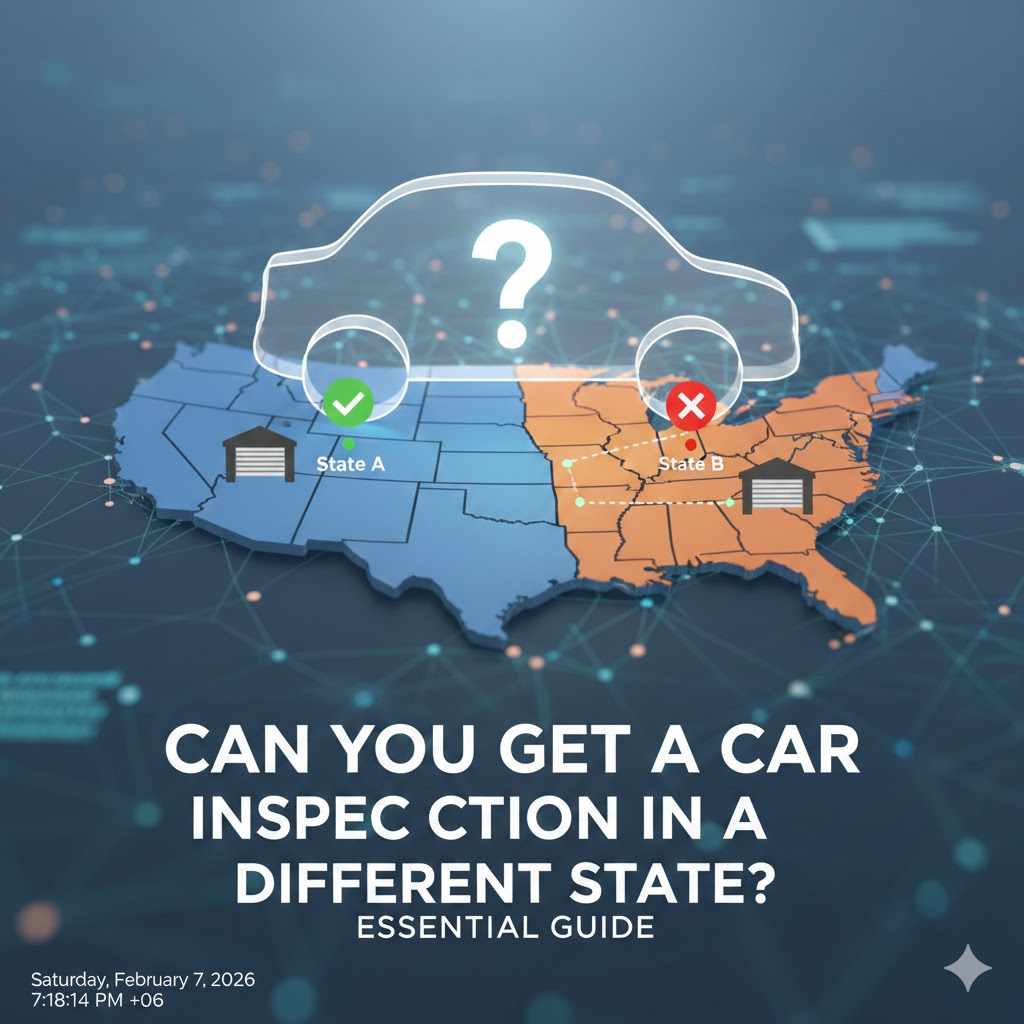
Can You Get a Car Inspection in a Different State? Essential.
Generally, you cannot get a car inspection in a different state that will be valid for the state where your vehicle is registered. Each state has its own specific safety and emissions standards, and inspection stations are only certified to test for their home state. Always check with your state’s DMV for exceptions like military or student status.
Picture this: you’re on a road trip, visiting family, or temporarily living in another state for work or school. One day, you glance at your windshield and see it—the dreaded inspection sticker is about to expire. A small wave of panic sets in. Can you just pop into a local garage and get it done? It feels like a simple problem, but the answer can be surprisingly complicated.
Don’t worry, this is a very common situation, and you’re not alone in feeling confused. Car rules can feel like a tangled web, especially when you cross state lines. But I’m here to help you untangle it. In this guide, we’ll walk through exactly what you need to know about out-of-state car inspections, step by step. We’ll cover the rules, the exceptions, and what to do so you can drive legally and safely.
Why Car Inspections Are a State-by-State Matter
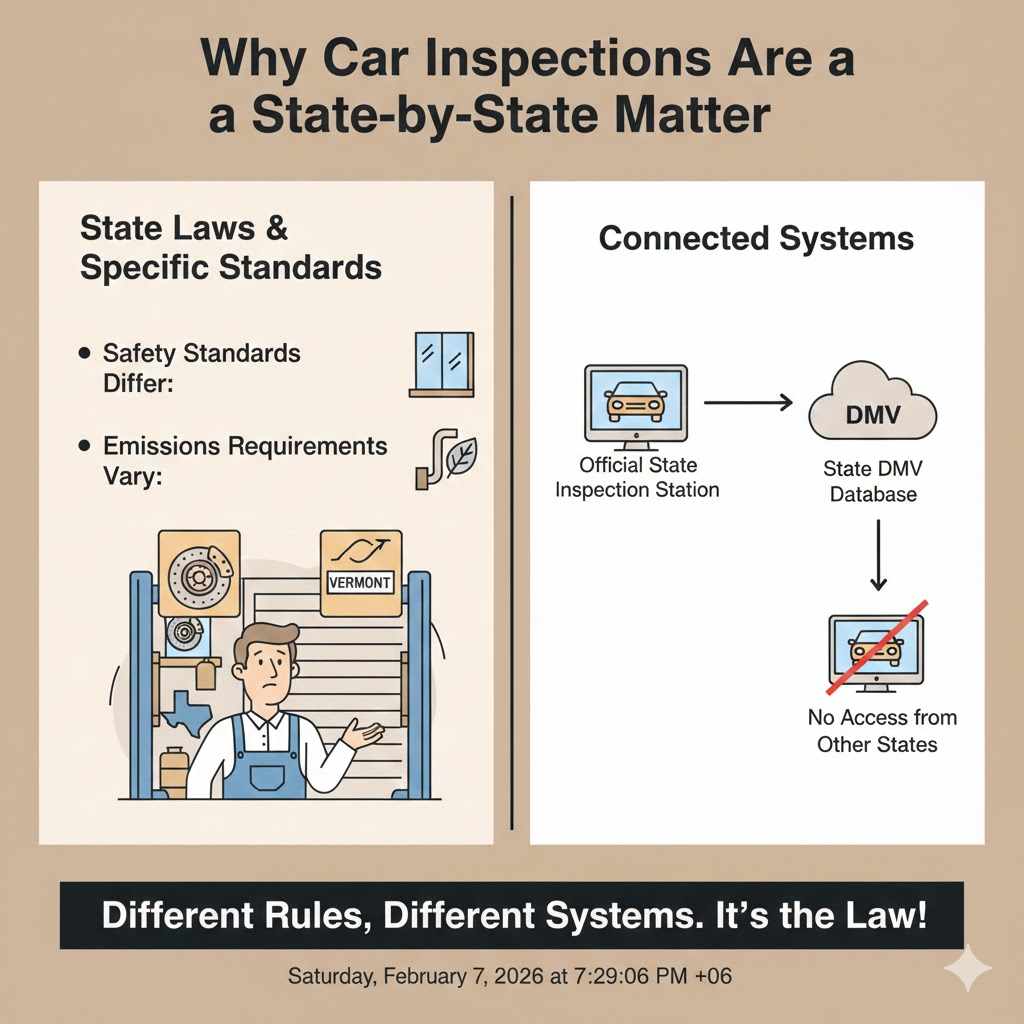
Before we dive into the “how-to,” it helps to understand the “why.” Why can’t a certified mechanic in Florida inspect a car registered in New York? It comes down to two simple reasons: state laws and specific standards.
Every state that requires vehicle inspections sets its own unique rules. These rules are designed to ensure cars on their roads are safe to drive and meet local environmental standards. A mechanic in one state is trained and licensed to follow their state’s rulebook, not another’s.
- Safety Standards Differ: What Texas considers a critical safety check for brakes might be different from what Vermont requires. One state might check your window tint, while another doesn’t.
- Emissions Requirements Vary: Air quality goals are different everywhere. A smog check in California, known for its strict environmental laws, tests for different pollutants than a check in Virginia. You can learn more about state-level emissions programs from the U.S. Environmental Protection Agency (EPA).
- Connected Systems: Official inspection stations are linked to their state’s Department of Motor Vehicles (DMV) computer system. When your car passes, the station electronically notifies the DMV. A station in another state simply doesn’t have access to that system.
Because of these differences, an inspection performed in State A has no legal standing in State B. It’s like trying to use a library card from one city in a completely different town—their systems just aren’t connected.
The General Rule: Can You Get an Out-of-State Inspection?
So, let’s get straight to the point. In almost all cases, the answer is no. You cannot get a valid car inspection for your home state while you are physically in another state.
An inspection station in Arizona is only authorized to conduct Arizona inspections. They use Arizona’s specific checklist, equipment, and stickers, and they report the results to the Arizona MVD. They have no authority or ability to perform a New York State inspection, use a NYS sticker, or report to the New York DMV.
Trying to get an out-of-state inspection is usually a dead end. The local shop will likely tell you they can only inspect cars registered in their state or that are being registered there for the first time.
Understanding the Two Main Types of Car Inspections
To better understand the process, it’s helpful to know what inspectors are looking for. Inspections generally fall into two categories, and some states require one, both, or neither.
1. Safety Inspections
This is the most common type of inspection. It’s a basic checkup to make sure your car is safe to be on public roads. A mechanic will look over the essential components of your vehicle to ensure they are working properly. Think of it as a health check for your car’s most critical parts.
Common items checked during a safety inspection include:
- Brakes (pads, rotors, and brake lines)
- Lights (headlights, taillights, brake lights, and turn signals)
- Tires (tread depth and overall condition)
- Steering and Suspension
- Windshield and Wipers
- Horn
- Mirrors
- Seatbelts
2. Emissions Inspections (Smog Checks)
An emissions inspection, or smog check, is all about air quality. Its purpose is to measure the amount of pollutants your car’s exhaust system releases into the atmosphere. These tests are usually required in and around major metropolitan areas where air pollution is a bigger concern.
During a smog check, a technician will typically:
- Connect a device to your car’s onboard diagnostic (OBD-II) port to read data from its computer.
- Visually inspect your emissions control equipment.
- Sometimes, they may test the exhaust directly from the tailpipe.
The rules for these inspections can be very different from one place to another. Below is a table showing a general overview of state inspection requirements. Important: This is for general guidance only. Laws change, so always check your official state DMV website for the most current information.
| State | Safety Inspection Required? | Emissions Inspection Required? |
|---|---|---|
| Alabama | No | No |
| California | No (but VIN verification required) | Yes (in most areas) |
| Florida | No (but VIN verification required) | No |
| New York | Yes (Annually) | Yes (Annually) |
| Pennsylvania | Yes (Annually) | Yes (in certain counties) |
| Texas | Yes (Annually) | Yes (in certain counties) |
| Virginia | Yes (Annually) | Yes (in certain counties) |
What About Special Situations? Exploring the Exceptions
While the general rule is “no,” life isn’t always simple. State governments understand that people travel, and they have created some exceptions for specific situations. If you fall into one of these categories, you may have a way forward.
Military Personnel
If you are an active-duty member of the military stationed out of state, you are almost always covered. Most states offer an exemption or a waiver for service members. Typically, you will need to:
- Complete a specific form for military personnel.
- Provide a copy of your military orders.
- Sometimes, you may be required to get a safety inspection in the state where you are stationed, even if it’s not for your home state. This is to prove the car is still safe to drive.
Always check your home state’s DMV website and search for “military exemptions” to find the exact forms and requirements.
College Students
Similar to military members, students attending college out of state often qualify for an extension or waiver. The process is usually straightforward. You will likely need to:
- Fill out a waiver or extension application.
- Provide proof of enrollment from your college or university (like a class schedule or tuition bill).
- Submit the paperwork to your home state’s DMV before your current inspection expires.
This allows you to legally drive your car until you return home for a break, at which point you must get it inspected immediately.
Extended Travel or Temporary Work
This category can be a bit trickier, as it’s less defined than military or student status. However, some states offer temporary waivers if you are out of state for an extended period for work or other personal reasons. Success here depends heavily on your state’s specific rules.
You may need to provide proof of your temporary residence, like a utility bill or a letter from an employer. It’s crucial to contact your DMV directly to explain your situation and ask about your options. Don’t assume you can get a waiver; you must apply for and receive it.
Your Step-by-Step Plan: What to Do If Your Inspection Expires While You’re Away
Okay, so you’re out of state and your sticker is expiring next week. Here is a clear, actionable plan to follow. The key is to be proactive!
- Don’t Panic, Find Your State’s DMV Website: Your first and most important step is to visit the official DMV or equivalent agency website for the state where your car is registered. Do not rely on third-party sites. A quick search for “[Your State] DMV car inspection” will get you there. A great resource is the official U.S. government portal that links to all state DMVs: USA.gov Motor Vehicle Services.
- Look for “Waivers,” “Extensions,” or “Exemptions”: Once on the site, use the search bar to look for terms like “out-of-state inspection,” “inspection waiver,” or “inspection extension.” This is where you’ll find information about the special circumstances we discussed (military, student, etc.) and the necessary forms.
- Gather Your Documents: The website will list exactly what you need. This could be a copy of your driver’s license, vehicle registration, proof of insurance, and specific documentation for your situation (e.g., military orders, proof of college enrollment, a signed letter).
- Submit Your Application as Instructed: Follow the directions carefully. You may need to mail, fax, or email your application and supporting documents. Pay close attention to deadlines—you must do this before your current inspection expires.
- Keep Proof With You: Once your waiver or extension is approved, print out a copy of the confirmation email or the official document. Keep this in your glove compartment with your registration and insurance at all times. If you get pulled over, this document will prove you are in compliance with the law.
- Get Inspected Immediately Upon Return: A waiver is not a permanent pass. It’s a temporary solution. The law requires you to get your vehicle inspected within a very short timeframe after you return to your home state, often within 10 days. Don’t delay!
What Happens If You Drive with an Expired Inspection Sticker?
Ignoring an expired inspection sticker is not a good idea. While it might seem like a minor issue, it can lead to frustrating and expensive consequences. The risks include:
- Tickets and Fines: This is the most common outcome. A police officer can pull you over and issue a ticket for an expired sticker. Fines can range from a small warning to several hundred dollars, depending on the state and how long it has been expired.
- Parking Tickets: In some cities, parking enforcement officers can issue tickets for expired inspection stickers on parked cars.
- Registration Problems: In many states, you cannot renew your vehicle registration without a valid, current inspection. Driving with an expired registration is a much more serious offense.
- Safety Risks: Most importantly, an inspection is a safety check. Driving with an expired sticker might mean you’re unaware of a serious issue with your brakes, tires, or steering. The sticker isn’t just red tape; it’s a part of keeping you and others safe on the road.
Here’s a look at how different states might handle an expired sticker. Again, this is for illustration—always check your local laws.
| State | Potential Penalty for Expired Inspection |
|---|---|
| New York | Fine between $25 and $50 for less than 60 days expired. Up to $100 if over 60 days. Parking ticket can also be issued. |
| Texas | Fine can be up to $200. This is a “fix-it ticket” in some cases, meaning if you get it fixed and show proof, the fine may be reduced. |
| Virginia | Considered a traffic infraction. Police can issue a ticket. You cannot be pulled over solely for an expired sticker (within the first four months of expiration), but they can add it to another ticket. |
How to Prepare for Your Inspection (Once You’re Back Home)
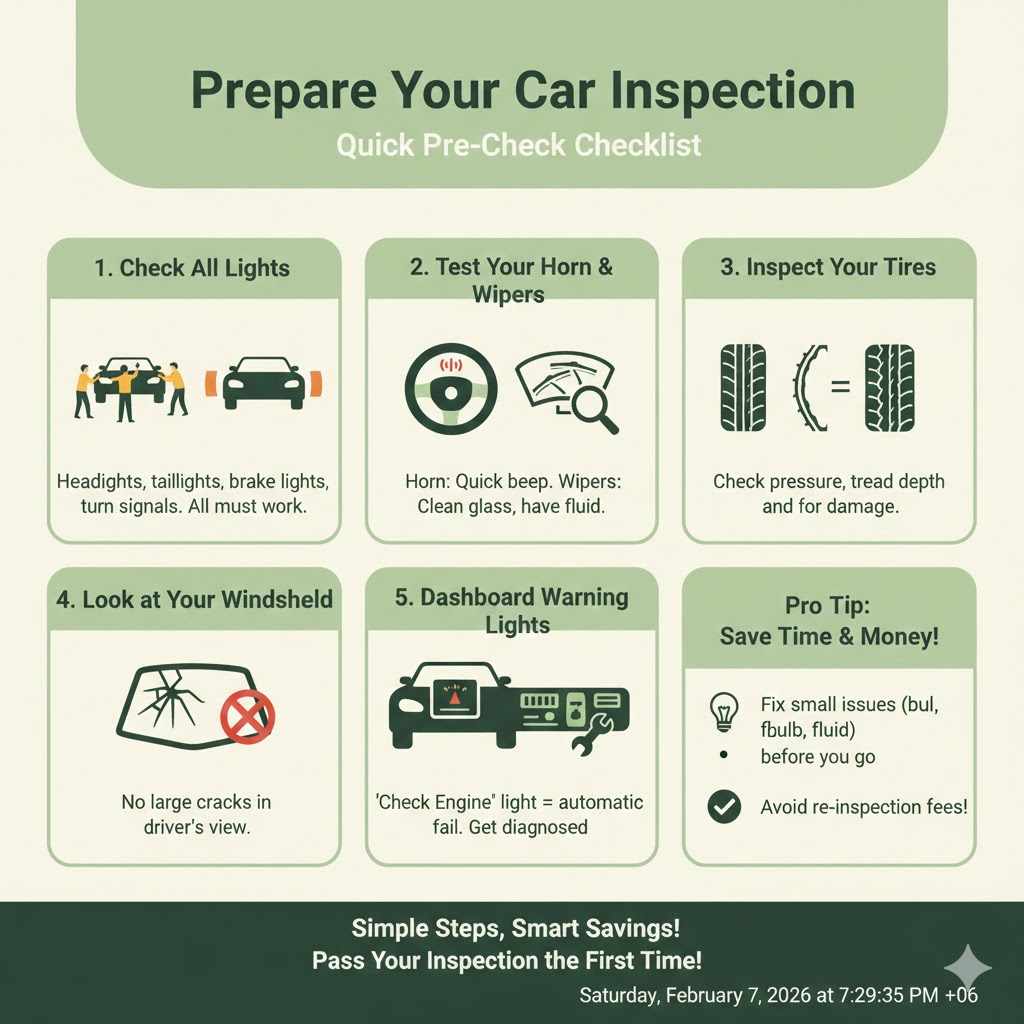
Once you’ve returned to your home state, you’ll need to get your car inspected right away. You can save yourself time and money by doing a quick pre-inspection check yourself. Here’s a simple checklist:
- Check All Lights: Have a friend help you. Test your headlights (high and low beams), taillights, brake lights, reverse lights, and turn signals.
- Test Your Horn: Give it a quick beep.
- Inspect Your Tires: Look for any obvious damage. Check the tire pressure and make sure the tread isn’t worn down to the wear bars.
- Look at Your Windshield: Check for any large cracks that obstruct the driver’s view.
- Test Your Wipers: Make sure the wipers clean the glass effectively and that you have washer fluid.
- Check for Dashboard Warning Lights: If your “Check Engine” light is on, your car will automatically fail an emissions test. Get this issue diagnosed and fixed before your inspection.
Fixing a burned-out bulb or adding washer fluid beforehand can be the difference between passing and failing, saving you the hassle of a second trip.
Frequently Asked Questions (FAQ)
Can I just get my car inspected early before I leave?
Yes, in many states you can! Most states allow you to get your vehicle inspected up to 90 days before the current sticker expires. If you know you’ll be traveling, getting it done early is the smartest and easiest solution.
What if my car fails the inspection when I get back?
If your car fails, the inspection station will give you a report detailing what needs to be fixed. You’ll have a set amount of time (often 15-30 days) to make the repairs and get a free or discounted re-test at the same station. Don’t worry, it’s a common and fixable problem.
How long is a car inspection good for?
This depends on your state. Most states require an annual inspection, so it’s good for one year. Some states require inspections every two years, and others have different rules for new cars versus older ones.
Do brand new cars need an inspection?
Often, no. Many states exempt brand new vehicles from their first few years of inspections (especially emissions tests). A new car sold by a dealer will come with a valid sticker. Check your state’s DMV website for the rules on new vehicles.
Can I renew my vehicle registration without a current inspection?
In states that require inspections, you almost always cannot renew your registration without one. The inspection is a prerequisite for registration renewal. The systems are linked, so the DMV will know if your inspection is not up to date.
What’s the difference between vehicle registration and inspection?
Registration is the official record that links you to your car. It proves ownership and gives you the legal right to use the car on public roads. It’s what your license plates are tied to. An inspection is a recurring safety and/or emissions test required to ensure your registered vehicle remains roadworthy and compliant with state laws.
Will an out-of-state “courtesy” inspection help me at all?
While it won’t be legally valid for your home state, getting a basic safety check at a reputable shop out of state can give you peace of mind that your car is safe to drive. However, it will not get you a valid sticker or satisfy your home state’s legal requirement.
Conclusion: Driving with Confidence and Peace of Mind
Navigating the rules of car ownership can feel overwhelming, but as we’ve seen, the issue of out-of-state inspections is pretty straightforward. The key takeaway is simple: your car needs to be inspected in the state where it is registered. An inspection from any other state just won’t count.
But being away from home when your sticker expires doesn’t have to be a crisis. By understanding the exceptions for students, military members, and other travelers, you can stay on the right side of the law. The most powerful tool at your disposal is your state’s official DMV website. It holds all the forms, rules, and contact information you need.
Remember to be proactive. If you know you’ll be traveling, get your inspection done early. If you’re already away, apply for a waiver before it’s too late. Taking these small steps will save you from the stress of potential tickets and ensure your vehicle is safe for every journey. Drive safely, and drive smart!