Blinker Fluid: Real or a Joke? What Fast Signals Mean
Blinker fluid does not exist: a car’s turn signals flash because of a bulb and a flasher circuit, not a fluid. The name is a classic prank played on new drivers at parts counters and in family garages, and a novelty bottle of it is sold as a gag gift. This guide explains what actually makes a turn signal blink, what a fast, slow or dead blinker really means, and how LED bulbs can make it blink too fast.
What Is Blinker Fluid Supposed To Be?
Best Blinker Fluid Gag Gift Pick
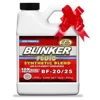 |
Jergrim Blinker Fluid Funny Gag Gift (novelty bottle)
|
As an Amazon Associate we earn from qualifying purchases. Spec-based pick from the listing, not a hands-on test.
In the joke, blinker fluid is the liquid that supposedly keeps your turn signals working and has to be topped up like oil. It is made up. There is no reservoir, no dipstick and no service interval for it, and nobody sells a real automotive product by that name.
Turn signals click, blink at a steady pace and sometimes speed up for no obvious reason. That behavior has real causes, and none of them is fluid.
How a Turn Signal Really Works
When you move the lever, current flows to the lamps on that side and a flasher switches it on and off. Sylvania’s installation guide describes it this way: most turn signal circuits monitor lamp operation and must report a lamp outage. On many cars the flasher is a separate relay that can be replaced, which Sylvania notes is one fix for LED bulbs. On others the body control module does the job, as in GM’s own service bulletin for Silverado and Sierra trucks, where the module checks the rear turn signal circuit.
That monitoring is why the blink rate carries information. A faster rhythm is the car’s way of saying something in that circuit changed.
What Fast, Slow or Dead Blinkers Really Mean
Instead of topping up a fluid, work through the lamps and the circuit. This table keeps to what the lamp maker, the GM service bulletins and the Hyundai manuals actually say.
| What you see | What the sources say | What to do first |
|---|---|---|
| Blinks faster than normal | Sylvania: the circuit speeds up the flash when a lamp fails. GM bulletin PIT5152 (2012 GMC Acadia): the module watches current draw, and bulbs or a faulty rear lamp circuit board can put it out of range. | Walk around the car with the signal on and look for a dead bulb. Replace it with the same type. |
| Indicator stays on but does not flash | Hyundai 2024 manual: if the indicator stays on and does not flash, or flashes abnormally, one of the turn signal bulbs may be burned out. | Check the bulbs on that side; if they are fine, see a dealer or shop. |
| Indicator does not light at all | Hyundai manuals list a signal that does not illuminate as a possible turn signal malfunction and say to have the vehicle inspected. | Have it inspected; do not guess at wiring. |
| Blinks fast right after an LED swap | Sylvania: lower wattage can be read as a failed lamp and trigger hyper-flash. | Use an LED-rated flasher relay if the car has a replaceable one, or a load equalizer on each lamp. |
| Message such as Check turn signal | Hyundai 2024 manual: the message appears if the turn signal lights are not operating properly; replace the burned-out bulb with one of the same wattage rating. | Match the wattage exactly. |
Why LED Bulbs Can Make Your Blinker Fast
This is the real-world version of the blinker fluid mystery. Sylvania says the incandescent turn signal lamps a car shipped with generally use 21 to 27 watts. When one burns out, the drop in power is what tells the car to flash fast. Put in an LED, which uses much less, and the car can read the lower wattage as a failure even though the lamp works. Sylvania’s wording is that the lower operating wattage could be misinterpreted by the vehicle as a lamp failure, triggering hyper-flash.
Two fixes are named in Sylvania’s guide:
- An LED-rated flasher relay. Sylvania says vehicles with replaceable flasher relays can swap the original for an appropriate LED-rated one. Many newer cars have no separate flasher, so this is not always possible.
- A load equalizer (load resistor). Sylvania describes it as a 6 ohm power resistor wired in parallel with each LED lamp, with one needed per lamp.
A resistor trades one problem for another. Sylvania’s guide warns that it gets extremely hot, can stay hot after use, and must be screwed to a flat metal surface away from heat-sensitive parts. At 13.5 volts it can dissipate up to 30 watts while the lamp is lit, averaging about 15 watts when a signal blinks, and in Sylvania’s controlled test it rose about 65 C (149 F) above the surrounding air. In a brake circuit it can rise about 115 C (239 F). The guide also says a load equalizer bypasses the bulb-out warning, so you lose the car’s alert when a bulb actually fails. See the Sylvania load equalizer installation guide before fitting one.
Some Trucks Skip the Check Entirely
Not every vehicle works the same way. GM’s July 2023 service bulletin 07-08-42-006S, covering 2007 to 2024 Silverado and Sierra pickups, describes rear turn signal software that checks two bulbs, one bulb, or, on box-delete and chassis cab trucks, no bulbs at all, so the indicator flashes at the same rate however many are out. GM notes the fast flash is required by Federal Motor Vehicle Safety Standard 108. See the GM bulletin on NHTSA for the original text.
How to Replace a Burned-Out Turn Signal Bulb
Every car is different, so use your own owner’s manual. As one example, Hyundai’s 2025 U.S. owner’s manual (the bulb replacement page) describes a bulb-type front turn signal like this:
- Engage the parking brake and disconnect the negative battery cable.
- Remove the wheel guard clips under the front bumper and push the wheel guard aside.
- Turn the bulb socket counterclockwise to remove it.
- Press the bulb in and rotate it counterclockwise until it releases, then pull it out.
- Fit the new bulb, turn the socket back in until it locks, and refit the wheel guard in reverse order.
The same page says to wear eye protection, let the bulb cool before handling it, never touch the glass with bare hands because residual oil may cause the bulb to overheat and burst when lit, and replace a cracked bulb immediately. It also says an LED turn signal cannot be replaced as a single unit and must be handled by a dealer. If your car’s signal is LED, there may be no bulb to swap. For other bulbs, see how to change a light bulb in a car and how to turn on both blinkers.
Is Blinker Fluid Real? Only as a Prank Gift
The twist is that you can buy it. Novelty sellers bottle empty or non-functional containers labeled blinker fluid and sell them as stocking stuffers and white elephant gifts, as in our pick near the top of this page. The bottle is real; what is sold is the joke, not a car product.
Actual Car Fluids
If you came looking for the fluids a car really does use, these are the main ones. The right type and level are in the owner’s manual:
- Engine oil: lubricates the engine and has a dipstick.
- Coolant: carries heat away from the engine and is toxic, so keep it away from children and pets.
- Brake fluid: works the hydraulic brake system; see do all cars have brake fluid and how to check brake fluid.
- Transmission fluid: used by automatic transmissions on cars that have a serviceable system.
- Washer fluid: cleans the windshield; see what washer fluid is for.
A puddle under the car is more useful to diagnose than any imaginary fluid, so see how to tell what fluid is leaking from a car if you spot one. The turn signal lamps, along with headlights and tail lights, run on wiring and bulbs, and if a fuse is involved, why car fuses keep blowing is the place to start.
Other Classic Fake Car Part Pranks
Blinker fluid is one of a family of made-up parts used to tease newcomers at parts counters and garages:
- Muffler bearings: a muffler has no bearings to wear out.
- Headlight fluid: headlights are electrical lamps and use no fluid, just like blinkers.
- Left-handed screwdriver: a workshop prank across many trades, not just cars.
- Exhaust bearings: another invented part built on the same everything-has-bearings joke.
- Tire rotation fluid: tires are rotated by swapping their positions, not with a fluid.
If a part or fluid only ever comes up as the punchline, check your owner’s manual or simple car maintenance tips before believing it. The same goes for other car folklore such as whether warming up your car is a myth.
When to See a Professional
- The signal blinks fast, slow or not at all and every bulb on that side checks out: the flasher, the wiring or a module may be at fault, and Hyundai’s manuals say to have the vehicle inspected by a dealer in that case.
- The signal is LED and has failed: some LED units cannot be replaced one bulb at a time.
- You are thinking about fitting load resistors: they get extremely hot, so ask a shop to fit them if you are not sure where they can be mounted safely.
- You smell burning or see melted plastic near a lamp: stop using that circuit and have it checked.
Turn signals tell other drivers what you are about to do, so a dead one is worth fixing promptly rather than driving around with it.
Frequently Asked Questions
What Is Blinker Fluid?
Blinker fluid is a made-up car part used as a joke on people new to cars. No vehicle has a fluid reservoir for its turn signals; they run on electricity, with a bulb or LED in each lamp and a flasher circuit that makes it blink.
Do Cars Need Blinker Fluid?
No. Turn signals need no fluid. If a signal acts up, the owner’s manuals and lamp makers point to bulbs, the flasher circuit or wiring instead.
Why Do People Mention Blinker Fluid?
It works as a prank because it sounds plausible to a new driver. The same trick shows up with other invented parts, listed in the section on fake car parts above.
Are There Any Fluids For Car Lights?
No. Headlights, brake lights and turn signals are electrical lamps. The fluids a car really uses are things like engine oil, coolant, brake fluid, transmission fluid and washer fluid, and none of them goes to a lamp.
Can You Actually Buy Blinker Fluid?
You can buy a bottle labeled blinker fluid, but it is a novelty gag gift, not a car product. See our gag gift pick near the top of this page, and do not pour anything from a novelty bottle into a vehicle.
Why is my turn signal blinking fast?
On most cars a fast flash means the system sees a bulb that is out or drawing too little current. Sylvania says turn signal circuits monitor the lamp and speed up the flash to report an outage, and the 2024 Hyundai manual says to replace a burned-out bulb with one of the same wattage rating.
Why do LED turn signal bulbs blink fast?
LED bulbs draw far less power than the 21 to 27 watt incandescent lamps many cars shipped with, and the car can read that as a failed lamp. A load resistor or an LED-rated flasher relay is the fix named by Sylvania.
What Other Fake Car Parts Do Mechanics Joke About?
Blinker fluid has company: muffler bearings, headlight fluid, exhaust bearings and the left-handed screwdriver. Each one sounds like a part but has no use on a real car.
What This Guide Does Not Cover
This guide does not give bulb part numbers, fuse ratings or wiring diagrams, because they differ by make, model and year; use your owner’s manual or the lamp maker’s bulb finder. It also does not cover trailer wiring or aftermarket sequential turn signals.
Conclusion
Cars do not have blinker fluid; the only blinker fluid you can buy is a gag gift. When a turn signal misbehaves, check the bulbs first, remember that LEDs can trip the car’s outage detection, and have a professional look at anything that stays odd after the bulbs check out.
Products related to this article
Sponsored / affiliate links. As an Amazon Associate I earn from qualifying purchases. I may earn additional commission from eligible campaigns.