Car Protection for Dogs: Seat Covers, Barriers and Safety Gear
The seat cover or barrier itself is only part of the job — most dog “safety” harnesses sold online have never passed an independent crash test. Only three states (Hawaii, New Jersey, and Rhode Island) have laws that specifically require a dog to be restrained in a moving vehicle, but an unsecured 60-pound dog in a 30 mph crash hits with roughly the same force as a small car, which is why the right gear matters even where it isn’t legally required.
This guide covers the four main types of dog car protection (seat covers, cargo liners, barriers, and harnesses), what independent crash testing actually shows about harness safety, which states have restraint laws and what they fine, and how to pick gear that fits your specific car and dog.
Why Dog Car Protection Matters
An unrestrained dog in a moving car is both a mess risk and a safety risk. Loose fur, mud, drool, and scratching claws wear down upholstery fast, and a dog that can move freely around the cabin is a documented driving distraction — the AAA Foundation for Traffic Safety has flagged unrestrained pets as a distraction category alongside phones and food. In a crash or hard stop, an unsecured dog becomes a projectile: at 30 mph, a 60-pound dog exerts roughly 1,350 pounds of force, enough to seriously injure both the dog and anyone in the front seat.
Seat covers, cargo liners, and barrier guards solve the mess and distraction problems. Only a properly fitted, tested harness or a secured crate solves the crash-force problem — and as the next section explains, most harnesses on the market haven’t been proven to do that.
WATERPROOF BACK SEAT COVER
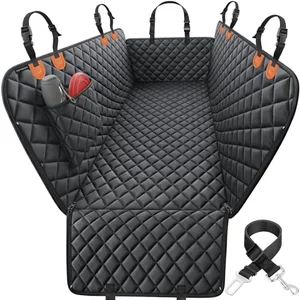 |
URPOWER Dog Car Seat Cover – $26.59 A hammock-style cover like this handles the mess side of dog car protection this guide covers — it converts a back seat into a fully enclosed, waterproof area with side flaps to protect the doors too.
|
Types of Car Protection for Dogs
Most dog car gear falls into four categories, and they solve different problems. Many owners end up combining two or three.
| Type | What It Protects | Typical Price | Restrains the Dog? |
|---|---|---|---|
| Seat cover / hammock | Upholstery from fur, mud, scratches | $20–$45 | No |
| Cargo liner | Trunk/cargo area in SUVs and hatchbacks | $30–$70 | No |
| Barrier or gate | Keeps dog out of the front seat/driver area | $25–$60 | Partially (confines, doesn’t crash-restrain) |
| Harness or crate | The dog itself, in a crash or hard stop | $25–$90 | Only if independently crash-tested |
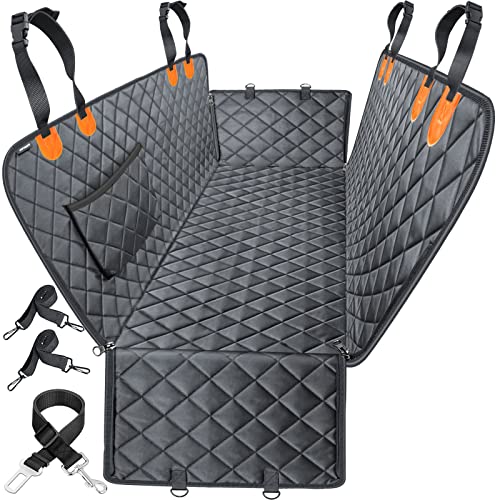
Seat covers are the most common starting point — a waterproof cover, usually 600D polyester, that drapes over the back seat and clips to the headrests. Hammock-style covers add side flaps that hang down to protect the door panels and prevent a dog from sliding into the footwell during braking.
Cargo liners serve the same purpose for the trunk or rear cargo area of an SUV or hatchback, and typically come with raised side walls to contain spills, mud, and loose fur, plus a bumper flap that protects the paint and bumper when the dog jumps in and out.
Barrier guards mount behind the front seats or across the cargo opening to physically block a dog from climbing into the driver’s area — a real distraction and liability risk, since a dog in your lap or on the console can interfere with steering or pedal access.
Harnesses and secured crates are the only category that addresses crash force directly, which is why the next section is worth reading before buying one.
Is Your Dog’s Harness Actually Crash-Tested?
Here’s the part most product listings don’t tell you: a harness labeled “safety” or “crash-tested” often means the manufacturer ran its own test, not that it passed an independent one. The Center for Pet Safety (CPS), a nonprofit that runs pet-restraint tests using the same crash-force standards (FMVSS 213) used for child car seats, has tested dozens of harnesses over the years. In its widely cited 2013 study of 11 harness brands, only one — the Sleepypod Clickit Utility — passed without a catastrophic failure. Most either broke at the anchor point, let the dog fly forward off the seat, or failed to keep the dog on the seat at all.
As of the most recent CPS certifications, the Sleepypod Clickit Sport and Clickit Terrain are certified for dogs up to 110 pounds, and the ZuGoPet Rocketeer Pack has an independent 5-star result for small dogs under about 25 pounds. If crash protection (not just keeping the dog on the seat) is the goal, look specifically for a harness that lists CPS certification — not just a manufacturer’s own “tested” claim — and check that the tether adjusts short enough (6 inches or less) to keep the dog from being thrown forward on impact.
A seat cover or barrier doesn’t replace this. They keep a dog contained and your seats clean, but only a properly fitted, independently certified harness or a secured, crash-tested crate addresses what happens in an actual collision.
Do You Legally Have to Restrain Your Dog in the Car?
Only three U.S. states currently have laws that specifically require dogs to be restrained in a moving vehicle:
| State | Requirement | Fine |
|---|---|---|
| Hawaii | Dog must be restrained so it can’t fall, jump, or be thrown from the vehicle | $97 (dog on driver’s lap), $57 (loose pet) |
| New Jersey | Pet must ride in a carrier or wear a seat belt/harness | $250–$1,000 |
| Rhode Island | Pet must be under a passenger’s control or restrained by a crate, harness, or seat belt | Up to $200 |
Every other state does not have a dedicated “dogs must be restrained” statute, but a loose dog can still get you cited under a general distracted-driving law if it’s judged to be interfering with your control of the vehicle, and it can affect fault or insurance claims after an accident regardless of whether a specific pet-restraint law exists where you live. Check your own state’s current distracted-driving statute before a long trip, since these rules do get updated.
How to Choose the Right Seat Cover or Barrier
- Material: Look for 600D or heavier polyester with a waterproof (not just water-resistant) coating — thinner fabric tears under claws within a few trips.
- Fit: Measure your back seat width and depth before buying. A cover that’s too small leaves gaps where fur and dirt reach the upholstery; one that’s too large bunches up and becomes a tripping hazard for the dog.
- Anchoring: Covers should clip around the headrests and have a nonslip rubber backing so the whole cover doesn’t slide forward under braking.
- Seatbelt access: If you carry human passengers in the same seat, confirm the cover has a slit or buckle-through opening for the seat belt — some hammock-style covers block it entirely.
- Side protection: Side flaps that hang over the door panels matter if your dog scratches at the door or leans against it — plain flat covers leave the doors exposed.
Installation and Care Tips
Most seat covers and barriers install without tools. Loop the headrest straps first, then pull the cover taut and clip or buckle any lower anchor points before letting the dog in — a loose cover is what causes bunching and slipping. For hammock-style covers, tuck the side flaps down between the seat and door before the first drive so they seat correctly against the door panel.
- Vacuum loose fur off the cover before washing — it clogs washing machine filters otherwise.
- Machine-wash on cold with the straps tucked in or in a mesh bag to prevent snagging.
- Check clips and buckles for cracking every few months — plastic hardware is usually the first part to fail.
- Re-check harness tether length periodically; webbing stretches slightly over time and a tether that’s grown past 6 inches of slack no longer meets CPS’s short-tether standard.
Frequently Asked Questions
How Can I Protect My Car Seats From Dog Hair?
A waterproof seat cover made of 600D polyester or similar heavy fabric is the most effective fix — it traps hair, dirt, and moisture on a removable surface instead of your upholstery. Vacuum the cover regularly and machine-wash it every few weeks to keep it from matting or holding odor.
Are Dog Seat Belts and Harnesses Actually Crash-Tested?
Most are not, despite marketing claims. Independent crash testing by the Center for Pet Safety has found that the majority of harnesses fail under real crash-force conditions. Look specifically for CPS-certified products, such as the Sleepypod Clickit line, rather than a generic “tested” label on the packaging.
Is It Illegal to Drive With an Unrestrained Dog?
Only in Hawaii, New Jersey, and Rhode Island do state laws specifically require restraining a dog in a moving vehicle, with fines ranging from about $57 to $1,000. Elsewhere, a loose dog can still lead to a distracted-driving citation if it interferes with your control of the car, and it can affect fault in an accident claim.
What’s the Difference Between a Seat Cover and a Cargo Liner?
A seat cover protects the back seat of a sedan or SUV where a dog rides upright. A cargo liner protects the trunk or rear cargo floor of an SUV or hatchback, typically for a dog that rides loose in the back with raised side walls to contain mess. Some owners use both if the dog moves between the back seat and cargo area.
How Do I Keep My Dog Calm During Car Rides?
Start with short trips to build tolerance before a long drive, bring a familiar blanket or toy, and secure the dog with a harness or crate so it can’t pace or climb around the cabin — inability to move freely often reduces anxiety rather than increasing it. Keep the car cool and take breaks every couple of hours on longer trips.
Can I Use a Barrier Instead of a Harness?
A barrier keeps a dog out of the front seat and driver’s area, which addresses the distraction risk, but it does not restrain the dog’s body during a crash or sudden stop the way a properly fitted, crash-tested harness does. For full protection, most safety-focused guides recommend a barrier combined with a harness or secured crate, not a barrier alone.
Conclusion
A waterproof seat cover or cargo liner solves the mess side of traveling with a dog quickly and cheaply. Solving the safety side takes one more step: checking that any harness you buy carries independent crash certification, such as from the Center for Pet Safety, rather than trusting a manufacturer’s own “crash-tested” claim. Combine a seat cover for cleanup, a barrier if your dog tries to reach the front seat, and a certified harness or secured crate for actual crash protection, and you’ve covered both problems this gear exists to solve.
Products related to this article
Sponsored / affiliate links. As an Amazon Associate I earn from qualifying purchases. I may earn additional commission from eligible campaigns.