Chevy 6 Lug Pattern Explained: Fitment Chart, Adapters, and Common Mistakes
You found a set of used take-off wheels from a 2026 Silverado for a steal. You own a 2026 Tahoe. The bolt holes look right, the tires have tread, so you buy them. Then the wheel won’t seat flush, the lugs strip, or the whole thing vibrates at 60 mph. That’s the reality of guessing with the Chevy 6 lug pattern.
This guide covers the exact specifications you need to avoid that expensive mistake. You’ll learn the precise bolt circle, the differences between half-ton and mid-size trucks, and why the center bore matters more than most people think. We’ll also cover when wheel adapters make sense and when they create problems.
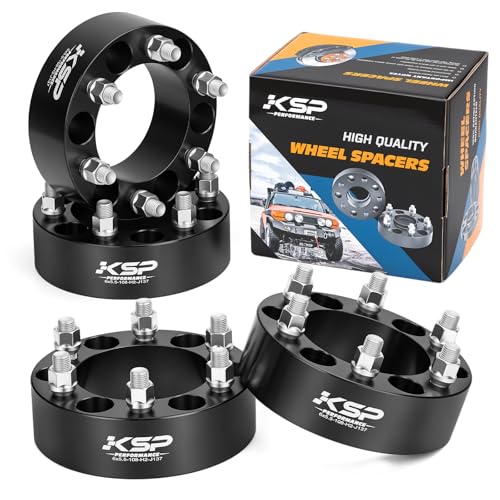
KSP PERFORMANCE
KSP 6x5.5 Wheel Spacers for Chevy Silverado…
- Universal Fitment: 1999-2026 Escalade, 1999-2026 Silverado 1500, 2001-2026 Tahoe, 2000-2014 Suburban 1500, 2003-2014 Express 1500,…
- Specification: Bolt Pattern:6x5.5"(6x139.7mm), Hub Bore:108mm, Thickness:2"(50mm), Stud/Nut Thread Pitch:14mmx1.5, Recommended tor…
- Build Quality: The 6x5.5" wheel adapters are made from the FORGED 6061-T6 aluminum billet, stronger than casting. Heat treated and…
By the end, you’ll know whether those take-offs fit your specific truck or SUV before you hand over any cash.
If you find your wheels sit too far inward or you want to run a wider tire, a set of quality spacers like the KSP 6x5.5 wheel spacers can push the track out by two inches. They bolt onto your existing hub and convert the pattern to accept your stock wheels with a wider stance.
The Chevy 6-Lug Pattern Explained (6×5.5 vs. 6×139.7)
Chevy uses one dominant 6-lug pattern for most half-ton trucks and full-size SUVs. It is called 6×5.5 inches in the standard measurement system. In metric, it’s 6×139.7 millimeters. These are the same measurement, not two different patterns.
The first number (6) is the number of lug studs. The second number is the diameter of the circle that passes through the center of each stud. For a 6-lug wheel, you measure from the center of one stud to the center of the stud directly opposite it. That distance is 139.7mm, which equals 5.5 inches when you divide by 25.4.
Do not round 139.7mm to 140mm when shopping. Some aftermarket wheels list 6×140, and that slight difference can cause lug nuts to seat improperly or the wheel to sit off-center. Stick to the exact spec: 6×139.7.
Comprehensive Chevy 6-Lug Fitment Chart (By Model & Year)
Here’s where most online guides fall short. They tell you the pattern and stop. But the center bore and lug seat type vary across models, and those differences determine whether a wheel actually fits safely.
Half-Ton Trucks (Silverado 1500, Sierra 1500)
Most Silverado 1500 and GMC Sierra 1500 models from 1999 through 2026 use the 6×5.5 pattern. The center bore is 108mm. The studs are M14x1.5. The lug nut seat is a 60-degree conical (cone) shape.
A 2026 or newer Silverado uses the same bolt pattern and center bore as a 2026 model. That means wheels interchange between those generations physically. The offset and tire diameter may differ, but the mounting surface specs are identical.
SUVs (Tahoe, Suburban, Yukon, Trailblazer)
The Tahoe, Suburban, and Yukon follow the same specs as the Silverado 1500 for most model years. You get the 6×139.7 pattern, a 108mm hub bore, and M14 studs. This applies from the GMT400 generation through the current models.
The Trailblazer is the exception. The original Trailblazer (2026-2026) used a 6×5.5 pattern but with a slightly different hub bore of 70.3mm. The new 2026+ Trailblazer is a completely different vehicle with a 5x105mm pattern. Do not assume the name means the same fitment.
Mid-Size Trucks (Colorado, Canyon)
The Colorado and Canyon are where Chevy 6 lug patterns get confusing. First-generation models (2026-2026) use a 6×5.5 pattern with a 78.1mm hub bore. The studs are M12x1.5, not M14.
Second-generation Colorado and Canyon models (2026-2026) switched to a 6x120mm pattern. That’s a completely different bolt circle. A wheel from a Silverado will not fit a 2026 Colorado. A wheel from a 2026 Colorado will not fit a 2026 Colorado. Always check the generation-specific spec.
| Model | Years | Bolt Pattern | Hub Bore | Stud Size |
|---|---|---|---|---|
| Silverado 1500 | 1999-2026 | 6×139.7 | 108mm | M14x1.5 |
| Sierra 1500 | 1999-2026 | 6×139.7 | 108mm | M14x1.5 |
| Tahoe / Yukon | 1995-2026 | 6×139.7 | 108mm | M14x1.5 |
| Suburban 1500 | 1992-2026 | 6×139.7 | 108mm | M14x1.5 |
| Trailblazer (old) | 2026-2026 | 6×139.7 | 70.3mm | M12x1.5 |
| Colorado / Canyon | 2026-2026 | 6×139.7 | 78.1mm | M12x1.5 |
| Colorado / Canyon | 2026-2026 | 6×120 | 64.1mm | M14x1.5 |
Critical Variations: Stud Thread, Center Bore, and Lug Seat Types
Three specs beyond the bolt circle determine if a wheel mounts safely. Get any of them wrong and you risk wheel separation.
Stud thread pitch. Half-ton trucks use M14x1.5. Mid-size trucks from the first generation use M12x1.5. A lug nut from a Silverado will not thread onto a Colorado stud. The pitch is different, and forcing it will strip the threads.
Center bore. The hub bore is the hole in the center of the wheel that fits over the vehicle’s hub. For most full-size Chevys, that’s 108mm. If you install a wheel with a larger bore, the wheel is lug-centric, meaning the lug nuts center it. If the bore is smaller than 108mm, the wheel simply will not fit over the hub.
Lug seat type. Chevy half-ton trucks use a 60-degree conical seat. Some aftermarket wheels use a ball seat (usually found on Ford and some European cars) or a flat seat (common on commercial trucks). Using the wrong seat type means the lug nut contacts the wheel at the wrong angle, which can crack the wheel or cause the nut to loosen. The KSP spacers listed above use M14x1.5 studs and are designed for the conical seat, so they match the factory spec for most full-size GM trucks.
6-Lug vs. 8-Lug: Why It Matters for Towing and Upgrades
You’ll see 8-lug wheels on Chevy 2500 and 3500 trucks. Those use a 8x180mm pattern. The 6-lug pattern is reserved for 1500-series trucks and SUVs rated for lighter duty.
The lug count itself doesn’t determine towing capacity. The axle, frame, brakes, and suspension do. But the 6-lug hub is typically paired with a semi-floating rear axle, while 8-lug trucks use a full-floating axle. A full-floating axle carries the vehicle weight on the axle housing, not the axle shaft. That design handles heavier loads and more stress.
If you tow near the maximum rating of a 1500, the 6-lug setup is fine. If you plan to exceed that rating or regularly tow heavy loads, moving to a 2500 with 8 lugs is the right call. Adapters exist to convert a 6-lug hub to 8-lug, but that does not increase your truck’s payload or towing capacity. It only changes the wheel mounting surface. The axle underneath remains the weak link.
How to Measure Your Bolt Pattern Correctly (Even Number vs. Odd Number)
If you have a wheel in hand and you’re not sure what it fits, measuring is straightforward. For an even number of lugs (6, 8), measure from the center of one stud to the center of the stud directly across from it. That’s the bolt circle diameter.
For an odd number of lugs (5), the measurement is different. You measure from the center of one stud to the outer edge of the stud directly opposite it. That’s why a 5×5 pattern and a 5×4.75 pattern look similar but don’t interchange.
Use a tape measure or a caliper for accuracy. A tape measure can give you a rough reading, but a caliper is precise to the millimeter. If you measure 139.7mm, you have the Chevy 6-lug. If you get 120mm, you have a newer Colorado or a Jeep Gladiator wheel.
Using Wheel Adapters and Spacers: Pros, Cons, and Safety Risks
Wheel adapters change the bolt pattern. Wheel spacers push the wheel outward without changing the pattern. The KSP product mentioned earlier is technically a spacer that uses the same 6×139.7 pattern on both sides, moving the wheel 2 inches outward.
Here’s what adapters and spacers actually do well:
- Fix brake caliper clearance issues when upgrading to larger brakes
- Allow you to run wheels with a different offset or backspacing
- Widen the track for a more aggressive stance and improved cornering stability
- Enable fitment of tires that would otherwise rub on the frame or suspension
Here’s the risk side. A spacer adds another set of mechanical joints to the wheel assembly. Every joint is a potential failure point if not torqued correctly. The KSP spacer uses forged 6061-T6 aluminum and hardened 10.9 grade bolts, which addresses the material quality concern, but installation still requires care.
Torque the lug nuts to the recommended spec. For the KSP unit, that’s 85-95 ft-lbs. Re-torque after 50-100 miles of driving. Use the included thread locker on the adapter-to-hub bolts. If you skip that step, the adapter can loosen over time, causing a vibration that feels like a bad wheel balance.
One more thing: a 2-inch spacer changes the scrub radius and puts more load on the wheel bearings. That’s fine for street use and occasional off-roading, but it’s not ideal for heavy towing. The extra leverage from a wider track increases bearing stress.
Common Fitment Mistakes and How to Avoid Them
Most fitment failures come down to a few repeatable errors. Here’s how to spot them before they cost you.
Wrong center bore. A wheel with a 108mm bore fits a Silverado perfectly. A wheel with a 110mm bore will bolt on but vibrate because the hub isn’t centering the wheel. The lug nuts center it, but they’re not designed for that job alone. Use hub-centric rings if the wheel bore is larger than the hub.
Ignoring the offset. The bolt pattern is only half the fitment equation. A wheel with the correct 6×139.7 pattern can still rub the brake caliper or stick out past the fender if the offset is wrong. Factory Chevy wheels typically have a positive offset between +24mm and +31mm. Aftermarket wheels vary widely.
Assuming all 6-lug Chevys match. We covered this above, but it bears repeating: a 2026 Colorado wheel does not fit a 2026 Silverado. The bolt patterns are different (6×120 vs 6×139.7). Always verify the generation-specific spec.
Using the wrong lug nuts. If your aftermarket wheels have a different seat type than factory, you need new lug nuts. Don’t reuse the factory conical-seat nuts on a wheel designed for a ball seat. They won’t seat properly, and the wheel will loosen.
If you’re considering swapping wheels between different brands, check our guide on whether Toyota 6-lug wheels fit Chevy before you buy. The bolt pattern might match, but the hub bore and offset often don’t.
Frequently Asked Questions (FAQs)
What is the exact Chevy 6 lug pattern?
The Chevy 6 lug pattern is 6×5.5 inches, which is the same as 6×139.7mm. This applies to most Silverado 1500, Tahoe, Suburban, and Yukon models from the 1990s through current production.
Will Chevy 6 lug wheels fit a Ford?
Some Ford F-150 models use a 6x135mm pattern. That’s close to 6×139.7 but not identical. The 4.7mm difference means the wheel will not mount correctly. You need an adapter or a wheel with the correct pattern. Ford Rangers use 6×135 as well, so the same limitation applies.
Can I put 8-lug wheels on my 6-lug truck?
Yes, with a wheel adapter that converts 6×139.7 to 8×180. But this does not increase your truck’s towing capacity or payload rating. The axle and suspension are still rated for the lower capacity. Only do this if you have a specific wheel you want to run, not to gain capability.
Do wheel spacers affect tire wear?
They can. A spacer changes the scrub radius, which alters how the tire tracks over bumps and how the alignment settings interact with the road. If the alignment isn’t adjusted for the new track width, you may see accelerated edge wear. It’s worth checking alignment after installing spacers.
How do I know if my wheels are hub-centric or lug-centric?
If the wheel’s center bore matches the hub diameter exactly, it’s hub-centric. The hub carries the weight and centers the wheel. If the bore is larger than the hub, the wheel is lug-centric, meaning the lug nuts do the centering. Most factory Chevy wheels are hub-centric. Many aftermarket wheels are lug-centric unless you add hub rings.
Final Verdict: Are All Chevy 6 Lugs the Same?
No. The bolt circle is the same across most full-size models, but the center bore and stud size vary between generations and vehicle classes. A Silverado and a first-generation Colorado share the 6×139.7 pattern, but the Colorado uses a smaller bore and M12 studs. A second-generation Colorado uses a completely different pattern.
Before you buy wheels, confirm four things: the bolt pattern, the center bore, the stud thread size, and the lug seat type. Write them down. Match them against the wheel spec sheet. If any one of those four is off, the wheel doesn’t fit safely.
Here’s what to remember:
- Full-size Chevy trucks and SUVs use 6×139.7mm with a 108mm bore and M14x1.5 studs.
- Mid-size trucks (Colorado, Canyon) changed patterns after 2026 to 6x120mm.
- Measure the bolt circle from stud center to stud center for 6-lug wheels.
- Never round 139.7mm up to 140mm when ordering wheels.
- Hub-centric fitment is safer than lug-centric for daily driving.
- Wheel spacers and adapters work well when torqued properly and re-checked after 100 miles.
- Adapters do not change your truck’s towing capacity.
Take the 15 minutes to verify your specs before you buy. It beats the alternative of a wheel coming loose at highway speed.
Products related to this article
Sponsored / affiliate links. As an Amazon Associate I earn from qualifying purchases. I may earn additional commission from eligible campaigns.