Chevy 6 Lug Bolt Pattern Explained (And Why Getting It Wrong Is Dangerous)
You just picked up a set of used wheels from a guy down the road. They look perfect, the price was right, and they came off a Silverado. But when you try to mount them on your Colorado, the lug holes line up and the wheel still wobbles. Or worse, you buy spacers without checking the hub bore and your truck shakes at 60 mph.
This is the reality of Chevy 6-lug wheel fitment. The pattern is shared across many GM trucks and SUVs, but the details — thread size, center bore, torque specs — vary enough to cause real problems if you ignore them. This guide walks through everything you need to know: what the pattern actually is, which models use it, how to measure it, and the safety risks of getting it wrong.
KSP PERFORMANCE
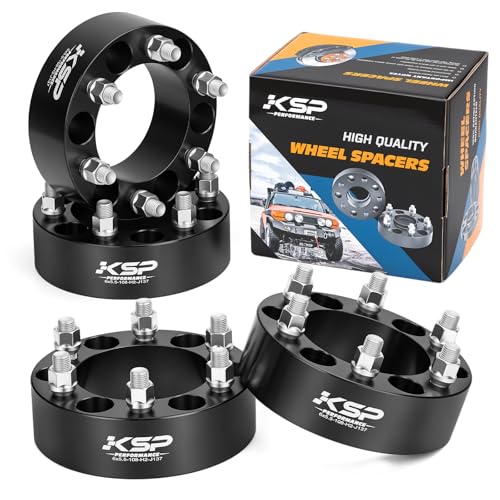
KSP 6x5.5 Wheel Spacers for Chevy Silverado…
- Universal Fitment: 1999-2026 Escalade, 1999-2026 Silverado 1500, 2001-2026 Tahoe, 2000-2014 Suburban 1500, 2003-2014 Express 1500,…
- Specification: Bolt Pattern:6x5.5"(6x139.7mm), Hub Bore:108mm, Thickness:2"(50mm), Stud/Nut Thread Pitch:14mmx1.5, Recommended tor…
- Build Quality: The 6x5.5" wheel adapters are made from the FORGED 6061-T6 aluminum billet, stronger than casting. Heat treated and…
You’ll leave with the confidence to buy wheels, spacers, or adapters without second-guessing yourself. Let’s start with the basics.
If you’re planning to install wheel spacers or adapters, a quality set like the KSP 6x5.5 wheel spacers can help you achieve a wider stance or clear larger brakes. These are forged from 6061-T6 aluminum and come with hardened studs, which is exactly what you want for a safety-critical part.
What Is the Chevy 6-Lug Bolt Pattern?
The Chevy 6-lug bolt pattern is commonly called 6×5.5 inches or 6×139.7 millimeters. The first number tells you how many lug holes the wheel has (six). The second number is the diameter of the circle that passes through the center of those holes — the bolt circle.
So 6×5.5 means six lugs arranged on a circle that measures 5.5 inches across. In metric, that same circle is 139.7 mm. Both numbers mean the same thing, and you’ll see either used on product listings, forums, and spec sheets. Don’t let the units confuse you.
This pattern has been a GM truck standard for decades. It’s used on half-ton pickups, heavy-duty 2500/3500 models (though those often use 8-lug), and many full-size SUVs. It’s also shared with some other brands, but we’ll get to that later.
Chevy Models That Use the 6×5.5 (6×139.7mm) Pattern
Here’s a quick rundown of the most common Chevy and GMC vehicles that use the 6×5.5 pattern. This isn’t exhaustive, but it covers the vast majority of what you’ll encounter.
- Silverado 1500 – 1999 to present (some later models may have different options, but the bolt pattern stays the same)
- GMC Sierra 1500 – 1988 to present
- Colorado / Canyon – 2026 to 2026 (the newer 2026+ models use 6×5.5 as well, but check the hub bore)
- Tahoe / Yukon – 1995 to present
- Suburban 1500 – 1992 to present
- Avalanche 1500 – 2026 to 2026
- Express / Savana 1500 – 2026 to present
If you own a 2500 or 3500 series truck, stop right here. Those use an 8-lug pattern (8×6.5). Don’t try to force a 6-lug wheel onto an 8-lug hub. It won’t work, and it’s a safety hazard.
One thing to note: the bolt pattern alone doesn’t guarantee a wheel will fit. You also need to match the center bore and the lug seat type. We’ll cover those next.
Are All Chevy 6-Lug Patterns the Same? (Spoiler: No)
Here’s where people get into trouble. The 6×5.5 pattern is the same across many models, but the thread pitch and center bore differ. A wheel that fits a 2026 Silverado might not bolt onto a 2026 Silverado without the right lug nuts or hub rings.
Thread Size Variations (M12 vs. M14)
Chevy used two different stud sizes on 6-lug trucks: M12x1.5 and M14x1.5. The M12 studs are thinner, about 12 mm in diameter. The M14 studs are thicker, at 14 mm.
Older models, like the 1999-2026 Silverado and 2026-2026 Tahoe, use M12x1.5 studs. Starting around 2026, GM switched most half-ton trucks to M14x1.5. That’s a big difference. If you put an M14 lug nut on an M12 stud, it will strip the threads immediately. If you use M12 nuts on M14 studs, they won’t even start.
Always check the stud size before buying lug nuts or wheels. The KSP wheel spacers mentioned earlier come with M14x1.5 studs, which is correct for most 2026+ Chevy trucks. For older trucks, you’d need a different adapter.
Center Bore Differences Across Models
The center bore is the hole in the middle of the wheel that fits over the hub. On Chevy trucks, this is typically 108 mm or 78.1 mm, depending on the model and year.
For example, the 1999-2026 Silverado has a center bore of 78.1 mm. The 2026+ Silverado uses 108 mm. If you mount a wheel with a 108 mm bore on a 78.1 mm hub, it will sit loose and vibrate. You’ll need hub-centric rings to fill the gap.
Wheel spacers and adapters also have a center bore. The KSP spacers have a 108 mm bore, which matches the newer trucks. If you have an older model, you need to verify the hub bore matches your vehicle.
How to Measure a 6-Lug Bolt Pattern Correctly
If you’re unsure what pattern your wheels have, you can measure it yourself. Here’s how to do it for a 6-lug wheel.
- Lay the wheel flat on the ground, face down.
- Pick any lug hole and measure from the center of that hole to the center of the hole directly opposite it. For a 6-lug pattern, that’s the hole across the diameter.
- That distance is the bolt circle diameter. For Chevy trucks, it should be 5.5 inches (139.7 mm).
If you’re measuring a 5-lug wheel, the method is different. You measure from the back of one hole to the center of the opposite hole. But for 6-lug, it’s center to center across the diameter.
Double-check your measurement. A common mistake is measuring between adjacent holes, which gives you about 4.75 inches — that’s a different pattern entirely.
Chevy 6-Lug Wheel Fitment: Torque Specs and Tightening Sequence
Once you have the right wheels, you need to install them correctly. Torque specs are critical. Too loose and the wheel can come off. Too tight and you can warp the rotor or strip the studs.
For most Chevy 6-lug trucks, the recommended torque is 140 ft-lbs for steel and aluminum wheels. Some sources say 100-140 ft-lbs, but 140 is the standard for half-ton trucks. For the KSP wheel spacers, the recommended torque is 85-95 ft-lbs for the adapter-to-hub bolts, and then the wheel lug nuts to 140 ft-lbs.
Here’s the correct tightening sequence:
- Hand-thread all lug nuts to avoid cross-threading.
- Use a torque wrench to tighten each nut to about half the final spec (70 ft-lbs) in a star pattern.
- Then go around again in the same star pattern and tighten to the full 140 ft-lbs.
- After driving 50-100 miles, re-torque the lug nuts. They can settle as the wheel seats.
The star pattern is crucial. It ensures even pressure across the wheel. If you tighten in a circle, you can warp the rotor or cause the wheel to sit unevenly.
Wheel Spacers and Adapters: Risks You Must Know
Wheel spacers and adapters are popular for giving your truck a wider stance or fitting bigger tires. But they come with real risks if you choose cheap or incorrect parts.
The main risk is lug-centric vs. hub-centric. A hub-centric spacer sits snugly on the hub, so the wheel is centered by the hub. A lug-centric spacer relies on the lug nuts to center the wheel. Lug-centric is more common and works fine if the tolerances are tight, but hub-centric is safer for high-speed driving.
Another risk is changing the scrub radius. Moving the wheel out 2 inches changes the steering geometry. You’ll feel a difference in how the truck handles. It’s not dangerous, but it takes getting used to.
There’s also the legal side. In many states, wheel spacers are legal, but they must meet certain standards. If you’re in an accident and an investigator finds that spacers caused a failure, your insurance might not cover it. Check your local laws and your insurance policy before installing spacers.
If you do go with spacers, buy from a reputable brand. The KSP spacers are forged, not cast, which means they’re stronger and less likely to crack. They also come with hardened studs and a 30-day refund, 12-month replacement policy.
Brake Clearance and Wheel Size Compatibility
Newer Chevy trucks often have larger brake calipers, which can interfere with smaller wheels. If you’re upgrading to bigger brakes or trying to fit 17-inch wheels on a truck that came with 18s, you might run into clearance issues.
The caliper can hit the inside of the wheel barrel, or the wheel weights can scrape. A common fix is to use wheel spacers to push the wheel out slightly, giving the caliper more room. The KSP spacers are 2 inches thick, which is enough to clear most oversized calipers.
But be careful: 17-inch wheels are the minimum for most half-ton Chevy trucks. 16-inch wheels won’t clear the brakes on 2026+ models. Check your specific model’s brake package before buying wheels.
Chevy 6-Lug vs. Ford 6×135: Don’t Mix Them Up
Ford uses a 6-lug pattern too, but it’s different. Ford’s is 6×135 mm (about 5.31 inches). That’s close to Chevy’s 6×139.7, but not the same. If you try to install a Ford wheel on a Chevy, the lug holes won’t line up. You might be able to force one or two lugs, but the others will be off by a few millimeters. That’s enough to cause vibration and dangerous stress on the studs.
Some aftermarket wheels are drilled with multiple patterns, like 6×135 and 6×139.7, to fit both. Those are fine, but always verify which pattern you’re using.
Load Rating and Towing: Why Wheel Choice Matters
Wheels have a load rating, which is the maximum weight they can support. If you’re towing or hauling heavy loads, you need wheels rated for that weight.
For a Silverado 1500, the factory wheels are typically rated for at least 2,500 lbs each. That gives you a total capacity of 10,000 lbs, which covers the truck’s GVWR plus a margin. Aftermarket wheels might have a lower rating, especially cheap ones. Check the load rating stamped on the wheel before you buy.
Also consider the tire load index. The tire’s load rating must match or exceed the wheel’s rating. If you put a tire with a lower load index on a heavy truck, it can fail under load.
Using the right wheels and tires isn’t just about looks. It’s about keeping you and your family safe on the road.
Quick Reference Chart: Chevy 6-Lug Models by Year
Here’s a table to help you quickly identify what you need for your Chevy or GMC.
| Model | Years | Bolt Pattern | Thread Size | Center Bore |
|---|---|---|---|---|
| Silverado 1500 | 1999-2026 | 6×5.5 (6×139.7) | M12x1.5 | 78.1 mm |
| Silverado 1500 | 2026-2026 | 6×5.5 (6×139.7) | M14x1.5 | 108 mm |
| Sierra 1500 | 1988-2026 | 6×5.5 (6×139.7) | M12x1.5 | 78.1 mm |
| Sierra 1500 | 2026-2026 | 6×5.5 (6×139.7) | M14x1.5 | 108 mm |
| Colorado | 2026-2026 | 6×5.5 (6×139.7) | M14x1.5 | 108 mm |
| Tahoe / Yukon | 1995-2026 | 6×5.5 (6×139.7) | M12x1.5 | 78.1 mm |
| Tahoe / Yukon | 2026-2026 | 6×5.5 (6×139.7) | M14x1.5 | 108 mm |
| Suburban 1500 | 1992-2026 | 6×5.5 (6×139.7) | M12x1.5 | 78.1 mm |
| Suburban 1500 | 2026-2026 | 6×5.5 (6×139.7) | M14x1.5 | 108 mm |
| Express / Savana 1500 | 2026-2026 | 6×5.5 (6×139.7) | M14x1.5 | 108 mm |
Use this as a starting point, but always verify with your owner’s manual or a trusted fitment guide.
FAQ
Will Toyota 6-lug wheels fit a Chevy?
No. Toyota uses a 6×5.5 pattern on some trucks, like the Tundra and Tacoma, but the center bore and lug seat are different. The bolt pattern might look the same, but the wheel won’t sit flush on the hub. You’d need hub-centric rings and possibly different lug nuts. It’s not worth the hassle.
Can I use 5-lug wheels on a 6-lug Chevy?
Absolutely not. The lug holes won’t line up, and you’d be relying on only a few bolts to hold the wheel. That’s a catastrophic failure waiting to happen. Don’t try it.
What’s the difference between lug-centric and hub-centric wheels?
A lug-centric wheel is centered by the lug nuts, while a hub-centric wheel is centered by the hub. Most factory wheels are hub-centric. Aftermarket wheels are often lug-centric. Hub-centric is better for high-speed stability, but lug-centric works if the wheel is torqued properly.
How do I know if my Chevy uses M12 or M14 studs?
Check the year and model. Generally, 1999-2026 Silverado and 2026-2026 Tahoe use M12. 2026 and newer use M14. You can also measure the stud diameter with a caliper. M12 is about 12 mm, M14 is about 14 mm.
Are wheel spacers legal in my state?
Laws vary by state. Some states prohibit spacers that change the track width beyond a certain amount. Others require them to be certified. Check your local DMV and insurance policy before installing spacers.
Final Verdict: What to Buy and What to Avoid
- Always match the bolt pattern (6×5.5 or 6×139.7) exactly. Don’t assume a 6-lug wheel fits all 6-lug trucks.
- Check the thread size (M12 vs. M14) and center bore before buying wheels or spacers. A mismatch means vibration and potential failure.
- Torque your lug nuts to spec (140 ft-lbs for most Chevy trucks) and re-torque after 50-100 miles.
- Use a star pattern when tightening, never a circle.
- If you need spacers, buy forged, hub-centric adapters like the KSP set. Cheap cast spacers can crack.
- Consider brake clearance. Newer trucks with big brakes may need 18-inch wheels or spacers.
- Never mix Ford 6×135 wheels with Chevy 6×139.7. The few millimeters difference is enough to cause serious damage.
Getting your Chevy 6-lug bolt pattern right is straightforward once you know the details. Measure twice, buy once, and torque everything properly. Your truck will thank you.
Products related to this article
Sponsored / affiliate links. As an Amazon Associate I earn from qualifying purchases. I may earn additional commission from eligible campaigns.