Chevy C10 Lift Kits: What Works, What Doesn’t, and What Most Guides Get Wrong
You bought a square-body C10 because it looks right sitting low. Then you drove it on a gravel road, bottomed out over a washout, and started wondering about lifting it. That’s the moment most people start shopping for chevy c10 lift kits, and it’s also the moment they get bombarded with bad advice from forum threads and YouTube comments.
This guide covers what actually happens when you lift a C10. You’ll learn the difference between a suspension lift and a body lift, why steering geometry matters more than shock brand, and what tire sizes genuinely fit without cutting metal. You’ll also see why some kits are worth the money and others are just a pile of brackets that fight each other.
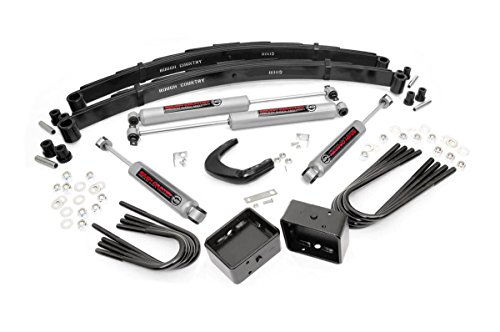
Rough Country
Rough Country 4" Lift Kit for 1977-1987…
- Boosted Ground Clearance: Extra lift improves off-road capability and clears obstacles with ease.
- Vehicle-Specific Leaf Springs: Front springs tailored for a precise fit and smooth ride.
- Fits 35-Inch Tires: Run up to 35" tires confidently without rubbing issues.
The best car lift kits for these trucks share one thing: they address the whole system, not just the springs. A kit like the Rough Country 4″ Lift Kit for 1977-1987 GM K10/K15 Pickup K5 Blazer (ASIN B07FP33BZ4) is a good example of that approach. It includes vehicle-specific leaf springs, a raised steering arm, and N3 shocks, so you’re not piecing together parts that may or may not work together.
The Biggest Myth: A Lift Kit Is Just Taller Springs
Most people think lifting a truck means swapping in stiffer, taller springs. That’s only half the story. A proper lift kit changes the suspension geometry so the axle stays centered, the driveline angles stay within spec, and the steering doesn’t bind.
On a C10, the front suspension uses control arms and torsion bars (or coil springs on some models). When you add height without correcting the geometry, you get a truck that wanders on the highway and eats tires. The steering arm angle changes, which causes bump steer — the truck darts left or right when you hit a bump.
That’s why a kit with a raised steering arm matters. It restores the original angle between the steering box and the knuckle. Without it, a 4-inch lift makes the truck dangerous to drive over 45 mph.
Rear lifts are simpler because leaf springs just get longer or get new mounting brackets. But the driveline angle changes. If the pinion angle isn’t adjusted, you’ll feel a vibration under acceleration, especially at freeway speeds. A good kit includes shims or angled spring pads to fix this. Cheap kits don’t, and that’s a common source of complaints.
Body Lift vs. Suspension Lift: Know the Trade-Off
A body lift uses polyurethane spacers between the frame and the body. It raises the cab and bed but leaves the suspension untouched. You gain clearance for tires, but the frame, bumpers, and steering column stay at stock height.
Body lifts are cheaper and easier to install. A 2-inch body lift costs less than a suspension lift and takes a weekend. The downside is aesthetic. You’ll see a visible gap between the frame and body, and the bumper brackets need adjusting or the bumpers look misaligned.
Suspension lifts are the real deal. They raise the frame, which raises everything attached to it: bumpers, rock sliders, and the transfer case. You get actual ground clearance, not just tire clearance. For a C10 that sees dirt, this is the right choice.
Some people run both. A 4-inch suspension lift plus a 2-inch body lift gives you 6 inches of total height with less driveline stress than a 6-inch suspension lift alone. It’s a common combo, and it works well if you’re chasing maximum tire size without extreme suspension angles.
| Lift Type | Height Range | Install Difficulty | Typical Tire Size | Main Trade-Off |
|---|---|---|---|---|
| Body Lift | 1-3 inches | Moderate | Up to 33 inches | Visible frame gap; no real ground clearance gain |
| Spindle Lift | 2-3 inches | Easy | Up to 33 inches | Limited to 2WD; no driveline changes |
| Suspension Lift (4-inch) | 4 inches | Hard | Up to 35 inches | Requires steering and driveline corrections |
| Suspension Lift (6-inch) | 6 inches | Very Hard | Up to 37 inches | Needs extended brake lines, drop pitman arm, possibly a CV driveshaft |
What Actually Happens to Ride Quality (and What You Can Do About It)
Lifting a C10 makes the ride worse. That’s not an opinion; it’s physics. You’re increasing unsprung weight, changing the lever arm on the control arms, and usually adding stiffer springs to handle the taller stance.
The stock ride is already stiff by modern standards. A 4-inch lift with cheap shocks will rattle your teeth on cracked pavement. The Rough Country N3 shocks included in the kit I mentioned earlier are nitrogen-charged, which helps them respond faster to bumps. They’re not luxury-car smooth, but they’re predictable and controlled.
One thing nobody tells you: the rear leaf springs on a lifted C10 are often the source of the worst ride quality. Adding a leaf or two for lift makes the rear end harsh, especially when the bed is empty. A better approach is a shackle flip or a set of lift springs with a progressive rate. Progressive springs are softer at the top of the travel and firm up as they compress. They cost more, but the difference is worth it if you daily-drive the truck.
Shocks matter more than people think. A good shock controls the spring’s rebound. A cheap shock lets the axle bounce twice after every bump. If you’re on a budget, spend your money on shocks first, not on the lift blocks.
Myth: You Can Just Crank the Torsion Bars for Free Lift
On 2WD C10s with torsion bars, cranking the adjuster bolts raises the front end. It’s free, and it works — for a while. The problem is you’re pre-loading the torsion bar beyond its design range. The ride gets harsh, the ball joints wear faster, and the upper control arm can bottom out on the frame crossmember.
Cranking torsion bars also changes the camber curve. The tires tilt outward at the top, which kills the inside edge of the tire in a few thousand miles. You can install camber shims to fix that, but you’re still left with a suspension that’s out of its intended travel range.
Use torsion bar cranking for a subtle 1-2 inch leveling job, not for a real lift. If you want 4 inches, buy a proper kit with drop spindles or new control arms. The same logic applies to add-a-leaf kits for the rear. They work, but they’re a band-aid for a truck that’s sagging, not a solution for a planned lift.
Steering and Brakes: The Parts You Can’t Skip
At 4 inches of lift, the factory steering linkage angles become a problem. The drag link slopes downward, which creates bump steer. A raised steering arm (or a dropped pitman arm) fixes this. Some kits include one; others don’t. If your kit doesn’t, you need to buy it separately.
Brake lines are another weak point. At full suspension droop, the stock rubber lines stretch tight. On a 6-inch lift, they can tear. Extended stainless braided lines are the fix. They’re not expensive, and they give you peace of mind when the front axle drops into a hole.
One more thing: the pitman arm. On a 4-inch lift, the stock pitman arm may work, but it’s marginal. A dropped pitman arm lowers the connection point, which helps keep the drag link parallel to the tie rod. That parallel relationship is what prevents bump steer. If your kit doesn’t include one, check the geometry before you drive.
For reference, if you’re dealing with driveline vibrations after a lift, the issue is often the pinion angle. That’s covered in detail in this how-to adjust hydraulic lifters guide, though that’s for engine work. The principle is the same: measure, shim, and re-check.
Tire Fitment: What Fits Without Cutting
Tire size is where most people get disappointed. A 4-inch lift on a C10 fits 35-inch tires with minor trimming. That’s the advertised spec, and it’s accurate for most trucks with stock fenders.
Here’s the catch: backspacing matters more than lift height. A 35×12.50 tire on a wheel with 4 inches of backspacing will rub the fender lip at full turn. The same tire on a wheel with 3.5 inches of backspacing clears because the tire sits further outboard. You’re trading fender rub for fender flare clearance.
On a 6-inch lift, 37-inch tires fit, but you’ll need to trim the front bumper and possibly the inner fender liner. The steering stops may need adjusting to prevent rubbing on the frame at full lock.
Don’t forget the spare tire. A 35-inch tire doesn’t fit in the stock spare location under the bed. You’ll need a bed mount or a bumper carrier. Most people forget this until they get a flat on a trail.
Common Questions About Lifting a C10
Will a lift kit ruin my truck’s resale value?
It depends on the buyer. A clean, professionally installed 4-inch lift with quality parts can add value to the right person. A hacked-together lift with cut springs and zip-tied brake lines will drop the value. Keep the stock parts if you can. Many owners return trucks to stock before selling and sell the lift separately.
Can I install a lift kit myself?
A 4-inch kit with leaf springs is a solid weekend project if you have a floor jack, stands, and basic hand tools. The front end is the hard part. You’ll need to compress springs, remove the steering linkage, and possibly cut a few bolts. If you’ve never done suspension work, budget two weekends and have a shop’s number on speed dial.
Do I need new wheels with a lift kit?
You need wheels with the right backspacing, not necessarily new wheels. Stock steelies have too much backspacing for 35-inch tires. You’ll want wheels with 3.5 to 4.5 inches of backspacing. If you’re keeping the stock wheels, stick with 33-inch tires.
Will a lift affect my truck’s towing capacity?
Yes, but not the way you think. The frame and axle ratings don’t change. The problem is the center of gravity. A lifted truck is less stable when towing a heavy trailer, especially in crosswinds. Keep the tongue weight within spec and drive slower. Also, the stiffer suspension may reduce the amount of squat you’d normally see, which can make the truck feel more stable than it actually is.
What’s the difference between a 2WD and 4WD lift kit?
Everything. A 2WD C10 uses torsion bars or coil springs and has no front differential. A 4WD K10 uses leaf springs in the front and has a solid axle. Lift kits are not interchangeable between the two. A 2WD lift often uses drop spindles, which lower the steering knuckle without changing the spring height. A 4WD lift uses taller springs and brackets. Make sure you order the kit for your drivetrain.
What I’d Do If I Were Lifting a C10 Today
- Decide on the height before buying anything. A 4-inch lift is the sweet spot for a daily driver. It clears 35s, doesn’t require a driveshaft modification, and keeps the step-up height manageable.
- Buy a complete kit with a raised steering arm. Piecing together a kit from random parts is how you end up with bump steer and a truck that tracks poorly.
- Budget for extended brake lines and a dropped pitman arm if they’re not included. These are safety items, not optional upgrades.
- Check your wheel backspacing before ordering tires. A 12.50-wide tire needs a wheel with 4.5 inches or less of backspacing to clear the fenders.
- Set the pinion angle on the rear axle. Use a magnetic angle finder and shim the spring perches until the driveline vibration disappears.
- Expect the ride to get firmer. If that’s a deal-breaker, look at progressive-rate leaf springs and a quality shock absorber. They’re worth the extra money.
- Keep your stock parts. You’ll want them if you ever sell the truck or decide the lift isn’t for you.
Lifting a C10 is a mechanical decision, not an emotional one. The right kit, installed correctly, transforms the truck. The wrong one makes you hate driving it. Stick with a complete system, measure twice, and don’t skip the steering corrections. If you’re also dealing with engine codes or wiring issues on your Chevy, this P0016 Chevy guide covers a common camshaft position code that shows up on older GM trucks after suspension work disturbs the wiring harness. It’s a reminder that everything on these trucks is connected.
Products related to this article
Sponsored / affiliate links. As an Amazon Associate I earn from qualifying purchases. I may earn additional commission from eligible campaigns.
 Car A/C Repair Kit, 270PCS Rubber O-Ring Seal Kit + 40PCS Car Air Conditioner Valve Core Kit for R12 R134a A/C with Remover & Install Tool+10pcs R134a AC Valve Caps, Fix Refrigeration System
 Evenoonest 2Pcs Car Polishing Sponge Pads, 7 Inch Car Sponge Wheel, For M16 Cars For Polishing Machine, Efficient Waxing And Buffing