Critical Warning: A Dangerous Ford Explorer Fluid Swap
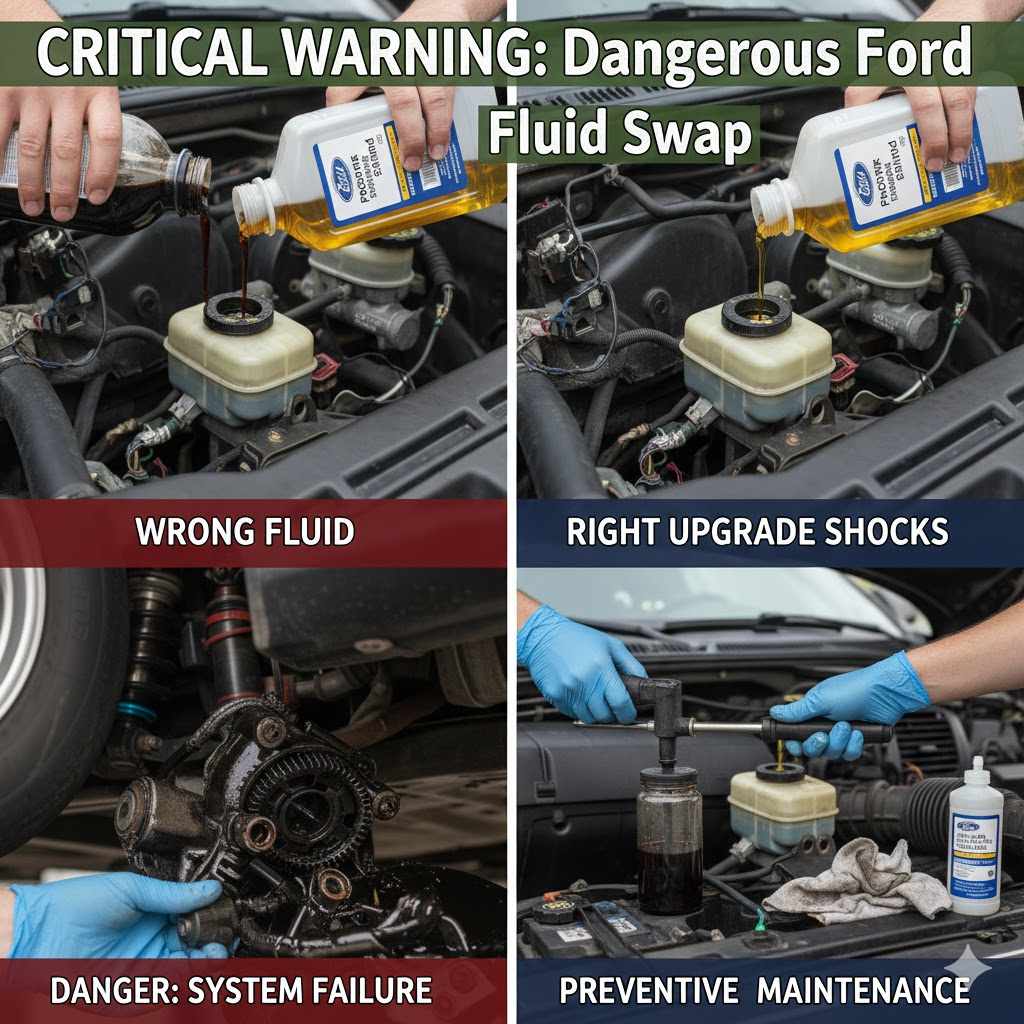
Never use power steering fluid instead of transmission fluid in a 2006 Ford Explorer. Doing so will cause immediate and severe damage to your transmission, leading to thousands of dollars in repairs. These fluids are chemically different and not interchangeable. Always use the manufacturer-specified fluid, typically MERCON V Automatic Transmission Fluid (ATF).
Standing in an auto parts store, it’s easy to feel overwhelmed. You see rows of bottles, and many of the fluids look the same. You might grab a bottle of red fluid, thinking it’s what your Ford Explorer needs, only to realize later you’ve made a critical mistake. This simple mix-up can lead to a huge headache and a massive repair bill.
But don’t worry. I’m here to clear up the confusion and help you keep your SUV running smoothly and reliably. We’ll break down exactly why this fluid swap is so dangerous, how to use the right fluid every time, and what to do if you’ve already made the mistake. Let’s make sure your Explorer stays healthy and on the road for years to come.
Why You Absolutely Cannot Swap These Fluids
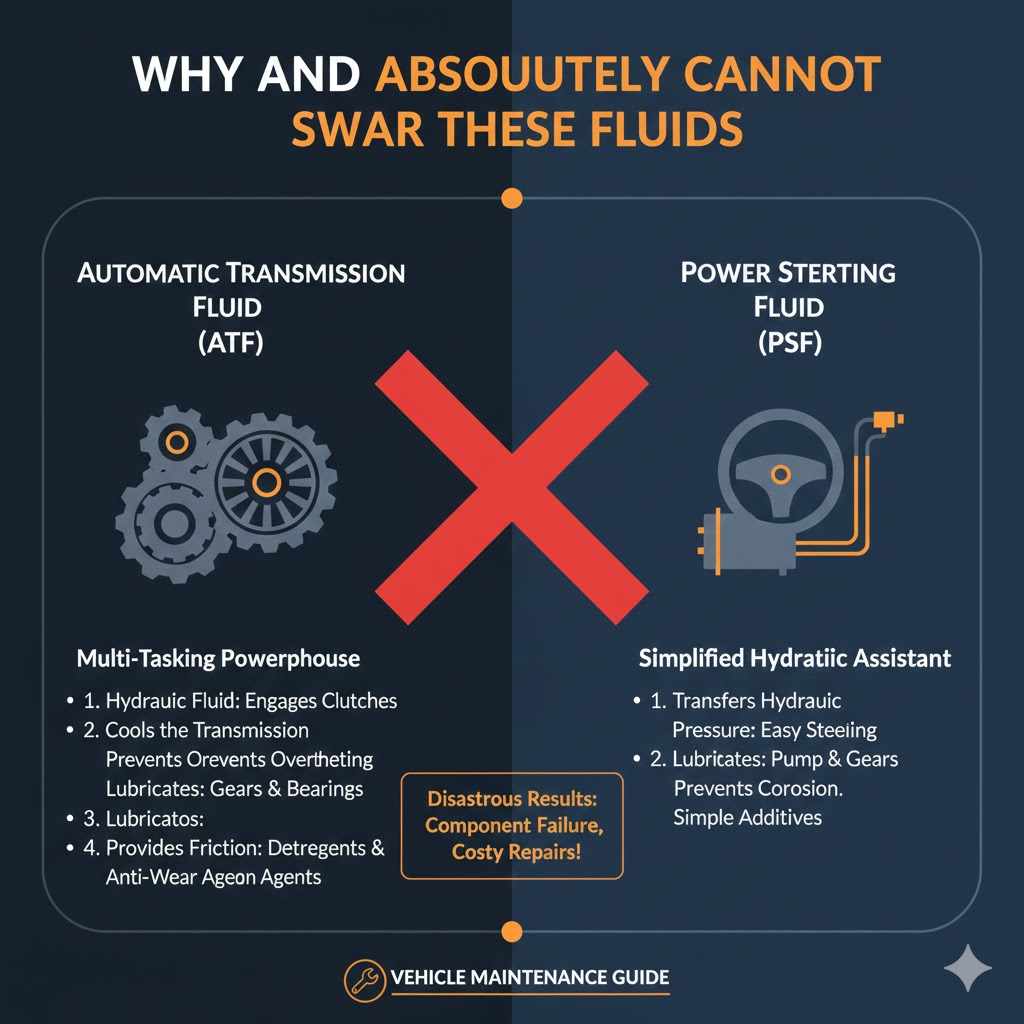
The core of the problem is simple: automatic transmission fluid (ATF) and power steering fluid (PSF) are designed for completely different jobs. Think of it like trying to cook with motor oil instead of olive oil—they are both liquids, but the results will be disastrous. Using the wrong one in your vehicle’s sensitive systems is a recipe for failure.
What Does Automatic Transmission Fluid (ATF) Do?
Your transmission is one of the most complex parts of your vehicle. It’s a marvel of gears, clutches, and hydraulics that work together to send power from your engine to your wheels. ATF is the lifeblood that makes it all possible. It’s not just a simple lubricant; it’s a multi-tasking powerhouse that:
- Acts as a Hydraulic Fluid: ATF creates the pressure needed to engage clutches and shift gears smoothly.
- Cools the Transmission: Transmissions generate an immense amount of heat. ATF circulates constantly to carry that heat away and prevent overheating.
- Lubricates Moving Parts: It keeps hundreds of internal components, like gears and bearings, from grinding themselves into metal shavings.
- Provides Friction: This might sound strange, but ATF contains special “friction modifiers.” These additives are engineered to allow the clutch plates inside the transmission to grip each other just right. Too much or too little friction causes slipping or harsh shifts.
Because of these demanding jobs, ATF is packed with detergents, anti-wear agents, and corrosion inhibitors to keep the transmission clean and protected.
What Does Power Steering Fluid (PSF) Do?
Power steering fluid has a much simpler, yet still important, job. It operates in your power steering system, which is a hydraulic system designed to make turning your steering wheel easy. When you turn the wheel, a pump sends pressurized fluid to a piston, which provides the force needed to turn your wheels.
The main jobs of power steering fluid are:
- Transferring Hydraulic Pressure: Its primary role is to act as the medium for the hydraulic force that assists your steering.
- Lubricating the Pump and Gears: It keeps the power steering pump and steering rack components moving smoothly.
- Preventing Corrosion: It contains additives to protect the metal parts of the system from rust and wear.
Compared to ATF, power steering fluid is a much simpler formula. It doesn’t need detergents or fancy friction modifiers because it isn’t dealing with clutches or extreme heat cycles.
The Critical Differences: A Side-by-Side Look
To really see why these fluids can never be swapped, let’s compare them directly. Their chemical makeup and properties are worlds apart.
| Property | Automatic Transmission Fluid (ATF) | Power Steering Fluid (PSF) |
|---|---|---|
| Primary Job | Shifting gears, cooling, lubrication, and friction control in the transmission. | Creating hydraulic pressure for steering assist. |
| Viscosity (Thickness) | Specifically engineered to flow correctly at high temperatures. | Generally a lower viscosity fluid designed for a less demanding environment. |
| Friction Modifiers | Yes, a critical component. These are precisely tuned to allow clutches to engage smoothly without slipping or grabbing. | No. It does not contain friction modifiers. |
| Detergents | Yes. Contains strong detergents to clean varnish and sludge from inside the transmission. | No. Does not contain cleaning detergents. |
| Heat Resistance | Very high. Designed to withstand temperatures well over 200°F (93°C). | Lower. It is not designed to handle the extreme heat generated by a transmission. |
What Happens If You Put Power Steering Fluid in Your Transmission?
If you accidentally pour power steering fluid into your Ford Explorer’s transmission, the damage begins almost immediately after you start the engine. The sequence of failure is predictable and catastrophic.
- Immediate Shifting Problems: The first thing you’ll notice is that your SUV won’t shift gears properly. Because PSF has no friction modifiers, the transmission clutches can’t grip correctly. This will cause delayed shifts, slipping between gears, or incredibly harsh, jarring shifts.
- Catastrophic Overheating: Power steering fluid isn’t designed to handle the intense heat inside a transmission. It will quickly break down, losing its ability to lubricate. This causes a rapid spike in temperature, which can warp metal parts and cook internal seals.
- Clutch Pack Destruction: The wrong fluid will destroy the delicate friction material on the clutch plates. They will either burn up from slipping or be torn apart by the incorrect chemical additives, sending debris throughout the entire transmission.
- Seal and Gasket Failure: The detergents and additives in ATF are specifically designed to be compatible with the transmission’s rubber seals and gaskets. The chemical makeup of PSF can cause these seals to swell, harden, or dissolve, leading to massive fluid leaks.
- Complete Transmission Failure: In a very short time, the combination of overheating, lack of proper lubrication, and internal component destruction will lead to total transmission failure. At this point, the only solution is a complete rebuild or a full replacement, a repair that often costs between $3,000 and $7,000.
The Right Fluid for Your 2006 Ford Explorer Transmission
So, what is the correct fluid? For nearly all 2006 Ford Explorers with an automatic transmission, the manufacturer specifies MERCON V Automatic Transmission Fluid. This is not a suggestion; it is a requirement. Using any other type of ATF, let alone power steering fluid, can cause damage.
How to Be 100% Sure You Have the Right Fluid
Never guess when it comes to fluids. A few moments of checking can save you thousands of dollars. Here are the three best ways to confirm the correct fluid for your vehicle.
- Read Your Owner’s Manual: This is the most reliable source of information for your specific vehicle. Look in the index under “Fluid Capacities” or “Transmission.” It will tell you the exact type of fluid you need. If you don’t have your manual, you can often find it online at the official Ford Owner Manuals website.
- Check the Dipstick: Many vehicles have the required fluid type stamped directly onto the transmission fluid dipstick handle or shaft. It might say “Use MERCON V Only” or something similar.
- Consult a Professional: If you are still unsure, call the parts department at a Ford dealership or ask a trusted mechanic. They can look up your vehicle by its Vehicle Identification Number (VIN) and tell you with absolute certainty what fluid to use.
I Already Made the Mistake! What Do I Do Now?
If you’re reading this article because you’ve already put power steering fluid in your transmission, stay calm. What you do next is critical and can mean the difference between a manageable repair and a complete financial disaster.
Step 1: DO NOT START THE ENGINE
This is the most important step. Do not start the car. Do not even turn the key to the “on” position. Starting the engine will engage the transmission pump, which will instantly begin circulating the wrong fluid throughout the entire system, starting the chain reaction of damage. If the car is already running, turn it off immediately.
Step 2: Do Not Try to Drive It
Even if it’s just to the end of the driveway, do not attempt to drive the vehicle. Every rotation of the internal parts with the wrong fluid causes more damage. It is not safe to drive and will only make the final repair bill higher.
Step 3: Call for a Tow Truck
Your vehicle needs to be taken to a qualified transmission shop or a trusted mechanic. You must have it towed. Explain to the tow truck driver that the vehicle cannot be started or driven. They will know how to safely load it onto the truck without causing further harm.
Step 4: Be Honest with Your Mechanic
When you get to the shop, tell the mechanic exactly what happened. Let them know what type of fluid you put in and how much you added. Don’t be embarrassed—it happens, and giving them accurate information is the fastest way for them to help you. This information will help them determine the best course of action.
What Will the Mechanic Do?
A simple “drain and fill” will not be enough to fix this problem. When you drain the transmission pan, you only remove about half of the total fluid. The rest remains trapped in the torque converter, valve body, and cooler lines. The mechanic will need to perform a full transmission flush using a special machine to force all of the contaminated fluid out while simultaneously pumping in new, clean MERCON V fluid. In some cases, they may also need to drop and clean the transmission pan to remove any early signs of debris.
How to Check Your Transmission Fluid Correctly and Safely
Knowing how to check your transmission fluid is a great skill that helps you catch problems early. It’s easy to do!
- Park on Level Ground and Warm Up the Engine. Drive the car for about 10-15 minutes to get the transmission fluid up to normal operating temperature.
- Keep the Engine Running. Unlike checking your oil, you must check the transmission fluid while the engine is running. Put the vehicle in Park and engage the parking brake.
- Locate the Transmission Dipstick. In most Ford Explorers, it has a red or yellow handle and is located toward the back of the engine bay.
- Pull, Wipe, and Re-insert. Pull the dipstick out and wipe it clean with a clean, lint-free rag. Push it all the way back in, then pull it out again.
- Read the Level. The dipstick will have markings like “FULL” and “ADD,” often with a cross-hatched area. The fluid level should be within this range.
- Check the Fluid Condition. New ATF is bright, translucent red. Healthy fluid should be pink or reddish. If it looks brown or black, or if it smells burnt, it needs to be changed.
Common Fluid Confusion: A Quick Reference Guide
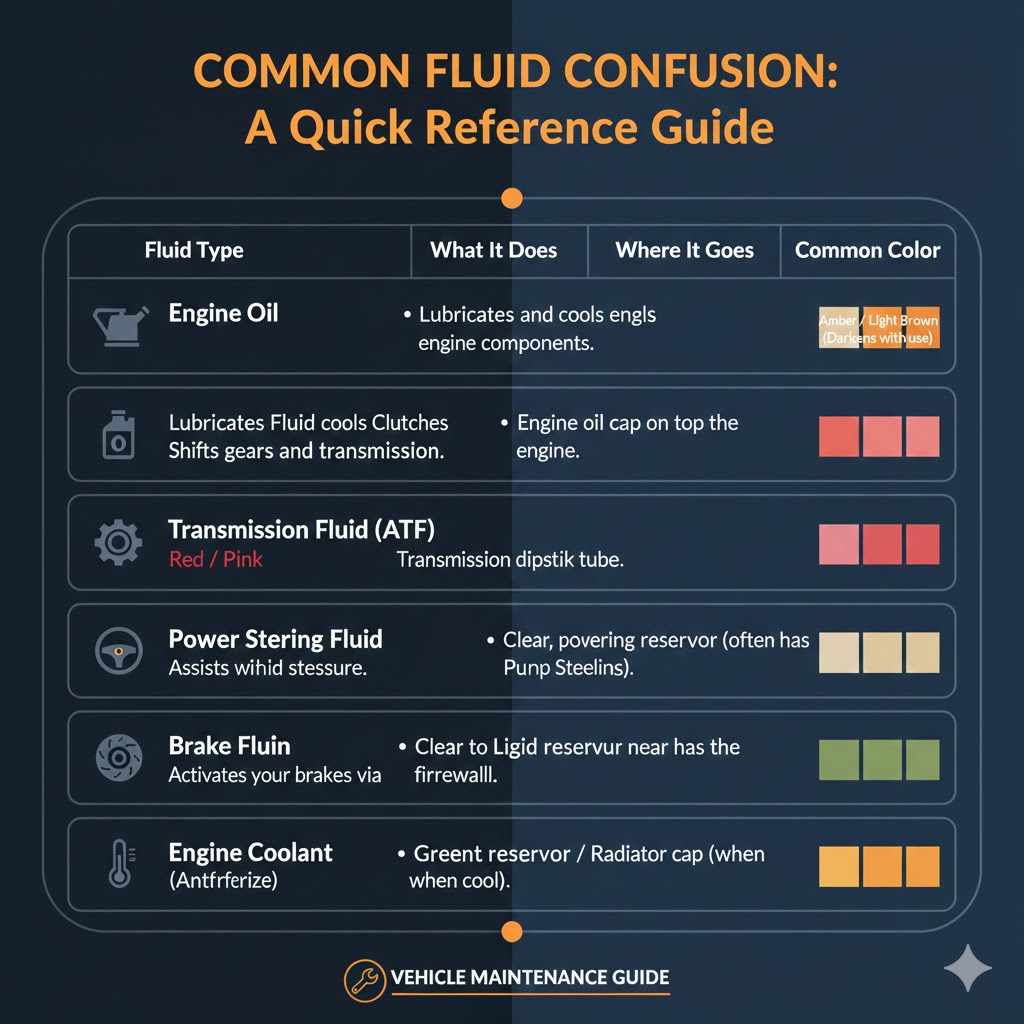
To help you avoid any future mix-ups, here is a quick guide to the most common fluids under your hood.
| Fluid Type | What It Does | Where It Goes | Common Color |
|---|---|---|---|
| Engine Oil | Lubricates and cools engine components. | Engine oil cap on top of the engine. | Amber / Light Brown (Darkens with use) |
| Transmission Fluid (ATF) | Shifts gears and cools the transmission. | Transmission dipstick tube. | Red / Pink |
| Power Steering Fluid (PSF) | Assists with steering. | Power steering reservoir (often has a steering wheel icon). | Clear, Amber, or Red |
| Brake Fluid | Activates your brakes via hydraulic pressure. | Brake fluid reservoir near the driver’s side firewall. | Clear to Light Yellow |
| Engine Coolant (Antifreeze) | Keeps the engine from overheating or freezing. | Coolant reservoir / Radiator cap (when cool). | Green, Orange, Pink, or Yellow |
Frequently Asked Questions (FAQ)
1. Are all automatic transmission fluids the same?
No, they are very different. Vehicle manufacturers design transmissions to work with specific fluid formulas. Common types include MERCON (Ford), Dexron (GM), and ATF+4 (Chrysler). Using the wrong type, even if it’s still ATF, can cause damage. Always use the exact type specified in your owner’s manual.
2. Can I use automatic transmission fluid in my power steering system?
Sometimes, but only if your owner’s manual explicitly says so. Many older vehicles, including some Fords, were designed to use ATF in the power steering system. However, modern systems often require a specific power steering fluid. The rule is simple: the manual is always right. Never assume.
3. What color is transmission fluid supposed to be?
When new, automatic transmission fluid is typically a bright, translucent red or pink. The red dye is added primarily for identification purposes, making it easy to distinguish from motor oil and other fluids if you have a leak. As it ages, it will turn a darker reddish-brown. If it is dark brown, black, or smells burnt, it is overdue for a change.
4. How much does it cost to fix putting the wrong fluid in the transmission?
The cost depends entirely on how quickly you catch the mistake. If you realize it before starting the car, you might only pay for a tow and a comprehensive transmission flush, which could cost between $250 and $500. If you drive the vehicle, you are likely looking at a complete transmission rebuild or replacement, which typically costs between $3,000 and $7,000.
5. Why do they make the fluid bottles look so similar?
That’s a great question! It often comes down to brand consistency and marketing. Many companies use similar bottle shapes and label designs across their entire product line. This is why it is absolutely essential to stop and carefully read the label on the front and back of the bottle before you open it.
6. How often should I check my transmission fluid?
Getting into the habit of checking all your vehicle’s fluids once a month is a fantastic way to stay on top of maintenance and catch problems early. It only takes a few minutes and can save you a lot of trouble down the road.
7. Is it safe for me to top off my own transmission fluid?
Yes, it is perfectly safe as long as you are confident you have the correct fluid type. When adding fluid, use a long, thin funnel to avoid spills. Add a little bit at a time, re-checking the dipstick between pours. It is very important not to overfill the transmission, as this can cause its own set of problems, like foaming fluid and high pressure.
Your Key to a Healthy Ford Explorer: The Final Word
Your Ford Explorer is a capable and reliable vehicle, but its health depends on proper care and the right fluids. The single most important lesson to take away from this is to always, always double-check that you are using the correct fluid for the job. That one simple act of reading your owner’s manual or the label on a bottle can save you from one of the most expensive and avoidable repairs a car owner can face.
You don’t have to be a master mechanic to take great care of your car. By being careful, asking questions when you’re not sure, and paying attention to the details, you can handle basic maintenance with confidence. You now have the knowledge to avoid this critical mistake and keep your Explorer’s transmission shifting smoothly for many more miles. Happy driving!