Do Car Dealerships Accept Credit Cards? A Comprehensive Guide for Buyers
Hey there! So, you’re thinking about buying a car and wondering, “Do car dealerships accept credit cards?” I’ve been in your shoes. When I bought my first car, I was curious if I could just swipe my credit card and drive off. Turns out, it’s not always that simple. After purchasing a couple of cars, talking to dealers, and digging into payment options across the USA, I’ve learned a ton about how this works.
Whether you’re eyeing a shiny new SUV or a used sedan, I’m excited to share my experience to help you navigate this process. In this guide, I’ll break down everything you need to know about using credit cards at car dealerships, including benefits, limitations, and tips to save money. Let’s sit down and figure this out together!
My First Car-Buying Experience
Let me take you back to when I bought my first car—a used Honda Civic. I walked into the dealership with my credit card in hand, thinking I could charge the whole thing like a big shopping spree. The salesperson gave me a funny look and explained that credit cards aren’t always the go-to for car purchases. That moment sparked my curiosity, and since then, I’ve bought two more cars and learned the ins and outs of dealership payment policies. Knowing whether you can use a credit card can save you time, stress, and maybe even some cash. Let’s dive into the details.
Do Car Dealerships Accept Credit Cards?
Here’s the big question: Do car dealerships accept credit cards? The short answer is yes, most do—but there’s a catch. In my experience, nearly every dealership in the USA accepts credit cards for at least part of the purchase. However, policies vary widely. Some dealers let you charge the entire car price, while others limit how much you can put on a card. When I bought my second car, a Toyota Corolla, the dealership let me put $5,000 on my Visa but required a cashier’s check for the rest.
Why the limits? Dealerships pay a processing fee—usually 1-3%—for every credit card transaction. For a $30,000 car, that’s $300-$900 they lose. Smaller dealers, especially used car lots, might not want to eat that cost. Bigger chains, like those for Ford or Chevy, are often more flexible but still have caps. I’ve found that it’s always worth asking upfront to avoid surprises.
How Credit Card Payments Work at Dealerships
When I used my credit card at a dealership, the process was pretty straightforward. You hand over your card, they swipe it (or insert it for chip cards), and the charge goes through like any other purchase. But here’s what I learned:
- Down Payments: Most dealers are happy to take credit cards for down payments. I put $3,000 on my card for my Corolla’s down payment, and it was no hassle.
- Partial Payments: Some dealers cap the amount you can charge, say, $2,000-$10,000. My local Honda dealer had a $5,000 limit, but a nearby Toyota dealer let me charge $8,000.
- Full Payments: Paying the entire car price on a credit card is rare but possible. I found a small used car lot that let me charge a $12,000 car in full, but they warned me about the fees they’d pass on.
- Fees: Some dealers add a surcharge (2-3%) to cover processing costs. I avoided one dealership because they wanted to add a 3% fee on a $20,000 purchase—that’s $600 extra!
Always ask about the dealership’s policy before you start negotiating. I learned to call ahead to save time.
Benefits of Using a Credit Card at a Dealership
Using a credit card for a car purchase can be a smart move. Here’s why I’ve done it and loved it:
- Rewards Points: My credit card gives me 2% cash back. When I put $5,000 on it for my car, I earned $100 back. Some cards offer miles or points, which can add up fast on a big purchase.
- Purchase Protection: Many cards offer buyer protection. My Visa covered damage or theft for 90 days after purchase, which gave me peace of mind.
- Building Credit: Paying off a big purchase on time boosts your credit score. I paid off my car’s down payment over a few months, and my credit score jumped.
- Convenience: No need to run to the bank for a cashier’s check. I loved swiping my card and being done with it.
For my last car, I used a rewards card and earned enough points for a free flight. It felt like a win!
Downsides of Using a Credit Card
As much as I love my credit card, there are some drawbacks. Here’s what I’ve run into:
- Processing Fees: Some dealers pass on the 1-3% fee. I skipped a dealership that wanted to charge me $400 extra for a $15,000 purchase.
- Credit Limits: Most cards have limits lower than a car’s price. My card’s $10,000 limit wasn’t enough to cover a $25,000 car.
- Interest Charges: If you don’t pay off the balance quickly, interest can pile up. I made sure to pay off my $5,000 charge within the grace period to avoid 20% interest.
- Dealership Restrictions: Some dealers flat-out don’t take cards for the full amount. I called one that only allowed $2,000 on a card, which wasn’t enough for me.
Weigh the pros and cons before deciding. I always check my card’s terms and the dealer’s policy first.
Alternatives to Credit Cards for Car Purchases
When I couldn’t use my credit card for the full amount, I explored other options. Here’s what I’ve tried or learned about:
- Cashier’s Check: Most dealers prefer this for large payments. I got one from my bank for my Corolla’s balance. It’s secure but requires a bank trip.
- Personal Check: Some dealers accept checks, but they might hold the car until it clears. I used a check once, and it took three days to process.
- Auto Loan: Financing through a bank or the dealer is common. I got a 3.5% loan for my Ford, which was cheaper than credit card interest.
- Cash: Small used car lots often love cash. I paid cash for a $6,000 used car once, and the dealer gave me a discount.
- Debit Card: Some dealers take debit cards, but limits can be low. My bank caps debit transactions at $5,000 daily, so I couldn’t use it for more.
Each option has its perks. I mix and match—like using a credit card for the down payment and a loan for the rest.
How to Ask a Dealership About Credit Card Payments
When I’m shopping for a car, I always ask about credit card policies upfront. Here’s how I do it:
- Call Ahead: Before visiting, I call and ask, “Do you accept credit cards for car purchases, and is there a limit or fee?” This saved me from wasting a trip to a dealer with a $2,000 cap.
- Negotiate Fees: If they charge a processing fee, I ask if they’ll waive it. One dealer dropped a 2% fee when I pushed back.
- Confirm Limits: I verify the maximum amount I can charge. My Toyota dealer confirmed $8,000, so I planned accordingly.
- Check Card Type: Some dealers only take Visa or Mastercard, not American Express. I always bring two cards just in case.
Being upfront avoids surprises. I learned to ask these questions early to make the process smooth.
Dealership Policies Across the USA
Dealership policies vary by state and even by dealer. Here’s what I’ve seen:
- California: Big chains like Toyota of Orange or Honda of Hollywood often allow $5,000-$10,000 on credit cards. Smaller lots might limit it to $2,000 or charge fees.
- Texas: In Dallas, I found dealers more flexible, with some allowing full payments on cards. Rural dealers might prefer checks or cash.
- Florida: Miami dealers I visited had strict caps—$3,000-$5,000—due to high processing fees. Used car lots were more open to full card payments.
- New York: NYC dealers often limit credit card use to down payments. I called a Ford dealer in Buffalo, and they allowed $7,000 on a card.
Always call your local dealership to check. I’ve found chain dealers (like CarMax) are more consistent, while independent lots vary widely.
Using Credit Cards for Other Dealership Services
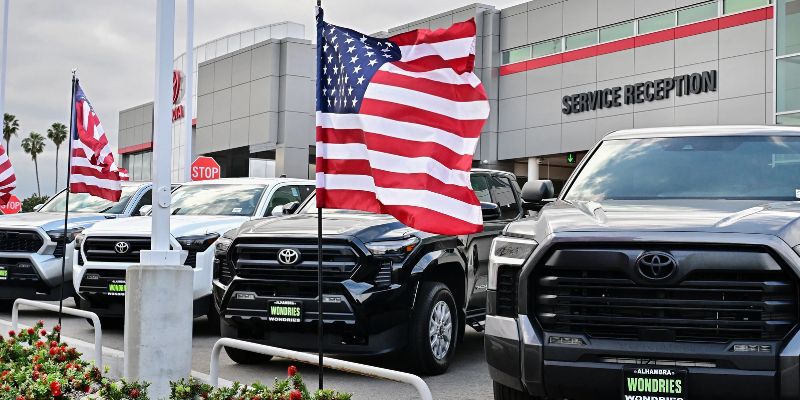
Even if you can’t use a credit card for the full car price, most dealers accept them for other stuff. Here’s what I’ve paid for with my card:
- Down Payments: Almost every dealer takes cards for this. I put $3,000 on my card for my Ford without issue.
- Accessories: I bought floor mats and a cargo cover with my credit card at a Toyota dealer. It earned me reward points!
- Service and Repairs: Dealership service centers love credit cards. I’ve paid for oil changes and tire replacements with my Visa.
- Fees and Taxes: Some dealers let you pay registration or taxes with a card. I charged $1,500 in fees for my Corolla.
These smaller charges are a great way to rack up rewards without hitting limits.
Tips for Using a Credit Card Wisely
I’ve learned a few tricks to make the most of using a credit card at a dealership:
- Choose a Rewards Card: I use a 2% cash-back card for big purchases. For my $5,000 down payment, I got $100 back—free money!
- Pay Off Quickly: Avoid interest by paying the balance before the due date. I set up auto-payments to stay on track.
- Check Your Limit: Make sure your card can handle the charge. I called my bank to raise my limit to $10,000 before buying my car.
- Negotiate Fees: If the dealer charges a processing fee, ask them to waive it or lower it. I got one dealer to drop a 2% fee by negotiating.
- Keep Records: Save receipts and statements. I had a dealer double-charge me once, and my records helped fix it.
These tips have saved me money and stress over the years.
Common Mistakes to Avoid
I’ve made my share of mistakes when using credit cards at dealerships. Here’s what to watch out for:
- Not Asking About Fees: I once paid a 3% fee because I didn’t ask. Always confirm if there’s a surcharge.
- Exceeding Your Limit: I tried to charge $12,000 on a card with a $10,000 limit—embarrassing! Check your limit first.
- Ignoring Interest Rates: If you don’t pay off the balance, interest can be brutal. I paid my card off fast to avoid 18% interest.
- Assuming All Dealers Are the Same: Policies vary. I wasted time at a dealer that didn’t take cards for purchases over $2,000.
Ask questions and plan to avoid these pitfalls.
How to Find Flexible Dealerships
Not all dealerships are created equal. Here’s how I find ones that work with credit cards:
- Call Multiple Dealers: I contact 3-4 dealerships in my area to compare policies. One Toyota dealer allowed $8,000 on a card, while another capped it at $3,000.
- Check Chain Dealerships: Big names like CarMax or AutoNation often have clear credit card policies. I used CarMax for my last car, and they were super flexible.
- Read Reviews: Yelp or Google reviews sometimes mention payment experiences. I found a dealer with great reviews for accepting cards without fees.
- Ask About Promotions: Some dealers waive fees during sales events. I got a fee waived during a year-end sale.
Shopping around pays off. I saved $200 in fees by picking the right dealer.
Financing vs. Credit Card: Which Is Better?
When I bought my Ford, I debated between a credit card and a car loan. Here’s how they compare:
- Credit Card: Great for rewards and small payments like down payments. I used my card for $5,000 to earn cash back. But high interest (15-25%) makes it bad for big balances.
- Auto Loan: Better for large purchases. My 3.5% loan was cheaper than my card’s 18% interest. Loans also have longer terms, so payments are manageable.
- Cash/Check: Good for avoiding interest, but no rewards. I used a cashier’s check for my Corolla’s balance to keep things simple.
For me, a mix works best—credit card for the down payment, loan for the rest. It depends on your budget and card terms.
The Future of Car Payments
Car buying is changing, and I’m excited about it. More dealers are accepting digital payments like Apple Pay or PayPal, though credit cards remain the most common. Some brands, like Tesla, let you pay online with a card for the full price. I think we’ll see more flexibility as dealerships go digital, but fees might stick around. Staying informed helps you make the best choice.
Why Knowing This Matters
Learning about credit card payments at dealerships has made me a smarter buyer. I’ve saved money on fees, earned rewards, and avoided interest by planning. It’s also helped me negotiate better deals and choose the right payment method. Whether you’re buying your first car or your fifth, knowing your options gives you confidence.
Conclusion
So, do car dealerships accept credit cards? Yes, most do, but with limits, fees, and policies that vary. After buying a few cars and navigating these payments, I’ve learned that asking questions, comparing dealers, and using rewards cards can make the process smoother and even profitable. Whether you’re swiping for a down payment or exploring loans, you’ve got options to make car buying work for you. I hope this guide helps you walk into a dealership ready to make a smart choice. Here’s to driving off in your new ride with confidence and maybe a few extra rewards points!
FAQs
Do car dealerships accept credit cards for the full price?
Some do, but most limit how much you can charge—often $2,000-$10,000. Smaller dealers might allow full payments, but they could add a fee.
Are there fees for using a credit card at a dealership?
Sometimes. Dealers may charge a 1-3% processing fee to cover their costs. I always ask upfront to avoid surprises.
Can I use a credit card for a down payment?
Yes, most dealers accept cards for down payments. I put $5,000 on my card for my car, and it was no problem.
Is it better to use a credit card or a car loan?
Cards are great for small payments and rewards, but loans have lower interest rates for large balances. I use a card for down payments and a loan for the rest.
What types of credit cards do dealers accept?
Most take Visa and Mastercard. Some accept American Express or Discover, but I always bring two cards to be safe.
Can I earn rewards points when buying a car with a credit card?
Yes! I earned $100 cash back on a $5,000 down payment with my 2% rewards card. Check your card’s terms for details.
What if my credit card limit is too low?
Call your bank to raise your limit temporarily. I did this to charge $8,000. Otherwise, use a loan or check for the rest.
Do all dealerships have the same credit card policies?
No, policies vary. Big chains might allow more on cards, while small lots could have stricter limits. I call multiple dealers to compare.