What Is OD on a Car? Overdrive Explained (When to Use It)
OD on a car means Overdrive — the transmission’s top gear, with a ratio below 1:1 (often 0.7 to 0.85:1), letting the engine spin slower at highway speed. Leaving OD on while towing or climbing steep grades can overwork the transmission and cause it to run hot. This guide covers the OD light, when to switch it off, troubleshooting a stuck transmission, and why many new 8- and 10-speed automatics no longer have an OD button at all.
Quick Answer
OD stands for Overdrive, a car’s highest automatic transmission gear. It lets the engine turn slower while the wheels spin faster, cutting RPM and improving fuel economy at highway speed. Keep OD on for normal driving; switch it off when towing, climbing steep hills, or using engine braking on a downhill grade.
What Does OD Stand For?
OD is short for Overdrive. Think of it as a special gear in your car’s automatic transmission. When your car is in OD, it’s essentially in its highest gear, allowing your engine to spin slower while the wheels spin faster. This might sound a little technical, but it has a big impact on how your car drives, especially on the open road.
In simple terms, when OD is engaged, your car is working a bit less to maintain speed. This is great for long drives and helps save on gas. It’s all about making your engine’s job easier when you’re cruising along at steady, higher speeds.
How Automatic Transmissions Work: The Basics
To really understand OD, it helps to know a tiny bit about how an automatic transmission works. Unlike a manual transmission where you shift gears yourself with a clutch, an automatic transmission does the shifting for you. It uses a complex system of gears, clutches, and fluid to change gears based on your speed, engine load, and how hard you’re pressing the gas pedal. The goal is to always keep the engine in its most efficient operating range.
Most automatic cars have a gear selector with options like P (Park), R (Reverse), N (Neutral), D (Drive), and sometimes lower gears like 1, 2, or L (Low). “D” (Drive) is the setting you’ll use most of the time. When you put it in “D”, the car will automatically shift through all available gears, including overdrive, as you speed up and slow down. The OD gear is just the highest gear in this automatic sequence.
Understanding Gear Ratios
Gear ratios are key to how transmissions work. A low gear ratio, like in first gear, gives you a lot of power to get moving from a stop. This is why the engine has to work hard and revs up quickly. A high gear ratio, like the OD gear, gives you less torque (twisting power) but allows the wheels to turn many times for each single rotation of the engine’s output shaft. In most automatic transmissions, the overdrive gear ratio falls somewhere around 0.7:1 to 0.85:1 — meaning the output shaft spins faster than the engine’s input shaft. This reduction in engine speed is what makes overdrive so crucial for efficiency.
Imagine riding a bicycle. When you start from a standstill, you use a low gear to make it easy to pedal. Once you’re on a flat road and moving fast, you shift to a higher gear. This lets you pedal slower but keep your speed up. Your car’s OD gear works in a very similar way.
What is OD in a Car Transmission?
So, to be super clear, OD on your car’s gear shifter means Overdrive is engaged. Most modern automatic transmissions have at least four forward gears, and the fourth (or higher) gear is typically the overdrive gear.
When your car is in Drive (D) and reaches a certain speed, the transmission will automatically shift into the OD gear. This means the transmission is effectively providing a gear ratio that is “over” 1:1. In a 1:1 ratio, the input shaft and output shaft of the transmission turn at the same speed. In overdrive, the output shaft spins faster than the input shaft, relative to the engine.
Key Benefits of Overdrive:
- Improved Fuel Economy: By allowing the engine to run at lower RPMs at cruising speeds, OD significantly reduces fuel consumption. Less engine work means less fuel burned.
- Reduced Engine Noise and Vibration: A slower-spinning engine is a quieter and smoother engine. This makes for a more comfortable ride, especially on long journeys.
- Less Engine Wear: When the engine isn’t constantly revving high, its components experience less stress and heat. Over time, this can contribute to a longer engine lifespan and fewer maintenance issues.
- Lower Exhaust Emissions: More efficient combustion due to lower RPMs can also lead to reduced emissions.
The OD Light on Your Dashboard
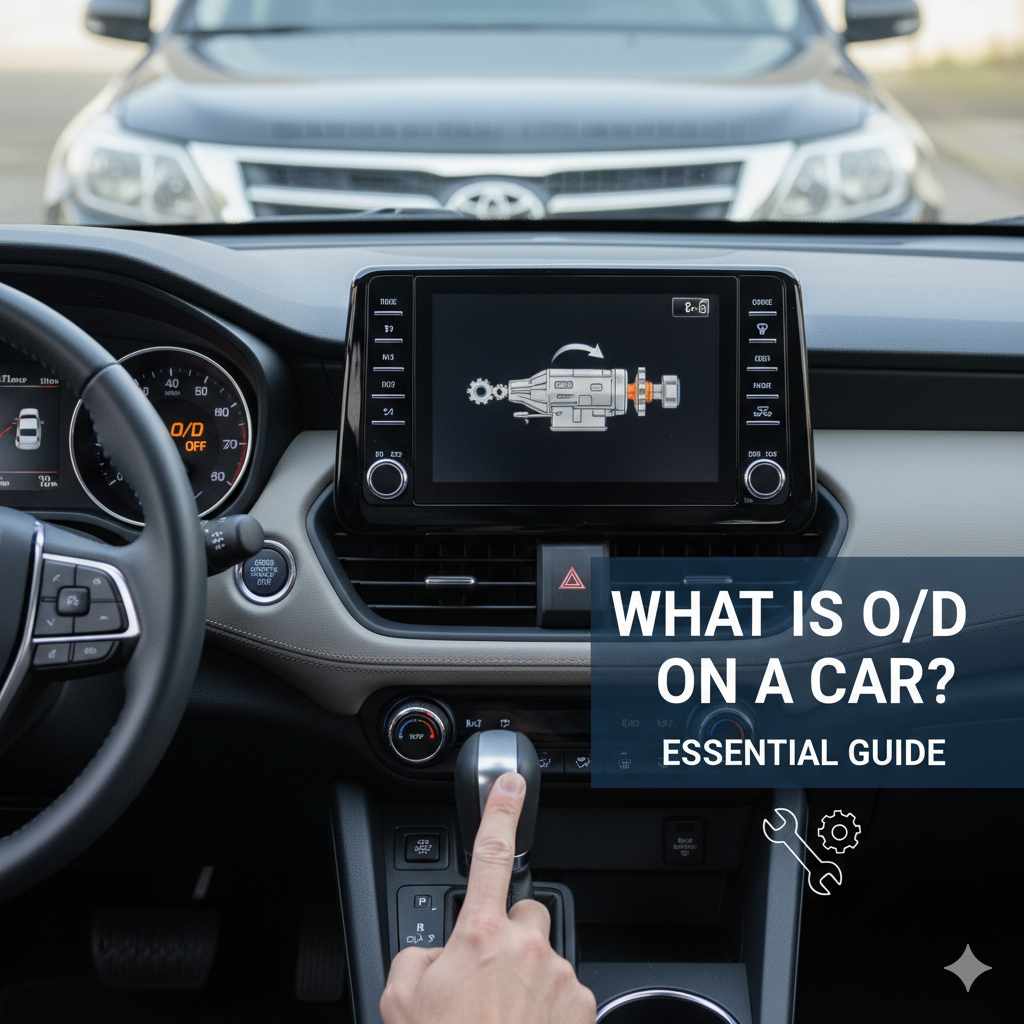
Some cars have a dashboard light that indicates the status of the Overdrive gear. You might see “OD OFF” or an illuminated light symbol. If you see “OD OFF,” it means the overdrive gear is not currently engaged. This is usually done consciously by pressing a button on the gear shifter or the dashboard.
Why would you want to turn OD off? There are a few specific situations:
- Towing or Hauling Heavy Loads: When you’re towing a trailer or carrying a very heavy load, you need more power and torque from the engine. Disengaging OD forces the transmission to stay in lower gears, giving you that extra pulling power.
- Driving Uphill or on Steep Inclines: Similar to towing, climbing steep hills requires more engine power. Turning OD off prevents the transmission from “upshifting” into the less powerful overdrive gear, helping to maintain momentum and reduce the strain on the engine. Many cars will automatically downshift out of OD on steep hills anyway, but manually turning it off can provide more control.
- Driving in Heavy Traffic or Slow Speeds: In stop-and-go traffic, OD might cause the transmission to shift up and down frequently, which can be jerky. Turning it off can lead to smoother acceleration and deceleration at lower speeds.
- Engine Braking on Downhills: When going down a steep hill, you might want some engine braking to help slow the vehicle without constantly riding your brakes. Turning OD off forces the transmission to stay in a lower gear, providing more resistance from the engine.
Most of the time, you’ll want OD to be engaged – meaning “OD ON” or no “OD OFF” indicator is lit. Modern cars are very good at managing these shifts automatically. Your car’s computer will decide when it’s best to use the overdrive gear for optimal performance and efficiency.
Do Modern Cars Still Have an OD Button?
Not always. A dedicated “OD OFF” button was standard on most 4-speed automatics from the 1990s and 2000s, but it has become less common as transmissions have gained more gears. Overdrive itself hasn’t gone away — it’s just built into the normal shift sequence.
Modern automatics with 6, 8, 9, or 10 forward gears often have two or more overdrive gears stacked at the top of the range, and the transmission shifts through all of them automatically without any driver input. Instead of a manual OD toggle, many newer vehicles give you a Tow/Haul mode, a Sport mode, or paddle shifters that hold a lower gear when you need more power — accomplishing the same goal the OD button used to handle on older cars. If your shifter or dashboard has no “OD” label at all, that’s normal for a lot of current vehicles; check your owner’s manual for the equivalent Tow/Haul or manual-shift control.
When to Use OD On and OD Off
Here’s a simple breakdown of when to keep your OD engaged (“OD ON”) and when it might be beneficial to disengage it (“OD OFF”):
| Situation | Recommended Setting | Why? |
|---|---|---|
| Highway Cruising (e.g., 55 mph and above) | OD ON | Maximizes fuel economy and reduces engine strain. The engine runs at its most efficient low RPM. |
| City Driving (stop-and-go traffic) | OD ON (usually) | Modern cars manage this well. If you notice frequent, jerky shifts between gears, turning OD OFF might offer smoother performance at lower, inconsistent speeds. |
| Towing a Trailer | OD OFF | Provides more torque and power from the engine by keeping the transmission in lower, stronger gears. |
| Driving Up Steep Hills | OD OFF | Helps maintain uphill momentum and provides necessary pulling power without the transmission constantly trying to shift into a less powerful gear. |
| Driving Down Steep Hills | OD OFF (for engine braking) | Allows the engine to help slow the vehicle, reducing wear on your brakes and providing better control. |
| Carrying Heavy Loads | OD OFF | Similar to towing, it ensures you have sufficient power and torque from the engine to move the heavy load efficiently. |
📊 Gas mileage drops rapidly above 50 mph, and holding a steady speed can improve highway fuel economy by 7–14% — the same steady, low-RPM cruising that OD is designed to deliver. Source: U.S. Department of Energy, FuelEconomy.gov
Identifying the OD Button
The button to control the OD setting is usually found in one of a few places:
- On the Gear Shifter Lever: This is the most common location. Look for a small button, often on the thumb rest area of the gear selector.
- On the Dashboard: Some vehicles have a dedicated button on the dashboard, often near the other gear selector indicators or climate controls.
- Integrated into the Gear Selector (less common): In some newer models, the control might be a toggle switch or a part of the selector itself.
When this button is pressed, it usually toggles the OD setting. If you see an “OD OFF” light, pressing the button will turn it off. Pressing it again, or shifting the gear selector, will often re-engage OD and turn the light off (or indicate “OD ON”). Always refer to your car’s owner’s manual for the exact location and operation of this control in your specific vehicle.
Troubleshooting Common OD Issues
While OD is generally reliable, like any part of your car, it can sometimes encounter problems. Here are a few common issues and how to approach them:
Best OD Diagnostic Pick
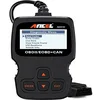
ANCEL AD310 OBD2 Scanner
Reads the transmission control module (TCM) fault code that’s often behind a permanent “OD OFF” light or a car that won’t shift into overdrive.
- Best for: Finding out why the OD light stays on before paying a mechanic to diagnose it
- Why we picked it: Simple plug-and-read interface, no subscription or laptop needed
- Main drawback: Only reads generic codes, not manufacturer-specific transmission codes
Compare more transmission care options
 Option 1 Castrol Transmax ATF/CVT Fluid
|
 Option 2 Long-Neck Automotive Funnel
|
 Option 3 MOTOPOWER MP69033 Scanner
|
As an Amazon Associate we earn from qualifying purchases.
1. OD Light Stays On Permanently
If the “OD OFF” light is illuminated and won’t turn off, even after trying the button or restarting the car, it suggests the transmission may be stuck in a mode that prevents overdrive engagement. This could be due to:
- A faulty switch or button.
- An issue with the transmission control module (TCM).
- Low transmission fluid level or a transmission problem.
Action: Check your transmission fluid level first (see your owner’s manual for how). If the fluid is fine, it’s best to have a professional mechanic diagnose the issue. Driving with OD permanently off will hurt fuel economy and potentially cause more wear on the transmission in the long run.
“The overdrive function reduces the engine’s revolutions per minute (RPM) down to a certain speed to aid in acceleration and make the vehicle more fuel-efficient. When the overdrive gets turned off, the car will not allow the transmission to operate in the highest gear.”
2. Transmission Hesitation or Jerking
If your car hesitates to shift into OD, or shifts roughly between gears, it could be a sign of several things:
- Low Transmission Fluid: Not enough fluid means poorer lubrication and hydraulic pressure, affecting shifting performance. If the level keeps dropping, see how long a car can run without transmission fluid before real damage sets in.
- Old or Contaminated Fluid: Transmission fluid degrades over time. Dirty fluid can clog passages and reduce its effectiveness.
- Worn Transmission Components: Internal parts of the transmission may be worn, leading to rough shifts.
- Computer/Sensor Issues: The car’s computer, which controls shifting, might have a faulty sensor or communication problem.
Action: Check your transmission fluid level and condition — you can even check it while the car is running, which is how most dipstick-equipped automatics are designed to be checked. If it’s low or looks dirty/burnt, top it up or get a transmission fluid service. For other issues, a mechanic’s diagnosis is recommended.
According to the U.S. Department of Energy, keeping up with regular vehicle maintenance, including transmission fluid checks and changes, can significantly improve fuel efficiency and prevent costly repairs. For more on vehicle maintenance, visit FuelEconomy.gov.
3. Car Won’t Shift into OD
If your car simply refuses to shift into overdrive, especially at highway speeds, it can feel like you’re losing power. This is often a deliberate action by the car’s computer to protect the transmission if it detects a problem. It might also be that the OD button was accidentally engaged.
Action: First, ensure the “OD OFF” light isn’t on. If it is, try pressing the button to re-engage OD. If the light is off and the car still won’t shift, it points to a more significant transmission issue or a sensor problem. This warrants a visit to your mechanic.
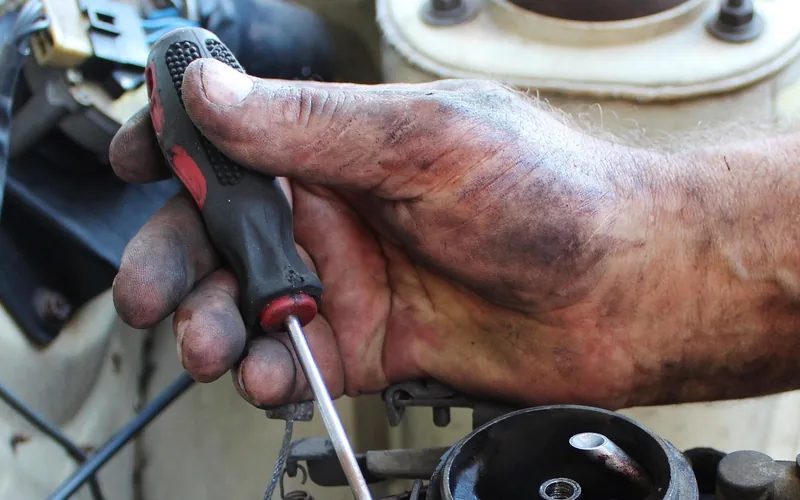
Checking Your Transmission Fluid
Transmission fluid is the lifeblood of your automatic transmission. Ensuring it’s at the correct level and in good condition is crucial for proper OD function and overall transmission health. If you’re not sure what a failing fluid level actually feels like from behind the wheel, this rundown of how a car acts when it needs transmission fluid covers the warning signs.
Here’s a general guide, but always consult your car’s owner’s manual for specific instructions, as the procedure can vary greatly between models.
- Park on a Level Surface: This is essential for an accurate fluid reading.
- Warm Up the Engine: Most automatic transmissions require the fluid to be at operating temperature for a correct reading. Drive your car for about 15-20 minutes.
- Keep the Engine Running: With your foot firmly on the brake pedal (and parking brake engaged), shift the gear selector slowly through each gear (P, R, N, D, and any lower gears), pausing for a few seconds in each position. Then, return it to Park (P) or Neutral (N) as specified by your manual.
- Locate the Dipstick: The transmission fluid dipstick is usually longer and may have a different colored handle (often red or yellow) than the engine oil dipstick. It might be labeled “TRANS,” “ATF,” or have a gear symbol. Important: Some modern cars do not have a dipstick and require a mechanic to check the fluid level using a special procedure.
- Pull Out and Wipe the Dipstick: Remove the dipstick carefully, wipe it clean with a lint-free cloth, and reinsert it fully.
- Read the Level: Remove the dipstick again and check the fluid level against the markings (usually “HOT” and “COLD” or “ADD” and “FULL”). The level should be within the proper range.
- Check Fluid Condition: The fluid should be reddish-pink and clear, with a slightly sweet smell. If it’s dark brown, black, has a burnt smell, or contains debris, it needs to be changed.
Never add the wrong type of transmission fluid, as this can cause significant damage. Always use the fluid type specified in your owner’s manual. If you’re unsure about any step, it’s best to seek assistance from a qualified mechanic.
When to Call a Professional
While checking fluid is a DIY task many can handle, other transmission issues are best left to the experts. If you experience any of the following, it’s time to visit your mechanic:
- Persistent “OD OFF” light that won’t turn off.
- Slipping gears (where RPMs rise, but the car doesn’t accelerate properly).
- Clunking or grinding noises when shifting.
- The car fails to move in any gear.
- You need a transmission fluid change and don’t have the correct tools or knowledge.
Modern transmissions are complex pieces of engineering. For anything beyond basic fluid checks, professional diagnosis and repair are crucial to avoid further damage.
FAQ: Your OD Questions Answered
What is the difference between D and OD?
D (Drive) is the setting that allows the transmission to shift through all available gears automatically, including overdrive. OD (Overdrive) is the highest gear ratio within that automatic sequence. When your car is in D, it will automatically shift into OD at higher speeds for better efficiency. Sometimes, a car will have a separate “OD OFF” button to prevent it from shifting into the highest gear. Some vehicles also use numbered modes like D1, D2, or D3 instead of a simple OD button — see what D1, D2, and D3 mean in cars if your shifter uses that system instead.
Is it bad to drive with OD off?
Driving with OD off most of the time isn’t ideal for regular driving on highways. It means your engine will run at higher RPMs, which uses more fuel and can cause more wear on the engine over time. However, it’s not “bad” to use OD off in specific situations like towing.
What is the overdrive gear ratio?
Most automatic transmissions use an overdrive gear ratio of roughly 0.7:1 to 0.85:1 — a ratio below 1:1. That means the transmission’s output shaft spins faster than its input shaft, letting the engine turn at a lower RPM for a given road speed. A 1:1 ratio (sometimes called direct drive) is typically the gear just below OD.
How much does overdrive actually affect fuel economy?
Overdrive typically improves highway fuel economy, since it lets the engine run at lower RPM at a steady cruising speed. The exact gain depends on the vehicle, but the underlying principle is confirmed by the U.S. Department of Energy: maintaining a steady speed, rather than constantly speeding up and slowing down, measurably improves highway mileage — which is exactly the kind of steady cruising OD is built for.
Why doesn’t my car have an OD button?
Many newer vehicles with 6, 8, 9, or 10-speed automatic transmissions no longer include a manual OD button. Overdrive is still there — it’s just one of several top gears the transmission shifts through on its own. Look for a Tow/Haul mode, Sport mode, or manual paddle shifters instead; these give you similar control over when the transmission holds a lower gear.
Can driving with OD off damage your transmission?
Occasional use of OD off, such as while towing or descending a steep grade, will not damage a healthy transmission — it’s exactly what the setting is designed for. Leaving OD off permanently during normal highway driving won’t damage the transmission outright, but it does run the engine at higher RPM continuously, which increases wear and fuel use over time.
OD is a normal, useful part of how your automatic transmission saves fuel and reduces engine wear on the highway. Leave it on for everyday driving, switch it off when towing or working the engine hard on a grade, and if the “OD OFF” light won’t clear or the transmission won’t shift at all, check the fluid first and then get a professional diagnosis.
Products related to this article
Sponsored / affiliate links. As an Amazon Associate I earn from qualifying purchases. I may earn additional commission from eligible campaigns.