Does Automatic Start-Stop System Reduce Fuel? Expert Answer
Lots of people wonder about how car engines work, especially when they’re new to driving or thinking about buying a new car. A really common question is, “Does Automatic Start-Stop System Reduce Fuel?” It can sound tricky, but it’s actually pretty simple once you break it down. This post will walk you through it step by step, making it easy to get.
We’ll look at what this system does and if it really helps you save gas.
Understanding Automatic Start-Stop Systems
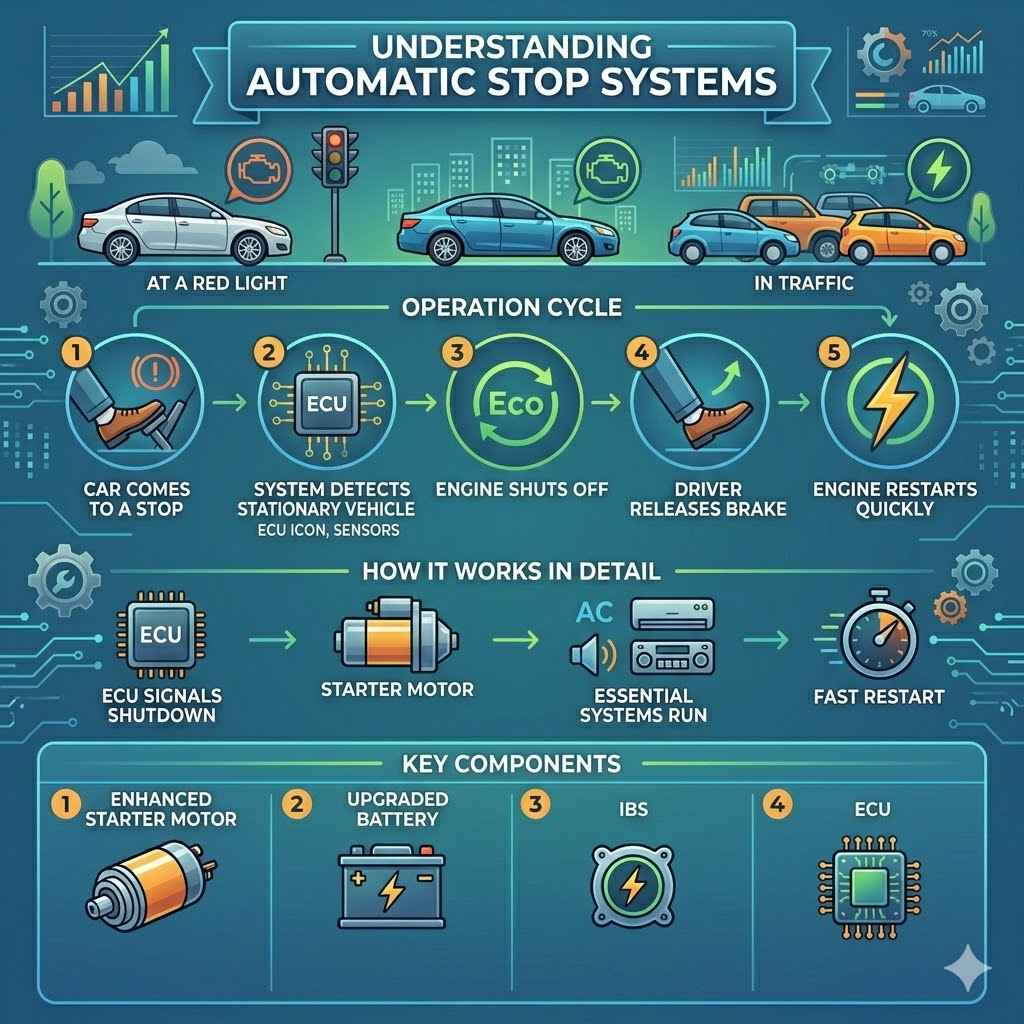
Automatic start-stop systems are designed to help improve fuel efficiency by turning off the car’s engine when it’s not needed, like when you’re stopped at a red light or in traffic. This simple action of shutting down the engine can lead to noticeable savings on your gas bill over time. It’s a clever piece of technology that many modern cars come equipped with, aiming to make driving more eco-friendly and budget-conscious.
What is Start-Stop Technology
Start-stop technology, also known as idle-stop or stop-start, is a system built into vehicles that automatically shuts off the engine when the car comes to a complete stop. This happens when you press the brake pedal and the vehicle’s speed drops to zero. The system then uses a more powerful starter motor and an enhanced battery to restart the engine quickly and smoothly when you lift your foot off the brake pedal or gently press the accelerator.
This process is managed by a sophisticated control unit that monitors various sensors, including engine speed, vehicle speed, brake pedal position, and battery charge. The goal is to prevent the engine from idling unnecessarily, which consumes fuel without moving the car. When the system is active, you’ll notice the engine turning off and then on again almost instantly when you’re ready to move.
Many drivers initially find the engine shutting off surprising. However, with a little time, it becomes second nature. The system is designed to be seamless and often goes unnoticed after a short period of adjustment.
The benefits it offers in terms of fuel savings and reduced emissions make it a valuable feature for many drivers.
How the System Works in Detail
The operation of an automatic start-stop system involves several key components working together. The primary goal is to detect situations where the engine is idling without purpose and then safely shut it down. When you stop the car, sensors tell the system that the vehicle is stationary.
At this point, the engine control unit (ECU) signals the engine to shut off. This is not a complete shutdown of all vehicle functions; essential systems like air conditioning, power steering, and the car’s electrical systems continue to run, often powered by the battery. The starter motor is designed to be more robust than in older vehicles to handle the frequent restarts.
When you prepare to move again, by releasing the brake pedal or pressing the accelerator, sensors detect this action. The ECU then triggers the starter motor to restart the engine. This restart is usually very fast, often taking less than half a second, so you can accelerate away without significant delay.
The system also has safeguards. For instance, if the battery charge is low, the engine might not shut off to ensure there’s enough power to restart it. Similarly, if the climate control system needs the engine to run to maintain a set temperature or if the engine temperature is too low or too high, the system might bypass the shutdown.
Components of a Start-Stop System
Several important parts make up an automatic start-stop system. Each plays a vital role in ensuring the system works correctly and efficiently.
Enhanced Starter Motor: This is not your typical starter motor. It’s built to withstand many more starts and stops than a standard one. It’s often more powerful and designed for higher durability. This ensures that even with hundreds of thousands of restarts over the car’s lifetime, it can keep working reliably.
The enhanced starter motor is crucial because traditional starter motors are not designed for the frequent engagement that a start-stop system demands. Imagine starting your car five to ten times on a short commute; a regular starter would wear out very quickly.
Upgraded Battery: The battery in a car with start-stop technology is usually an Absorbed Glass Mat (AGM) battery. These are different from standard flooded batteries because they are sealed and designed to handle deeper discharges and higher electrical loads. This is necessary because the battery needs to power the car’s electronics when the engine is off and then provide the surge of power to restart the engine.
AGM batteries are also known for their longer lifespan and better performance in extreme temperatures, which contributes to the overall reliability of the start-stop system and the vehicle’s electrical components.
Intelligent Battery Sensor (IBS): This sensor monitors the battery’s state of charge, voltage, and temperature. It provides crucial information to the engine control unit (ECU) to determine if the battery has enough power to start the engine. If the battery is low, the ECU will typically disable the start-stop function to prevent a situation where the car cannot be restarted.
The IBS ensures that the start-stop system operates only when conditions are optimal for battery health and vehicle functionality. It’s a key element in preventing driver inconvenience.
Engine Control Unit (ECU): The ECU is the brain of the operation. It receives data from various sensors, including the IBS, vehicle speed sensors, and brake pedal sensors. Based on this data, it decides when to shut down the engine and when to restart it. It manages the whole process with precision to ensure a smooth experience for the driver.
The ECU’s programming is complex, taking into account many variables to optimize fuel saving while maintaining driver comfort and safety.
Does Automatic Start-Stop System Reduce Fuel?
The core question on many drivers’ minds is whether this system actually makes a difference at the gas pump. The answer is a definite yes, but the amount of fuel saved can vary. It depends on how and where you drive.
In stop-and-go traffic or city driving, where there are frequent stops, the system has more opportunities to work and save fuel. On the highway, where you’re mostly driving at a constant speed, the system has fewer chances to engage.
Fuel Savings in City Driving
City driving is where automatic start-stop systems shine. Think about your daily commute or a trip into a busy downtown area. You’re constantly stopping at traffic lights, encountering slow-moving traffic, or waiting for pedestrians.
Each time your engine turns off, you’re not burning any fuel. Over the course of an hour or a day spent in such conditions, these small savings add up.
For example, if your engine idles for a total of 10 minutes during a short city trip, and your car consumes about 0.5 gallons of fuel per hour while idling, you’ve just saved over 0.08 gallons (10 minutes / 60 minutes per hour * 0.5 gallons/hour). While this might seem small, multiply it by every stop and every trip, and the cumulative effect can be significant over weeks and months.
One study found that start-stop systems can improve fuel economy by 3-10% in urban driving conditions. This percentage might seem modest, but for a driver who spends a lot of time in the city, it translates into tangible savings at the pump and fewer trips to the gas station. It also means less emissions, which is good for the environment.
Fuel Savings on the Highway
On the highway, the impact of automatic start-stop systems on fuel economy is much less pronounced, and in some cases, it might even be negligible. This is because highway driving typically involves long periods of consistent speed without the need for the engine to stop. The system is programmed to engage only when the vehicle is completely stationary and has been for a short period.
If you’re driving on the open road, the engine will likely remain on for the entire duration of your trip. Therefore, the start-stop system will not have any opportunity to activate and save fuel. The primary benefit of the system is realized in scenarios with frequent braking and stopping, not in steady-state cruising.
However, even on the highway, there might be occasional situations where the system could engage, such as when passing through toll booths or encountering unexpected traffic jams. In these instances, any fuel saved is a small bonus, but it won’t contribute significantly to the overall fuel economy of a highway journey.
Real-World Examples and Statistics
Many car manufacturers have adopted start-stop technology across their model lineups. You can find it in economy cars, sedans, SUVs, and even some performance vehicles. The reason for this widespread adoption is the proven benefit in reducing fuel consumption and emissions, particularly in real-world driving conditions where stop-and-go traffic is common.
For instance, a study conducted by the Environmental Protection Agency (EPA) in the United States indicated that vehicles equipped with automatic start-stop systems can achieve a fuel economy improvement of up to 5% on average, with higher savings in city driving scenarios.
Another example comes from a report by the International Energy Agency (IEA), which highlighted that widespread adoption of start-stop systems could contribute to a noticeable reduction in overall fuel consumption for passenger cars globally. They estimate that these systems, when combined with other fuel-saving technologies, can collectively reduce CO2 emissions by millions of tons annually.
Consider a typical commuter who drives 10,000 miles per year. If their car gets 30 miles per gallon, they use approximately 333 gallons of fuel annually. If the start-stop system provides a 5% fuel saving, that’s about 16.7 gallons saved per year.
At $4 per gallon, that’s over $65 in savings per year, plus reduced emissions. Over five years, that’s more than $300 saved.
Factors Affecting Fuel Savings
The actual fuel savings you experience from a start-stop system are not set in stone. Several factors can influence how much you benefit. Understanding these can help you gauge your own potential savings.
Driving Habits: How you drive plays a big role. Aggressive acceleration and braking will cause the engine to idle more frequently and for longer periods when stopped. Smooth driving, anticipating stops, and coasting when possible will allow the start-stop system to engage more often.
For example, a driver who brakes hard at every red light and then accelerates rapidly will benefit less than someone who eases to a stop and gently accelerates. The smoother the driving, the more opportunities the system has to shut the engine off.
Climate Control Usage: The car’s climate control system, especially the air conditioning, can significantly impact when the start-stop system engages. On hot days, if the AC is working hard to cool the cabin, the engine might need to stay on to power the compressor. This means fewer shutdowns and less fuel saving.
Some vehicles allow drivers to manually disable the start-stop system, but doing so might mean sacrificing some fuel economy, especially in city driving.
Traffic Conditions: As mentioned, dense traffic with frequent stops and starts offers the most benefit. A commute that involves a lot of time spent at red lights, in slow-moving queues, or during rush hour will see more fuel saved than a drive on open roads.
Imagine a taxi driver in a busy city compared to someone who only drives on country roads. The taxi driver will likely see a much greater reduction in their fuel bill thanks to the start-stop system.
Potential Drawbacks and Considerations
While automatic start-stop systems offer benefits, it’s important to acknowledge that they also come with potential drawbacks and considerations that drivers should be aware of. These are generally minor and often outweighed by the advantages, but understanding them helps manage expectations.
Engine Wear and Tear
A common concern is whether the frequent starting and stopping of the engine leads to increased wear and tear. However, modern start-stop systems are designed with this in mind. The enhanced starter motors and strengthened engine components are built to handle many more starts than a conventional system.
Automakers engineer these systems to be highly durable. The engines are designed to be restarted thousands of times without significant degradation. The engine oil is also formulated to provide sufficient lubrication even during short periods of shutdown.
Therefore, for the average driver, the increased wear is minimal and often insignificant compared to the lifespan of the vehicle.
Manufacturers rigorously test these systems to ensure reliability. They also provide warranties that cover these components, giving drivers peace of mind. The actual impact on engine longevity is generally negligible for typical usage patterns.
Impact on Battery Life
The battery is perhaps the component most directly affected by the start-stop system. Since it’s used more frequently to restart the engine and power electronics when the engine is off, its lifespan can be reduced compared to a battery in a car without this feature.
However, as mentioned earlier, cars equipped with start-stop technology use specialized, higher-capacity batteries, such as AGM batteries. These batteries are designed to handle the increased demands and often last as long as, or even longer than, standard batteries in other vehicles. Regular maintenance and ensuring the battery is kept charged are still important for maximizing its life.
The intelligent battery sensor (IBS) plays a key role here by monitoring the battery’s health. If the battery’s charge drops too low, the system will automatically disable the start-stop function to preserve battery life and ensure the car can always be restarted.
Driver Comfort and Experience
For some drivers, the automatic restarting of the engine can be a source of discomfort or annoyance. The slight jolt or noise when the engine restarts can be noticeable, especially if they are not accustomed to it. Some people may also find the engine shutting off at every stop disruptive to their sense of control or awareness.
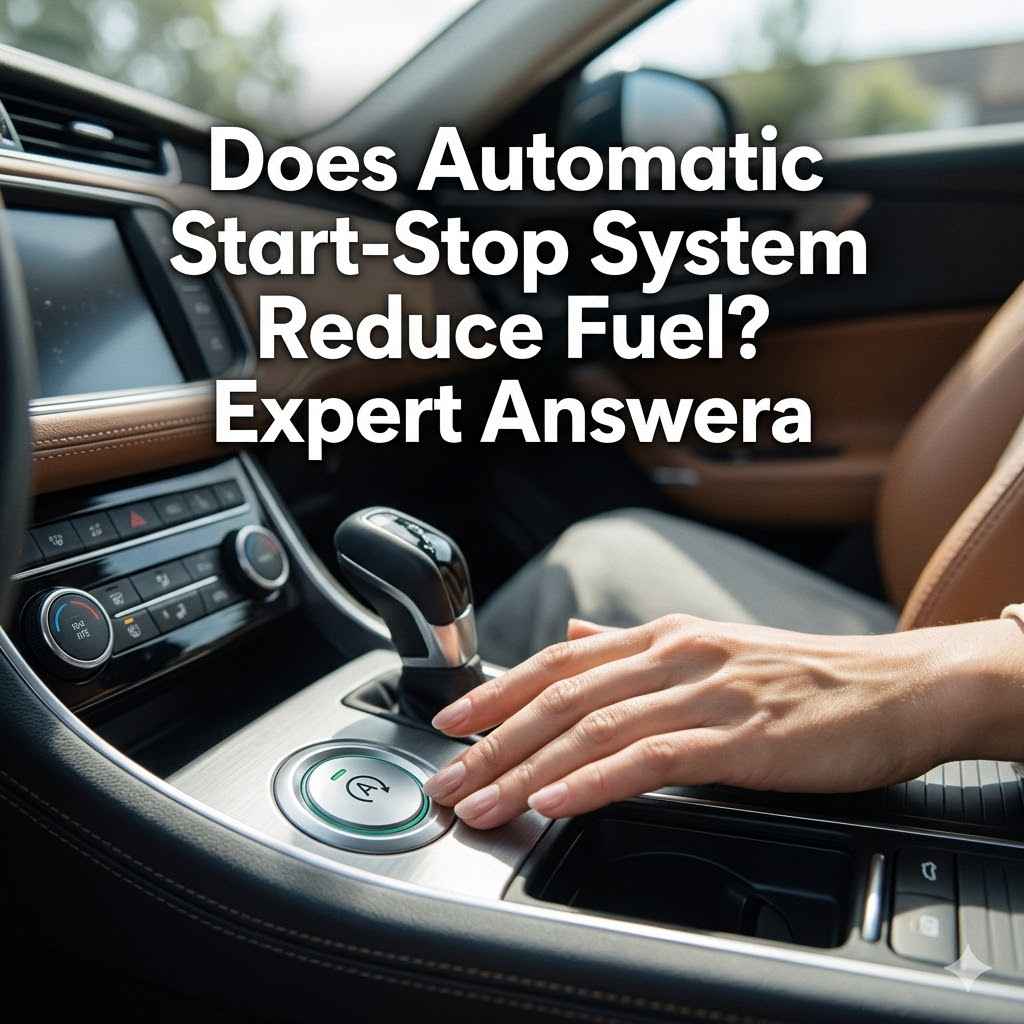
Many vehicles offer a way to temporarily or permanently disable the start-stop system. This is usually done via a button on the dashboard. While disabling it might offer a perceived increase in comfort for some, it will also mean a reduction in fuel efficiency, particularly in city driving.
The decision to disable it is a personal choice between comfort and potential fuel savings.
Manufacturers are continually working to make these systems smoother and less noticeable. Newer systems are often quieter and quicker, minimizing any disruption to the driving experience.
Environmental Impact
Beyond fuel savings, automatic start-stop systems also contribute to reduced emissions. When the engine is off, it’s not producing any exhaust gases. This means less carbon dioxide (CO2), nitrogen oxides (NOx), and other pollutants are released into the atmosphere.
This reduction is particularly significant in urban areas where traffic congestion leads to extensive idling. By minimizing idling time, start-stop technology helps improve air quality in cities and contributes to the overall environmental goals of reducing greenhouse gas emissions. It’s a practical way for individual drivers to contribute to a cleaner environment simply by driving their cars as they normally would.
Alternatives and Related Technologies
Automatic start-stop is just one piece of the puzzle when it comes to improving vehicle fuel efficiency and reducing emissions. Many other technologies work alongside or as alternatives to achieve similar or even greater benefits. Understanding these can provide a broader perspective on how vehicles are becoming more eco-friendly.
Hybrid Vehicles
Hybrid vehicles combine a traditional internal combustion engine with an electric motor and battery. This allows them to use electric power for short distances or at low speeds, significantly reducing fuel consumption and emissions in city driving.
The electric motor can also assist the gasoline engine during acceleration, meaning the gasoline engine doesn’t have to work as hard. When braking, regenerative braking systems capture energy that would normally be lost as heat and use it to recharge the battery.
Hybrids generally offer more substantial fuel savings than vehicles with only start-stop technology, especially in stop-and-go traffic. They represent a more significant step towards electrification and reduced reliance on fossil fuels.
Electric Vehicles (EVs)
Electric vehicles (EVs) eliminate the internal combustion engine entirely. They run solely on electricity stored in a battery, meaning they produce zero tailpipe emissions. This makes them the most environmentally friendly option currently available for personal transportation in terms of direct emissions.
EVs also have simpler mechanical designs with fewer moving parts, potentially leading to lower maintenance costs. They offer instant torque, providing quick acceleration, and a quiet driving experience.
While EVs offer significant environmental benefits, their adoption depends on factors like charging infrastructure availability, driving range, and initial purchase cost.
Fuel-Efficient Engine Designs
Beyond start-stop systems, manufacturers continually innovate in engine design to improve efficiency. Technologies like direct fuel injection, turbocharging, and variable valve timing help engines burn fuel more effectively.
Direct fuel injection precisely sprays fuel directly into the engine cylinders, leading to more efficient combustion. Turbochargers use exhaust gases to spin a turbine, forcing more air into the engine, which allows for smaller, more fuel-efficient engines to produce the power of larger ones. Variable valve timing adjusts when the engine’s valves open and close, optimizing performance and fuel economy across different engine speeds.
These engine improvements work continuously, whether the car is moving or idling, making the entire operation of the engine more efficient.
Aerodynamics and Weight Reduction
The physical design of a vehicle also plays a crucial role in its fuel efficiency. Improved aerodynamics reduce the drag force that the car has to overcome as it moves through the air. Smoother body shapes, undertrays, and smaller side mirrors can all contribute to better aerodynamics.
Similarly, reducing the vehicle’s weight means the engine has less mass to propel. Lighter materials like aluminum and high-strength steel, along with clever design, can shave pounds off a car, leading to better fuel economy and performance. Every pound saved means less energy required to move the vehicle.
These design elements often work in conjunction with engine technologies and alternative powertrains to achieve the best possible fuel economy and environmental performance.
Frequently Asked Questions
Question: Does the start-stop system drain the car battery?
Answer: The start-stop system uses a specially designed, higher-capacity battery, often an AGM type, which can handle the frequent restarts. While it does draw power to restart the engine, the system is engineered to manage battery life effectively. An intelligent battery sensor monitors the battery’s charge and will disable the start-stop function if the charge is too low to prevent a dead battery.
Question: Can I turn off the start-stop system if I don’t like it?
Answer: Yes, most vehicles with automatic start-stop systems have a button on the dashboard that allows you to manually disable it. However, turning it off means you will not benefit from the fuel savings it provides, especially in city driving.
Question: Does the start-stop system affect the car’s air conditioning?
Answer: The start-stop system is designed to work with the air conditioning. When the engine turns off, the car’s electrical system and battery power the AC to maintain the cabin temperature. On very hot days, if the AC is working hard, the system might decide not to turn the engine off to ensure sufficient cooling.
Question: How much fuel can I realistically save with start-stop?
Answer: Fuel savings can range from 3-10% in city driving, depending on traffic and driving habits. On the highway, savings are minimal. For an average driver, this could mean saving a few gallons of fuel per month, translating into a modest but noticeable amount of money saved over a year.
Question: Is start-stop technology bad for the engine?
Answer: No, modern start-stop systems are designed with enhanced starter motors and strengthened engine components to handle frequent restarts. Manufacturers test these systems extensively to ensure they do not cause significant or premature engine wear under normal operating conditions.
Summary
Automatic start-stop systems do reduce fuel consumption, especially in city driving with frequent stops. The technology works by turning off the engine when idle, saving fuel and emissions. While it uses a specialized battery and starter, it’s designed for durability and efficiency, offering practical benefits for most drivers who encounter stop-and-go traffic regularly.