Does BMW Roadside Assistance Cover Flat Tires? Here’s What
Yes. BMW Roadside Assistance can help with a flat tire if the car is disabled and the tire can be changed, inflated, or sealed on the spot; if not, the next step is a tow to a BMW center or tire shop. Waiting on the wrong fix can leave you stranded, ruin a run-flat beyond repair, or turn a minor puncture into a longer, costlier delay. This guide explains which tire failures qualify, what the service can do for run-flats, sealant kits, and cars without a spare, and what to do when roadside help cannot repair the tire.
Does BMW Roadside Assistance cover flat tires?
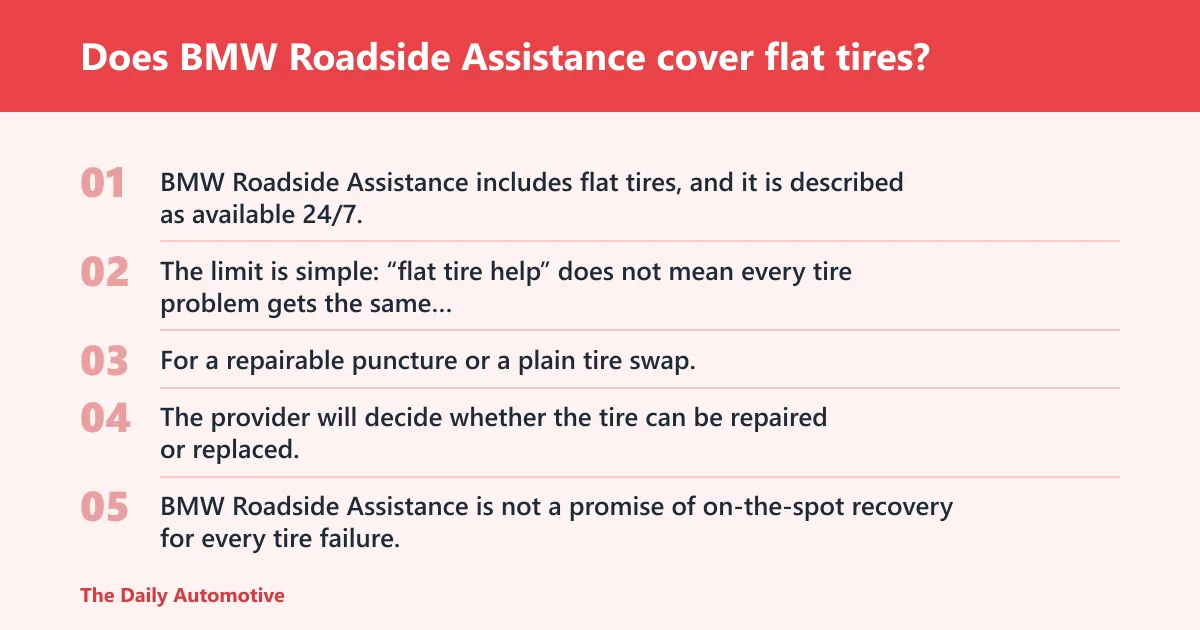


Yes. BMW Roadside Assistance includes flat tires, and it is described as available 24/7. The limit is simple: “flat tire help” does not mean every tire problem gets the same result; the roadside provider still has to decide whether the tire can be changed, repaired, inflated, or needs a tow.
What BMW can usually do for a flat tire
For a repairable puncture or a plain tire swap, BMW Roadside Assistance may send help for tire changes or repairs. The provider will decide whether the tire can be repaired or replaced, and a replacement may mean fitting the spare if the vehicle has one.
What BMW usually cannot fix at the roadside
BMW Roadside Assistance is not a promise of on-the-spot recovery for every tire failure. Sidewall damage, severe blowouts, and some run-flat failures are often not repairable roadside, because the tire may be unsafe or the vehicle’s equipment may not allow a quick fix.
Which tire problems qualify for help?
Flat-tire coverage depends on the damage type. A puncture in the tread, a slow leak, a blowout, and sidewall damage are different cases. BMW Roadside Assistance may respond to all of them, but the result changes fast once the tire cannot be repaired or the wheel cannot safely move the car.
Puncture versus blowout
A puncture is often the best roadside case because it may still leave enough structure for a temporary repair or an inflation-and-drive-away plan. A blowout is different. The tire may be shredded or fully deflated, which usually pushes the situation toward a tire change or tow rather than a patch.
Slow leak and minor tread damage
Slow leaks and minor tread punctures are the situations most likely to lead to a repair attempt. If the damage is in the tread area and not too large, the provider may be able to help. If the leak keeps returning or the tire cannot hold air, the next step is usually replacement or towing.
Sidewall damage and run-flat tire failures
Sidewall damage is a hard stop for many roadside fixes. The sidewall is not meant to be patched, and sealant kits do not apply there. Run-flat tire failures also need caution: even though the car may be able to move a short distance on a run-flat, the tire can still be too damaged to repair safely.
What BMW Roadside Assistance may do on arrival
On scene, the technician’s job is to decide whether the tire can be changed, repaired, inflated, or must be towed. That decision depends on the damage, the wheel setup, and whether the vehicle has a spare, jack, and lug wrench. The roadside visit is about the next safe step, not a guaranteed repair.
Change the tire if a spare is available
If your BMW has a usable spare and the car is safe to work on, roadside help may change the flat for the spare. That changes the outcome a lot. Without a spare, the provider has fewer options and may go straight to inflation, sealing, or towing depending on the damage.
Use inflation or sealant only when appropriate
A compressor-and-sealant kit is the right stopgap for some BMWs with run-flats and no spare tire. It is meant for minor tread punctures only. It should not be used for sidewall damage or major tire failure, because the sealant is not a structural repair.
Tow the vehicle when the tire is unsafe to repair
If the tire cannot be repaired, if the wheel is unsafe, or if the car cannot be moved safely, the usual next move is towing. That may mean a tow to a BMW dealer or to a tire shop that can inspect the tire, replace it, and verify that the wheel was not damaged.
What if your BMW does not have a spare tire?
Some BMW vehicles do not include a full-size spare, and others come with run-flat tires or an emergency repair kit instead. That changes the roadside decision tree. If there is no spare, BMW Roadside Assistance may still help, but the solution may be limited to sealant, inflation, or a tow.
Why that changes the roadside decision
No spare means no simple roadside tire swap. The provider cannot fit a wheel that is not in the car. If the tire is flat because of minor tread damage, a compressor-and-sealant kit may get the car to a shop. If the damage is larger, towing is more likely.
When a sealant kit can help and when it cannot
The kit is only for minor tread punctures. It is not for sidewall cuts, blowouts, or cases where the tire has come apart. If the car has run-flat tires and no spare, the kit is a temporary bridge, not a repair plan. A tire shop still needs to inspect the tire afterward.
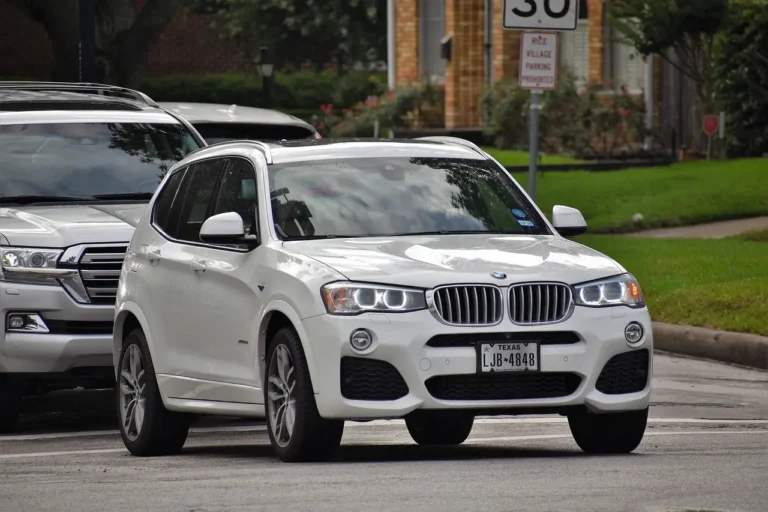
Say your X3 shows a low-pressure warning after a screw goes into the tread on the rear tire in a grocery-store lot. That is the kind of situation where a compressor-and-sealant kit or a roadside tire change may help. Say the same car suffers a torn sidewall after clipping a curb; that usually means a tow.
What to say when you call the BMW Roadside Assistance helpline
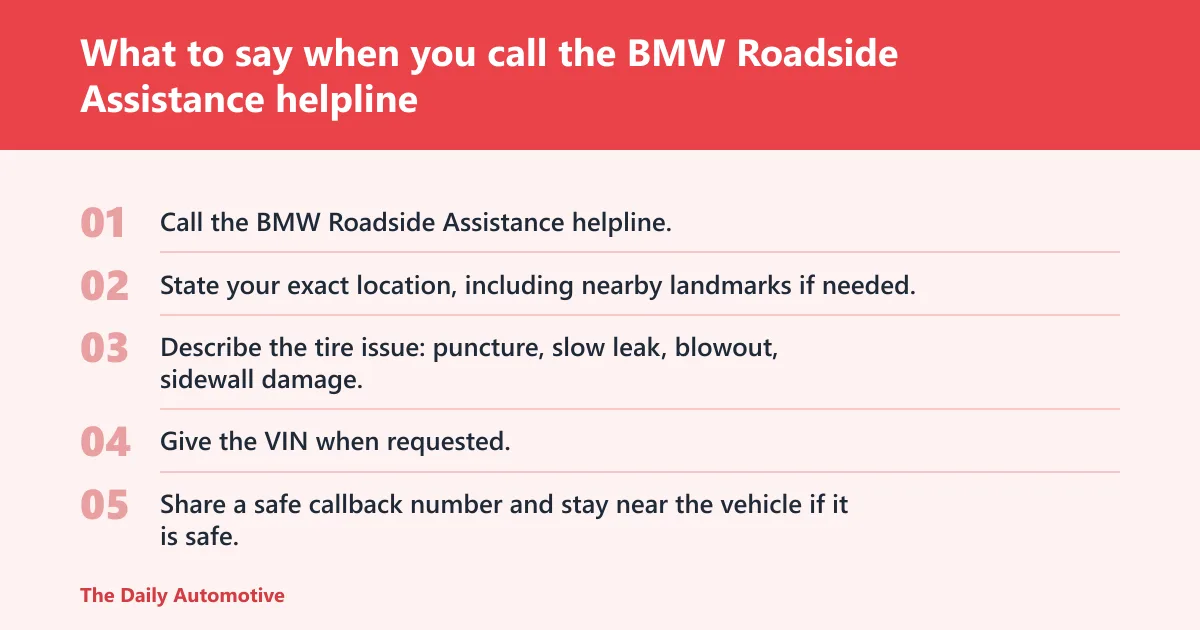
When you contact roadside assistance, be ready to share your location, describe the tire problem clearly, and give the vehicle identification number, or VIN, if asked. That lets dispatch choose the right kind of help and avoid sending the wrong service truck.
- Call the BMW Roadside Assistance helpline.
- State your exact location, including nearby landmarks if needed.
- Describe the tire issue: puncture, slow leak, blowout, sidewall damage, or run-flat failure.
- Give the VIN when requested.
- Share a safe callback number and stay near the vehicle if it is safe.
Have your VIN ready
The VIN helps identify the exact BMW model and equipment. That matters because a car with run-flat tires and no spare needs different help from one that carries a temporary spare. If you are unsure where the VIN is, it is usually on the registration, insurance documents, or visible at the base of the windshield.
Give the exact location and safe callback number
Dispatch needs a precise location, not a general area. Parking level, cross streets, mile markers, and gate codes can save time. A working callback number matters too, because the provider may need clarification before sending a truck or arranging a tow.
Describe the tire damage clearly
Use plain terms. Say whether the tire is flat, losing air slowly, blown out, cut on the sidewall, or punctured in the tread. That description helps the provider decide whether the fix is likely to be a change, a repair attempt, temporary inflation, or towing.
Flat-tire decision table: what BMW is likely to do
The table below shows the practical decision path, not brochure language. The key question is whether the tire can be repaired or whether the car needs a replacement tire or tow. A spare, if present, can change the outcome quickly.
| Tire damage type | Likely BMW roadside outcome | Does a spare help? | Next best fallback action |
|---|---|---|---|
| Minor tread puncture | Minor repair attempt, inflation, or sealant if suitable | Yes, if the car has one | Drive to a tire shop or BMW center for inspection |
| Slow leak | Check, inflate, and decide whether it can be repaired | Yes | Monitor pressure and visit a tire shop soon |
| Blowout | Tire change if a spare is available; otherwise tow | Strongly helps | Tow to a BMW dealer or tire shop |
| Sidewall damage | Usually not repairable roadside | Only if a spare can be installed | Tow the vehicle |
| Run-flat failure | Assess for safe movement; often tow if damaged beyond use | Not needed if a spare is present, but many BMWs do not have one | Replace the tire and inspect the wheel |
| Large cut or shredded tire | Unsafe to repair on scene | Yes, if a spare exists | Tow to a tire shop or BMW center |
What to do if roadside assistance cannot fix the tire
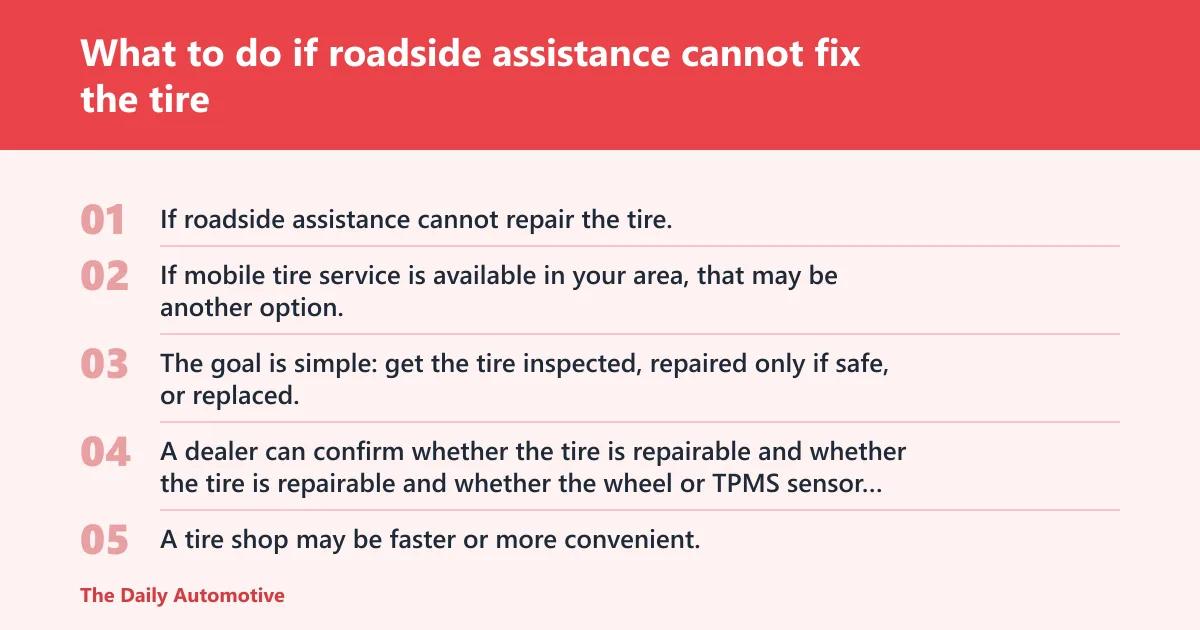
If roadside assistance cannot repair the tire, the next move is usually a tow to a dealer or tire shop. If mobile tire service is available in your area, that may be another option. The goal is simple: get the tire inspected, repaired only if safe, or replaced.
Tow to a BMW dealer or tire shop
A dealer can confirm whether the tire is repairable and whether the wheel or TPMS sensor took damage. A tire shop may be faster or more convenient, especially if the tire brand and size are common. If the tire is unsafe, towing is better than trying to limp it along.
Use mobile tire service if available
In some areas, mobile tire service can come to the car, remove the damaged tire, and mount a replacement on the spot. That is especially useful when the car has no spare and roadside help cannot seal the tire. Coverage and cost vary by provider and location.
Decide whether the tire can be repaired or needs replacement
Not every puncture needs a new tire, but sidewall damage, severe blowouts, and shredded tread usually do. A tire shop will judge repairability based on the damage location and size. If the tire cannot be fixed safely, replacement is the correct answer even if the car can still move briefly.
A common first-timer mistake is assuming a run-flat means “no problem.” A run-flat can buy time, not immunity. If the sidewall is damaged or the tire has been driven too far while flat, the repair may no longer be safe, and the replacement cost can be higher than a simple puncture fix.
Frequently asked questions
Does BMW Roadside Assistance cover flat tires?
Yes, BMW Roadside Assistance includes flat tires and is described as available 24/7. The catch is that the exact help depends on the damage and the vehicle setup. A repairable tread puncture, a spare-tire change, or a tow are all possible outcomes.
Will BMW Roadside Assistance change a flat tire for me?
It can, if the car has a spare tire and the situation is safe for roadside service. If there is no spare, or if the tire damage is too severe, the provider may move to inflation, sealant, or a tow instead of a tire change.
Is a blowout covered under BMW Roadside Assistance?
A blowout can qualify for roadside help, but it often changes the outcome. If the vehicle has a spare, a tire change may be possible. If the tire is shredded or the wheel area is unsafe, the more likely result is towing to a tire shop or BMW center.
What number do I call for BMW Roadside Assistance?
You should call the BMW Roadside Assistance helpline. Have your location, callback number, and VIN ready before the call if possible. Those details help dispatch coordinate the right kind of help and avoid delays.
What if my BMW has no spare tire?
If your BMW has no spare tire, roadside help may still be available, but the options are narrower. A compressor-and-sealant kit can help with minor tread punctures, while sidewall damage, blowouts, or severe failures usually mean towing to a shop.
What information do I need when I call roadside assistance?
Give your exact location, describe the tire problem, and provide the VIN when requested. Those three details matter most. They help the provider decide whether to send a tire-change truck, advise a sealant-kit use, or arrange a tow.
Products related to this article
Sponsored / affiliate links. As an Amazon Associate I earn from qualifying purchases. I may earn additional commission from eligible campaigns.