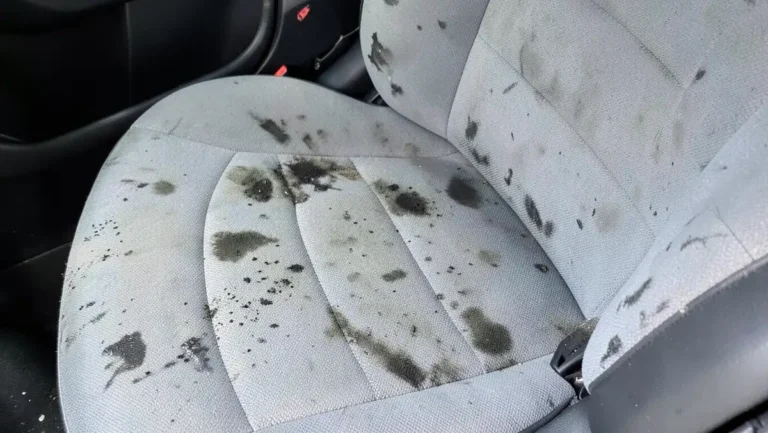
Does Bologna Eat Car Paint? Debunking the Myth
No, bologna does not “eat” or dissolve car paint the way a chemical paint stripper would. But it isn’t harmless, either. Left on a car’s clear coat for hours — especially in hot sun — the salt, fat, and mild curing acids in bologna can cause real staining and etching. Wash it off within an hour or two and your paint will almost always be fine.
If you’ve heard the old “bologna will strip the paint right off your car” story, or found a slice stuck to your hood as a prank, here’s the honest, non-exaggerated version of what’s actually going on chemically — and how it stacks up against other foods people worry about.
Where the “Bologna Eats Car Paint” Myth Comes From
BUG, TAR & FOOD RESIDUE REMOVER
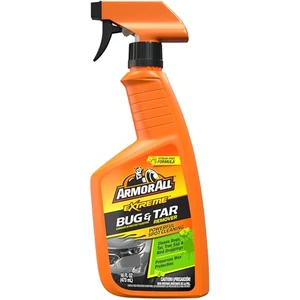 |
Armor All Extreme Bug and Tar Remover – $11.79 If bologna, bird droppings, or other greasy food residue has already dried onto your paint, this breaks it down so you can wipe it away instead of scrubbing.
|
The “bologna on a car” prank is old — it’s been described as a vandalism trick going back decades, long before anyone was posting it on social media. A slice of lunch meat sticks surprisingly well to a flat, glossy hood, which makes it a favorite for a harmless-looking joke. Somewhere along the way, the prank picked up a scarier legend attached to it: that the meat would actually strip the paint off the car.
That version of the story is an exaggeration. Bologna won’t act like paint remover, and it won’t cause visible damage in the few minutes a prank typically lasts. The myth persisted anyway, partly because it’s a genuinely odd claim that’s fun to repeat, and partly because — as we’ll get into next — there’s just enough real chemistry behind it to keep the legend from being total nonsense.
What’s Actually in Bologna That Could Affect Paint
Bologna is a cured, processed meat, and that curing process is where the real (if modest) risk to paint comes from. It typically contains:
- Salt (sodium chloride): Bologna is high in sodium. Salt itself doesn’t dissolve paint, but it’s corrosive to bare metal if it ever reaches through a compromised clear coat.
- Curing agents and spices: Preservatives like sodium nitrite and various spice blends are mildly acidic. This is the closest thing bologna has to an “active ingredient” against clear coat.
- Animal fat and oils: These can seep into the microscopic pores of a clear coat. In direct sun, that fat heats up and can start to bond with the surface instead of just sitting on top of it.
- Moisture and dye: As the slice dries out, any pigment in the meat can leave a faint stain ring, similar to what you’d see from other food residue.
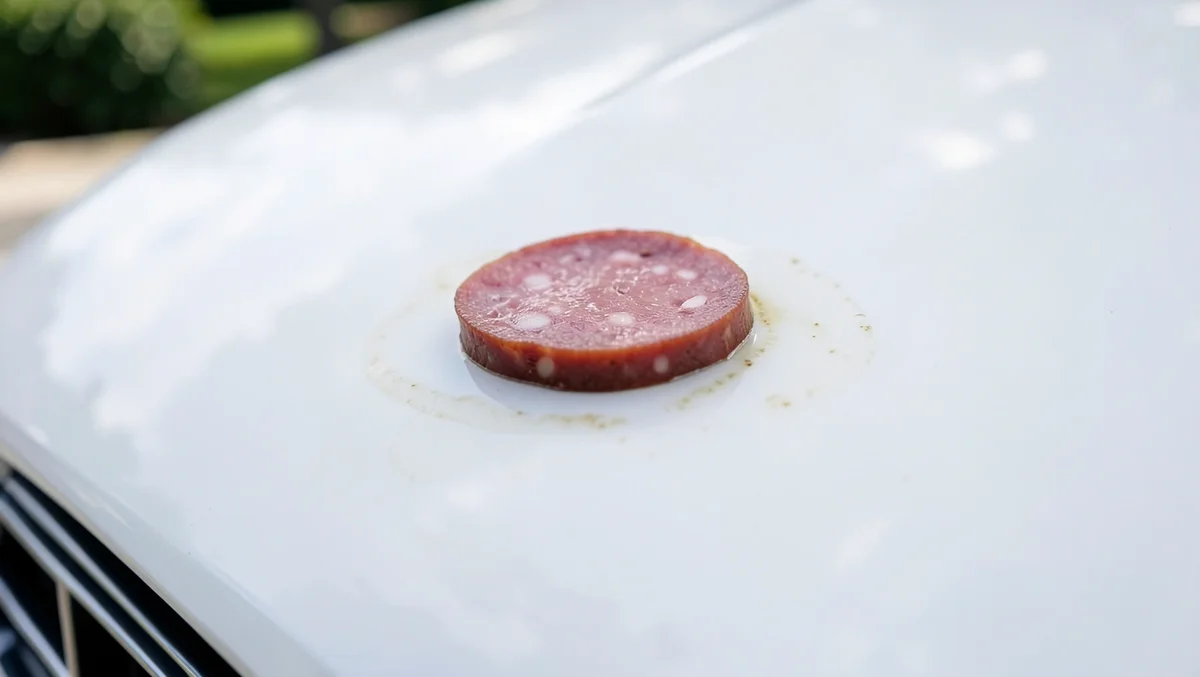
None of this behaves like a solvent. Bologna won’t melt or peel paint on contact the way something like acetone or paint thinner can. What it can do, given enough time and heat, is slowly stain and mildly etch the clear coat — the same category of damage caused by other food and organic residue that’s left to bake in the sun for too long.
Bologna vs. Other Foods and Substances: How They Compare
Bologna is far from the most damaging thing that can end up on your paint. Here’s how it stacks up against other substances people commonly worry about:
| Substance | What Makes It Risky | Speed of Damage |
|---|---|---|
| Bologna (lunch meat) | Salt, fat, and mild curing acids | Slow — hours to days |
| Bird droppings | Highly acidic uric acid | Fast — can etch within hours in hot sun |
| Egg yolk | Sulfur compounds and enzymes, worsened by heat | Fast — noticeable within hours |
| Tree sap | Sticky resin that bakes into the clear coat under UV light | Slow but persistent |
| Lemon or citrus juice | Genuine citric acid | Fast, especially in direct sun |
| Ketchup or mustard | Vinegar-based acidity | Slow — mostly staining, less etching |
The pattern across all of these is the same: heat and time are what turn a minor annoyance into real damage. Bird droppings and egg yolk are generally considered worse for paint than bologna because their acidity is stronger and works faster. Bologna sits closer to tree sap or ketchup — a genuine but slower-moving risk, not an emergency.
What to Do If You Find Bologna on Your Car
You don’t need to panic, but you also shouldn’t leave it there “until you get around to it.” A quick response prevents any of the staining or etching described above:
- Don’t scrape or peel dried bologna off — that can drag grit across the clear coat and cause scratches.
- Rinse the area with plenty of water first to soften and loosen the meat.
- Wash the spot with a pH-neutral automotive car wash soap and a soft microfiber towel — not dish soap, which can strip wax.
- If a greasy film remains after washing, a dedicated bug-and-tar remover will lift it without you having to scrub.
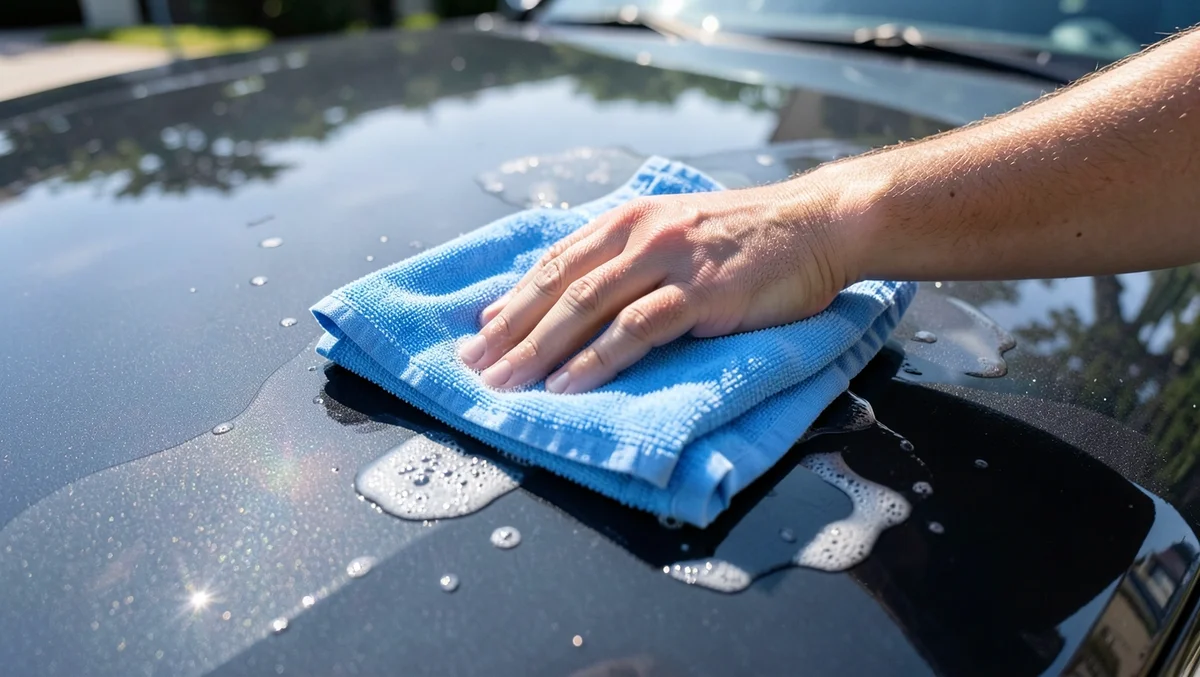
If the meat was left on for a day or more in hot weather and you’re now seeing a dull, hazy ring that won’t wash off, that’s likely light etching rather than surface residue. For a full walkthrough — including how to handle stubborn residue, when a spot needs polishing, and how to tell if it’s gone past a DIY fix — see our complete step-by-step guide to removing bologna from car paint.
Frequently Asked Questions
Does bologna actually take paint off a car?
No, not in the sense of dissolving or stripping paint like a chemical remover would. But bologna’s salt, fat, and mild curing acids can cause staining and light etching of the clear coat if left on the surface for an extended time, especially in hot sun.
How long can bologna sit on a car before it causes damage?
A slice that’s washed off within an hour or two typically leaves nothing behind but a greasy smear. Real risk starts to build after several hours in direct sun, and staining or light etching becomes more likely the longer it’s ignored, especially over a full day or more.
Is bologna worse for car paint than bird droppings?
No. Bird droppings contain highly acidic uric acid and are generally considered more damaging and faster-acting than bologna. Bologna’s acidity comes from milder curing agents and spices, so the same level of damage takes longer to develop.
Does egg yolk damage car paint the same way bologna does?
They cause similar-looking damage — staining and etching — but egg yolk tends to act faster because of the sulfur compounds and enzymes it contains, which are worsened by heat. Both should be washed off promptly, but egg yolk is the more urgent of the two.
Can other lunch meats like ham or salami damage paint too?
Yes. Any cured, processed meat contains a similar mix of salt, fat, and mild acids, so ham, salami, and pepperoni carry roughly the same slow, low-level risk as bologna. None of them are more dangerous than acidic contaminants like bird droppings or citrus juice.
What should I do if I find bologna stuck to my car?
Rinse it off with water instead of peeling or scraping it, then wash the area with pH-neutral car wash soap and a microfiber towel. If greasy residue remains, a dedicated bug-and-tar remover will lift it. Acting within the first hour or two prevents almost any lasting mark.
Conclusion
Bologna doesn’t “eat” car paint — that part of the legend is an exaggeration. But it isn’t completely harmless either: the salt, fat, and mild curing acids in cured meat can stain and lightly etch a clear coat if it’s left baking in the sun for hours or days. Compared to genuinely acidic contaminants like bird droppings, egg yolk, or citrus juice, bologna is one of the slower, milder risks — but “slower” still means “wash it off soon,” not “never.”
Products related to this article
Sponsored / affiliate links. As an Amazon Associate I earn from qualifying purchases. I may earn additional commission from eligible campaigns.