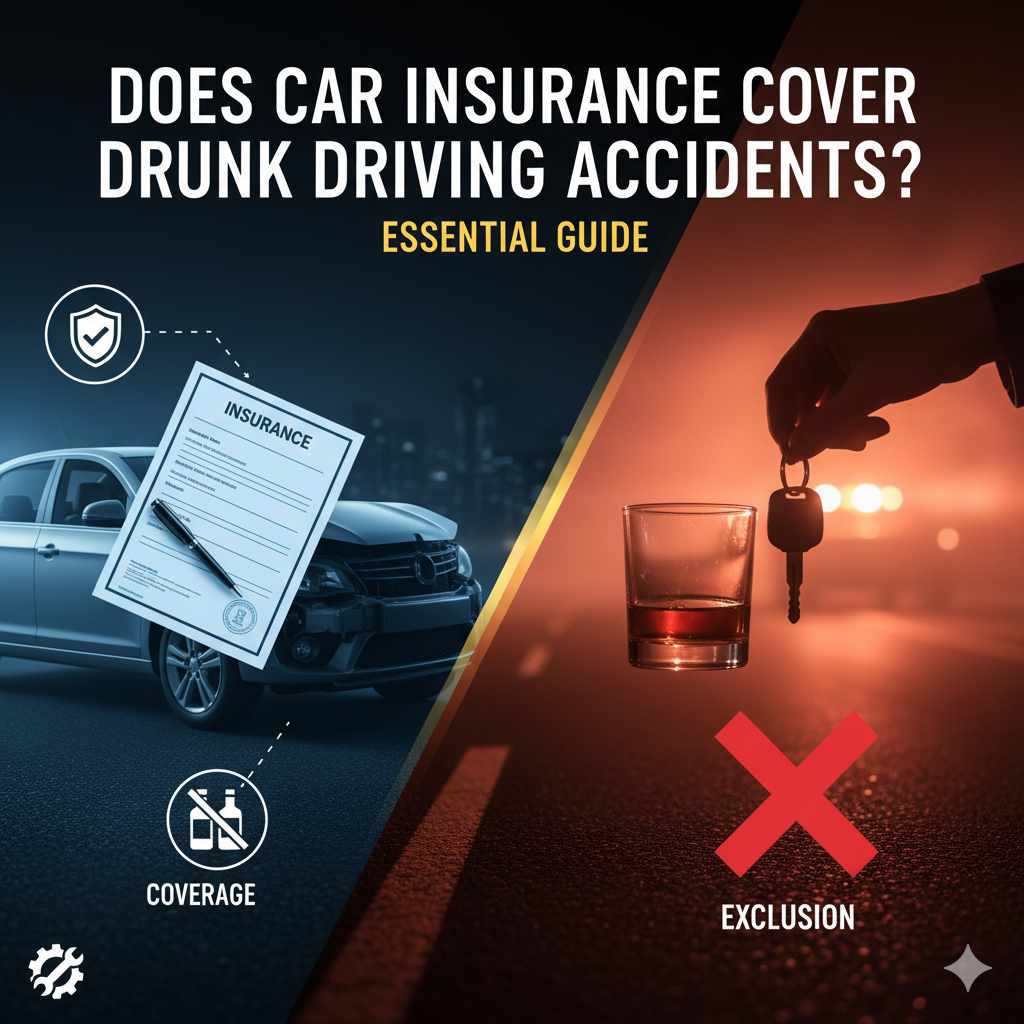
Does Car Insurance Cover Drunk Driving Accidents? Essential Guide
Many drivers wonder if their car insurance will cover costs after an accident involving alcohol. The short answer is: it depends, and it’s usually not straightforward. While policies might pay for damages to other vehicles or people, your own policy could be voided, leaving you personally liable for massive expenses. This guide breaks down what you need to know so you can make informed decisions and drive safely.
It’s a question that crosses many minds after a stressful event, or even just in a moment of curiosity: If I get into a car accident while driving under the influence of alcohol, will my insurance company cover the damages? It’s a scary thought because accidents can be expensive enough without the added worry of how your insurance will handle it. Many people assume their insurance is a safety net for all road mishaps. However, drunk driving adds a layer of complexity that can significantly change how your auto insurance policy applies. This guide is here to help clear up the confusion, explain the crucial details in simple terms, and give you the confidence to understand your coverage. We’ll walk through exactly what happens and what your options might be.
Understanding your car insurance is like understanding a vital tool in your life. It’s there to help, but knowing how it works, especially in tricky situations, is key. When alcohol is involved, things get complicated fast. This isn’t about placing blame, but about knowing the rules of the road and the rules of your insurance policy. We’ll break down the common scenarios, explain the legal implications, and help you understand the financial risks involved with drunk driving accidents. So, let’s dive into this essential guide to ensure you’re informed and prepared.
We’ll cover:
- The general rules for drunk driving accidents and insurance.
- How different types of car insurance coverage might apply (or not apply).
- What happens if you’re at fault versus not at fault.
- The severe legal and financial consequences you could face.
- Tips on how to understand your own policy better.
Understanding Car Insurance and Drunk Driving
When you purchase car insurance, you’re entering into a contract with an insurance company. This contract outlines what the insurer will pay for in the event of an accident. However, this contract also comes with conditions and exclusions. Most insurance policies have clauses that specifically address illegal activities, and driving under the influence (DUI) or driving while intoxicated (DWI) is almost universally considered illegal.
Generally, car insurance is designed to cover damages arising from accidents that are not a result of intent or illegal behavior. Drunk driving is a deliberate choice that violates traffic laws and significantly increases the risk of an accident. Because of this, insurance companies often have specific provisions related to DUI/DWI accidents. These provisions can dramatically impact whether your claim is approved or denied, and what financial responsibility you might bear.
It’s crucial to understand that while your insurance might pay out for damages to other parties involved in an accident you caused while drunk, there are significant caveats. Often, this coverage is provided as a legal obligation to protect innocent third parties, but it doesn’t mean your own car will be fixed or that your rates won’t skyrocket, or worse, that your policy will be canceled. The aftermath of a drunk driving accident can extend far beyond the immediate collision.
Collision and Comprehensive Coverage
These coverages are typically for damage to your own vehicle. For example, if you hit a tree or another car, collision coverage helps pay for repairs to your car, minus your deductible. Comprehensive coverage usually handles non-collision events like theft, vandalism, or natural disasters.
When it comes to drunk driving accidents:
- Collision Coverage: In most cases, if you cause an accident while driving drunk, your collision coverage might not pay for the damage to your own car. Insurance companies often view this as a violation of policy terms due to the illegal nature of your actions. You could end up paying for your car’s repairs entirely out of pocket.
- Comprehensive Coverage: This coverage is less likely to be directly affected by a drunk driving accident unless it’s related to the accident itself (e.g., if your car is stolen after you’ve left it somewhere after drinking). However, the overall impact of a DUI on your policy could lead to broader issues.
Liability Coverage
Liability coverage is a critical part of any auto insurance policy. It’s divided into two main parts: bodily injury liability and property damage liability. This coverage is designed to pay for damages and injuries you cause to others if you are at fault in an accident. Many states require drivers to carry a minimum amount of liability insurance.
Here’s how drunk driving affects liability coverage:
- Bodily Injury Liability: If you cause an accident while drunk and injure someone else, your bodily injury liability coverage might pay for their medical bills, lost wages, and pain and suffering. However, this isn’t guaranteed. Some policies may deny claims resulting from illegal acts. Moreover, if the damages exceed your policy limits, you will be personally responsible for the remaining costs.
- Property Damage Liability: Similarly, if you cause an accident while drunk and damage someone else’s car or property, your property damage liability coverage may cover the cost of repairs or replacement. Again, the coverage could be denied, and you could face personal liability for excessive damage.
It’s vital to understand that even if your insurance pays out to the injured third party, the insurance company may seek to recoup these costs from you, especially if they consider the act of drunk driving a direct breach of contract. This is often referred to as “subrogation.”
Uninsured/Underinsured Motorist (UM/UIM) Coverage
This coverage protects you if you’re involved in an accident with a driver who has no insurance (uninsured) or not enough insurance (underinsured) to cover your damages. It can cover your medical expenses, lost wages, and sometimes damage to your vehicle.
If you are involved in an accident with a drunk driver who is at fault, and they are uninsured or underinsured, your UM/UIM coverage could come into play. However, if you are the drunk driver at fault in an accident, your own UM/UIM coverage usually won’t apply to you or your passengers for injuries you sustain as the result of your drunk driving. This coverage is primarily for situations where the other driver is at fault and lacks adequate insurance, or in hit-and-run scenarios.
Personal Injury Protection (PIP) / Medical Payments (Med-Pay)
These coverages are designed to pay for medical expenses for you and your passengers, regardless of who is at fault in an accident. PIP is common in “no-fault” states, while Med-Pay is often an optional add-on in other states.
In a drunk driving accident:
- If you are drunk and at fault: Your PIP or Med-Pay coverage might still cover your own medical expenses and those of your passengers. However, some policies may have exclusions for injuries sustained while driving under the influence. It’s essential to check your policy wording.
- If you are the victim of a drunk driver: Your own PIP or Med-Pay coverage will likely kick in to cover your immediate medical bills, even if the at-fault driver’s insurance ultimately pays. This can be very helpful for fast access to funds for treatment.
The Legal and Financial Realities of Drunk Driving Accidents
Beyond insurance, the legal and financial repercussions of a drunk driving accident are severe and far-reaching. These consequences can persist for years, impacting your life in profound ways.
Criminal Charges and Penalties
Driving under the influence is a criminal offense. If you cause an accident while intoxicated, you face not only traffic violations but potentially serious criminal charges. These can include:
- DUI/DWI charges, which can lead to jail time.
- Reckless endangerment charges.
- Vehicular manslaughter or homicide charges if someone dies in the accident.
Penalties can include significant fines, mandatory jail sentences, loss of driving privileges, required participation in alcohol education or rehabilitation programs, and a permanent criminal record. A criminal record can affect your ability to find employment, secure housing, and even travel to certain countries.
Civil Lawsuits
Even if your insurance covers some damages, or if you avoid criminal charges, you can still be sued by injured parties in civil court. If the damages awarded in a lawsuit exceed your insurance policy limits, you are personally responsible for the difference. This can bankrupt an individual, forcing them to sell assets or pay off the debt for many years.
According to the National Highway Traffic Safety Administration (NHTSA), drunk driving fatalities cost society billions of dollars each year due to medical and work loss expenses, property damage, and other related issues. This highlights the immense financial stakes involved.
Insurance Policy Consequences
Involvement in a drunk driving accident can have dire consequences for your car insurance:
- Policy Cancellation: Most insurance companies reserve the right to cancel your policy following a DUI-related accident, especially if you are found to be at fault.
- Non-Renewal: Even if they don’t cancel mid-term, they are highly likely to choose not to renew your policy when it expires.
- Difficulty Getting New Insurance: With a DUI on your record and a history of accidents, getting new auto insurance will be significantly harder and much more expensive. You may be relegated to high-risk insurance pools, which come with much higher premiums.
- Increased Premiums: If your policy isn’t canceled, expect a substantial increase in your premium at your next renewal. Insurers see you as a much higher risk.
To re-establish coverage after a DUI, you may need to obtain an SR-22 certificate. This is a document filed by your insurance company with your state’s DMV that proves you have the minimum required auto insurance. It’s often required for a period of several years and typically leads to higher insurance costs.
What Happens if You’re NOT at Fault in a Drunk Driving Accident?
Even if you are not the one who was drinking and driving, being involved in an accident with a drunk driver can still be a complex situation. However, from an insurance perspective, it’s generally different from being the at-fault drunk driver.
- Your Own Insurance: If the drunk driver who hit you is uninsured or underinsured, your Uninsured/Underinsured Motorist (UM/UIM) coverage would typically apply. If they have insurance, but it’s insufficient, your UM/UIM might cover the difference up to your policy limits. Your collision coverage or Med-Pay/PIP could also be used for your vehicle repairs and medical expenses, which you would then typically seek reimbursement for from the at-fault driver’s insurer.
- The At-Fault Driver’s Insurance: In theory, the drunk driver’s liability insurance should cover your damages (medical bills, vehicle repairs, lost wages, etc.). However, as discussed, their insurance company may investigate the circumstances thoroughly. If they find the driver was indeed intoxicated and it directly caused the accident, they might still try to deny coverage or limit their payout, leaving their driver personally liable. This is where legal action might become necessary to ensure you are compensated.
- Legal Action: If the at-fault drunk driver’s insurance company denies your claim or offers a settlement that doesn’t adequately cover your losses, you may need to consult with a personal injury attorney. They can help you navigate negotiations and, if necessary, file a lawsuit against the drunk driver to recover your damages.
It’s important to remember that while your insurance company might pay out for your damages (especially via UM/UIM), they will likely pursue the at-fault drunk driver to recover those costs. This is their right as your insurer.
How to Understand Your Specific Policy
The most crucial step in knowing how your insurance works is to read and understand your own policy. Insurance policies can be complex, filled with legal jargon. However, there are key sections and terms you should look for:
| Policy Section/Term | What to Look For | Relevance to Drunk Driving Accidents |
|---|---|---|
| Declarations Page | Your coverage types (Liability, Collision, Comp, UM/UIM, PIP/Med-Pay), limits, deductibles, and premium costs. | Confirms what coverage you have in place. |
| Exclusions | A list of situations or damage types your policy will not cover. | Crucially, look for exclusions related to illegal acts, impaired driving, or criminal behavior. |
| Conditions | The rules you must follow for your coverage to be valid. | May include mandatory cooperation with the insurer and adherence to traffic laws. |
| Definitions | Clarifies the meaning of terms used in the policy, such as “accident,” “occupant,” etc. | Ensures you understand the insurer’s precise language. |
| Endorsements/Riders | Additions or modifications to your standard policy. | May specify any special terms related to high-risk driving or specific situations. |
If any part of your policy seems unclear, don’t hesitate to contact your insurance agent or broker. They are there to explain the terms and answer your questions. You can ask them directly: “What is my policy’s stance on claims arising from driving under the influence?”
Tips for Policy Review:
- Read the Fine Print: Don’t skim. Dedicate time to read your policy document carefully.
- Highlight Key Terms: Underline or highlight terms like “exclusions,” “illegal acts,” “DUI,” “DWI,” and “indemnification.”
- Ask Specific Questions: Prepare a list of questions before you call your agent.
- Keep Records: Save copies of your policy documents and any correspondence with your insurer.
- Understand Your State’s Laws: Insurance policy terms often interact with state laws. Familiarize yourself with your state’s DUI laws and minimum insurance requirements. For example, find out your state’s specific DUI laws on the U.S. Devlet de transport website.
Choosing to Drive Sober: The Best Protection
The most reliable—and indeed, the only truly safe—way to ensure your car insurance covers an accident is to never drive under the influence of alcohol or any impairing substance. The consequences of drunk driving extend far beyond insurance claims and financial penalties; they involve emotional distress, potential injury or death to yourself and others, and a lasting impact on your life and the lives of those around you.
According to the Centers for Disease Control and Prevention (CDC), about 30% of all traffic crash fatalities in the United States involve drunk drivers. These are preventable tragedies.
There are always alternatives to driving after drinking:
- Designated Driver: Plan ahead and have a friend or family member who agrees to stay sober and drive everyone home.
- Ride-Sharing Services: Apps like Uber and Lyft are widely available and offer a convenient, often affordable, way to get home safely.
- Taxis: Traditional taxi services are still an option in many areas.
- Public Transportation: If available, buses and trains can be a safe alternative.
- Stay Overnight: If you’re at a friend’s house or a venue, consider staying until you are sober or until transportation is readily available.
Making the responsible choice to not drive impaired is the best way to protect yourself, your finances, and most importantly, the lives of others on the road. It’s a decision that ensures your insurance policy, no matter how comprehensive, doesn’t become irrelevant in the face of catastrophic consequences.
Frequently Asked Questions (FAQ)
Q1: Will my car insurance cover damage to my car if I’m drunk and cause an accident?
A: Generally, no. Most insurance policies have exclusions for damages resulting from illegal acts, including driving under the influence. You will likely be responsible for paying for your own car’s repairs out of pocket.
Q2: If I injure someone while driving drunk, will my insurance cover their medical bills?
A: Your liability insurance may cover the injured party’s medical bills and other damages, but it’s not guaranteed. The insurance company might deny the claim due to the illegal nature of your act. Even if they pay, you could still be sued for damages exceeding your policy limits, and your policy could be canceled. You might also be obligated to repay the insurer.